When the Bay Comes In, You Need Someone Who Knows What's Behind Your Walls
Water damage in a coastal home moves fast and in Remsenburg, where Moriches Bay is practically in your backyard, the stakes are higher than most. We respond 24/7 with the tools, credentials, and local knowledge to stop the damage before it compounds.
I needed a professional consultation explanation of procedure for safe removal of Asbestos in my apartment complex. Without having an account yet, I was very impressed with the caring, knowledgeable and generous advice offered by Jessica, and will look forward to doing business in the future. Thank you so much! I feel much more informed about a sometimes scary endeavor. Peace. Nancy Silva Mineola, NY.
Mia Munoz
Used this company to clean up some water flood in my house. They were fast and easy to work with.very professional, Would recommend to anyone!
Nini Valle
Great company, had a flood and they responded quickly and efficiently. Billed my insurance company directly. I highly recommend this company!
joe colapietro, jr
I had pipe freeze in my basement right before a snow storm and they made to within an hour to help start the clean up process. They we by our side throughout the entire process and even helped with the insurance company. They did such a great job with the cleanup, repair, remidiation, I contracted them to perform the repairs and finishes in the basement. They came with enough manpower and material to get the job done. Leo and Jessica were nothing but a pleasure to deal with!!
Cristian Arredondo c
I had some water damage in my home and Green Island was able to take care of my issue quickly and effectively. I am very pleased with the work they did. They responded quickly and were very professional.
Michael M
Outstanding service! From the office to the field crew everyone was friendly, helpful and responsive. I highly recommend Green Island Group.
When water damage is handled correctly, you don’t just get a dry house. You get certainty. No hidden moisture behind plaster walls. No mold colonizing inside the framing of a home that’s been standing since the 1960s. No surprise call six months later from a contractor telling you the subfloor is shot. That’s what proper water damage restoration actually delivers and it’s a very different outcome than surface drying and a handshake.
Remsenburg’s housing stock makes this especially important. Many of the homes here were built well before 1980, and older construction absorbs and holds moisture differently than modern materials. Plaster walls, original hardwood floors, wood-frame structures near the bay these don’t dry the same way a new build does, and they don’t forgive shortcuts. A thermal imaging scan after a storm surge or a pipe failure in a Remsenburg home will often reveal saturation in places no one thought to look.
The other reality is that Remsenburg sits in a coastal environment where ambient humidity is already elevated year-round. Mold doesn’t need much of an invitation here. The IICRC documents that mold can begin growing within 24 to 48 hours of water exposure and in a home close to Moriches Bay, that window is not theoretical. Getting the moisture out completely, and verifying it with professional equipment, is what separates a real restoration from a temporary fix.
We’re a Long Island-based environmental and restoration company not a franchise, not a call center, not a lead-generation site with a local-sounding URL. When you call, you reach a real team that knows Suffolk County, understands Southampton Town’s permitting requirements, and has direct experience working on the kinds of properties that line the waterfront roads and quiet lanes of Remsenburg.
What sets us apart in a practical sense is the range of what we handle in-house. Water extraction and structural drying are just the starting point. If the job uncovers mold, asbestos in older pipe insulation, or lead paint behind the walls of a pre-1978 home which happens regularly in Remsenburg we have the certifications and licensing to address all of it without bringing in a separate contractor. That matters when you’re trying to restore a high-value property efficiently and completely.
For Remsenburg homeowners, especially those managing seasonal properties or coordinating from the city, that single-company continuity makes an already stressful situation significantly more manageable.
It starts with the call. Whether it’s a burst pipe discovered when you open the house for summer, a basement that took on water during a nor’easter, or bay flooding that came through a ground-floor door, the first step is getting eyes on the damage quickly. We respond 24/7, and the initial assessment isn’t just visual moisture meters and thermal imaging are used to find water that’s already migrated behind walls or beneath flooring, because that’s where the real damage usually hides.
Once the scope is clear, water extraction begins immediately. Industrial-grade equipment removes standing water, and the structural drying process follows dehumidifiers, air movers, and targeted drying systems that bring moisture levels down to documented, measurable standards. In Remsenburg’s older homes, this phase takes longer and requires more monitoring than newer construction, and that’s accounted for rather than rushed.
If the job involves structural repairs, drywall replacement, or work on a property in a FEMA flood hazard zone which applies to a number of waterfront and near-waterfront addresses in Remsenburg we pull the appropriate permits through the Town of Southampton Building Department. Nothing gets skipped to move faster. The final step is verification: air quality testing and moisture confirmation before the job is closed, so you know the problem is actually solved, not just covered up.
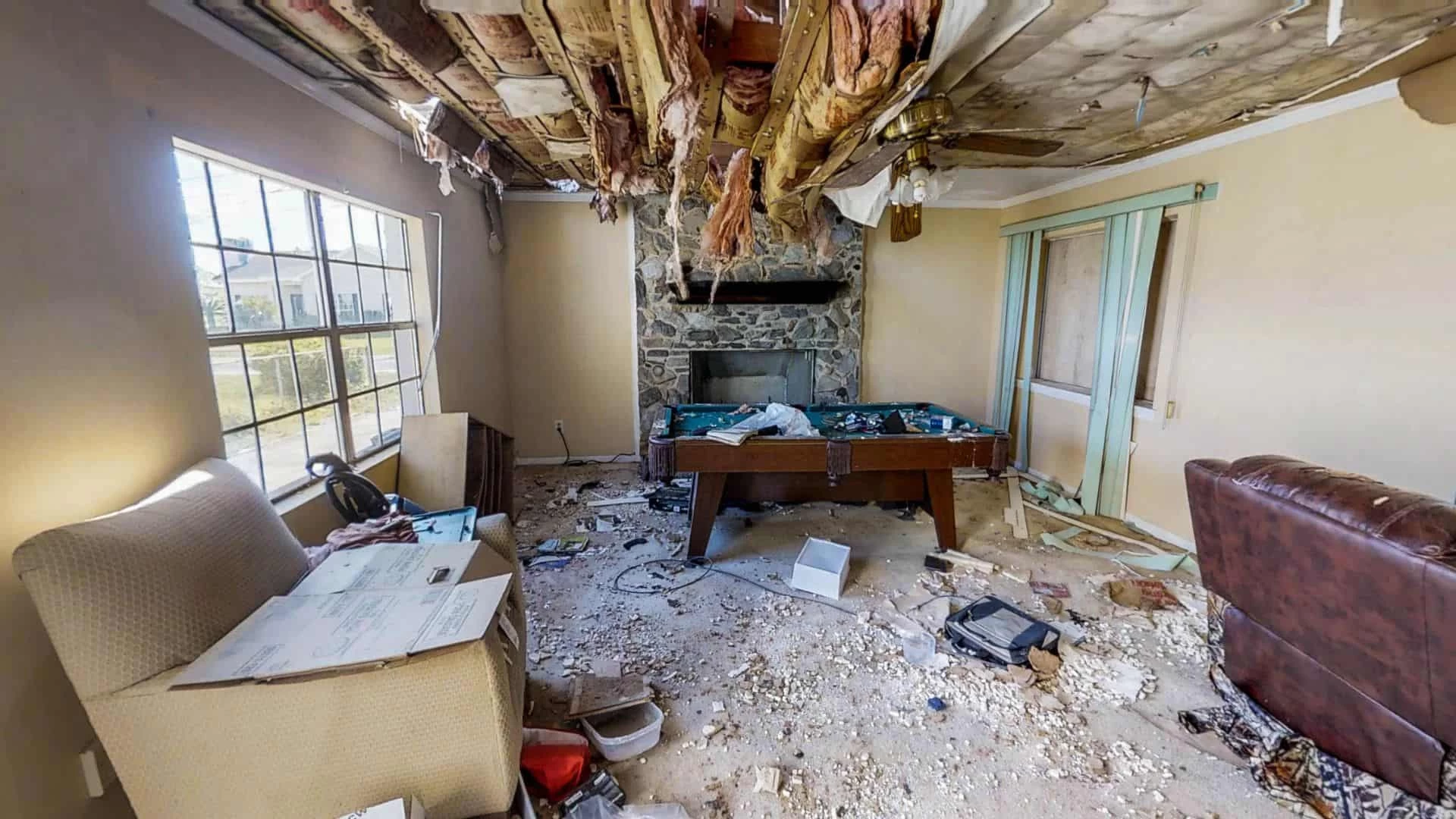
Water damage rarely stops at the water. In a community like Remsenburg where a meaningful portion of the housing stock predates 1980 and where storm surge and coastal flooding are genuine seasonal risks what starts as a water extraction job frequently becomes something more. Asbestos in pipe insulation or floor tiles. Lead paint in plaster walls that need to come down. Mold behind framing that’s been holding moisture since the last big nor’easter. These aren’t edge cases here. They’re common.
Our water damage restoration service covers the full scope: emergency response and water extraction, structural drying and dehumidification, mold remediation, asbestos testing and abatement, lead paint testing and removal, and post-remediation air quality verification. Every one of those capabilities is in-house, which means no waiting for a separate contractor, no gaps in accountability, and no situation where you’re left coordinating between three different companies while your home sits unfinished.
For properties in FEMA flood zones along Moriches Bay or Seatuck Cove, we handle the documentation process with insurance in mind from day one. Many Remsenburg homeowners carry both a standard homeowners policy and a separate flood insurance policy and navigating both claims simultaneously, with proper damage documentation, is something we’ve done before. You’re not figuring that out alone.
How quickly can water damage turn into a mold problem in Remsenburg?
Faster than most people expect especially in Remsenburg. The IICRC standard documentation puts mold colonization at 24 to 48 hours after water exposure, and that’s under average conditions. In a coastal community like Remsenburg, where humidity levels near Moriches Bay are elevated year-round, that window can be even less forgiving. Older homes with plaster walls and wood framing hold moisture longer than modern construction, which gives mold more time to establish before it’s visible.
The practical takeaway is that waiting to see if things dry out on their own is a real risk in this environment. What looks like a manageable wet spot on the surface can be significant saturation inside a wall cavity or beneath original hardwood floors. Professional moisture assessment using thermal imaging and calibrated meters, not just a visual check is the only reliable way to know what you’re actually dealing with before mold becomes part of the conversation.
Does homeowners insurance cover water damage from a burst pipe in Remsenburg?
Generally, yes sudden and accidental water damage from a burst pipe is typically covered under a standard homeowners insurance policy. The key word is sudden. If the pipe failure is traced back to long-term deterioration or a slow leak that went unaddressed, insurers will often push back on the claim. In Remsenburg, where a significant portion of the housing stock has plumbing systems that are 40 to 60 years old, the condition of your pipes matters when a claim is filed.
It’s also worth understanding what your homeowners policy does not cover: storm surge and flooding from outside the home. If Moriches Bay water enters your Remsenburg property during a coastal storm, that’s a flood insurance claim a separate policy entirely, and one that many properties near the water are required to carry. Having both policies and understanding which damage falls under which coverage is something worth sorting out before you’re in the middle of an emergency.
What's the difference between flood damage and regular water damage restoration?
The distinction matters both technically and from an insurance standpoint. Standard water damage from a pipe burst, appliance failure, or roof leak is typically Category 1 or Category 2 water, meaning it starts clean or mildly contaminated. Flood damage from storm surge or bay overflow is almost always Category 3, which means the water carries contaminants, sediment, and biological material that require a more intensive remediation protocol.
For Remsenburg properties near Moriches Bay or Seatuck Cove, this is a real-world distinction, not a theoretical one. After a significant coastal storm, water that enters from outside the structure needs to be treated as contaminated, which affects how materials are handled, what gets removed versus dried in place, and how the space is cleared for safe reoccupancy. It also affects which insurance policy applies flood insurance handles storm surge, while homeowners insurance handles internal water failures. Getting the documentation right from the start is critical to a successful claim on either policy.
Do I need a permit for water damage repairs in Remsenburg, NY?
It depends on the scope of the work. Cosmetic repairs repainting, replacing flooring in kind, minor drywall patching typically don’t require a permit. But structural repairs, significant drywall replacement, electrical or plumbing work uncovered during restoration, or any work on a property in a FEMA flood hazard zone is a different story. In those cases, a building permit from the Town of Southampton Building Department is required, and work done without one can create problems at resale or complicate future insurance claims.
Remsenburg falls under Southampton Town jurisdiction, and the town has specific regulations for properties in designated coastal flood hazard areas including elevation requirements for certain types of structural work. If your property is in a flood zone, which applies to a number of waterfront and near-waterfront addresses in Remsenburg, the permitting process has an added layer. Working with a restoration company that understands Southampton Town’s requirements and pulls permits correctly is not a minor detail it protects your property’s legal standing and your ability to claim future losses.
Should I use my insurance company's preferred contractor or choose my own?
In New York, you have the right to choose your own restoration contractor and that right is worth exercising. An insurer’s preferred contractor has a financial relationship with the insurance company, which creates an inherent tension between completing the most thorough job and keeping claim costs down. That tension doesn’t always work in your favor, particularly on a high-value property where the difference between a complete restoration and a cost-minimized one can be significant.
For Remsenburg homeowners with properties valued well above the county average, this matters more than it might elsewhere. A restoration that looks complete on paper but leaves hidden moisture in a plaster wall or unaddressed contamination from a coastal flood event can result in mold, structural damage, and a much larger problem down the road one that may not be covered because the original claim was already closed. Choosing an independent, certified restoration company that documents everything thoroughly and works in your interest from the start is the more protective choice.
Can water damage in an older Remsenburg home uncover asbestos or lead paint?
Yes, and it happens regularly in Remsenburg. The hamlet’s median home construction year is 1981, and a significant portion of Remsenburg’s most distinctive properties particularly those along the waterfront and on historic lanes like Basket Neck Lane were built decades before that. Homes constructed before 1978 frequently contain lead paint in plaster walls, window trim, and original woodwork. Homes built before 1980 often have asbestos in pipe insulation, floor tiles, ceiling materials, and joint compound.
When water damage restoration requires removing or disturbing these materials which it often does, since drywall, insulation, and flooring frequently need to come out federal and state regulations apply. The EPA’s RRP Rule requires certified contractors for lead paint disturbance in pre-1978 homes, and New York State requires licensed contractors for asbestos abatement. A restoration company that isn’t certified for both cannot legally or safely complete a full restoration in many of Remsenburg’s older homes. We hold the certifications to handle all of it in-house, which means the job doesn’t stop partway through while you wait for a separate abatement contractor to become available.