When Ridge's Water Table Rises, You Need More Than a Wet Vac
Ridge sits on one of Long Island’s highest water table zones and when a pipe bursts or your basement floods, the clock starts immediately. We respond 24/7 with real water damage restoration that goes beyond surface drying.
I needed a professional consultation explanation of procedure for safe removal of Asbestos in my apartment complex. Without having an account yet, I was very impressed with the caring, knowledgeable and generous advice offered by Jessica, and will look forward to doing business in the future. Thank you so much! I feel much more informed about a sometimes scary endeavor. Peace. Nancy Silva Mineola, NY.
Mia Munoz
Used this company to clean up some water flood in my house. They were fast and easy to work with.very professional, Would recommend to anyone!
Nini Valle
Great company, had a flood and they responded quickly and efficiently. Billed my insurance company directly. I highly recommend this company!
joe colapietro, jr
I had pipe freeze in my basement right before a snow storm and they made to within an hour to help start the clean up process. They we by our side throughout the entire process and even helped with the insurance company. They did such a great job with the cleanup, repair, remidiation, I contracted them to perform the repairs and finishes in the basement. They came with enough manpower and material to get the job done. Leo and Jessica were nothing but a pleasure to deal with!!
Cristian Arredondo c
I had some water damage in my home and Green Island was able to take care of my issue quickly and effectively. I am very pleased with the work they did. They responded quickly and were very professional.
Michael M
Outstanding service! From the office to the field crew everyone was friendly, helpful and responsive. I highly recommend Green Island Group.
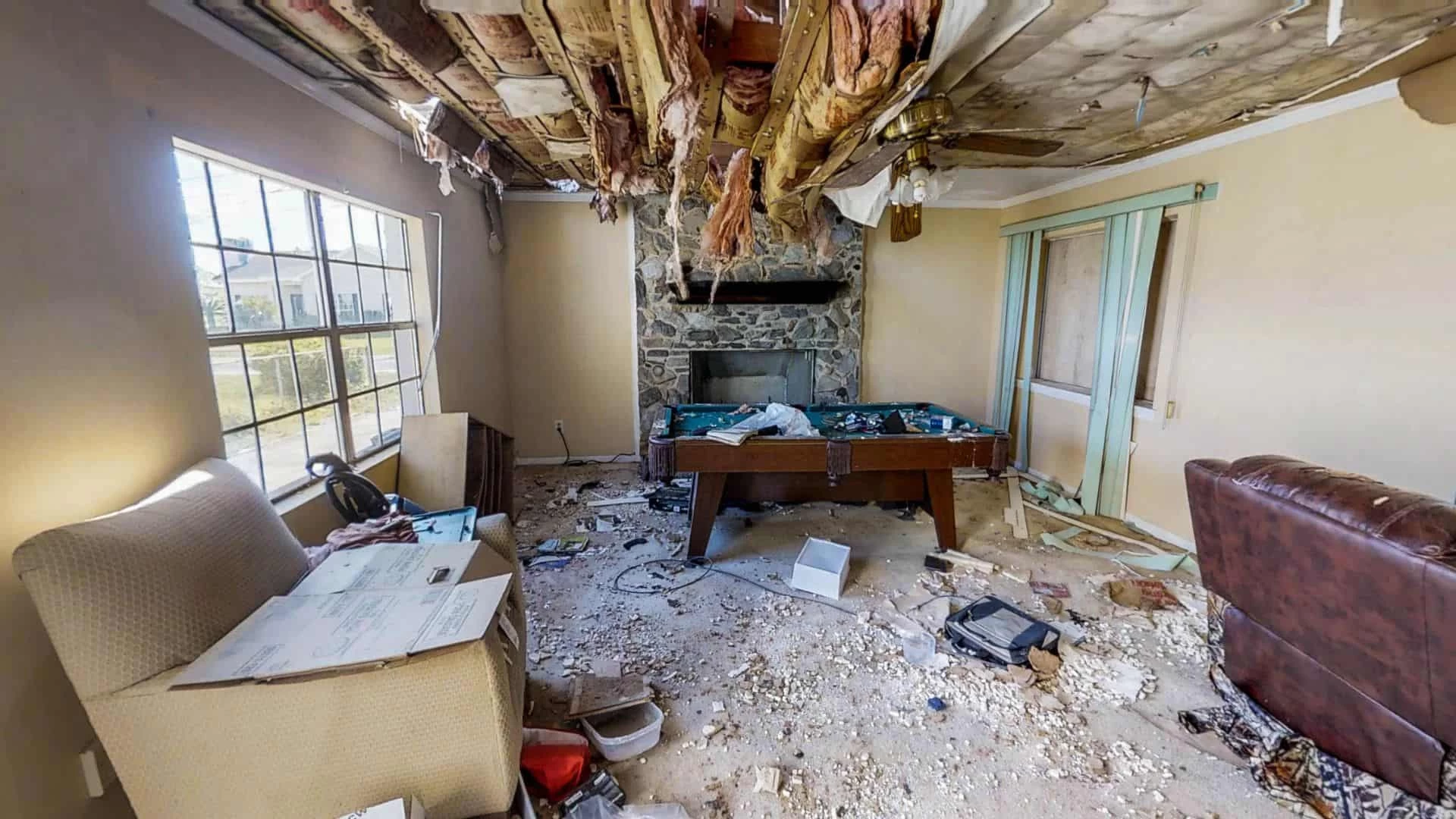
What most homeowners don’t realize is that water damage is rarely just what you can see. A saturated subfloor looks fine once the surface dries. A wall that feels dry can be holding moisture behind the drywall that turns into a mold colony within 48 hours. That’s the part that costs you later and it’s the part most water-only companies miss entirely.
For Ridge residents, this matters more than it does in most Long Island towns. The hamlet borders the Long Island Central Pine Barrens, which functions as the primary aquifer recharge zone for the entire island. That means the water table here is naturally elevated and during heavy rain, groundwater doesn’t just come from above. It rises from below, pushing through foundation cracks and floor seams even in homes that appear structurally sound. Standard surface drying doesn’t address that.
The other factor is the housing stock itself. Most homes in Ridge’s 11961 ZIP code were built in the 1960s and 1970s. That means wood framing, paper-faced drywall, and cellulose insulation all materials that absorb water fast and hold it longer than modern construction. When those materials stay wet, mold doesn’t wait. Getting the full picture not just the visible damage is what separates a real restoration from a temporary fix.
We’re a Long Island-based environmental and property restoration company not a national franchise, not a call center routing you to whoever’s available. When you call the 631 number, you reach a local team that knows Brookhaven Town, knows the Longwood School District area, and has worked in homes just like yours throughout Ridge and Suffolk County.
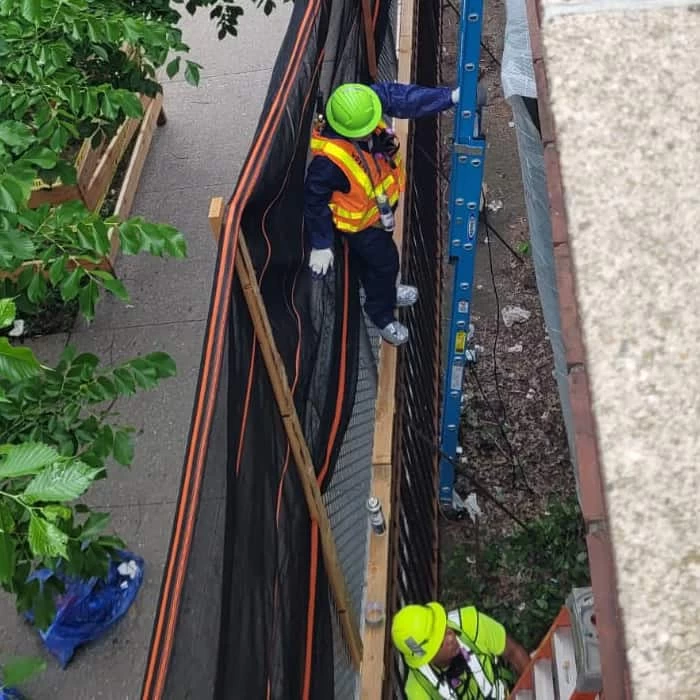
What sets our team apart isn’t just the response time. It’s the scope. Most water damage companies handle the water and stop. We handle water damage, mold remediation, asbestos abatement, and lead paint work all under one roof. For a Ridge home built in 1972, that matters. Disturbing a wall in a pre-1980 home without testing for asbestos or lead isn’t just cutting corners it’s a liability. You shouldn’t have to manage three different contractors to get your home back to normal.
The reviews reflect what actually happens on the job: staff members are named, the process is described as transparent, and customers consistently say they felt taken care of not processed.
What Actually Happens From First Call to Final Walkthrough
The first step is getting there fast. Water damage spreads into walls, under floors, through insulation and every hour of delay increases both the scope of the damage and the probability of mold. We operate 24/7, and our team can be on the road toward Ridge within the hour of your call.
Once on-site, the process starts with a full moisture assessment not just a visual check. Thermal imaging cameras and calibrated moisture meters map every zone of saturation, including the ones you can’t see. This documentation matters for two reasons: it tells our crew exactly where to focus the drying equipment, and it gives your insurance adjuster a clear, evidence-backed picture of the full scope of damage. In a hamlet where the water table can drive basement flooding from below, that hidden moisture detection isn’t optional it’s the whole point.
From there, water extraction and structural drying begin using industrial-grade equipment. If mold is present or the conditions are right for it to develop, that assessment happens in the same visit not after a second contractor shows up three days later. And because Ridge’s older housing stock frequently involves pre-1980 materials, any work that could disturb asbestos-containing materials or lead paint is handled within our own licensed scope, keeping the project moving without compliance gaps or contractor handoffs. Before our team leaves, you’ll know exactly what was done, what was found, and what comes next.
Water damage restoration in Ridge isn’t a single-step job, and it rarely ends with just drying the floor. Our scope covers the full continuum: water extraction, structural drying, moisture mapping, mold testing and remediation, asbestos abatement, lead paint compliance, and full property restoration. For homeowners in Leisure Village, Leisure Knoll, or Leisure Glen where HOA boundaries and shared walls can complicate who’s responsible for what having one company document and manage the entire project is a significant advantage over coordinating multiple contractors who don’t talk to each other.
Insurance claim assistance is built into our process, not offered as an add-on. We document everything from the initial moisture assessment through final restoration, communicate directly with your adjuster, and advocate for a complete and accurate settlement. For Ridge residents on fixed incomes or those who haven’t filed a major property claim before, this removes the most stressful part of an already stressful situation.
The work also accounts for Brookhaven Town’s floodplain development permit requirements when structural repairs are involved. If your restoration requires a permit which it may, depending on the extent of the work and your property’s flood zone designation we’re familiar with the process and can help you navigate it without delays. You won’t be left figuring that out on your own mid-project.
Why does my Ridge basement keep flooding even without heavy rain?
This is one of the most common questions from homeowners in Ridge, and the answer comes down to geography. Ridge sits adjacent to the Long Island Central Pine Barrens, which is the primary aquifer recharge zone for Long Island. The USGS has documented that this zone carries some of the island’s highest water table elevations meaning the groundwater level beneath your home is naturally closer to the surface than it would be in most other parts of Long Island.
When the water table rises after prolonged rain, during spring snowmelt, or even after a stretch of wet weather that pressure builds against your foundation from the outside. It can push through floor cracks, seams, and porous concrete block walls without any visible surface flooding at all. This is called hydrostatic pressure, and no amount of guttering or grading fully prevents it. A sump pump helps, but if it’s undersized, aging, or loses power during a storm, you’ll see water regardless. If your basement floods without an obvious source, the water table is almost certainly the cause and a professional moisture assessment can confirm it and document the intrusion pattern for your insurance claim.
How quickly does mold actually start growing after water damage?
Mold can begin colonizing within 24 to 48 hours of water exposure under the right conditions and in most Ridge homes, the conditions are ideal. Homes built in the 1960s and 1970s contain high concentrations of organic materials: wood framing, paper-faced drywall, cellulose insulation, and natural fiber subflooring. These materials absorb moisture quickly and hold it, creating exactly the warm, damp environment mold needs to establish.
The 48-hour window isn’t a worst-case scenario it’s the standard. What makes it particularly relevant in Ridge is that many water damage events here aren’t discovered immediately. A slow pipe leak behind a wall, a sump pump failure during a nor’easter, or groundwater seeping through a foundation crack overnight can go unnoticed for hours before anyone finds it. By the time you’re calling for help, mold may already have a head start. This is why rapid response and complete moisture detection not just surface drying are critical. If moisture is left behind in wall cavities or under flooring, mold will follow, even if the surface looks and feels dry.
Does homeowners insurance cover basement flooding and water damage in Ridge, NY?
It depends on the source of the water, and the distinction matters a lot. Standard homeowners insurance typically covers sudden and accidental water damage a burst pipe, a washing machine supply line failure, an overflowing appliance. It generally does not cover flooding caused by surface water or groundwater intrusion, which requires a separate flood insurance policy through the National Flood Insurance Program (NFIP) or a private carrier.
For Ridge homeowners, this is an important nuance. Because Ridge’s elevated water table can cause basement flooding that originates from groundwater pressure rather than a specific appliance or pipe failure, the coverage question isn’t always straightforward. The source of the water and how it’s documented directly affects what your insurer will pay. This is one of the reasons professional documentation matters so much from the start. Our moisture assessment and damage documentation gives your adjuster a clear, evidence-based record of what happened and where the water came from, which supports a more accurate and complete claim outcome. If you’re unsure about your coverage, reviewing your policy before an event not during one is always the better move.
Should I be worried about asbestos if water damage affects my older Ridge home?
If your home was built before 1980 which describes the majority of homes in Ridge, including all three of the Leisure communities then yes, it’s a reasonable concern and one worth taking seriously. Asbestos-containing materials were commonly used in construction through the mid-1970s and into the early 1980s. That includes floor tiles, ceiling texture, joint compound, pipe insulation, and some types of drywall backing. When water damage requires opening walls, removing flooring, or disturbing insulation, those materials can be disturbed.
The risk isn’t in the materials sitting undisturbed it’s in the disturbance. A water-only restoration company that tears into a 1970s wall without testing isn’t just cutting corners; they may be releasing asbestos fibers into your home’s air. New York State requires specific Department of Labor licensing for asbestos abatement work, and the EPA’s RRP rules apply to lead paint in pre-1978 construction. We hold the certifications to test, assess, and abate hazardous materials as part of the same restoration project so you don’t end up with a water damage company that creates a hazmat situation in the process of drying your basement.
How long does water damage restoration typically take for a home in Ridge?
The honest answer is that it varies and anyone who gives you a flat number without seeing your home first is guessing. The timeline depends on how much water was involved, how long it sat before extraction began, what materials were affected, and whether secondary issues like mold or hazardous materials are present. For a straightforward burst pipe with limited spread and fast response, structural drying typically takes three to five days. For a basement flood that sat overnight in a 1970s ranch home with cellulose insulation and wood subfloor, the timeline extends considerably.
What affects the timeline most in Ridge specifically is the age of the housing stock. Older materials absorb more moisture and dry more slowly than modern construction. Thick wood framing, dense insulation, and original plaster walls hold water longer than today’s materials, and industrial drying equipment needs more time to draw that moisture out completely. Rushing the drying process to hit an arbitrary deadline is one of the most common causes of mold problems showing up weeks after a “completed” restoration. The goal is to get it done right with moisture readings confirming dry conditions throughout not just done fast.
What should I do the moment I discover water damage in my Ridge home?
The first thing to do is stop the source if you can shut off the water supply valve if it’s a pipe or appliance failure. If the flooding is from groundwater or a storm event and there’s no valve to turn, focus on what you can safely remove from the affected area: rugs, furniture, anything on the floor that will absorb more water or be damaged further. Don’t run a standard household fan and assume that’s drying the space it circulates air but doesn’t remove the moisture that’s already been absorbed into structural materials.
Call for professional help as quickly as possible. The 24 to 48 hour mold window is real, and in Ridge’s older homes with the organic framing and insulation common in 1960s and 70s construction that window closes fast. While you’re waiting, document everything with photos and video before anything is moved or cleaned up. That documentation is the foundation of your insurance claim, and the more thorough it is, the better position you’re in with your adjuster. Don’t throw anything away before the damage is assessed even materials that look ruined may need to be documented as part of the claim. Our team can walk you through the insurance process from the first call, so you’re not navigating that on your own while also dealing with a flooded home.