Rosedale Floods. Your Home Shouldn't Pay the Price.
Over 60% of Rosedale properties are at risk of flooding and if your basement has already taken on water, you know the clock starts the moment it stops raining. We respond fast, dry it right, and handle the insurance so you don’t have to fight that battle alone.
I needed a professional consultation explanation of procedure for safe removal of Asbestos in my apartment complex. Without having an account yet, I was very impressed with the caring, knowledgeable and generous advice offered by Jessica, and will look forward to doing business in the future. Thank you so much! I feel much more informed about a sometimes scary endeavor. Peace. Nancy Silva Mineola, NY.
Mia Munoz
Used this company to clean up some water flood in my house. They were fast and easy to work with.very professional, Would recommend to anyone!
Nini Valle
Great company, had a flood and they responded quickly and efficiently. Billed my insurance company directly. I highly recommend this company!
joe colapietro, jr
I had pipe freeze in my basement right before a snow storm and they made to within an hour to help start the clean up process. They we by our side throughout the entire process and even helped with the insurance company. They did such a great job with the cleanup, repair, remidiation, I contracted them to perform the repairs and finishes in the basement. They came with enough manpower and material to get the job done. Leo and Jessica were nothing but a pleasure to deal with!!
Cristian Arredondo c
I had some water damage in my home and Green Island was able to take care of my issue quickly and effectively. I am very pleased with the work they did. They responded quickly and were very professional.
Michael M
Outstanding service! From the office to the field crew everyone was friendly, helpful and responsive. I highly recommend Green Island Group.
There’s a difference between a basement that looks dry and one that actually is. When water gets into a Rosedale home through a floor drain, a foundation crack, or a sump pump that gave out during a storm it doesn’t stay where you can see it. It wicks up drywall, saturates subfloor, and works its way into wall cavities. If it’s not pulled out completely and dried with the right equipment, mold starts growing within 24 to 48 hours. That’s just how moisture works, especially in a warm New York summer.
For homeowners in Rosedale, the stakes are real. Most homes here have full, finished basements living rooms, home offices, in-law suites that represent serious square footage and real money. Losing that space, even temporarily, is a big deal. A proper restoration job gets it back to where it was before the water came in, not just patched up enough to look okay.
The other piece that matters here specifically is mold. Rosedale’s recurring flooding history three separate city sewer projects in under a decade, and streets that still flood during heavy rain means this isn’t a one-time problem for most residents. Every event that’s not fully remediated leaves behind conditions that compound the next time. Getting it done right the first time is what actually breaks that cycle.
Local to the Queens-Nassau Border. Not a Franchise.
We serve the Suffolk and Nassau County corridor which puts Rosedale, sitting right on the Queens-Nassau line, squarely in our home territory. We’re not a national brand with a local phone number. We’re a restoration company that actually knows this area, the housing stock, and the specific way water behaves in neighborhoods like Rosedale.
When you call us, you’re talking to someone who understands why Hook Creek Boulevard floods, what a finished basement in Warnerville is actually worth, and why southeast Queens has been underserved by city infrastructure for generations. That context matters when we’re scoping your damage and working with your insurance adjuster.
We handle water extraction, structural drying, mold remediation, and full reconstruction all under one roof. No handoffs to subcontractors you’ve never met. No surprise crews showing up from a different company. Just a consistent team that sees the job through from the first call to the final walkthrough.
From Standing Water to Solid Ground Here's the Process
The first thing we do is get there. When you call, we dispatch immediately day or night because water damage doesn’t pause while you wait for a callback. When we arrive, we assess the full scope of what’s happened: where the water came from, how far it’s traveled, what’s been affected structurally, and what the mold risk looks like given how long it’s been sitting.
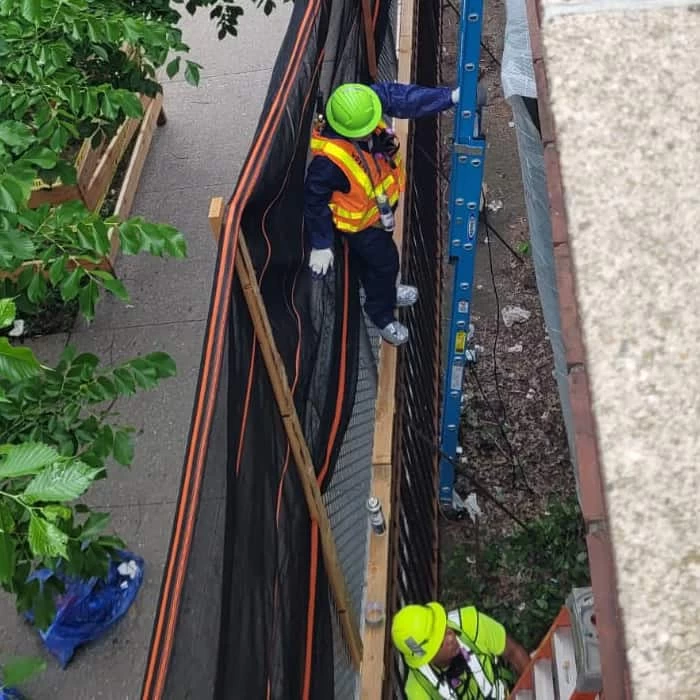
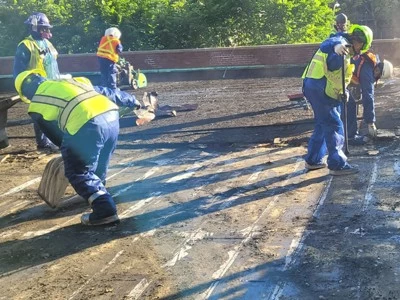
From there, we extract the standing water using industrial-grade equipment not the kind of pump you’d find at a hardware store. Once the visible water is out, we deploy commercial dehumidifiers and air movers to pull moisture out of the materials themselves. This is the step that most homeowners don’t see, but it’s the one that actually determines whether your home dries correctly or develops a mold problem three weeks later.
In Rosedale specifically, we also account for the age of the infrastructure. Many homes in the neighborhood sit above water mains that are more than 80 years old cast iron pipes that can fail without warning. If the damage came from a supply line or a drain backup rather than a storm, we document that clearly for your insurance claim. Once everything is dry and cleared, we move into reconstruction: drywall, flooring, framing, whatever the job calls for. New York City permitting requirements apply to certain structural repairs, and we handle that process so it doesn’t fall on you.
Water damage restoration isn’t one thing it’s a sequence of steps that each have to be done correctly for the next one to hold. We cover the full range: emergency water extraction, structural drying, mold assessment and remediation, odor removal, and complete reconstruction of affected areas. For Rosedale homeowners with finished basements, that last part matters most. We restore not just dry out and leave.
New York State has specific licensing requirements for mold work. Mold remediation above 10 square feet requires a licensed Mold Remediation Contractor, and the assessment has to be done separately by a licensed Mold Assessor. We operate in full compliance with those regulations, which protects you legally and ensures the work is done to a standard that holds up if your insurance carrier asks questions.
We also work directly with insurance adjusters both standard homeowner’s policies and National Flood Insurance Program (NFIP) claims, which a number of Rosedale homeowners carry given the neighborhood’s documented flood risk. We document everything thoroughly, communicate directly with your carrier, and make sure covered damage doesn’t get left off the claim. If you’ve been through a flooding event near the Hook Creek Boulevard corridor or in the Meadowmere area and you’re not sure what your policy covers, that’s exactly the kind of conversation we’re set up to help you have.
How quickly can a water damage restoration company reach my Rosedale home?
We dispatch as soon as you call 24 hours a day, 7 days a week. For Rosedale residents, that response time matters more than it might in other neighborhoods, because flooding here tends to happen fast and hard. When a summer thunderstorm drops several inches of rain in an hour and the stormwater system gets overwhelmed, you don’t have the luxury of waiting until morning to make a call.
Once we’re on site, the extraction process starts immediately. We don’t schedule an assessment for the next day and come back later the assessment and the work happen together. Every hour that water sits in your home, it’s migrating further into your materials and increasing the mold risk. Fast response is the difference between a restoration job and a full gut renovation.
Will my homeowner's insurance cover water damage restoration in Rosedale, NY?
It depends on the source of the water, and this is where a lot of homeowners get tripped up. Standard homeowner’s insurance typically covers sudden and accidental water damage a burst pipe, a washing machine failure, an appliance leak. It generally does not cover flooding from outside the home, like storm surge or groundwater backup, unless you have a separate flood insurance policy through the National Flood Insurance Program.
In Rosedale, this distinction is especially important. The neighborhood’s flooding is often driven by stormwater system overload and groundwater saturation not always a clean internal pipe failure. If you carry an NFIP policy, that changes what’s covered significantly. We’ve worked with both types of claims and know how to document the damage in a way that supports your case with the adjuster. If you’re not sure what you have, we can help you figure out which policy applies before the claim gets filed.
How do I know if my basement has mold after a flood?
The honest answer is that you often can’t tell by looking at least not early on. Mold starts growing in hidden places: inside wall cavities, under flooring, behind baseboards, anywhere moisture got trapped and didn’t dry out fully. By the time you can see it or smell it, it’s already been growing for a while.
In Rosedale, where basement flooding is a recurring reality for a lot of homeowners, this is a pattern we see regularly. A previous flood gets cleaned up, the basement looks fine, and then a few months later there’s a musty smell that won’t go away. That’s usually mold that was never fully addressed. After any water intrusion event, a professional moisture assessment using thermal imaging and moisture meters to check inside walls and under floors is the only way to know for certain. We include this as part of our initial assessment on every job.
What's the difference between water mitigation and full water damage restoration?
Mitigation is the emergency phase stopping the damage from getting worse. That means extracting standing water, removing saturated materials that can’t be saved, and getting industrial drying equipment running. It’s essential, but it’s not the finish line.
Restoration is everything that comes after: rebuilding the drywall, replacing the flooring, repairing or replacing structural elements, restoring your basement or living space to what it looked like before. Some companies stop at mitigation and hand you a dried-out shell. We handle both phases, which means you’re not left coordinating a second contractor after the emergency is over. For a Rosedale homeowner with a finished basement that serves as real living space, that continuity matters you want one team that knows the full scope of what was there and what it needs to look like when it’s done.
How long does water damage restoration typically take for a Rosedale home?
The drying phase alone typically takes three to five days for a standard basement water event, assuming the extraction is done promptly and the right equipment is deployed. Structural drying can’t be rushed the materials need time to release moisture, and pulling the equipment too early is one of the most common reasons jobs develop mold problems after the fact.
The full restoration timeline depends on the scope of damage. If it’s extraction, drying, and minor repairs, you might be looking at one to two weeks total. If there’s significant structural damage, mold remediation, or a full basement rebuild involved, it can run longer. In Rosedale, where homes often have finished basements with multiple layers of flooring, insulated walls, and built-in fixtures, the rebuild phase can be more involved than a bare concrete space. We give you a realistic timeline upfront not an optimistic estimate that gets extended three times.
My Rosedale street floods every time it rains hard what can I do to protect my home?
You’re not imagining it, and you’re not alone. The city has invested nearly $95 million across three separate sewer and stormwater projects in Rosedale since 2017 the most recent being a $51.8 million project launched in 2024 that won’t be completed until 2026. Until that infrastructure is finished, the flooding risk on streets near Hook Creek Boulevard and throughout the neighborhood remains real.
In the meantime, there are practical steps that make a meaningful difference. A battery-backup sump pump is one of the most important power outages during storms are common, and a sump pump that loses power during the worst part of a storm is useless. Backwater valves on floor drains can prevent sewage from pushing back into your basement during heavy rain events. Proper grading around your foundation directs surface water away from the house rather than toward it. These aren’t permanent fixes for a neighborhood-wide infrastructure problem, but they reduce your exposure significantly. If you’ve already had water come in, we can also assess where it entered and what changes might reduce the risk next time that conversation is part of what we do.