I needed a professional consultation explanation of procedure for safe removal of Asbestos in my apartment complex. Without having an account yet, I was very impressed with the caring, knowledgeable and generous advice offered by Jessica, and will look forward to doing business in the future. Thank you so much! I feel much more informed about a sometimes scary endeavor. Peace. Nancy Silva Mineola, NY.
Mia Munoz
Used this company to clean up some water flood in my house. They were fast and easy to work with.very professional, Would recommend to anyone!
Nini Valle
Great company, had a flood and they responded quickly and efficiently. Billed my insurance company directly. I highly recommend this company!
joe colapietro, jr
I had pipe freeze in my basement right before a snow storm and they made to within an hour to help start the clean up process. They we by our side throughout the entire process and even helped with the insurance company. They did such a great job with the cleanup, repair, remidiation, I contracted them to perform the repairs and finishes in the basement. They came with enough manpower and material to get the job done. Leo and Jessica were nothing but a pleasure to deal with!!
Cristian Arredondo c
I had some water damage in my home and Green Island was able to take care of my issue quickly and effectively. I am very pleased with the work they did. They responded quickly and were very professional.
Michael M
Outstanding service! From the office to the field crew everyone was friendly, helpful and responsive. I highly recommend Green Island Group.
Your Rye Brook Home Back to Normal, Without the Runaround
Water damage doesn’t wait, and in Rye Brook, it doesn’t always announce itself either. One heavy storm system pushing up the Blind Brook watershed, one overnight freeze cracking a pipe in a 1960s-era wall and suddenly you’re pulling up flooring, watching moisture creep behind drywall, and trying to figure out who to call first. What you actually need is someone who handles the whole thing, not just the wet part.
When the water is gone and the drying is done right, you’re not just looking at a dry floor. You’re looking at a home that’s been checked for hidden moisture in wall cavities and subfloors, tested for mold risk before it becomes a real problem, and cleared by someone who documented everything your insurance adjuster is going to ask for. That matters especially in Rye Brook, where finished basements, custom millwork, and high-end materials are the norm not the exception.
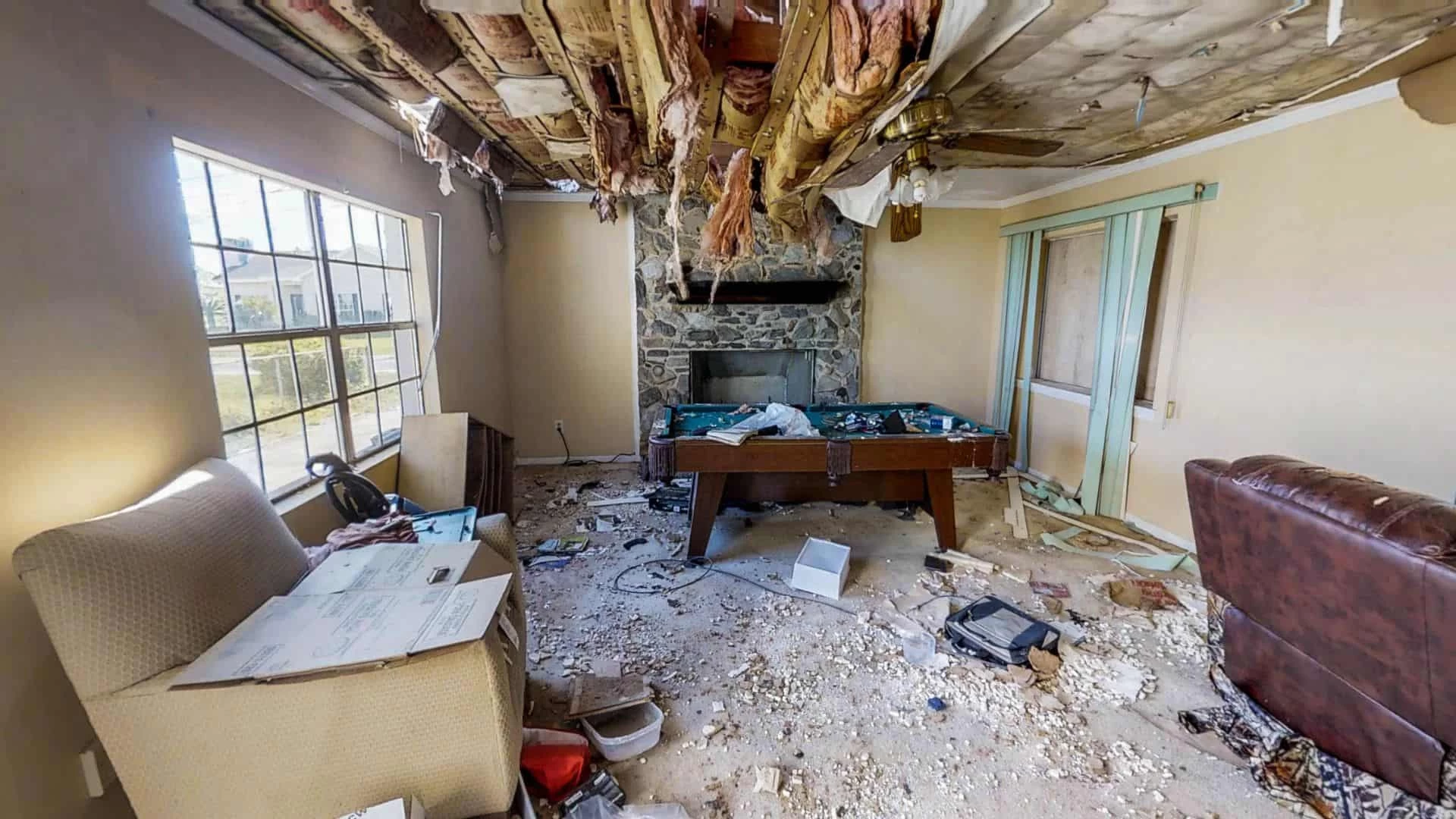
There’s also something specific to Rye Brook’s housing stock worth knowing. Most homes here were built in the 1960s, which means there’s a real possibility that a water damage event disturbs more than just drywall. Pipe insulation, floor tile adhesives, ceiling materials these can contain asbestos in homes of that era. A restoration company that can assess and handle that in-house, without stopping the job to wait for a subcontractor, saves you weeks of timeline and a significant amount of stress.
We’ve been doing environmental restoration work across Westchester County for over 12 years, with deep experience in Rye Brook and the surrounding communities. That includes water damage, mold remediation, fire damage recovery, and asbestos abatement all under one roof. We hold NYS and NYC M/WBE certification, we’re fully insured including liability and workers’ compensation, and we’ve done work for the NYS Office of General Services. That’s not a sales line it’s just context for the level of accountability we operate at.
For Rye Brook specifically, that matters. This is a community where a home on Brook Lane can take on four feet of water in a single storm event, where the Blind Brook has flooded the same neighborhoods repeatedly for decades, and where the homes are old enough that a water intrusion job can turn into an asbestos assessment before the day is out. We know this area. We know what these jobs look like here, and we’re not figuring it out as we go.
From First Call to Finished Restoration Here's What Actually Happens
You call, and someone actually picks up any time of day or night. From there, we get a crew dispatched to your Rye Brook address as fast as possible, because the first few hours after a water event determine a lot about how far the damage spreads. Standing water gets extracted, but that’s just the beginning of the job, not the end of it.
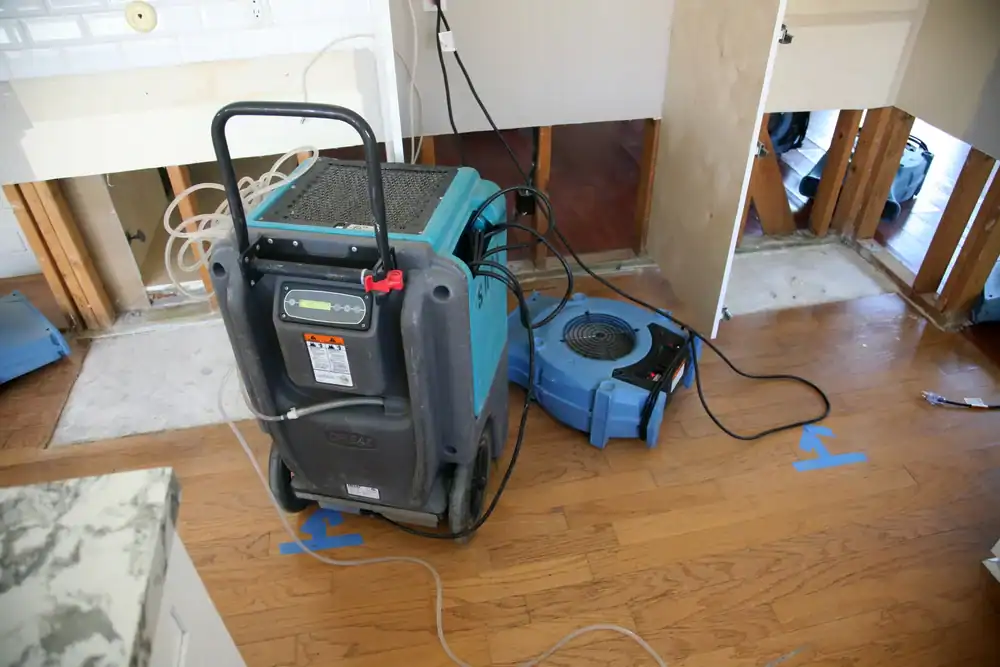
Once the visible water is out, the real work starts. We use thermal imaging and moisture mapping to find what you can’t see water that’s already moved into wall cavities, under subfloors, behind baseboards. Industrial-grade drying equipment goes in, and we monitor it until the readings confirm the structure is genuinely dry, not just surface-dry. If there’s any indication of mold risk, we address it before it becomes a remediation project on top of a restoration project.
If your home was built before 1980 which describes the majority of Rye Brook’s housing stock and we encounter materials that may contain asbestos during the restoration process, we handle that in-house. No stopping the job, no waiting on a separate contractor. From there, any structural repairs, drywall, flooring, or reconstruction work is completed under the same contract. We also coordinate directly with your insurance company throughout, so you’re not managing paperwork on top of everything else. The Village of Rye Brook requires permits for structural repairs following water damage, and we handle that process as well.
Everything the Job Requires, Not Just the Easy Parts
A lot of restoration companies do the extraction and drying, hand you a report, and move on. What happens when the mold test comes back positive three weeks later, or when the contractor doing the drywall finds asbestos-containing joint compound in a 1967 wall? You’re back to square one, managing multiple vendors, and the timeline stretches out. We’re built to handle the full scope water extraction, structural drying, mold testing and remediation, asbestos assessment and abatement if needed, and complete reconstruction without handing the job off.
For Rye Brook homeowners, that full-service capability is especially relevant given what these homes are and what this area deals with. The Blind Brook watershed flooding isn’t a one-time event it’s a documented, recurring pattern that the state has committed $21 million to address. Homes near Westchester Avenue, around the Kingsbrook corridor, and in neighborhoods like Country Ridge and Pine Ridge Park have all seen the downstream effects of impervious surface runoff compounding what the creek brings. Knowing your restoration contractor can handle whatever the job uncovers without stopping mid-project is worth a lot.
We also offer financing up to $200,000 at 0% APR, which matters when an insurance payout doesn’t fully cover a major restoration in a home worth close to or over a million dollars. There are no hidden costs, no subcontractor markups, and no surprises on the back end. The job gets done, documented, and signed off the right way.
How quickly can we respond to water damage in Rye Brook?
We operate 24/7, which means when you call whether it’s midnight during a storm system pushing the Blind Brook over its banks or a Tuesday afternoon after a pipe failure someone is available and a crew gets dispatched. Response time varies depending on your exact location and what’s happening regionally, but emergency response is a core part of how we operate, not an add-on.
Speed matters here more than it might in other contexts. Water that sits for even a few hours begins working its way into subfloor materials, wall cavities, and insulation. In Rye Brook’s older housing stock most of which was built in the 1960s those materials absorb moisture quickly and are harder to fully dry once saturation sets in. The faster the extraction starts, the more of the original structure can be saved, and the lower the overall cost of the job tends to be.
Does homeowners insurance cover water damage restoration in Rye Brook, NY?
It depends on the cause of the damage, and that distinction matters more than most people realize until they’re in the middle of a claim. Standard homeowners insurance typically covers sudden, accidental water damage a burst pipe, an appliance failure, a roof leak from storm damage. It generally does not cover flooding from an external water source, which is where it gets complicated for Rye Brook homeowners near the Blind Brook watershed. Flood damage from a creek overflowing requires separate flood insurance, typically through the National Flood Insurance Program.
That said, many water damage events in Rye Brook involve a combination of causes storm-driven roof intrusion plus basement seepage, for example and documenting the scope correctly is what determines how much your insurer covers. We work directly with insurance companies, handle the documentation, and communicate with adjusters throughout the process. That coordination often makes a real difference in the final claim outcome, and it removes the administrative burden from you during an already stressful situation.
How do I know if there's hidden mold after a water damage event in my home?
The honest answer is that you often can’t tell by looking. Mold begins developing within 24 to 48 hours of water saturation, and it frequently starts in places you can’t see inside wall cavities, behind baseboards, under subfloor materials. By the time there’s a visible patch or a noticeable smell, it’s already been growing for a while. That’s why the drying phase of a restoration job matters as much as the extraction phase.
In Rye Brook’s climate humid summers, wet springs, and the kind of prolonged moisture events that come with Blind Brook flooding conditions for mold growth are favorable. We use thermal imaging and moisture mapping during every job to identify areas where water has traveled beyond the visible damage zone. If moisture readings indicate a risk area, we test and address it before closing up walls or finishing floors. Skipping that step is how a water damage job becomes a mold remediation job six months later.
Does water damage restoration work differently in older Rye Brook homes?
Yes, in a few important ways. The most significant one is asbestos. Homes built before 1980 which covers the majority of Rye Brook’s housing stock, given the median construction year of 1967 commonly used asbestos-containing materials in pipe insulation, vinyl floor tile adhesives, ceiling tiles, and joint compound. When a water damage event occurs, the restoration process often involves disturbing those materials. Under New York State law, asbestos abatement requires a licensed contractor, and work cannot proceed in affected areas until the material is properly assessed and, if necessary, removed.
For homeowners in Rye Brook, this means that choosing a restoration company without in-house asbestos abatement capability can result in a work stoppage mid-project while a separate contractor is scheduled. We handle asbestos assessment and abatement directly, which keeps the job moving and eliminates the coordination gap. Beyond asbestos, older homes also tend to have less insulated pipe runs, more vulnerable crawl spaces, and aging drainage infrastructure all of which affect how a water damage event spreads and how the drying process needs to be managed.
What's the difference between water damage restoration and just drying out my basement?
Drying out a basement removes the standing water and reduces surface moisture. Water damage restoration is the full process that starts there and ends with your home back to pre-loss condition structurally sound, mold-free, and properly documented for insurance purposes. The gap between those two things is where a lot of homeowners end up with problems down the road.
When water enters a finished basement in a Rye Brook home and plenty of them are finished, with flooring, drywall, built-ins, and HVAC equipment it doesn’t stay at the surface. It moves into the framing, the insulation, the subfloor, and the wall cavities. A shop vac and a few fans don’t reach any of that. Professional restoration uses industrial extraction equipment, moisture mapping, and calibrated drying systems to address the full depth of the damage. Then, once the structure is confirmed dry, the reconstruction phase restores what was damaged flooring, drywall, framing, whatever the job requires. That’s the complete process, and it’s what actually protects the long-term value of the property.
Can we handle a large-scale flood loss, or just smaller water damage jobs?
Large-scale is actually where the full-service model makes the most difference. A significant flood event the kind that Rye Brook neighborhoods near the Blind Brook have experienced repeatedly, most severely during Tropical Storm Ida in 2021 can affect multiple rooms, multiple systems, and multiple material types simultaneously. That scope requires coordinated extraction, drying, mold control, potential asbestos abatement, structural assessment, and reconstruction all running on the same timeline. When those are handled by separate contractors, the coordination gaps add weeks to the project and create accountability problems when something goes wrong.
We’re equipped for jobs at that scale. We’ve worked with state agencies on complex environmental restoration projects, and we carry the licensing, insurance, and staffing to handle large residential and commercial losses without subcontracting the critical work out. For Rye Brook homeowners who’ve watched neighbors go through extended, fragmented recovery processes after major flood events, the ability to have one accountable contractor managing the entire job with financing available up to $200,000 at 0% APR if the insurance payout falls short is a meaningful difference.