Water Damage Restoration in Saddle Rock Estates, NY
When the Peninsula's Water Table Works Against You
Saddle Rock Estates homes sit on ground shaped by decades of drainage history — and when water gets in, it doesn’t wait. We respond fast from Great Neck to stop the damage before it becomes a much bigger problem.
I needed a professional consultation explanation of procedure for safe removal of Asbestos in my apartment complex. Without having an account yet, I was very impressed with the caring, knowledgeable and generous advice offered by Jessica, and will look forward to doing business in the future. Thank you so much! I feel much more informed about a sometimes scary endeavor. Peace. Nancy Silva Mineola, NY.
Mia Munoz
Used this company to clean up some water flood in my house. They were fast and easy to work with.very professional, Would recommend to anyone!
Nini Valle
Great company, had a flood and they responded quickly and efficiently. Billed my insurance company directly. I highly recommend this company!
joe colapietro, jr
I had pipe freeze in my basement right before a snow storm and they made to within an hour to help start the clean up process. They we by our side throughout the entire process and even helped with the insurance company. They did such a great job with the cleanup, repair, remidiation, I contracted them to perform the repairs and finishes in the basement. They came with enough manpower and material to get the job done. Leo and Jessica were nothing but a pleasure to deal with!!
Cristian Arredondo c
I had some water damage in my home and Green Island was able to take care of my issue quickly and effectively. I am very pleased with the work they did. They responded quickly and were very professional.
Michael M
Outstanding service! From the office to the field crew everyone was friendly, helpful and responsive. I highly recommend Green Island Group.
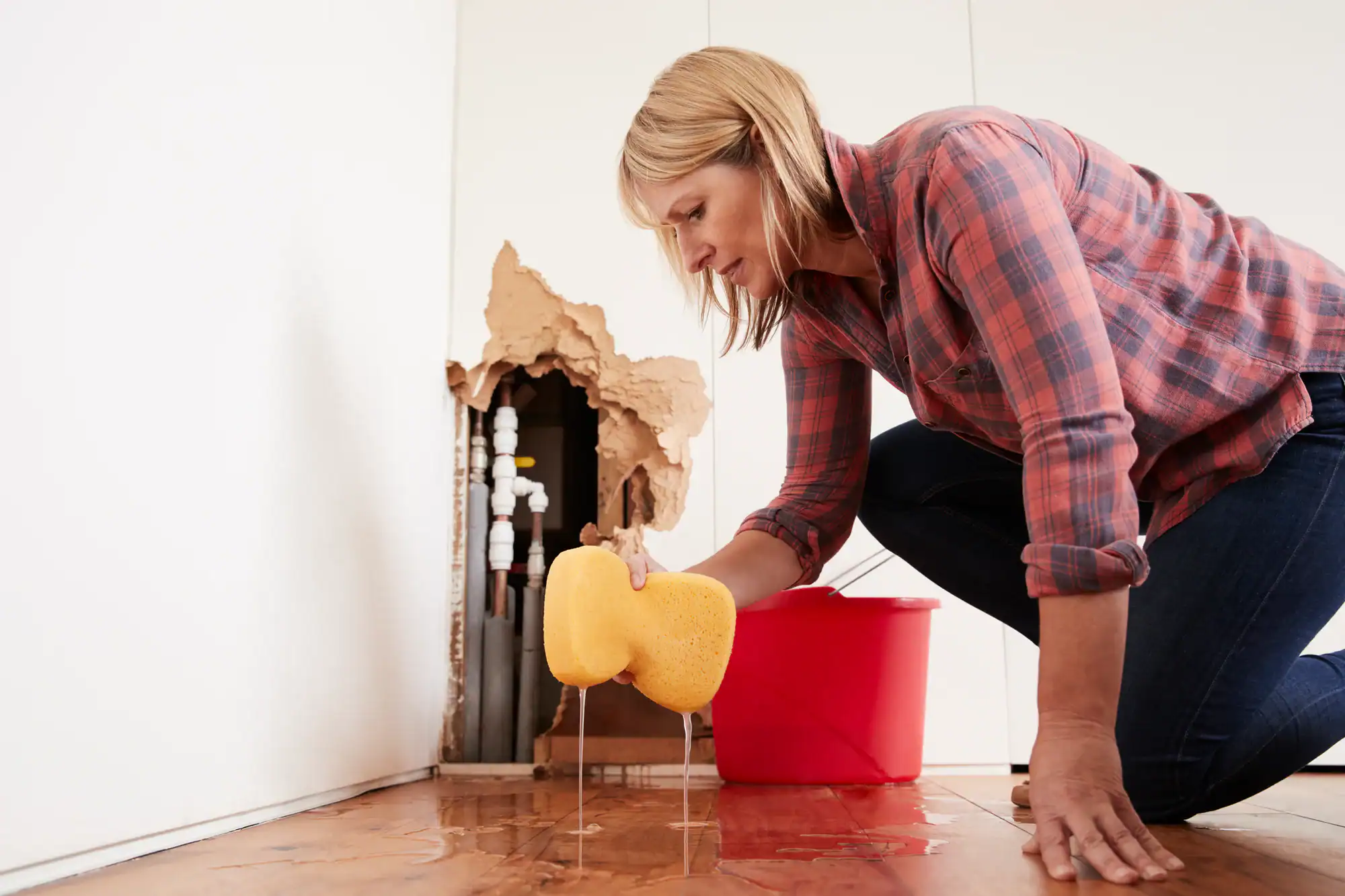
Water damage isn’t just about what you can see. It’s what’s sitting inside your walls, under your floors, and behind the drywall in a finished basement that causes the real problems — the kind that show up months later as mold, soft framing, or a disclosure issue when you go to sell.
For homes in Saddle Rock Estates, this risk runs deeper than most. The Great Neck Peninsula sits between Little Neck Bay and Manhasset Bay, and that peninsula geography means elevated groundwater levels year-round. When a nor’easter comes up the Sound or a hard spring rain hits after snowmelt, the hydrostatic pressure against older foundation walls here is real — not theoretical. Add in the fact that most homes in this hamlet were built in the 1950s and 60s, with original foundations and plumbing that have been working hard for seven decades, and you have a housing stock that’s genuinely more vulnerable than newer construction inland.
What you get when this is handled correctly is a home that’s structurally dry — confirmed by moisture meters and thermal imaging, not just a visual walkthrough. No hidden moisture left behind. No mold clock still ticking inside your walls. And documentation that holds up when your insurance adjuster reviews the claim.
Water Restoration Companies, Saddle Rock Estates NY
Saddle Rock Estates' Locally Owned Water Restoration Team
We’re locally owned and operated out of Great Neck — which means Saddle Rock Estates isn’t a service area on a map. It’s the neighborhood next door. When you call, you’re reaching the people who will actually show up, not a national dispatch center routing your emergency to whoever’s available that night.
We’re IICRC certified, fully licensed under New York State’s 2016 Mold Law, and carry a Nassau County Home Improvement Contractor license. That’s not a list of marketing badges — it’s the baseline you should demand from anyone working inside a home worth close to a million dollars. We also carry pollution liability insurance, which covers mold spore dispersal during remediation. A lot of operators you’ll find online don’t.
The team that starts your job finishes it. Same crew, same project manager, consistent communication from the first call to the final moisture reading.
From Standing Water to Structurally Dry — Here's Our Process
The first thing we do when we arrive is assess — not just the visible damage, but what’s behind it. We use thermal imaging cameras and calibrated moisture meters to map where water has traveled inside your walls, under your flooring, and into structural cavities. In a mid-century home with finished basement spaces and original framing, this step is what separates a real restoration from a surface cleanup that leaves problems behind.
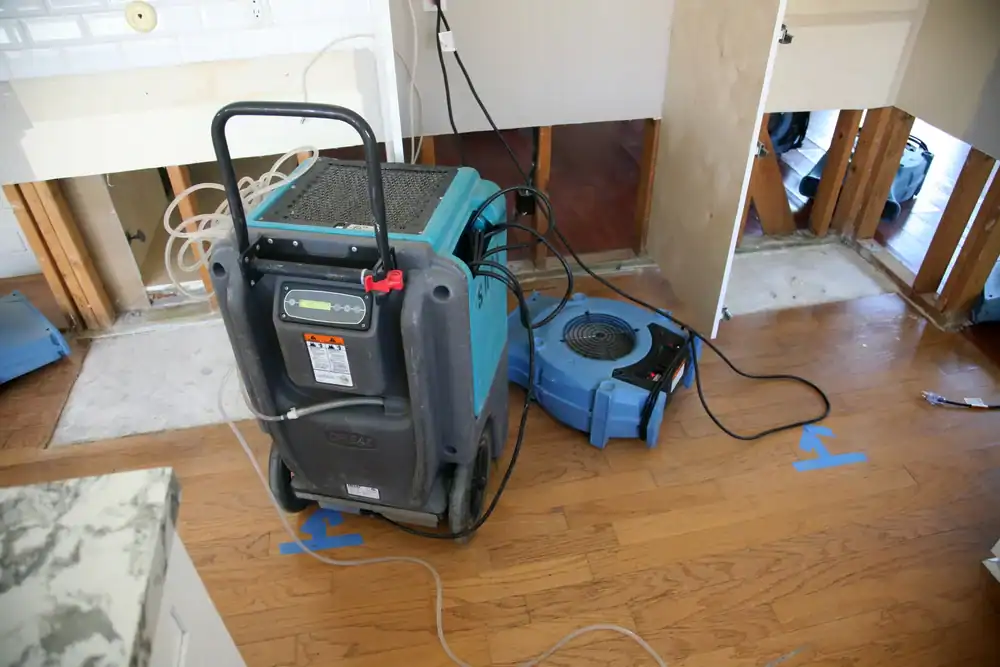
Once we know the full scope, we extract standing water, set up industrial drying equipment, and begin the structural drying process. This isn’t a one-day job. Proper drying takes time, and we monitor moisture readings throughout — not just at the start and end. If mold is present or at risk of developing, our Applied Microbial Remediation Technicians handle that under our New York State mold remediation license. That’s a legal requirement in this state, and not every company you’ll find in a search result actually holds it.
For work that requires structural repair — replacing drywall, flooring, or framing — we handle the permitting process through the Town of North Hempstead. As an unincorporated hamlet, Saddle Rock Estates falls under North Hempstead’s jurisdiction, not a local village building department, and knowing that process saves time. We also work directly with your insurance carrier, handling documentation and adjuster communication so you’re not navigating a claim on top of everything else.
Water damage restoration covers a wider range of situations than most people expect before they’re in the middle of one. Burst pipes, basement flooding from groundwater pressure, appliance failures, sewage backups, storm-driven intrusion, ice dam leaks in winter — these all fall under what we handle, and the approach is different for each one. A Category 3 sewage backup, for example, requires specialized containment and disposal under both state environmental regulations and the Great Neck Water Pollution Control District’s protocols. That’s not the same job as extracting clean water from a burst pipe, and treating it the same way creates real health risks.
For Saddle Rock Estates homes specifically, basement flooding tied to groundwater pressure and the peninsula’s high water table is one of the most common calls we get. This hamlet’s drainage history — the Old Mill Pond Brook ran directly through here and caused repeated basement floods before Nassau County enclosed it in a culvert in 1946 — reflects a subsurface hydrology that doesn’t disappear just because the waterway was rerouted. Homes near the former brook corridor are particularly susceptible to seepage and sump pump overload during heavy rain events.
Every job includes full moisture mapping, water extraction, structural drying, and a final clearance reading before we leave. If mold remediation is needed, we handle it in-house under our NY State license — you won’t be handed off to a subcontractor. And if your home needs structural repair after the water is gone, we manage that process too, including permits through the Town of North Hempstead.
How quickly can water damage turn into a mold problem in Saddle Rock Estates?
Mold can begin colonizing wet materials within 24 to 48 hours of water intrusion — and that clock starts from the moment moisture gets into your walls or under your floors, not from when you notice the damage. In many cases, you won’t see visible mold on the surface until it’s already well-established behind it.
For homes on the Great Neck Peninsula, this timeline is compressed by the area’s naturally elevated humidity and groundwater conditions. A finished basement in Saddle Rock Estates that took on water during a coastal storm or a sump pump failure isn’t just wet — it’s a warm, enclosed space with limited airflow sitting on ground that’s already moisture-saturated. That’s an ideal environment for mold to move fast. The most important thing you can do is call for professional water extraction and structural drying immediately, not after you’ve had a chance to assess whether it “looks bad enough.” By the time it looks bad, the mold clock has usually been running for a while.
Does homeowners insurance cover water damage restoration in Saddle Rock Estates, NY?
Most standard homeowners insurance policies cover sudden and accidental water damage — a burst pipe, an appliance failure, a washing machine line that gave out. What they typically don’t cover is gradual damage, meaning a slow leak you could have caught and didn’t, or flooding from an external water source, which requires separate flood insurance.
The distinction matters a lot in Saddle Rock Estates, where basement flooding can have more than one cause. If your basement flooded because a sump pump failed during a storm, that’s often covered. If it flooded because groundwater came in through a foundation crack that’s been there for years, it may not be — or coverage may be disputed. This is exactly why documentation matters so much. We photograph and record everything before, during, and after the job using the same protocols insurance adjusters follow. That documentation is what protects your claim. We also communicate directly with your carrier throughout the process so you’re not trying to navigate that conversation while dealing with the damage itself.
What's the difference between water removal and actual water damage restoration?
Water removal is one step in the process — it’s the extraction of standing water. Restoration is everything that comes after: drying the structural materials that absorbed moisture, treating or remediating any mold that developed, repairing damaged drywall, flooring, and framing, and verifying with equipment that the structure is genuinely dry before the job is closed.
A lot of homeowners don’t realize that a space can look dry and still have significant moisture trapped inside wall cavities, under subfloor material, or within insulation. In a mid-century home — which describes most of the housing stock in Saddle Rock Estates — finished basement walls often have no vapor barrier between the concrete and the drywall. Water gets in, the drywall absorbs it, and if the space is dried visually rather than instrumentally, that moisture stays put and feeds mold growth for weeks. Restoration means we don’t leave until the moisture meter says it’s done, not until it looks done.
Is mold remediation legally regulated for contractors working in Saddle Rock Estates?
Yes, and this is one of the most important things to understand before hiring anyone for water damage work in New York. Under the 2016 New York State Mold Law, any contractor performing mold assessment or mold remediation must hold a separate New York State Department of Labor license for each activity. Assessment and remediation are licensed separately — a company can’t legally do both under a single license.
This law applies statewide, including in Saddle Rock Estates and throughout Nassau County. The problem is that many restoration operators — including some that appear in local search results for this area — don’t hold the required licenses. Unlicensed mold work is illegal in New York, and it can create complications for your homeowners insurance claim and your ability to sell your home in the future. Before any contractor begins mold-related work in your home, ask for their NY State mold license numbers. Any legitimate operator will provide them without hesitation. We hold both licenses and can provide the numbers on request.
What causes basement flooding in Saddle Rock Estates specifically, and can it happen again?
The most common causes of basement flooding in Saddle Rock Estates are groundwater pressure during heavy rain or snowmelt, sump pump failures during coastal storms, and aging foundation walls that no longer have effective waterproofing. The peninsula’s high water table — a direct result of being surrounded by tidal waterways on multiple sides — means the ground around your foundation is often already saturated before a storm even arrives. When rain comes fast, there’s nowhere for the water to go except against your foundation.
This isn’t a new problem for this hamlet. The Old Mill Pond Brook ran through Saddle Rock Estates for decades and caused repeated basement floods and road washouts before Nassau County enclosed it in a culvert in 1946. The subsurface drainage dynamics that brook created don’t disappear when you put it in a pipe — they’re still reflected in how groundwater moves through this area today. Whether it can happen again depends on the condition of your sump pump, your foundation waterproofing, and how your drainage is set up. After we complete a restoration, we can give you a straightforward read on what your risk profile looks like and what, if anything, would reduce it.
How do I know if water got into my walls after a flood in my Great Neck Peninsula home?
The honest answer is that you usually can’t tell from a visual inspection alone — and that’s exactly the problem. Water travels through building materials along the path of least resistance, which means it can wick up drywall, spread through insulation, and saturate wood framing well beyond the area that looks wet. In a home with a finished basement, the drywall itself acts like a sponge, and the moisture inside it isn’t visible on the surface until the damage is already significant.
The way to know for certain is with a thermal imaging camera and a calibrated moisture meter. Thermal imaging shows temperature differentials in walls and floors that indicate moisture presence — even behind finished surfaces. Moisture meters give exact readings at specific points so we can map where the water traveled and confirm when drying is complete. For homes in Saddle Rock Estates, where mid-century construction often means no vapor barrier between the concrete foundation and interior finishes, this kind of instrumented assessment isn’t optional — it’s the only way to know what you’re actually dealing with. Skipping it and assuming the space dried out on its own is how a manageable water event turns into a mold remediation project.