When the Bay Backs Up, You Need Someone Already Here
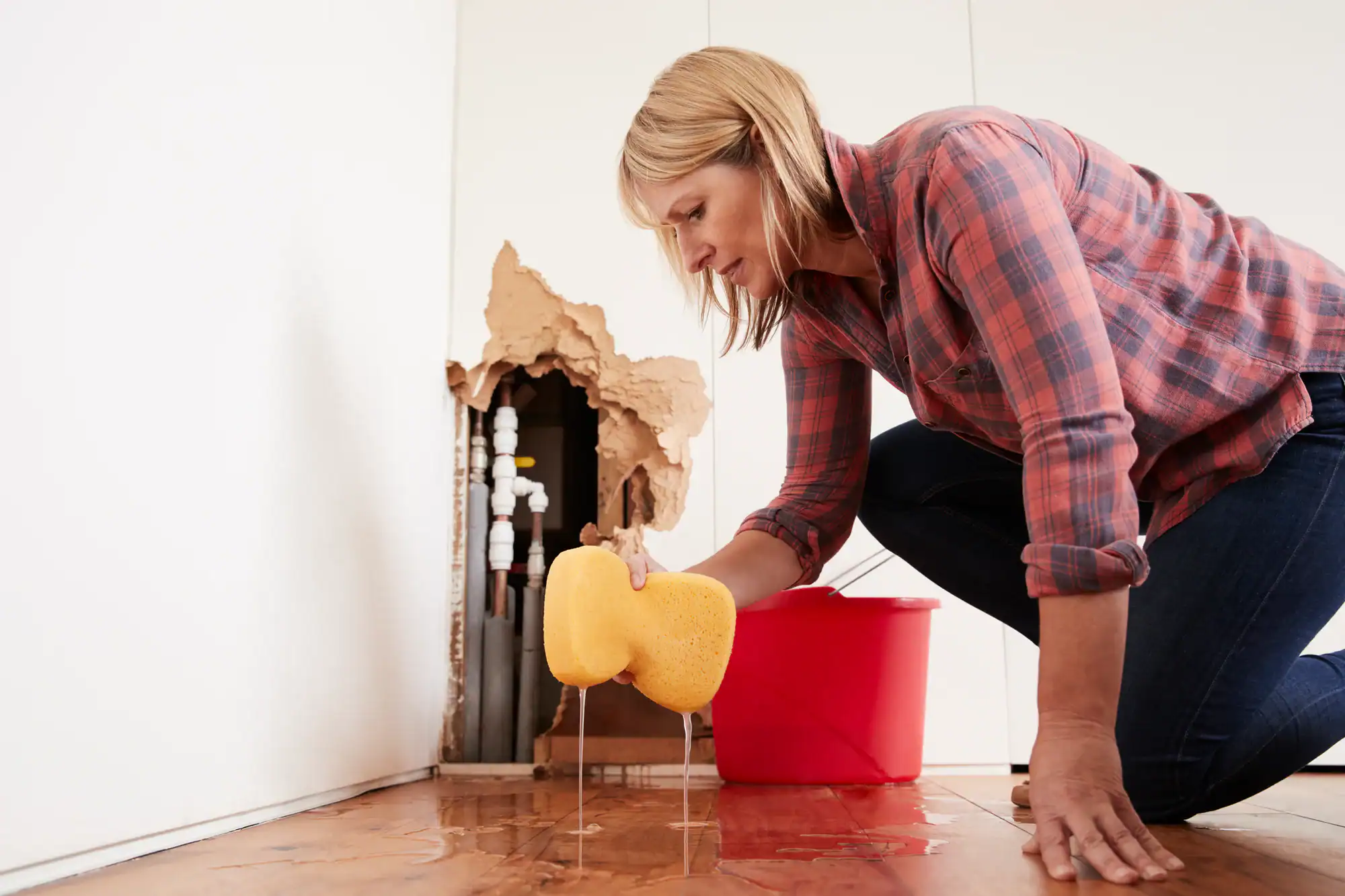
Seaford sits at the edge of Great South Bay, and when a storm rolls through, the water doesn’t wait. Neither should your restoration call. We respond fast — with a Long Island crew that knows exactly what South Shore flooding does to a home.
I needed a professional consultation explanation of procedure for safe removal of Asbestos in my apartment complex. Without having an account yet, I was very impressed with the caring, knowledgeable and generous advice offered by Jessica, and will look forward to doing business in the future. Thank you so much! I feel much more informed about a sometimes scary endeavor. Peace. Nancy Silva Mineola, NY.
Mia Munoz
Used this company to clean up some water flood in my house. They were fast and easy to work with.very professional, Would recommend to anyone!
Nini Valle
Great company, had a flood and they responded quickly and efficiently. Billed my insurance company directly. I highly recommend this company!
joe colapietro, jr
I had pipe freeze in my basement right before a snow storm and they made to within an hour to help start the clean up process. They we by our side throughout the entire process and even helped with the insurance company. They did such a great job with the cleanup, repair, remidiation, I contracted them to perform the repairs and finishes in the basement. They came with enough manpower and material to get the job done. Leo and Jessica were nothing but a pleasure to deal with!!
Cristian Arredondo c
I had some water damage in my home and Green Island was able to take care of my issue quickly and effectively. I am very pleased with the work they did. They responded quickly and were very professional.
Michael M
Outstanding service! From the office to the field crew everyone was friendly, helpful and responsive. I highly recommend Green Island Group.
When water gets into a Seaford home — whether it’s a finished basement off Seamans Neck Road or a ground-floor living space two blocks from the harbor — the visible damage is rarely the whole story. Water moves through wall cavities, under flooring, and behind drywall in ways that look completely dry on the surface. If it’s not pulled out properly and confirmed dry with moisture readings, you’re not looking at a water problem anymore. You’re looking at a mold problem.
Mold can start growing within 24 to 48 hours of water intrusion. In a community that sits this close to the water, with ambient coastal humidity running higher than inland Nassau County year-round, that window is not generous. That’s why the outcome you should be focused on isn’t just “the water is gone” — it’s confirmed dry, documented, and cleared.
What that actually looks like: moisture readings that hit safe levels before anyone packs up, thermal imaging that checks inside walls where you can’t see, and a full documentation package your insurance adjuster can work with. For a home worth $650,000 on the South Shore, that documentation isn’t a formality. It’s what protects your claim and keeps your walls from growing something worse six weeks from now.
Long Island-Based, Not Routed Through a Call Center
We are a Long Island restoration company — not a national franchise with a local phone number. When you call, you reach a team that’s already on the island, not a dispatch center routing your emergency to whoever’s available in the region. That difference matters most at 11pm when your basement is taking on water.
We’ve worked on homes throughout Nassau County’s South Shore, including the communities between Wantagh and Massapequa that share Seaford’s flood profile. We understand what back-bay flooding does differently than surface flooding, what a post-Sandy home looks like behind the walls, and why the area south of Sunrise Highway carries a different risk level than the neighborhoods north of it.
We’re IICRC certified, fully licensed under New York State’s 2016 Mold Law, and we work directly with your insurance carrier from the first call through final settlement. No handoffs, no subcontractors you’ve never met, no surprises.
What the Process Actually Looks Like From Your Front Door
The first thing that happens when we arrive is an assessment — not a sales pitch. We use thermal imaging cameras and moisture meters to map where the water actually went, not just where it’s visible. In older Seaford homes, especially those built during the post-war boom of the 1940s and 50s, water travels in ways that catch people off guard. Aging galvanized pipes, original drainage systems, and finished basements sitting close to the water table all factor into how a job gets scoped.
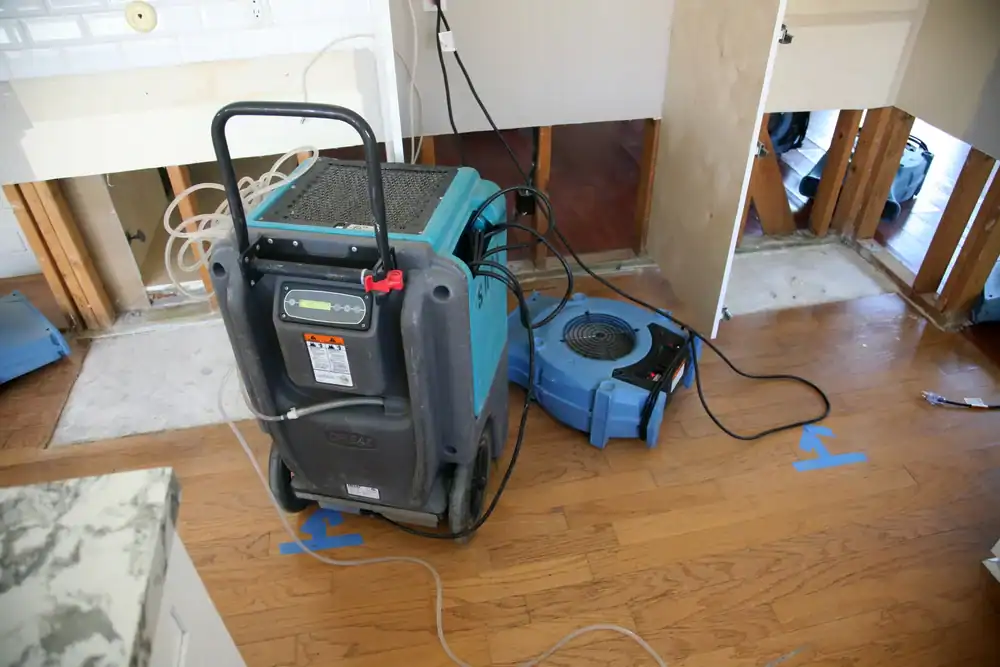
Once we know the full picture, extraction starts immediately. Industrial water removal equipment pulls standing water fast, and then the drying phase begins — commercial-grade air movers and dehumidifiers running until moisture readings confirm the structure is actually dry, not just surface-dry. We don’t pull equipment based on a schedule. We pull it based on the numbers.
From there, any mold remediation that’s needed is handled under our New York State Mold Law license — which is a legal requirement in this state, not an upsell. We document every step for your insurance file, communicate directly with your adjuster, and don’t consider the job done until you have a dry home and a completed claim package in hand.
Everything Covered, Nothing Left for You to Chase Down
Water damage restoration in Seaford isn’t a single service — it’s a sequence of connected steps that have to happen in the right order to actually work. Extraction first, then structural drying, then mold assessment if there’s any indication of growth, then repairs. Skipping steps or rushing the drying phase is exactly how a “finished” job turns into a mold remediation job three weeks later.
What’s included when you work with us: thermal imaging inspection, full water extraction, structural drying with commercial equipment, moisture documentation, mold assessment and remediation under NY State licensing where needed, and complete insurance claim support from documentation through adjuster communication. For homeowners in Seaford’s flood zone areas — particularly those south of Sunrise Highway near the harbor — we also assess for hydrostatic pressure damage to foundations and floor joints, which is a common and often missed issue in homes that sit this close to the water table.
We work with all major carriers — Allstate, State Farm, Travelers, GEICO, and others — and handle the paperwork so you’re not spending your evenings on hold with an adjuster trying to explain what happened. Your job is to get your home back. Our job is to make sure the process doesn’t become a second problem on top of the first one.
Does homeowners insurance cover water damage restoration in Seaford, NY?
It depends on the source of the water, and that distinction matters a lot in Seaford. Most standard homeowners insurance policies cover sudden and accidental water damage — a burst pipe, a failed appliance, a roof leak from a nor’easter. What they typically don’t cover is flooding from an external water source, which falls under separate flood insurance, usually through FEMA’s National Flood Insurance Program.
Given that a significant portion of Seaford sits in or near FEMA-designated flood zones — particularly south of Sunrise Highway toward the harbor — it’s worth knowing which policy applies before you file. We help you figure that out on the front end, not after you’ve already submitted incorrectly. We document the damage in a way that aligns with how adjusters evaluate claims, and we communicate directly with your carrier so the process doesn’t stall because of missing paperwork or unclear cause-of-loss language.
How quickly does mold start growing after water damage in my Seaford home?
The standard answer is 24 to 48 hours, and that’s accurate — but it’s worth understanding what that actually means inside a wall. Mold doesn’t need much: a little moisture, an organic surface like drywall or wood framing, and the right temperature. Your home provides all three. The part people miss is that mold can start colonizing inside wall cavities while the surface still feels dry to the touch, which is why surface drying alone isn’t enough.
In Seaford specifically, coastal humidity keeps ambient moisture levels elevated compared to inland communities. That doesn’t mean your home is always at risk, but it does mean that after a water event, the conditions for mold growth are more favorable here than they would be in a drier climate. Thermal imaging and calibrated moisture meters are how we confirm what’s actually happening inside the structure — not guessing based on what we can see or feel.
What should I do immediately after my basement floods in Seaford?
First, don’t go into standing water if there’s any chance the electrical system was affected. If your breaker panel is in the basement or if any outlets were submerged, treat it as a live electrical hazard until a professional confirms otherwise. Once it’s safe to enter, stop the source if you can — shut off the main water supply if it’s a pipe failure, or note the entry point if it came in through the foundation or a drain.
Document everything with photos before anything gets moved or cleaned up. Insurance adjusters need to see the damage as it was, and photos taken before extraction are significantly more useful than photos taken after. Then call a restoration company immediately — not in the morning, not after the weekend. Every hour of delay in a finished Seaford basement means water is sitting against drywall, under flooring, and inside insulation. The longer it sits, the more material has to be removed rather than dried in place.
How long does the water damage restoration process take from start to finish?
Extraction typically takes a few hours depending on the volume of water. The drying phase is where most of the time goes — commercial drying equipment usually runs for three to five days before moisture readings reach acceptable levels, though that can vary based on how much material absorbed water, how long the water was present before extraction started, and the ambient humidity conditions in the home.
In Seaford, homes that experienced back-bay flooding or storm surge — the kind that pushes water up through foundation joints rather than down from above — often have moisture in places that take longer to dry because the water entered from below and wicked upward through flooring and wall assemblies. We monitor moisture levels daily and adjust equipment placement based on readings, not a fixed schedule. Once the structure is confirmed dry, any needed repairs or mold remediation follow. Total timeline from call to completed restoration is typically one to two weeks for most residential jobs, though larger or more complex damage can take longer.
Is mold remediation legally required in New York after water damage?
New York State passed the Mold Law in 2016, which requires that anyone performing mold assessment or mold remediation on a residential property hold a separate state-issued license for each activity. This isn’t optional — it applies to any job where the affected area exceeds ten square feet. The law also requires that the assessment and the remediation be performed by different licensed entities, which exists to prevent conflicts of interest.
What this means practically for Seaford homeowners: if a restoration company finds mold during your water damage job and offers to handle it without mentioning licensing, ask to see their NY Department of Labor mold remediation license. Unlicensed mold work can create real problems with your insurance claim and potentially expose you to liability if the work is later found to be non-compliant. We hold the required state licensing and keep the assessment and remediation process properly separated so your claim and your home are both protected.
Why does our approach to Seaford water damage differ from national restoration companies?
Because Seaford’s flood profile isn’t generic South Shore flooding — it has specific characteristics that come from the community’s geography. The back-bay flooding mechanism, where water pushes in from Great South Bay rather than falling as rain, behaves differently inside a structure than surface flooding does. It enters through foundation joints and floor assemblies, travels upward, and saturates materials that a crew unfamiliar with this pattern might not think to check. The U.S. Army Corps of Engineers specifically studied the Wantagh-Seaford coastal area as a back-bay flood zone — it’s a named, documented risk, not a general South Shore concern.
A national franchise routing calls through a regional system doesn’t carry that institutional knowledge about this specific community. Our crew has worked throughout Nassau County’s South Shore — including homes that went through Sandy and the nor’easters that followed — and comes in already knowing where to look and what to expect. That’s not a marketing claim. It’s the difference between a crew that checks the obvious places and one that checks the right ones.