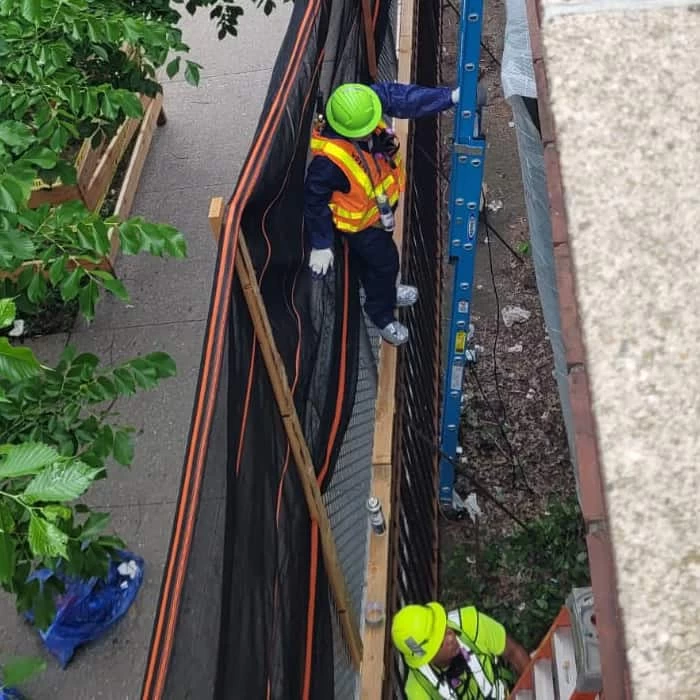
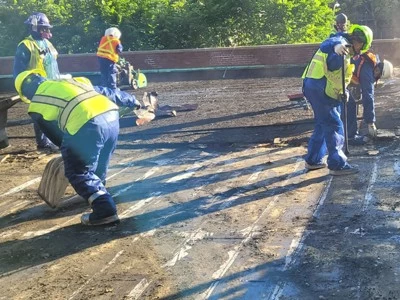
I needed a professional consultation explanation of procedure for safe removal of Asbestos in my apartment complex. Without having an account yet, I was very impressed with the caring, knowledgeable and generous advice offered by Jessica, and will look forward to doing business in the future. Thank you so much! I feel much more informed about a sometimes scary endeavor. Peace. Nancy Silva Mineola, NY.
Mia Munoz
Used this company to clean up some water flood in my house. They were fast and easy to work with.very professional, Would recommend to anyone!
Nini Valle
Great company, had a flood and they responded quickly and efficiently. Billed my insurance company directly. I highly recommend this company!
joe colapietro, jr
I had pipe freeze in my basement right before a snow storm and they made to within an hour to help start the clean up process. They we by our side throughout the entire process and even helped with the insurance company. They did such a great job with the cleanup, repair, remidiation, I contracted them to perform the repairs and finishes in the basement. They came with enough manpower and material to get the job done. Leo and Jessica were nothing but a pleasure to deal with!!
Cristian Arredondo c
I had some water damage in my home and Green Island was able to take care of my issue quickly and effectively. I am very pleased with the work they did. They responded quickly and were very professional.
Michael M
Outstanding service! From the office to the field crew everyone was friendly, helpful and responsive. I highly recommend Green Island Group.
When water gets into a South Ozone Park home, the clock starts immediately. Mold can begin forming within 24 to 72 hours, and in a neighborhood where most homes were built before 1950, older wood framing and porous building materials absorb moisture faster and hold it longer than newer construction. Getting the water out is only part of it what matters is confirming the structure is actually dry before the job is closed.
South Ozone Park’s sewer infrastructure has a documented history of failure. The 2019 collapse of a 42-inch city pipe near JFK Airport sent raw sewage into more than 74 homes along Inwood Street over a Thanksgiving weekend. Many of those homeowners later discovered mold growing in their basements weeks after the initial cleanup because the first pass wasn’t thorough enough. A proper restoration job here means treating sewage contamination at the biohazard level it deserves, not just extracting standing water and calling it done.
The other thing that matters in this neighborhood is documentation. After the 2019 crisis, many residents found themselves navigating insurance claims, city compensation processes, and contractor relationships all at once often without the records they needed to recover fully. Every job we complete is documented with moisture readings, photographs, and written reports your insurance adjuster can actually use.
Queens-Based, Not a Lead Generator with a Florida Number
If you’ve searched for water damage help in South Ozone Park, you’ve probably seen results from companies with out-of-state phone numbers, national call centers, and no real connection to this neighborhood. We’re based in Queens. We know what the housing stock along Rockaway Boulevard looks like. We know the drainage challenges that come with South Ozone Park’s low-lying terrain near JFK Airport. We know what Category 3 sewage contamination means for a finished basement in a brick two-family home built in 1942.
We hold IICRC certification in water damage restoration and carry all required New York State licenses for mold assessment and remediation under Article 32 of the NYS Labor Law. That’s not a footnote it’s the standard that insurance carriers and state regulators actually require. When we show up, we bring the credentials, the equipment, and the documentation process to back everything up.
Emergency Water Restoration Service South Ozone Park
What Actually Happens From Your First Call to a Dry Home
You call, and a real person answers not a voicemail, not a dispatch queue. We ask a few quick questions to understand what you’re dealing with: standing water, sewage backup, burst pipe, storm flooding. From there, a crew is dispatched immediately. Whether you’re near the Aqueduct Racetrack side of South Ozone Park or closer to the Van Wyck Expressway corridor, we know how to navigate the local roads to reach you fast.
Once on-site, the first priority is stopping the source if it’s still active and assessing the contamination category. Sewage backup which South Ozone Park residents know all too well is classified as Category 3 black water, meaning it requires full biohazard-level extraction, antimicrobial treatment, and material removal where necessary. Clean water from a burst pipe is handled differently, but the drying process is equally thorough either way. We use thermal imaging and moisture meters to find water that’s hidden inside walls and under floors, because in homes this age, water travels further than it looks.
After extraction and drying, we don’t just pack up and leave. We take final moisture readings and document everything scope of damage, materials affected, equipment used, drying timelines. If your insurance carrier needs a report, it’s ready. If the NYC DOB or NYC DEP involvement is triggered by the scope of the work, we walk you through what that means. You’re not left figuring it out alone.
Water Damage Restoration Service South Ozone Park, NY
Built for the Specific Conditions South Ozone Park Throws at Homes
Water damage in South Ozone Park doesn’t come from one source. It comes from aging sewer mains that fail without warning. It comes from the intense summer storms that dropped nearly six inches of rain near JFK Airport in a single September 2023 event. It comes from freeze-thaw cycles in January and February that stress the old cast iron pipes running through basements that haven’t been updated in decades. The service has to match the reality of what’s actually happening here.
We handle the full scope: water extraction, structural drying, sewage decontamination, mold assessment, content evaluation, and insurance documentation. For homes in Queens Community Board 10 with finished basements used as living space or rental units, we treat the basement with the same urgency as the main living area because for most homeowners here, that space represents real money and real life. Every job includes moisture mapping so nothing is left wet behind walls or under floors where mold can grow quietly for weeks.
New York State mold remediation work is regulated under Article 32 of the NYS Labor Law, and we are fully licensed to perform both mold assessment and remediation. If mold is already present when we arrive which is common in homes where water damage wasn’t caught immediately we handle it as part of a coordinated restoration process, not as a separate upsell that gets tacked on later.
How quickly can you respond to flooding in South Ozone Park, NY?
We respond 24 hours a day, 7 days a week, including holidays which matters in a neighborhood where the worst flooding events have happened on Thanksgiving weekend and during overnight summer storms. When you call, a crew is dispatched right away. We’re familiar with the roads around South Ozone Park, including the routes near the Van Wyck Expressway and the Belt Parkway, so we’re not losing time figuring out how to reach you.
Response time matters because water damage compounds fast. In a home built in the 1940s with older drywall, wood framing, and aging insulation, moisture absorbs deeply within the first few hours. The faster extraction and drying begins, the less structural material has to be removed and replaced and the lower the overall cost of restoration. Calling sooner rather than waiting to see if things dry on their own is almost always the right move.
Does homeowners insurance cover water damage and sewage backup in Queens?
It depends on the type of damage and the specific policy. Standard homeowners insurance typically covers sudden and accidental water damage like a burst pipe but sewage backup is often excluded unless you have a separate sewage backup rider. After the 2019 sewer main collapse in South Ozone Park, many residents discovered their standard policies didn’t cover the sewage contamination in their basements, which is part of why the claims process became so complicated and drawn out.
If you’re not sure what your policy covers, the best first step is to call your carrier and ask specifically about Category 3 water damage and sewage backup coverage. We document every job thoroughly moisture readings, photographs, written damage reports so that whatever coverage you do have, you’re in the strongest possible position to make your claim. We work directly with insurance adjusters and can communicate with your carrier on your behalf throughout the process.
What is Category 3 water damage, and why does it matter for my basement?
Category 3 is the classification for water that contains sewage, bacteria, or other serious contaminants what the industry calls black water. It’s the most serious level of water damage, and it requires a fundamentally different response than a clean water leak. You can’t simply extract it and dry the space. The affected materials flooring, drywall, insulation, personal belongings need to be assessed for contamination, and the entire area needs to be treated with antimicrobial agents before any drying or reconstruction begins.
This matters specifically in South Ozone Park because the neighborhood has experienced Category 3 events at a community scale. The 2019 collapse of a city sewer main flooded dozens of homes with raw sewage, and residents who received incomplete cleanups ended up with mold problems months later. If you’re dealing with sewage backup whether from a city main failure or a backed-up lateral treating it as a Category 3 event from the start is the only way to make sure your home is actually safe when the job is done.
How do I know if there's mold after water damage, even if I can't see it?
Visible mold is actually the later stage of the problem. By the time you see it on a wall or smell it in a basement, it’s been growing for a while. The earlier warning signs are more subtle: a persistent musty smell, unexplained allergy symptoms, or damp spots that don’t seem to fully dry. In older South Ozone Park homes, mold often starts inside walls and under flooring where water has been sitting undetected especially in basements where water entered from below during a sewer backup or heavy storm.
The only reliable way to know is moisture mapping. We use thermal imaging cameras and moisture meters to detect elevated moisture levels inside walls and structural materials things that aren’t visible to the eye. If moisture is present above acceptable levels after a water damage event, mold growth is likely either underway or imminent. Under New York State law, mold assessment and remediation above certain thresholds must be performed by a licensed professional, and we carry those licenses. If mold is found, we address it as part of the restoration process.
What happens to my belongings when my South Ozone Park basement floods?
Content evaluation is part of what we do on every job. When we arrive, we assess what’s in the affected space furniture, clothing, stored items, appliances, mechanical systems and separate what can be salvaged from what needs to be disposed of. For Category 3 sewage contamination, anything porous that had direct contact with the sewage is generally not salvageable and needs to be removed. Hard surfaces and non-porous materials can often be cleaned and decontaminated.
For South Ozone Park homeowners, this matters a lot. Basements here are used as real living space finished rooms, storage for decades of family belongings, sometimes rental units. The loss can be significant, and it’s important that your insurance documentation reflects the full scope of content damage, not just the structural damage to the space itself. We photograph and log affected contents as part of the documentation process so that your claim accurately represents what was lost or damaged.
Why do so many South Ozone Park homes have repeated basement flooding problems?
A few things are working against homeowners in this neighborhood simultaneously. The terrain is flat and low-lying historically farmland and filled marshland which means surface water drains slowly and has nowhere to go during heavy rain events. The sewer infrastructure serving South Ozone Park is aging, and the 2019 collapse wasn’t an isolated incident: residents had filed 137 sewage complaints from ZIP code 11436 in the period leading up to that pipe failure alone. When the city’s main lines are under stress, the pressure pushes back through residential sewer laterals and into basements.
Add to that the age of the housing stock nearly half of all homes in South Ozone Park were built before 1940 and you have foundations, drainage systems, and sewer lateral connections that were designed for a different era. Cracks in older foundations let groundwater in during heavy storms. Aging lateral pipes corrode and fail. None of this means repeated flooding is inevitable, but it does mean that a proper restoration job here includes an honest conversation about what made the water come in and whether there are practical steps to reduce the risk going forward.