Syosset's Older Homes Don't Hide Water Damage — They Hold It
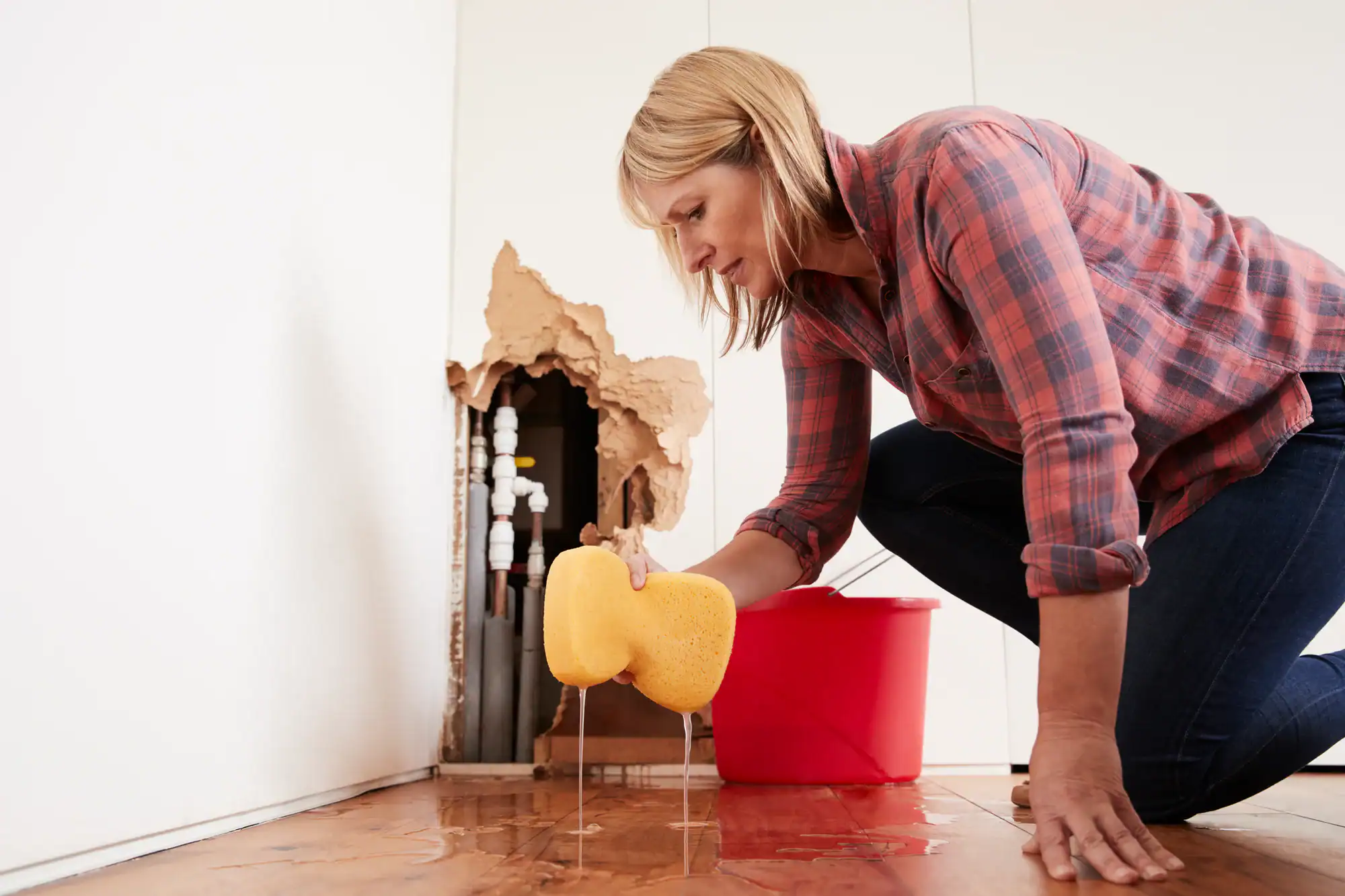
When water gets into a post-war split-level or high-ranch, it doesn’t just sit there — it moves. We find it, stop it, and restore your Syosset home the right way.
I needed a professional consultation explanation of procedure for safe removal of Asbestos in my apartment complex. Without having an account yet, I was very impressed with the caring, knowledgeable and generous advice offered by Jessica, and will look forward to doing business in the future. Thank you so much! I feel much more informed about a sometimes scary endeavor. Peace. Nancy Silva Mineola, NY.
Mia Munoz
Used this company to clean up some water flood in my house. They were fast and easy to work with.very professional, Would recommend to anyone!
Nini Valle
Great company, had a flood and they responded quickly and efficiently. Billed my insurance company directly. I highly recommend this company!
joe colapietro, jr
I had pipe freeze in my basement right before a snow storm and they made to within an hour to help start the clean up process. They we by our side throughout the entire process and even helped with the insurance company. They did such a great job with the cleanup, repair, remidiation, I contracted them to perform the repairs and finishes in the basement. They came with enough manpower and material to get the job done. Leo and Jessica were nothing but a pleasure to deal with!!
Cristian Arredondo c
I had some water damage in my home and Green Island was able to take care of my issue quickly and effectively. I am very pleased with the work they did. They responded quickly and were very professional.
Michael M
Outstanding service! From the office to the field crew everyone was friendly, helpful and responsive. I highly recommend Green Island Group.
When water damage is handled correctly, you get your home back — not just dry floors, but walls that aren’t quietly growing mold, a foundation that isn’t being slowly undermined, and documentation your insurance company will actually accept. That’s the real outcome. Not a cleanup. A restoration.
In Syosset, that matters more than most people realize. About 73% of homes here were built between the 1940s and 1960s. Those homes have plaster walls, original framing, and aging plumbing that absorbs and holds moisture in ways modern construction doesn’t. Water that looks dry on the surface can stay wet inside a wall cavity for weeks. By the time you smell it, mold has already started — and in Nassau County, mold remediation is a licensed, regulated process that takes real time and real money to do right.
The other thing worth knowing: Syosset sits above a water table that rises significantly during prolonged rain events. When 3 inches fall in a single night — which has happened here — that groundwater presses against your foundation from below. A company that shows up with a wet-vac and fans isn’t solving that problem. You need someone who understands what’s actually happening underneath your home, not just on top of it.
We’ve been responding to water damage emergencies across Syosset and Nassau County since 2012. That’s over a decade of working inside the split-levels, capes, and high-ranches that make up Syosset’s residential grid — from the older wooded streets of Cold Spring Hills to the denser neighborhoods south of the LIRR station. We know how these homes were built, and we know exactly where water goes when something fails.
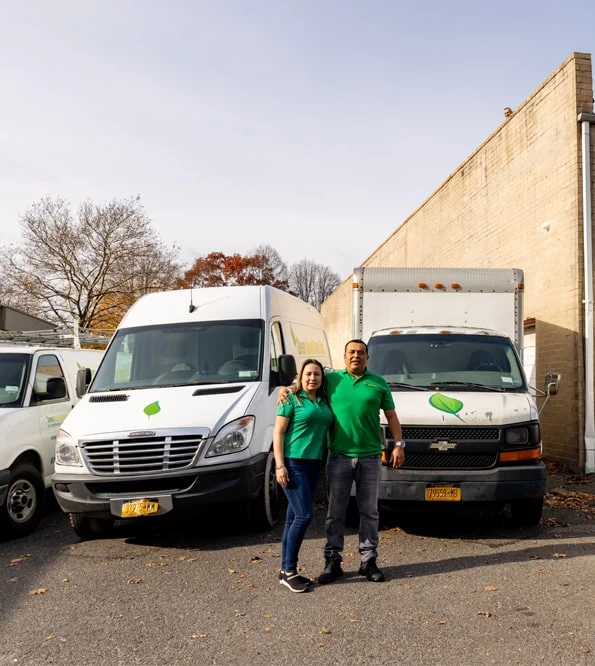
We’re not a franchise. There’s no national call center routing your emergency to whoever’s available. When you call us, you reach our team directly — the same crew that shows up, does the work, and signs off on it. Every job is documented to IICRC standards, which matters both for your insurance claim and for your home’s long-term value in one of Nassau County’s most competitive real estate markets.
If your Syosset home is worth close to a million dollars — and many are — the company you call when water is moving through it needs to be the right one.
The first thing we do when we arrive is figure out where the water actually is — not just where you can see it. We use thermal imaging cameras and calibrated moisture meters to map the full extent of intrusion. In Syosset’s older homes, where original plaster and wood framing hold moisture differently than modern drywall, this step is what separates a job that’s done from a job that just looks done. We don’t skip it.
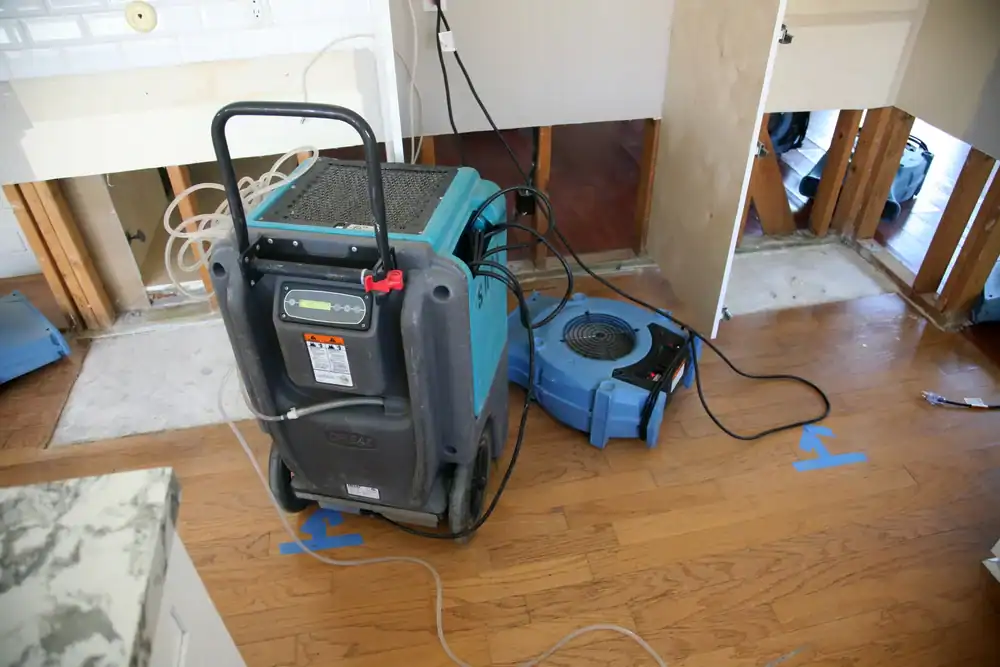
Once we know the full picture, we extract standing water and set up a controlled drying environment using commercial-grade equipment. The drying process typically takes two to five days depending on the severity of the damage and how deeply moisture has penetrated the building materials. We monitor readings daily — not once at the start and once at the end, but throughout the entire process — because moisture levels in a 1960s wall cavity don’t behave predictably.
After drying is confirmed, we handle the structural repairs: drywall, framing, flooring, whatever was affected. Any structural work in Syosset falls under Town of Oyster Bay permit requirements, and we handle that process so you don’t have to chase paperwork on top of everything else. If mold is present, our team is fully licensed under New York State’s 2016 Mold Law — which requires separate licensing for assessment and remediation. That’s not optional in this state, and not every company operating in Nassau County actually has it.
Every water damage restoration job we take in Syosset starts with a full moisture assessment — thermal imaging, moisture mapping, and a clear picture of what’s wet and what isn’t. From there, we handle water extraction, structural drying, and all necessary repairs under one roof. You’re not coordinating between a mitigation company and a separate contractor. We do both.
Insurance coordination is part of every job. We document everything your adjuster needs — photos, moisture readings, scope of work, drying logs — and we communicate directly with your carrier throughout the process. Most homeowners in Syosset end up paying only their deductible because we handle the claim the right way from the start. We work directly with all major insurance carriers and know what documentation they require.
If mold is discovered during the restoration — which happens frequently in Syosset’s older housing stock, especially after a slow leak or a basement flooding event that went unnoticed for a few days — we handle that too. Our team holds New York State Department of Labor licenses for both mold assessment and mold remediation, as required under the 2016 NY Mold Law. That’s a legal requirement in this state, and it’s worth asking any restoration company you’re considering whether they actually have it before you let them touch your walls.
Why does my Syosset basement keep flooding even without a plumbing problem?
This is one of the most common questions we get from homeowners in Syosset, and the answer usually comes down to groundwater — not a broken pipe. Long Island sits above a sole-source aquifer system, and the water table in north-central Nassau County is closer to the surface than most people expect. When prolonged rain saturates the ground — the kind of storm that drops 3 inches overnight — hydrostatic pressure builds against your foundation walls and floor slab from below. That pressure doesn’t need a crack to find its way in. It finds the path of least resistance, and in a home built in the 1950s or 1960s, there are plenty of those.
The fix isn’t always dramatic, but it does need to be correct. Sump pump systems, interior drainage channels, and proper waterproofing of the foundation assembly are all part of the solution depending on your specific situation. What doesn’t fix it is drying the floor and hoping it doesn’t happen again. If your Syosset basement has flooded more than once, a proper assessment will tell you exactly what’s driving it — and what it will take to stop it.
How quickly does mold start growing after water damage in my home?
Mold can begin establishing within 24 to 48 hours of water intrusion — and that clock starts the moment moisture reaches an organic material like wood framing, drywall paper, or subfloor. It doesn’t wait for the water to look serious. A slow leak behind a wall or a damp basement corner after a storm is enough to start the process under the right conditions.
In Syosset’s older homes, this risk is amplified. Original wood framing and plaster construction absorb moisture more readily than modern materials, and wall cavities in a 1960s split-level aren’t designed with airflow in mind. Once mold gets into the framing, remediation becomes a significantly larger and more expensive project than it would have been if the moisture had been caught and dried quickly. The most important thing you can do after any water intrusion — even one that seems minor — is get a professional moisture assessment before you assume the problem is resolved.
Does homeowners insurance cover water damage from a burst pipe or basement flooding in Syosset?
It depends on the cause, and the distinction matters. Standard homeowners insurance policies in New York typically cover sudden and accidental water damage — a burst pipe, a washing machine supply line failure, an appliance leak. What they generally don’t cover is flooding from an external water source, like groundwater rising into your basement during a storm. That type of event usually requires a separate flood insurance policy, which is issued through the National Flood Insurance Program or a private carrier.
For Syosset homeowners, this is worth understanding before you have a loss. If your basement floods during a heavy rain event, the cause — whether it’s a failed sump pump (often covered) or rising groundwater entering through the foundation (often not covered under standard policies) — determines what your carrier will pay. We’ve worked with homeowners across Nassau County long enough to know how these claims are evaluated, and we document our work specifically to support the strongest possible claim outcome based on the actual cause of loss.
How long does water damage restoration typically take from start to finish?
The drying phase alone typically takes two to five days, depending on how much water was involved, how deeply it penetrated the building materials, and what those materials are. In Syosset’s older homes — where plaster walls and original wood framing hold moisture more stubbornly than modern drywall — the drying timeline can run toward the longer end of that range. We monitor moisture readings daily throughout the process, so we’re not guessing when it’s done. We know.
After drying is confirmed, structural repairs begin. That timeline varies based on the extent of damage — replacing a section of drywall is different from reframing a wall section or replacing a subfloor. Any structural repair work in Syosset requires a building permit through the Town of Oyster Bay, and we handle that process as part of the job. From first call to completed repairs, most residential water damage jobs in this area are resolved within one to two weeks, though larger losses involving mold remediation or significant structural work can take longer.
What should I do immediately after discovering water damage in my home?
Stop the source if you can — shut off the water supply valve if it’s a plumbing failure, or move away from the affected area if it’s a structural issue like a roof leak or foundation seepage. Then call a restoration company before you call your insurance company. The reason for that order is practical: a professional assessment gives you accurate documentation of the damage before anything is moved, dried, or disturbed, which is exactly what your adjuster will need to process the claim correctly.
Don’t run fans or open windows thinking it will help. In some cases, improper airflow can spread moisture into unaffected areas or create conditions that accelerate mold growth in wall cavities. Commercial drying equipment is designed to create a controlled environment — household fans aren’t a substitute. The faster a professional gets eyes on the damage with proper moisture detection equipment, the better your outcome. In Syosset, we typically arrive within an hour of your call, and that response time makes a real difference in what the restoration ultimately involves.
Why does professional restoration matter more for Syosset homes than DIY cleanup?
The honest answer is that the visible water is rarely the whole problem — especially in homes built in the 1950s and 1960s, which make up the majority of Syosset’s housing stock. Plaster walls, original wood subfloors, and older framing systems absorb and retain moisture in ways that a shop vac and a box fan won’t address. A surface that feels dry to the touch can still have moisture readings well above the threshold for mold growth inside the wall assembly. Without thermal imaging and calibrated moisture meters, you won’t know that until you smell it months later.
There’s also a practical insurance consideration. When a water damage claim is filed, your carrier will look at whether the work was performed to IICRC standards and whether proper drying documentation exists. A DIY cleanup — even a thorough one — typically doesn’t produce the kind of documentation that supports a claim or protects you at resale, when prior water damage disclosure is a legal requirement in New York. Having a licensed, IICRC-certified restoration company handle the job protects your claim, your home’s value, and your family from the health risks that come with incomplete drying in an older Syosset home.