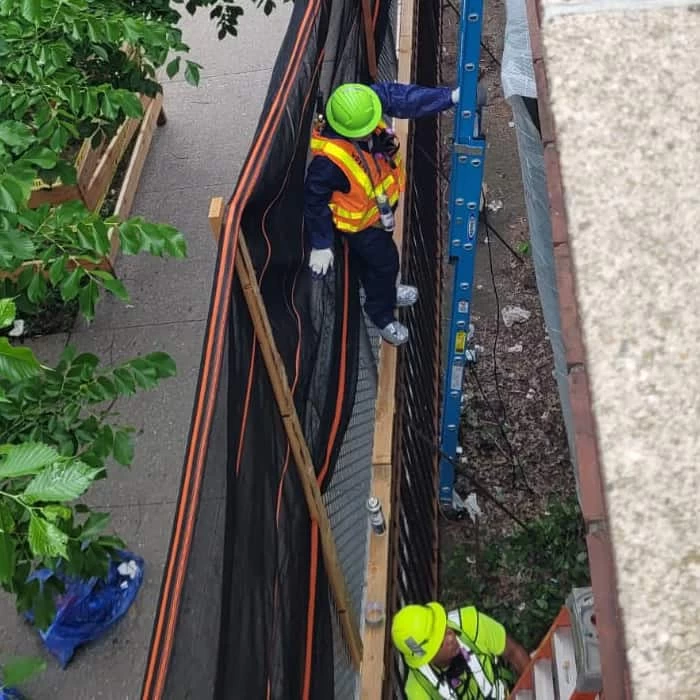
I needed a professional consultation explanation of procedure for safe removal of Asbestos in my apartment complex. Without having an account yet, I was very impressed with the caring, knowledgeable and generous advice offered by Jessica, and will look forward to doing business in the future. Thank you so much! I feel much more informed about a sometimes scary endeavor. Peace. Nancy Silva Mineola, NY.
Mia Munoz
Used this company to clean up some water flood in my house. They were fast and easy to work with.very professional, Would recommend to anyone!
Nini Valle
Great company, had a flood and they responded quickly and efficiently. Billed my insurance company directly. I highly recommend this company!
joe colapietro, jr
I had pipe freeze in my basement right before a snow storm and they made to within an hour to help start the clean up process. They we by our side throughout the entire process and even helped with the insurance company. They did such a great job with the cleanup, repair, remidiation, I contracted them to perform the repairs and finishes in the basement. They came with enough manpower and material to get the job done. Leo and Jessica were nothing but a pleasure to deal with!!
Cristian Arredondo c
I had some water damage in my home and Green Island was able to take care of my issue quickly and effectively. I am very pleased with the work they did. They responded quickly and were very professional.
Michael M
Outstanding service! From the office to the field crew everyone was friendly, helpful and responsive. I highly recommend Green Island Group.
What Gets Saved When You Call Before the Mold Does
Mold can start growing inside your walls within 24 to 48 hours of water exposure. That’s an IICRC-documented standard that applies to every home in Tuckahoe, whether you’re dealing with a burst pipe in January or a flooded basement after the Bronx River jumps its banks in spring. The faster the response, the smaller the job. And in most cases, fast professional drying saves 40 to 60 percent compared to full material replacement.
For Tuckahoe specifically, that math matters. The average single-family home here is around 82 years old. That means plaster walls, wood lath, and stone foundations that hold moisture far longer than modern drywall giving mold a longer window to take hold once water gets in. Older homes also mean a higher likelihood of asbestos pipe insulation and lead paint, which changes what a water damage job actually involves. A company that only does water extraction and drying isn’t equipped for what most Tuckahoe homes actually need.
What you get on the other side of a properly handled restoration is simple: dry walls, clean air, no hidden moisture, and a home that’s structurally sound. You’re not just fixing the visible damage you’re protecting a property worth well over $800,000 and the equity that comes with it.
Local Knowledge That Actually Changes How the Job Gets Done
We’re an independent, full-service environmental and restoration company serving Westchester County and the greater New York metro area. Unlike the national franchise operators that route your call through a 1-800 number and dispatch whoever’s available, we’re a real local company with named staff, direct accountability, and genuine knowledge of the communities we serve including Tuckahoe.
That local knowledge shows up in how we assess and handle jobs. When a home sits along the Garrett Avenue corridor near the Bronx River flood zone, or when a condo unit at a building like the Consulate on the Park has a leak spreading to multiple floors, our approach is different than a standard suburban water loss. We hold the Westchester County Home Improvement License required for permitted restoration work in Tuckahoe, carry the insurance documentation the village’s Building Department requires, and handle asbestos and lead paint in-house which is not optional when your home was built before 1960.
From the First Call to a Fully Dry Home Here's What to Expect
When you call, you reach a real person not a call center. From there, a technician is dispatched to your Tuckahoe address as quickly as possible. The first thing that happens on-site isn’t equipment placement it’s a thorough assessment using moisture meters and thermal imaging cameras to map where the water actually went. In a home with plaster walls and wood subfloors, water travels. What looks contained rarely is, and finding all of it before drying begins is what separates a job that’s actually done from one that grows mold six weeks later.
Once we’ve mapped the full extent of moisture, extraction and structural drying begin using professional-grade equipment not consumer fans. If the damage involves pre-1980 materials, we conduct a pre-demolition asbestos survey before any walls are opened, as required under New York State law. This step is standard practice for most Tuckahoe homes given the average age of the housing stock, and skipping it creates legal and health liability for the homeowner.
Throughout the process, we document everything for your insurance claim. Damage photos, moisture readings, drying logs all of it goes to your adjuster so the claim reflects the full scope of the loss. If you’ve been told by your insurer to use their preferred contractor, it’s worth knowing that in New York State, you have the right to choose your own restoration company. That’s your call to make.
One Company Handles What Most Tuckahoe Jobs Actually Require
Water damage restoration in Tuckahoe isn’t a single-trade job. It’s water extraction, structural drying, mold assessment, and in most homes built before 1980 asbestos and lead paint evaluation before any demolition begins. We handle all of it under one roof, which matters when you’re coordinating a restoration in a pre-war home where every layer of the building carries some form of legacy material.
Our core restoration service covers water extraction, commercial drying equipment, moisture mapping, structural assessment, and full documentation for insurance. When mold is found or when conditions make it likely we run mold remediation concurrently rather than as a separate engagement weeks later. For Tuckahoe’s condo residents, particularly in older buildings like the Consulate on the Park or Tower Club, our service extends to multi-unit damage assessment, building management communication, and documentation that addresses multiple insurance policies simultaneously.
For homes in the Garrett Avenue or Lake Avenue flood corridors, where Bronx River overflow has historically pushed two feet or more of water into residential properties, the scope of work often includes sewage-contaminated water cleanup a Category 3 loss that requires full protective protocols and proper disposal. Whatever the source burst pipe, appliance failure, roof infiltration, or river flooding our approach is built around what your specific home actually needs, not a one-size-fits-all service checklist.
How quickly can mold grow after water damage in a Tuckahoe home?
Mold can begin colonizing within 24 to 48 hours of water exposure and in Tuckahoe’s older homes, that window closes even faster. Plaster walls and wood lath, which are standard in homes built before the 1950s, absorb and retain moisture far longer than modern drywall. That extended saturation gives mold exactly the environment it needs to establish itself deep inside wall cavities where you can’t see it and a consumer dehumidifier can’t reach it.
The commuter pattern in Tuckahoe makes this worse. If a pipe fails at 8am while you’re heading to Grand Central, you could return home 10 to 12 hours later to a fully saturated wall system with mold conditions already developing. That’s why response time matters as much as the restoration itself. The sooner we extract moisture and begin drying, the less likely you are to be dealing with a mold remediation project on top of the water damage repair.
Does homeowner's insurance cover water damage restoration in Tuckahoe, NY?
It depends on the source of the water. Most standard homeowner’s insurance policies in New York cover sudden and accidental water damage a burst pipe, a failed washing machine hose, an overflowing appliance. What they typically don’t cover is gradual damage from a slow leak you should have caught, or flooding from an external source like the Bronx River. For riverine flooding specifically, you’d need a separate flood insurance policy, typically through the National Flood Insurance Program.
If your home is in one of Tuckahoe’s documented flood-prone corridors near Garrett Avenue or Lake Avenue, it’s worth checking whether you have flood coverage before the next spring storm season. For covered losses, we document the full scope of damage moisture readings, photographs, drying logs and work directly with your adjuster. You’re also not obligated to use your insurer’s preferred contractor in New York State. You have the legal right to choose who restores your home.
Does water damage restoration in older Tuckahoe homes involve asbestos?
In most cases, yes at least as a consideration. New York State law requires a pre-demolition asbestos survey before any renovation or demolition work in buildings constructed before 1980. Given that the average single-family home in Tuckahoe is approximately 82 years old, the majority of water damage jobs that involve opening walls, replacing flooring, or disturbing any building material fall under this requirement.
Common asbestos-containing materials in Tuckahoe’s pre-war housing stock include pipe insulation on older heating systems, floor tile adhesives, ceiling tiles, and joint compounds. If asbestos is identified, abatement must be performed by a NYSDOL-licensed contractor before restoration work can continue. We handle asbestos abatement in-house, which means you’re not waiting on a separate specialty contractor to clear the job before drying and reconstruction can proceed. One company, one timeline, no coordination gap.
What's the difference between water mitigation and full water damage restoration?
Mitigation is the emergency phase stopping the damage from getting worse. It includes water extraction, removing saturated materials, and placing drying equipment to bring moisture levels down. Restoration is everything that comes after: repairing or replacing what was damaged, rebuilding wall assemblies, addressing mold if it developed, and returning the space to its pre-loss condition.
Some companies only do one or the other, which creates a handoff problem. You get one crew to extract and dry, then you’re on your own to find a contractor for the rebuild. We handle both phases, which matters in Tuckahoe where the rebuild often involves matching period-appropriate materials in pre-war homes plaster finishes, hardwood floors, original millwork not just hanging new drywall. The goal isn’t just a dried-out structure. It’s a home that looks and functions the way it did before the damage happened.
How does water damage work in a Tuckahoe condo versus a single-family home?
Condo water damage is more complicated, and it’s more common than most people expect. A leak from a unit above you can saturate your ceiling, walls, and flooring before either of you knows it’s happening. Once damage is confirmed, the question of who’s responsible and whose insurance pays depends on whether the source was inside the unit or within the building’s common infrastructure, which is typically covered by the HOA’s master policy.
In buildings like the Consulate on the Park or Tower Club, where infrastructure is 50-plus years old, the line between unit responsibility and HOA responsibility isn’t always clear. Our team is experienced in multi-unit damage scenarios assessing the full spread of moisture across units, communicating with building management, and documenting damage in a way that addresses multiple insurance parties at once. If you’re a condo owner dealing with water damage, having a restoration company that understands HOA dynamics from the start saves significant time and conflict later.
How do Tuckahoe's winters affect water damage risk for homeowners?
Winter is one of the highest-risk seasons for water damage in Tuckahoe, and the village’s older housing stock is a big reason why. Homes built in the 1920s and 1930s often have inadequate insulation around pipes in exterior walls, crawlspaces, and unheated basement areas. When temperatures drop below 20°F which happens regularly in Westchester County those pipes are vulnerable to freezing and bursting. A single burst pipe can release hundreds of gallons before it’s discovered, especially in a home that’s empty during the workday.
The risk compounds because most Tuckahoe residents commute. A pipe that fails at 7am while you’re on the Harlem Line toward Grand Central can flood a basement or saturate multiple floors before you’re back home that evening. By then, the water has been sitting long enough that mold conditions are already developing. Winterizing vulnerable pipe runs, knowing where your main shutoff is, and having our number saved are the three most practical things a Tuckahoe homeowner can do before the temperature drops.