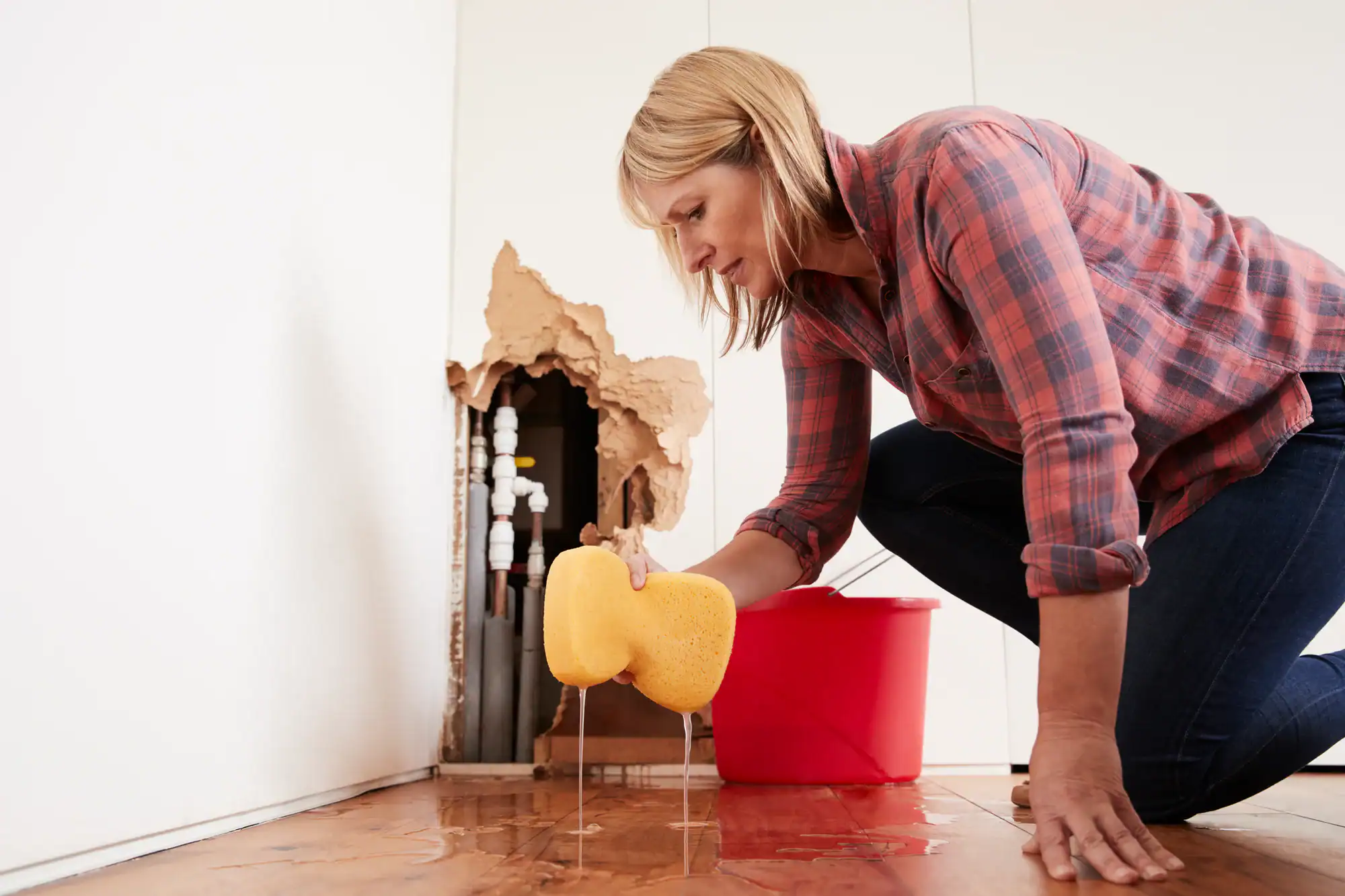
When water gets into a home built in the 1920s or 1930s, it moves fast and hides well. We respond the same day with local crews already on Long Island — not a franchise dispatch center three states away. In Valley Stream, where the water table sits high and older Tudor colonials line Gibson Avenue, that speed matters more than it does in newer developments.
I needed a professional consultation explanation of procedure for safe removal of Asbestos in my apartment complex. Without having an account yet, I was very impressed with the caring, knowledgeable and generous advice offered by Jessica, and will look forward to doing business in the future. Thank you so much! I feel much more informed about a sometimes scary endeavor. Peace. Nancy Silva Mineola, NY.
Mia Munoz
Used this company to clean up some water flood in my house. They were fast and easy to work with.very professional, Would recommend to anyone!
Nini Valle
Great company, had a flood and they responded quickly and efficiently. Billed my insurance company directly. I highly recommend this company!
joe colapietro, jr
I had pipe freeze in my basement right before a snow storm and they made to within an hour to help start the clean up process. They we by our side throughout the entire process and even helped with the insurance company. They did such a great job with the cleanup, repair, remidiation, I contracted them to perform the repairs and finishes in the basement. They came with enough manpower and material to get the job done. Leo and Jessica were nothing but a pleasure to deal with!!
Cristian Arredondo c
I had some water damage in my home and Green Island was able to take care of my issue quickly and effectively. I am very pleased with the work they did. They responded quickly and were very professional.
Michael M
Outstanding service! From the office to the field crew everyone was friendly, helpful and responsive. I highly recommend Green Island Group.
Water damage isn’t just what you can see on the floor. In Valley Stream’s older housing stock — the Tudor colonials in Gibson, the mid-century ranches near Sunrise Highway — moisture gets into plaster walls, original wood framing, and subfloors and stays there long after the visible water is gone. That’s the damage that turns into a mold problem, a structural problem, or a failed home inspection two years down the road.
The high water table throughout Nassau County means your basement is under constant pressure from the ground up, not just from storms. When that pressure finds a crack — in a foundation wall, a pipe joint, a window well — water doesn’t trickle in. It comes in until something stops it. The outcome you’re looking for isn’t just dry floors. It’s confirmed dry readings inside the walls, a home that’s safe to live in, and documentation your insurance company will actually accept.
When the job is done right, you’re not waiting to see if the smell comes back. You’re not second-guessing whether our crew got the moisture behind the drywall. You have a report, you have dry readings, and you have a home that’s back to where it was before this happened.
We’re a locally owned and operated restoration company serving Long Island. When you call, you’re reaching a team that’s already here — not a national brand routing your job through a call center. Our crew knows the difference between a flooded basement in South Valley Stream near a waterway and a burst pipe in a Gibson Tudor from 1932. Those are different jobs, and they require different approaches.
With over 5,000 restoration projects completed across New York State — including documented work in Devon and North Valley Stream — this isn’t a company learning the area on your dime. Our team is IICRC certified, fully licensed under New York State’s Mold Law, and familiar with the Valley Stream Village Building Department’s permit requirements for restoration work. That combination of credentials and local knowledge is what separates a job done right from one that creates problems later.
The first call triggers a same-day response. A technician arrives, assesses the full scope of the damage — not just what’s visible — and uses thermal imaging cameras and calibrated moisture meters to find water inside walls, under floors, and in structural cavities. In Valley Stream’s older homes, that step matters more than it does in newer construction. Original plaster walls and aged wood framing absorb and hold moisture in ways that modern materials don’t, and missing that hidden saturation is how mold starts growing before anyone realizes it’s there.
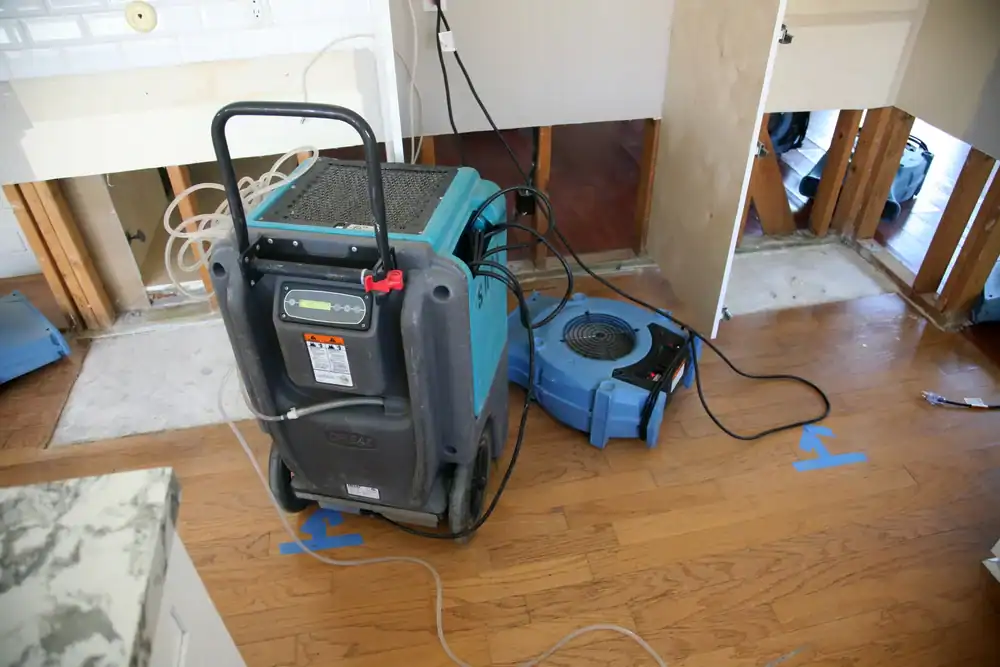
Once the assessment is complete, industrial extraction equipment removes standing water, and commercial-grade air movers and dehumidifiers begin the structural drying process. This isn’t the equipment you rent from a hardware store. It reaches moisture levels inside building materials that consumer equipment can’t touch. For homes near waterways in South Valley Stream or anywhere in the village with a basement, drying timelines are monitored with daily moisture readings — not guesswork.
If the work requires permits from the Village of Valley Stream Building Department, we handle that as part of the process. Reconstruction — drywall, subfloor, framing — follows drying, and every step is documented with photos and moisture logs for your insurance claim. If you’re commuting into the city and can’t be home, we manage the job and communicate to you remotely until you’re back.
Water damage restoration in Valley Stream covers the full scope — emergency water extraction, structural drying, mold assessment and remediation, and reconstruction. Every job starts with a thorough inspection that accounts for the specific vulnerabilities of this area: high water table pressure on basement walls, aging clay sewer pipes prone to root intrusion and failure, and the moisture-retention characteristics of 1920s and 1930s construction materials found throughout Gibson and the broader village.
Mold remediation is handled under New York State’s Mold Law, which requires separately licensed assessors and remediators. We hold the appropriate state licenses. This matters because unlicensed mold work can void your insurance claim and create liability down the road — and not every company advertising water damage restoration in Nassau County holds that license. If you’re not sure whether a company is licensed, the New York State Department of Labor’s license lookup is publicly available and worth checking before you commit.
Insurance claim support is included from the start. We communicate directly with your adjuster, provide comprehensive photo and moisture documentation, and advocate for a fair settlement. Valley Stream homeowners with median home values near $803,000 have a lot at stake in how a claim is handled. Our goal is to make sure the settlement reflects the real scope of the damage — not a lowball estimate that leaves you covering costs out of pocket.
How quickly can water damage lead to mold in a Valley Stream home?
Mold can begin growing within 24 to 48 hours of water intrusion — that’s documented by the EPA and the IICRC. In Valley Stream’s older housing stock, that window is tighter in practice than it sounds on paper. Original wood framing, plaster walls, and aged subfloor materials absorb moisture quickly and hold it longer than modern construction materials. By the time you notice a musty smell, mold has often already established itself inside the wall cavity.
That’s why the response timeline matters as much as the restoration itself. A crew that arrives the same day and begins extraction and drying immediately is working within that window. A crew that arrives 36 hours later because the call was routed through a national system is not. If you’ve had any standing water in your home — from a storm, a burst pipe, or a backed-up drain — the clock started the moment it happened.
Does homeowners insurance cover water damage restoration in Valley Stream, NY?
Most standard homeowners insurance policies cover sudden and accidental water damage — a burst pipe, an appliance failure, storm-driven water intrusion. What they typically don’t cover is gradual damage from a slow leak that went undetected, or flooding from a rising body of water, which requires separate flood insurance through the National Flood Insurance Program (NFIP). For Valley Stream homeowners in flood-prone areas near local waterways — particularly in South Valley Stream — knowing which policy applies to which type of event is worth understanding before you need it.
The claims process itself can be complicated, especially if you haven’t filed one before. Adjusters work for the insurance company, and their initial estimates don’t always reflect the full scope of what needs to be done. We document everything — moisture readings, thermal imaging, photos, scope of work — and communicate directly with your adjuster to make sure the settlement covers the actual job. That documentation process is part of the service, not an add-on.
What makes water damage in older Gibson neighborhood homes harder to fully dry?
The Gibson neighborhood’s homes — many built between the 1920s and 1950s on streets like Avondale, Berkeley, Cambridge, Derby, and Elmwood — present specific challenges that newer construction doesn’t. Plaster walls are denser and more porous than modern drywall, meaning they absorb water more readily and release it more slowly. Original wood framing, particularly in Tudor and Colonial-style homes from that era, can hold moisture deep in the grain even after surface readings look dry. And the original clay sewer pipes still found in many of these homes are prone to root intrusion and joint failure — meaning the source of the water event isn’t always obvious at first inspection.
Getting a Gibson home truly dry requires more than running dehumidifiers for a day. It requires daily moisture readings at multiple depths, thermal imaging to identify cold spots inside walls where moisture is hiding, and enough drying time to confirm — not estimate — that the structural materials have returned to acceptable moisture levels. Cutting that process short is how hidden mold problems start.
How does the high water table in Nassau County affect basement water damage?
Long Island sits on a glacial aquifer system, and the water table in Nassau County — particularly in the southern portions where Valley Stream is located — is consistently high. That means the ground around your foundation is holding significant water pressure year-round, not just after a storm. Any crack in a foundation wall, a failed sump pump, a deteriorating window well, or a gap in waterproofing becomes a path for that pressure to push water into your basement. This is a chronic condition, not a one-time weather event.
The practical implication is that basement water damage in Valley Stream often isn’t a single incident — it’s a recurring vulnerability. Drying the basement after one event without addressing the underlying entry points means you’re likely to see it again. A thorough restoration assessment should identify where the water entered, not just where it ended up, and the documentation of that finding is also valuable if you’re filing an insurance claim or planning any future waterproofing work.
What permits are required for water damage restoration work in Valley Stream?
The Village of Valley Stream has its own Building Department that oversees permits for construction and land improvement work within the incorporated village. Restoration work that involves structural repairs — replacing drywall, removing and replacing subfloor, repairing or replacing framing — generally requires permits issued through the village, and that work must comply with both New York State Building and Fire Codes and the Village of Valley Stream Code. The village also has a formal Flood Damage Prevention ordinance (Chapter 34 of the Village Code) and a Stormwater Management code (Chapter 76) that are directly relevant to restoration work in flood-affected areas.
For most homeowners, navigating this permit process on top of an active water emergency is genuinely difficult. We handle permit compliance as part of the job. That means the reconstruction phase — not just the drying and remediation — is done in a way that holds up to inspection, doesn’t create issues when you eventually sell the home, and satisfies your insurance carrier’s requirements for documented, code-compliant repairs.
How do I choose a water damage restoration company in Valley Stream I can actually trust?
There are a few things worth verifying before you commit to any restoration company in Valley Stream. First, check for IICRC certification — specifically the Water Damage Restoration Technician (WRT) and Applied Structural Drying (ASD) credentials. These are the standards your insurance adjuster uses to evaluate whether the work was done correctly, and a company without them is working outside the framework your claim depends on. Second, verify New York State licensing for mold remediation through the Department of Labor’s public license lookup. Under New York’s Mold Law, assessment and remediation must be performed by separately licensed parties — and not every company advertising locally holds that license.
Beyond credentials, pay attention to whether the company is actually local or a franchise routing calls through a national system. Valley Stream has a named SERVPRO franchise and national brands like Roto-Rooter operating in the market. Those companies have their place, but when your 1930s home in Gibson or your flood-prone basement in South Valley Stream is actively taking on water, the difference between a crew that’s already on Long Island and one being dispatched through a corporate system is real time — and in a 24 to 48 hour mold window, real time is what matters most.