I needed a professional consultation explanation of procedure for safe removal of Asbestos in my apartment complex. Without having an account yet, I was very impressed with the caring, knowledgeable and generous advice offered by Jessica, and will look forward to doing business in the future. Thank you so much! I feel much more informed about a sometimes scary endeavor. Peace. Nancy Silva Mineola, NY.
Mia Munoz
Used this company to clean up some water flood in my house. They were fast and easy to work with.very professional, Would recommend to anyone!
Nini Valle
Great company, had a flood and they responded quickly and efficiently. Billed my insurance company directly. I highly recommend this company!
joe colapietro, jr
I had pipe freeze in my basement right before a snow storm and they made to within an hour to help start the clean up process. They we by our side throughout the entire process and even helped with the insurance company. They did such a great job with the cleanup, repair, remidiation, I contracted them to perform the repairs and finishes in the basement. They came with enough manpower and material to get the job done. Leo and Jessica were nothing but a pleasure to deal with!!
Cristian Arredondo c
I had some water damage in my home and Green Island was able to take care of my issue quickly and effectively. I am very pleased with the work they did. They responded quickly and were very professional.
Michael M
Outstanding service! From the office to the field crew everyone was friendly, helpful and responsive. I highly recommend Green Island Group.
What Getting This Right Actually Means for Your Home
Water damage in Woodsburgh is not a generic problem. The Woodmere Channel sits at the edge of this village. Railroad Avenue has flooded at high tide. The homes here were built in the 1940s and 1950s — layered with decades of renovation, original plaster, hardwood over subfloor, basements that were never designed to stay dry in a tidal surge.
Getting the restoration right in Woodsburgh means more than running fans and calling it done. It means finding the moisture that’s hiding inside the wall cavity behind the finished drywall, under the flooring that looks fine on the surface, in the framing of a 75-year-old home that absorbed water before anyone arrived with a moisture meter. If that moisture stays, mold follows — typically within 24 to 48 hours of the initial intrusion. In a home worth over a million dollars, that’s not a minor inconvenience. It’s a structural and health problem that compounds fast.
When the job is done correctly, you’re not just dry — you’re documented. Moisture readings confirm the drying is complete. Your insurance claim is supported by real data. You’re not waiting for a mold problem to appear six weeks later because someone skipped the thermal imaging scan. That’s the difference between restoration that holds and restoration that leaves you with a second problem.
A Long Island Company That Knows Woodsburgh and the Five Towns
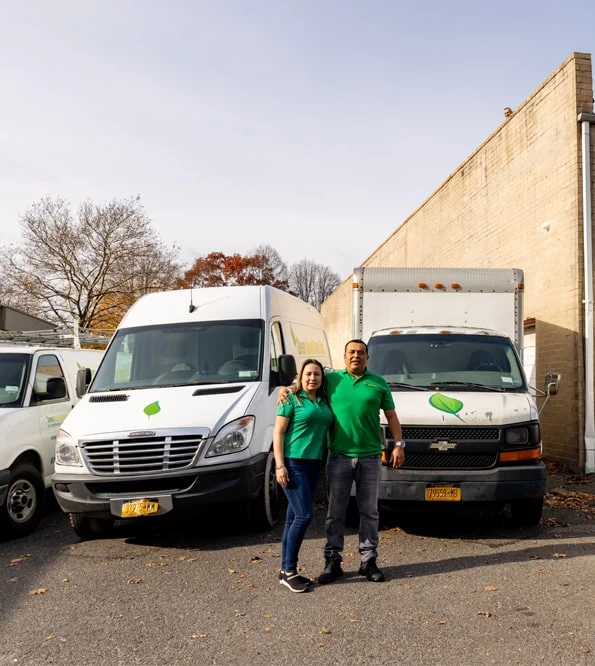
Green Island Group is a locally owned and operated restoration company serving Long Island — not a franchise routing your call through a national call center, and not a lead-generation website with a toll-free number and no real crew behind it. When you call, you reach someone who knows Nassau County’s South Shore, who understands what Woodsburgh looks like after a nor’easter or a tidal surge event, and who can dispatch a team that’s already on Long Island.
The homes in Woodsburgh are not average suburban houses. They’re large, older properties on quiet streets near the Woodmere Club — homes that have seen decades of weather, multiple renovations, and in many cases, the direct impact of Hurricane Sandy. We’ve worked in homes like these throughout the Five Towns area, and that experience shapes how we approach every assessment, every moisture reading, and every conversation with a homeowner or insurance adjuster.
You won’t get a different crew every day with no continuity. The same team that walks through your home on day one is the team that finishes the job.
No Guesswork — Here's Exactly What We Do in Your Woodsburgh Home
The first thing we do when we arrive is assess the full scope of the damage — not just what’s visible. We use thermal imaging cameras and calibrated moisture meters to detect water inside wall cavities, under flooring, and in structural assemblies that look dry to the eye. In a home built in 1947, there are layers. We check all of them before we form a plan.
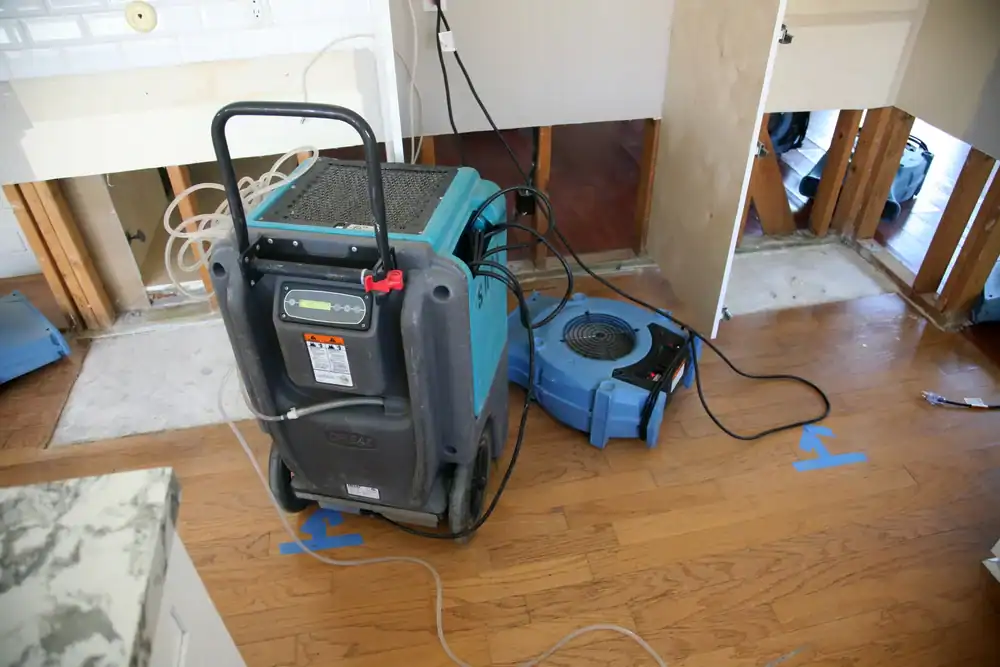
From there, we extract standing water if present, then set up industrial drying equipment — commercial air movers and desiccant dehumidifiers that operate at a fundamentally different capacity than anything you’d rent from a hardware store. The drying process is monitored with daily moisture readings, and nothing gets closed up until those numbers confirm the structure is dry. If mold is present or suspected, we follow New York State’s licensed remediation protocol — containment, air filtration, safe removal — not just a surface wipe-down.
Throughout the process, we document everything. Photos, moisture logs, equipment placement records — all of it formatted to support your insurance claim and communicate clearly with your adjuster. If your property falls within one of Woodsburgh’s FEMA-designated flood zones, we understand the additional documentation requirements that come with an NFIP claim, and we make sure nothing is missing. When we leave, you have a complete record and dry, confirmed readings — not a verbal assurance.
What's Actually Included When You Call Green Island Group
Water damage restoration is not one thing — it’s a sequence of connected steps, and skipping any one of them is where problems start. What you get with Green Island Group is the full sequence: emergency water extraction, structural drying with industrial equipment, moisture mapping with thermal imaging, mold assessment and licensed remediation where needed, and complete documentation for your insurance carrier. Every step is connected to the one before it.
For Woodsburgh homeowners specifically, a few things matter more than they might in other towns. Because much of the village sits within or adjacent to FEMA-designated special flood hazard areas — Woodsburgh holds NFIP Community No. 360496 — flood damage claims carry specific documentation requirements that differ from a standard water damage claim. We know that process. We also know that the aging construction typical of homes in this zip code (11598) means moisture doesn’t always behave predictably. Original plaster walls, older drainage systems, basements with multiple layers of renovation — these require a more thorough approach than a newer build would.
New York State’s 2016 Mold Law requires separate licensing for mold assessment and remediation. We are fully licensed and compliant. That matters in a home where children, elderly residents, or anyone with respiratory sensitivities lives — and it matters for your liability as a homeowner if the work isn’t done to the legal standard. You won’t have to wonder whether the company you called is actually authorized to do this work in New York. We are.
Does homeowners insurance cover water damage restoration in Woodsburgh, NY?
It depends on the source of the water, and this is where a lot of homeowners get caught off guard. Standard homeowners insurance typically covers sudden and accidental water damage — a burst pipe, an appliance failure, a roof leak from a storm. It does not typically cover flooding from outside the home, which in Woodsburgh means tidal surge events, overland flooding from the Woodmere Channel, or storm water backup.
That type of damage falls under flood insurance, which is a separate policy issued through FEMA’s National Flood Insurance Program or a private flood carrier. Because Woodsburgh participates in the NFIP as Community No. 360496, many properties here are eligible for federal flood insurance — and given the village’s documented flood history, a significant number of homeowners carry it. The distinction between which policy applies to a given event matters enormously for how the claim is filed and what documentation is required.
How quickly does mold actually start growing after water damage?
The IICRC documents that mold can begin growing within 24 to 48 hours of water intrusion under the right conditions — and the right conditions are not unusual. Warmth, moisture, and an organic material to grow on are all it takes. In a home built in the 1940s or 1950s, those conditions are easy to meet. Original wood framing, plaster over lath, layers of flooring added over decades — these materials hold moisture and provide exactly the kind of surface mold needs.
The 24 to 48 hour window is why response time is not just a marketing claim. The faster moisture is extracted and structural drying begins, the smaller the window for mold to establish. If you’re in Woodsburgh and water came in during a storm surge or a high-tide flooding event — the kind that has historically affected Railroad Avenue and the low-lying areas near the Woodmere Channel — the clock starts the moment the water enters the structure, not the moment you call.
What's the difference between water damage mitigation and water damage restoration?
Mitigation is the emergency phase — stopping the damage from getting worse. That means extracting standing water, removing saturated materials that can’t be saved, and setting up drying equipment to pull moisture out of the structure before mold sets in. It’s the immediate response, and it’s time-sensitive. Restoration is what comes after: rebuilding what was removed, repairing structural elements, replacing flooring or drywall, and returning the space to its pre-loss condition.
Some companies only do one or the other. We handle both, which matters because the handoff between mitigation and restoration is where things can fall apart if two different companies are involved. The crew that dried your home knows exactly what was removed, what the moisture readings were at every stage, and what the structure looked like before any work began. That continuity affects the quality of the rebuild and the accuracy of the documentation your insurance adjuster receives.
How do I know if my Woodsburgh home has hidden moisture after a flood?
You often can’t tell by looking. That’s the honest answer. Water moves through wall assemblies, under flooring, and into structural cavities in ways that leave the surface looking fine while the interior stays wet. In a home built in the mid-20th century — which describes most of the housing stock in Woodsburgh — the construction layers are deep. Original plaster, added drywall, subfloor over original hardwood, basement walls that may have been waterproofed and re-waterproofed over the decades. Each layer is a place moisture can hide.
The only way to know for certain is with equipment. Thermal imaging cameras detect temperature differentials that indicate moisture presence behind walls and under floors. Calibrated moisture meters give readings at specific points in the structure that tell you, numerically, whether the material is within an acceptable dryness range. We take these readings throughout the job and document them — so at the end, you have data showing the home is dry, not just a visual inspection and a handshake.
How long does water damage restoration typically take for a home like mine?
The honest answer is that it depends on the category of water, the class of damage, and the construction of the home. For a straightforward clean-water event — a burst pipe, a supply line failure — structural drying in a newer home typically takes three to five days with proper equipment. In an older home with more complex construction, or in a situation involving Category 2 or Category 3 water (gray water or sewage-contaminated water, which can occur during storm surge events), the timeline extends.
For homes in Woodsburgh, the mid-century construction factor is real. Thicker wall assemblies, original materials that absorb moisture differently than modern building products, and basement configurations that weren’t designed with drainage in mind all affect how long thorough drying takes. We don’t pull equipment early to close a job faster. The drying timeline is driven by the moisture readings, not by a calendar.
Why should I hire a local Long Island company instead of a national franchise for this job?
The practical difference comes down to who actually shows up and what they know when they get there. A national franchise call center books the job and routes it to whoever is available in the network — which may or may not be a crew with real experience in Nassau County, real familiarity with the South Shore’s flood patterns, or real knowledge of what a 1940s-built home in Woodsburgh looks like from the inside.
Green Island Group operates as a Long Island company. The people who answer the phone know this area. The crew we send to a home near the Woodmere Club or along the streets that flooded during Sandy knows the geography, knows the housing stock, and knows the specific insurance and permit landscape for Nassau County. For a village as small and connected as Woodsburgh — where 314 households form a genuinely close community — the company you hire will be known by your neighbors.