Summary:
When you’re looking at quotes for a demolition project in Nassau County, every contractor will tell you they’re “licensed and insured.” It’s on their website, their trucks, their business cards. The problem is that phrase doesn’t actually tell you anything useful. Licensed for what, exactly? Insured against which risks? In New York, demolition work touches multiple overlapping regulatory systems — and a contractor can be fully licensed for one part of the job while being completely unqualified for another. Before you sign anything, it’s worth understanding what the credentials actually mean.
What a Licensed Demolition Contractor License Actually Covers in Nassau County
New York doesn’t issue a single statewide general contractor license that covers demolition. Licensing happens at the local level — county by county, city by city — and the requirements vary significantly depending on where the work is being done. Nassau County has its own Home Improvement Contractor (HIC) license requirement for residential work. New York City has a separate demolition license through the Department of Buildings, which requires a minimum of five years of verified experience, proof of insurance, and specific training. A contractor licensed to work in one jurisdiction isn’t automatically qualified to work in another.
On top of the local licensing layer, three categories of work require state-level credentials through the NYS Department of Labor regardless of where the project is located: asbestos abatement, crane operation, and elevator and accessibility lift work. For most residential demolition projects in Nassau County, the asbestos license is the one that matters most — and it’s the one that’s most often missing when homeowners get a suspiciously low quote.
Why Nassau County Home Demolition Contractors Need More Than One License
Here’s the part that catches a lot of Nassau County homeowners off guard. The county was built out primarily during the post-World War II suburban boom — Levittown went up between 1947 and 1951, and most of the surrounding communities followed through the 1950s and 1960s. That means the vast majority of Nassau County’s housing stock predates 1978, which is the federal threshold for lead-based paint regulation, and most of it predates 1980, which is when asbestos-containing materials were still commonly used in floor tiles, ceiling tiles, pipe insulation, roofing felt, and siding.
What this means practically is that almost every residential demolition project in Nassau County requires a hazardous materials assessment before work can begin — not as a precaution, but as a legal requirement. If asbestos-containing materials are present, only a contractor holding a NYS DOL asbestos contractor license can legally remove them. If your contractor doesn’t hold that license, they have two options when asbestos turns up: stop the entire project while they locate a licensed subcontractor, or proceed illegally and expose you to penalties ranging from $1,200 to $10,000 per infraction.
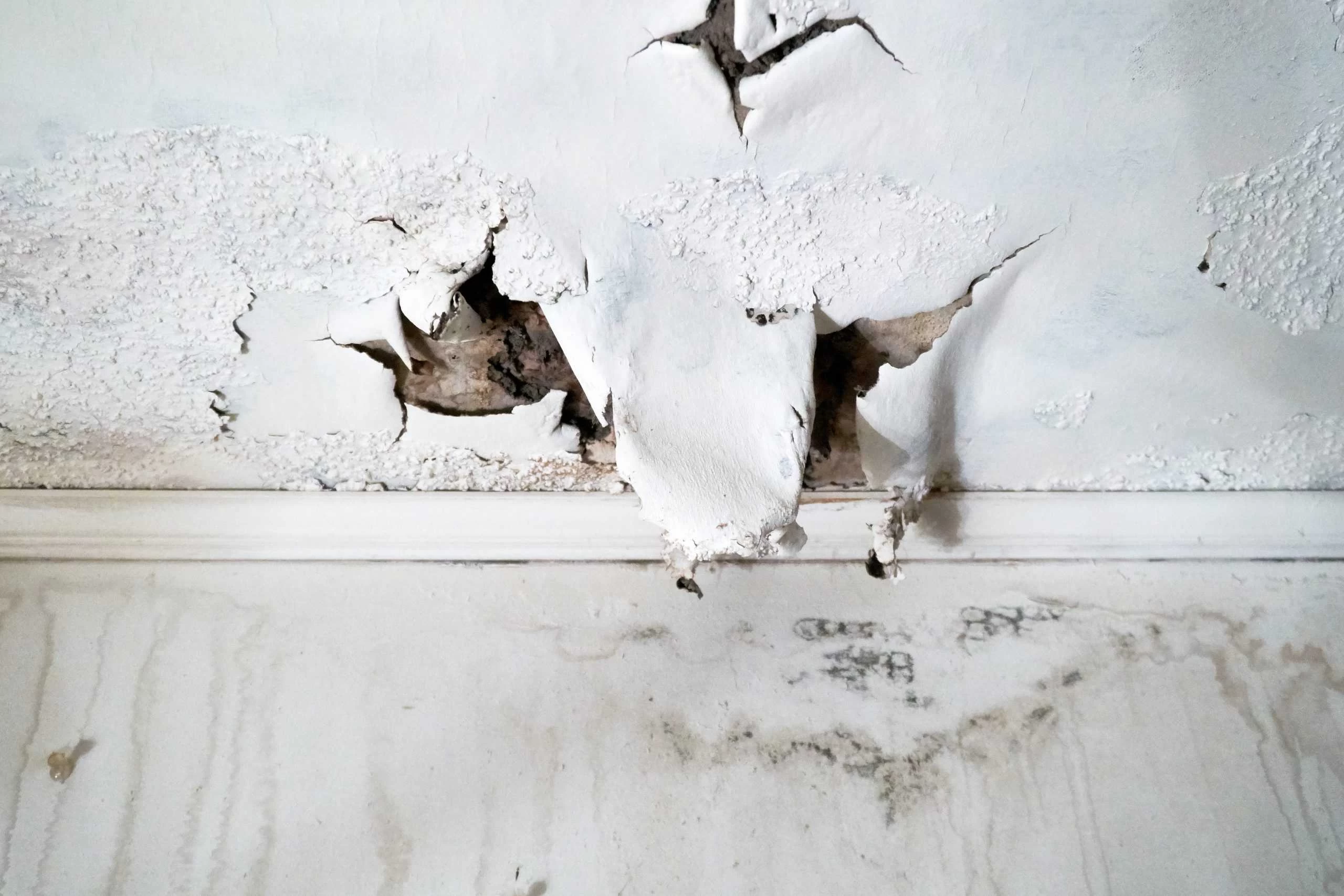
The lead-based paint side has its own requirement. Any renovation, repair, or demolition work that disturbs lead paint in a pre-1978 home requires USEPA Lead and RRP (Renovation, Repair, and Painting) certification. Again, this isn’t optional — it’s a federal requirement with its own enforcement mechanism. A contractor who doesn’t mention lead or asbestos when quoting a job in an older Nassau County home isn’t being efficient. They’re skipping a step that could come back on you.
Beyond hazmat credentials, there’s also a newer requirement that took effect on December 30, 2024: NYS DOL contractor registration. Contractors working on certain project types in New York State are now required to register with the Department of Labor before performing any work. It’s a relatively recent change, and some smaller or less attentive operators haven’t addressed it yet. It’s a straightforward question to ask any contractor you’re vetting.
How to Verify a Licensed Demolition Contractor's Credentials in Nassau County
Asking a contractor if they’re licensed is almost useless on its own — of course they’ll say yes. The more useful question is: can you show me your license numbers? A legitimate contractor should be able to hand over specific, verifiable credentials without hesitation. In New York, you can look up contractor licenses through the NYS Department of Labor’s online system for asbestos and mold credentials, through the NYC Department of Consumer and Worker Protection (DCWP) for the Home Improvement Contractor license, and through BuildZoom or similar databases that aggregate license records from multiple jurisdictions.
Workers’ compensation and general liability insurance are separate from licensing but equally important. Nassau County requires proof of both before issuing a demolition permit. If a worker without workers’ compensation is injured on your property, you can be held personally liable for medical costs and lost wages. General liability covers damage to neighboring structures — a real concern in Nassau County, where homes sit on relatively small lots and equipment access is often tight. Ask for certificates of insurance naming you as an additional insured, not just a verbal assurance that coverage exists.
One thing worth knowing specifically about Nassau County: before any demolition permit is issued, the county requires a rodent-free certification. You can reach the permit office at (516) 227-9715. It’s an unusual requirement that out-of-area contractors routinely miss, and it can delay a project significantly if it’s not anticipated. A contractor with genuine local experience in Nassau County will know this step is coming and coordinate it as part of their standard process — not scramble when the permit office asks for documentation they weren’t expecting.
House Demolition Contractors in Nassau County: The Full License Stack
A full residential demolition project in Nassau County — from initial assessment through final site clearance — touches multiple regulatory layers simultaneously. There’s the county-level HIC license for the home improvement work itself, the state-level asbestos contractor license if hazardous materials are present, the USEPA Lead/RRP certification for lead paint disturbance, the Nassau County demolition permit (including the rodent-free certification), and potentially the new NYSDOL contractor registration depending on project scope. If the contractor also handles mold remediation as part of the process, that requires a separate NYS DOL mold remediation license.
A contractor who holds all of these credentials in-house can move through the project without stopping. One who doesn’t will either subcontract the gaps — creating handoff points where accountability gets murky — or skip steps and hope nothing comes up. In Nassau County’s older housing stock, something almost always comes up.
What Should Happen Before the First Wall Comes Down
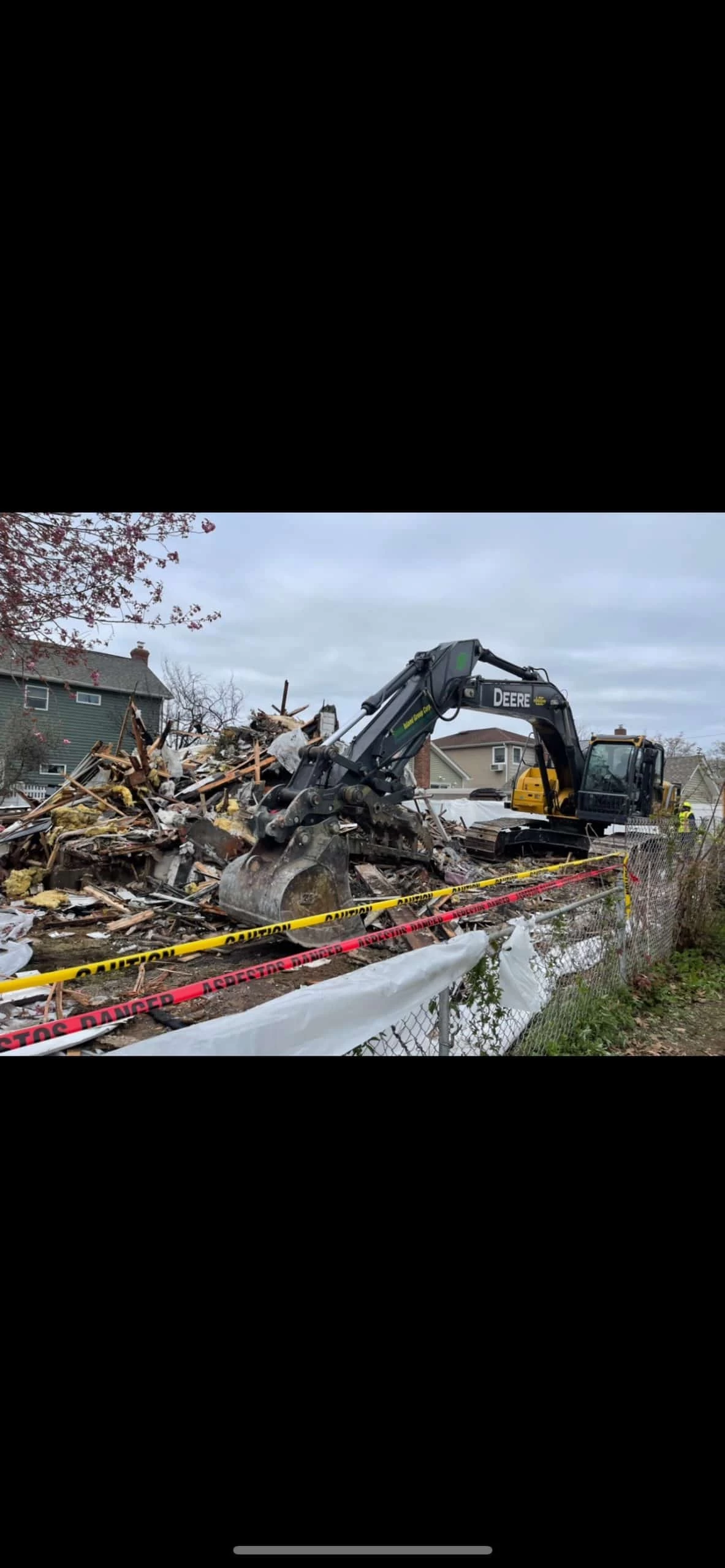
The sequence matters as much as the credentials. A properly run house demolition in Nassau County follows a specific order: hazardous material survey first, then licensed abatement if needed, then permit filing, then utility coordination, then structural demolition, then debris removal and site restoration. Each step has its own regulatory requirements, and skipping or reordering them creates problems that are expensive to fix after the fact.
The hazardous material survey is where a lot of projects go sideways. Some contractors skip it to keep their quote competitive, with the intention of dealing with anything they find once work has started. The problem is that once asbestos is discovered mid-demolition, the project legally cannot continue until a licensed abatement contractor completes the removal and the site is cleared. Depending on the scope of the contamination, that delay can run days or weeks — and the cost of the abatement work is on top of the original quote, not included in it.
For context on what full house demolition costs in Nassau County: projects typically range from $11,700 to $24,700 depending on the size and complexity of the structure. Houses under 4,000 square feet without a basement generally fall between $11,700 and $14,800; the same size with a basement runs $14,200 to $18,500. These figures assume a properly sequenced project with all required permits and hazmat assessments included. A quote that comes in well below this range is worth questioning — not because lower prices are inherently dishonest, but because the math usually means something is being left out.
The permit process itself is another area where local knowledge pays off. Nassau County’s demolition permit requires coordination with the county permit office, the rodent-free certification, and potentially separate approvals from the Nassau County Fire Marshal at (516) 572-1000 if the project involves flammables or combustibles. A contractor who has done this before in Nassau County knows how to anticipate these steps. One who hasn’t will discover them in real time, on your timeline.
Nassau County has a high density of in-ground swimming pools — many of them installed in the 1960s through the 1980s, now aging past their useful life or sitting on properties being redeveloped. Pool removal has become a common request, and it’s one where licensing gaps are especially common because homeowners often assume it’s simpler than it is.
In New York, pool removal requires specific licensing — the H H3 Pools and Spas classification — along with permits for the removal itself and for the fill work that follows. Utility disconnection has to be coordinated before any excavation begins. The fill material used to backfill the void has to meet specific standards, because improper fill creates drainage problems and foundation issues that can show up years later and cost significantly more to remediate than the original removal.
Long Island’s geology adds another layer: Nassau County’s water table is high, particularly in the low-lying coastal communities along the south shore, and groundwater management during pool removal requires experience with local soil conditions. A contractor performing pool removal without the proper licensing and insurance isn’t just cutting corners on paperwork — they’re leaving you exposed if something goes wrong during the excavation. Damage to a neighboring property, a worker injury, a drainage issue that affects adjacent lots — these are scenarios where your personal liability depends entirely on whether the contractor you hired was properly credentialed for the specific work they were doing.
What separates a qualified pool removal contractor from one who’s improvising is the same thing that separates any legitimate demolition contractor from a risky one: the ability to show you the specific licenses that apply to your specific project, pull the required permits themselves, and handle the full sequence without gaps or subcontracted surprises.
Hiring Local Demolition Contractors in Nassau County: What to Ask Before You Commit
The most important thing to take away from all of this is that “licensed and insured” is a starting point, not an answer. The right follow-up questions are: licensed for what, specifically? Insured for which risks? Who pulls the permits? What happens if asbestos turns up? Can you show me the actual license numbers?
A contractor who can answer all of those questions clearly, without hesitation, and with documentation to back it up is a contractor who has done this before and knows what they’re doing. One who gets vague or defensive is telling you something important.
If you’re planning a demolition project in Nassau County — whether it’s a full house teardown, selective interior work, or pool removal — and you want to work with a team that holds the full credential stack and has navigated Nassau County’s specific permit requirements for over 12 years, we’re worth a conversation. We handle the permits, the hazmat assessments, the coordination with county offices, and the work itself — all under one contract, with no gaps in accountability. Reach out to Green Island Group to discuss your project.