Summary:
Most Nassau County homeowners who find mold in their attic assume they caught it early. Sometimes they did. But in a pre-1980 home — the Cape Cods, ranch houses, and split-levels that make up the majority of the county’s housing stock — the mold you can see is usually a fraction of what’s actually there.
These homes were built in an era when attic ventilation was an afterthought, and decades of Long Island winters have quietly done their work. If you’re trying to understand what you’re actually dealing with, what it costs to fix it properly, and why it keeps coming back in older homes, this is a good place to start.
Attic Mold Remediation vs. Mold Removal: What's the Difference?
Mold removal and mold remediation are not the same thing, and the difference matters a lot when you’re dealing with an older Nassau County home. Removal is the physical act of cleaning or cutting out mold. Remediation is the full process — finding the moisture source, containing the work area so spores don’t spread into your living space, removing contaminated materials, treating structural wood, correcting whatever caused the moisture in the first place, and then verifying the result with independent post-remediation testing.
If the moisture source isn’t fixed, the mold comes back. It’s not a scare tactic — it’s how mold works. It needs moisture and organic material to grow, and the underside of your roof sheathing gives it both. A treatment that doesn’t address ventilation, insulation, or a slow roof leak is a temporary fix at best.
Why Pre-1980 Nassau County Attics Are Built for Mold Problems
Nassau County’s housing stock tells the story of the post-war suburban boom. Levittown, built by William Levitt starting in 1947, put tens of thousands of Cape Cod and ranch-style homes on Long Island in a matter of years. The neighborhoods that grew up around it — across Hempstead, Massapequa, Freeport, Valley Stream, and dozens of other Nassau County communities — followed the same design logic. These homes were built fast, built affordably, and built under ventilation standards that we now know were inadequate.
The core problem is airflow. Modern building codes require a specific ratio of soffit-to-ridge ventilation to keep attic air moving and moisture from accumulating. Pre-1980 homes were typically built with minimal soffit vents and no ridge ventilation to speak of. Over the decades, many of these homes have had blown-in insulation added to the attic floor — a reasonable energy upgrade on its own, but it frequently blocks whatever original soffit venting existed. The result is an attic that traps warm, moist air with nowhere to go.
Here’s what happens next. In winter, warm air from your heated living space rises into the attic and hits the cold underside of the roof sheathing. The moisture in that air condenses on the cold surface — sometimes forming frost on the plywood and even on the tips of roofing nails. When temperatures warm up in spring, that frost melts and the sheathing stays wet. Wet wood at temperatures between 60 and 80 degrees is exactly the environment mold needs to colonize.
By summer, the attic dries out and the mold may appear dormant. But the following winter, the cycle repeats — and the mold comes back stronger. This isn’t a failure of maintenance. It’s a design characteristic of the era. The house was built this way, and no amount of cleaning will permanently fix an attic that still has the same ventilation problem it had when the home was constructed.
The Asbestos Factor in Pre-1980 Attic Mold Remediation
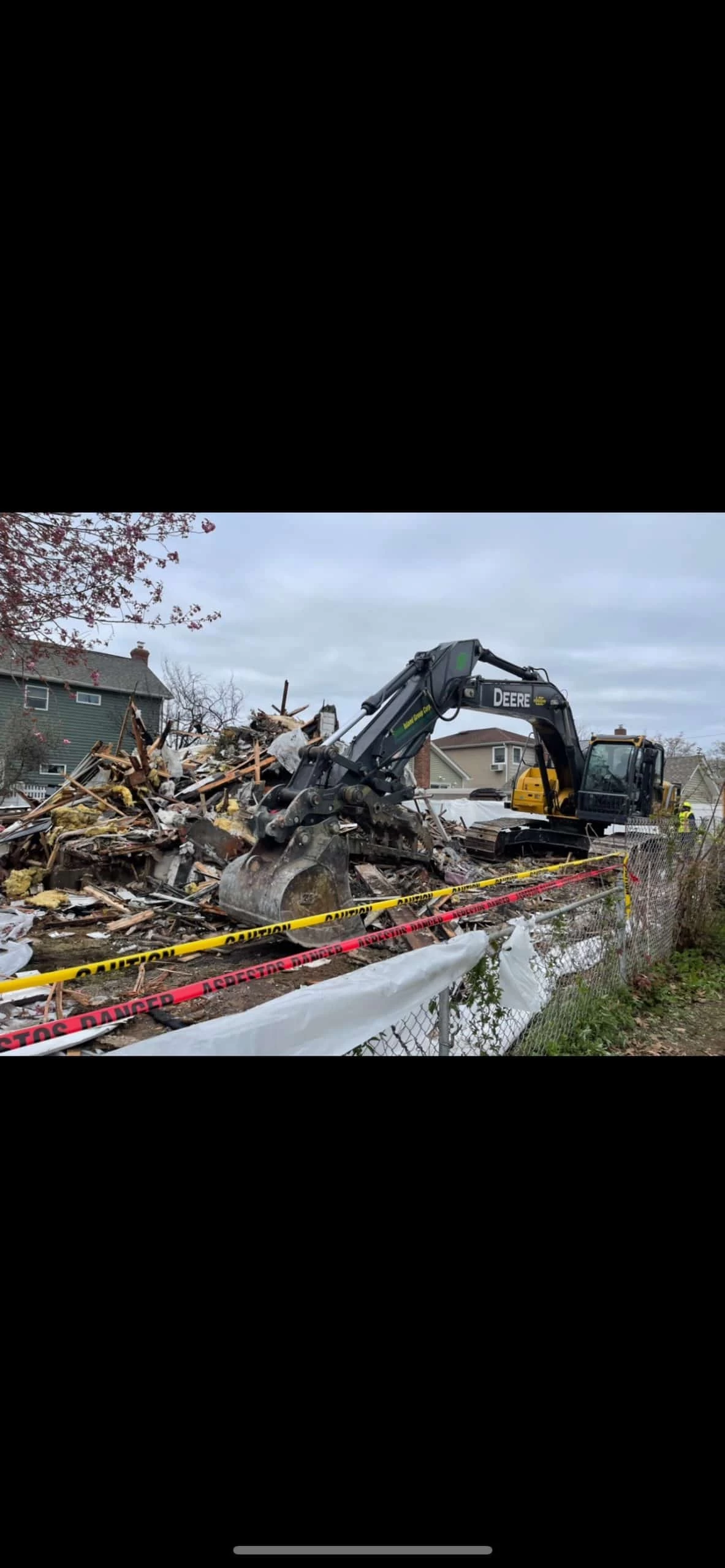
There’s a conversation that comes up frequently when we work on pre-1980 Nassau County homes, and it’s one that most mold remediation companies aren’t equipped to have. When attic work disturbs insulation, structural materials, or roofing components in a home built before 1980, asbestos becomes a real possibility. Vermiculite insulation, certain blown-in products, pipe insulation, and some roofing materials from that era may contain asbestos-containing materials. Disturbing them without the proper license isn’t just risky — in New York State, it’s illegal.
This is where a lot of attic mold projects in older Nassau County homes hit a wall. A mold remediation contractor who doesn’t hold a NYS DOL Asbestos license has to stop work the moment they suspect asbestos is present. That means a second mobilization, a second contractor, delays, and additional costs that weren’t in the original estimate.
We hold both the NYS DOL Mold Remediation Contractor license and the NYS DOL Asbestos license, along with USEPA Lead and RRP certifications for work in pre-1978 homes where lead paint may be disturbed. When we open up an older attic and find something unexpected, the job doesn’t stop. We handle it in-house, under the appropriate license, without subcontracting or scheduling delays.
New York is also one of the only states in the country with a mandatory mold remediation licensing law — NYS Article 32. Under that law, the contractor who performs the mold assessment and the contractor who performs the remediation must be separate, independently licensed entities. It’s a consumer protection provision worth knowing about, because not every contractor in the market follows it.
How Home Mold Removal Works: The Complete Remediation Process
A complete attic mold remediation follows a clear sequence, and understanding it helps you ask the right questions when you’re evaluating contractors. The process starts with a thorough inspection — not just a visual check, but a moisture assessment using thermal imaging cameras that can detect moisture hidden behind insulation and inside structural cavities that you’d never find by looking.
From there, the work area is contained and placed under negative air pressure so that spores disturbed during remediation don’t migrate into your living space. HEPA air scrubbers run continuously throughout the job. Contaminated insulation is removed and bagged. Structural wood is treated with EPA-registered antimicrobials, and in cases of significant surface mold, mechanical methods like soda blasting may be used to remove the top layer of contaminated wood.
Then, critically, the moisture source is corrected — whether that means repairing a roof leak, installing proper ridge and soffit ventilation, or both. Without this step, you’re not doing remediation. You’re just buying time.
Basement Mold Removal and the Full-Home Moisture Picture
Attic mold gets the most attention at inspection time, but it rarely exists in isolation. In Nassau County homes — particularly on the south shore communities like Long Beach, Oceanside, and Freeport, where the water table is shallow and coastal flooding is a recurring reality — moisture doesn’t respect floor boundaries. A home that has active mold in the attic has often been managing moisture issues throughout the building envelope for years, and the basement is frequently part of that story.
Basement mold removal follows a similar remediation logic: identify the moisture source, contain the work area, remove contaminated materials, treat surfaces, and correct the underlying cause. But in a pre-1980 Nassau County home with both attic and basement mold, the real value of working with a single contractor is continuity. The same team that understands why your attic has a condensation problem also understands why your basement wall is damp — and they’re not going to give you a piecemeal answer that treats each issue as if it exists independently.
We use industrial-grade dehumidifiers, water extractors, and thermal imaging throughout both attic and basement assessments. For homeowners dealing with mold in multiple areas of the house, we handle the full scope — from emergency moisture extraction through structural drying, remediation, and final restoration — without handing the project off to anyone else. One point of contact, from the first call to the final clearance test.
For larger projects, financing is available up to $200,000 at 0% APR through Enhancify. Attic and basement remediation in a pre-1980 home can involve structural repairs, insulation replacement, ventilation upgrades, and reconstruction — costs that add up quickly on an unplanned timeline. The financing option exists specifically so that cost doesn’t become the reason a serious problem goes unaddressed.
Roof Mold Removal and the Attic-Roof Connection Nassau County Homeowners Often Miss
The line between roof mold removal and attic mold remediation is thinner than most people realize, and in Nassau County’s older housing stock, the two problems are almost always connected. A slow roof leak — the kind that doesn’t show up as a stain on your ceiling for months — quietly saturates the sheathing from above while condensation attacks it from below. By the time visible mold appears on the underside of the roof deck, the sheathing has often been wet long enough to require replacement rather than treatment.
This is particularly relevant for Nassau County’s south shore communities. Homes in Long Beach, Lido Beach, and Atlantic Beach face not just the standard freeze-thaw condensation cycle but also salt air, coastal storm exposure, and the kind of wind-driven moisture intrusion that accelerates roof assembly deterioration. A nor’easter that lifts a few shingles on a home in Oceanside can introduce enough water into the attic to create a mold problem within 48 hours — which is the window mold needs to begin colonizing a wet surface.
Mold and mildew remediation on roof deck surfaces typically involves removing and replacing insulation, treating or replacing the affected sheathing, and addressing whatever allowed moisture to enter in the first place. In older homes, that often means a ventilation upgrade is part of the scope — not an optional add-on, but a necessary step to prevent the same conditions from recreating the same problem the following winter. We assess the roof assembly as part of every attic remediation, because treating the sheathing without understanding how it got wet is the definition of a temporary fix.
We also handle direct insurance billing in most cases, reviewing coverage before work begins and managing the claims paperwork so you’re not funding the full project out of pocket while waiting on reimbursement. For storm-related roof and attic damage — which insurance companies treat differently than long-term moisture neglect — having clear documentation of cause-of-loss is critical to a successful claim, and that’s something we build into the process from the start.
What to Do If You Find Attic Mold in Your Nassau County Home
If you’ve found mold in your attic — or a home inspector just flagged it — the most important thing to understand is that the mold itself is a symptom. The cause is moisture, and the moisture has a source. A fix that doesn’t address that source will buy you time, not a solution.
In a pre-1980 Nassau County home, that source is almost always a combination of inadequate ventilation, aging roof assembly, and decades of freeze-thaw cycles that have quietly worked on the sheathing from the inside. Sometimes there’s a roof leak involved. Sometimes there’s asbestos in the insulation that needs to be handled before the mold work can begin. The job is rarely just the mold.
If you’re ready to understand what you’re actually dealing with — and get a straight answer about what it will take to fix it properly — Green Island Group is available 24/7 and serves Nassau County and the surrounding Long Island area. We’ve been doing this work for over 12 years, and we hold every license the job requires.