Summary:
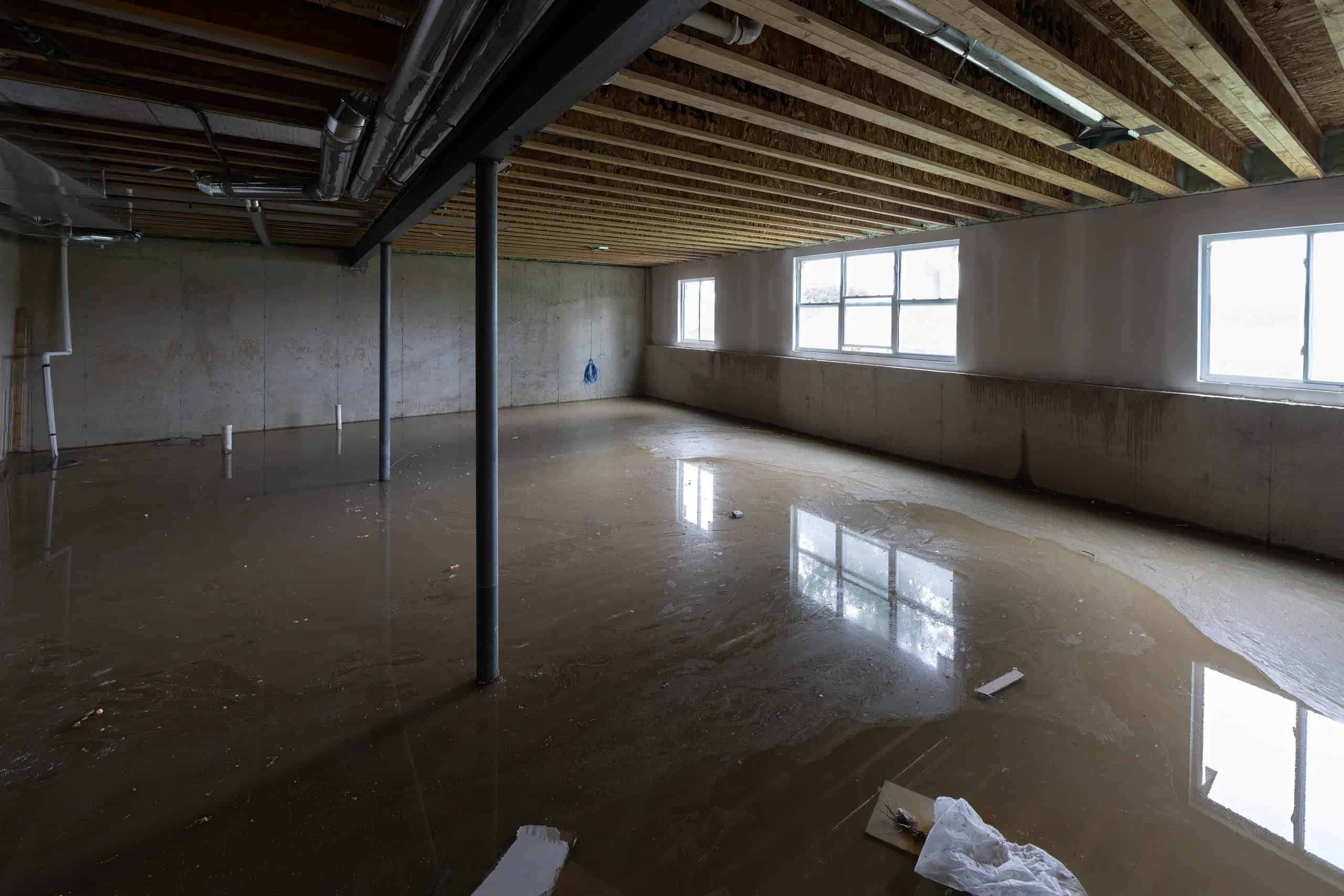
You had a leak. Maybe a pipe burst, a basement flooded, or a nor’easter pushed water through a window well you didn’t know was compromised. You cleaned it up — or at least it looks that way. The floors are dry. The fans did their job. Everything seems fine.
But “looks dry” and “is dry” are two different things. In Nassau County, where the housing stock is old, the water table is high, and summer humidity sits well above 70%, the conditions for mold growth can exist long after the visible water is gone. Here’s what’s actually happening — and what it means for your home.
How Water Damage Leads to Mold Growth
Mold doesn’t need much to get started. Moisture, a surface to grow on, and the right temperature — that’s it. Inside a Nassau County, NY home after a water event, all three conditions are almost always present at the same time.
Mold spores are naturally airborne everywhere, indoors and out. They’re not the problem on their own. The problem is when they land on a wet surface and find the conditions they need to germinate. That process begins within 24 hours of water damage in environments where relative humidity exceeds 55% — which describes virtually every wet basement, flooded crawl space, or water-damaged wall cavity on Long Island.
By the 48-to-72-hour mark, what started as germination becomes visible colonization. At that point, you’re no longer in prevention territory. You’re in remediation territory — and the scope, timeline, and cost of the work expand significantly the longer it goes unaddressed.
Why Nassau County Homes Are More Vulnerable Than Most
The 24-to-48-hour window that gets cited in most guides assumes a fairly standard indoor environment — around 70°F and 50% relative humidity. Nassau County doesn’t always cooperate with those assumptions.
Long Island sits between two bodies of water. In summer, outdoor humidity routinely climbs above 70%, and in homes without adequate air conditioning — or with HVAC systems that aren’t running consistently — indoor humidity can follow. That compresses the effective window for mold growth. Conditions that might give a homeowner two full days to respond in a drier inland climate can shrink to a single day in a South Shore basement in August.
The housing stock makes things more complicated. The median Nassau County home is roughly 73 years old. That means original plumbing that’s more likely to fail, finished basements that were built without modern moisture barriers, and wall assemblies that use materials — wood framing, plaster, older drywall — that absorb moisture and hold it. When water gets into those materials, it doesn’t just sit on the surface. It wicks inward, and the interior stays wet long after the outside feels dry to the touch.
Then there’s the water table. Long Island’s sandy, permeable soil means groundwater finds its way into below-grade spaces more readily than in areas with denser soil. A basement doesn’t need a catastrophic flood event to accumulate enough moisture to trigger mold. A slow seep through a foundation crack after a heavy rain can be enough — especially if it goes unnoticed for a few days.
Communities along the South Shore — Long Beach, Oceanside, Freeport, Merrick, Bellmore, and Wantagh — carry the highest combined risk. They have the oldest housing stock, the most direct coastal flood exposure, and the highest groundwater pressure. But inland Nassau County isn’t insulated either. The remnants of Hurricane Ida in 2021 demonstrated that water intrusion events aren’t limited to beachfront properties. Communities well inland saw significant basement flooding from rainfall alone.
The Biggest Mistake Homeowners Make After a Water Event
Running fans and mopping up standing water is a reasonable first response. The mistake is assuming that’s enough.
Consumer drying equipment — box fans, shop vacs, even the better residential dehumidifiers — addresses visible surface moisture. What it can’t do is reach the moisture that has already migrated inside wall cavities, under subfloor assemblies, into insulation, or behind baseboards. That moisture doesn’t evaporate on its own. It stays trapped, and it feeds mold growth in spaces you can’t see and may not smell until the colony is well established.
Professional remediation starts with thermal imaging and moisture mapping — tools that detect temperature differentials in building materials that indicate trapped moisture. This step alone changes the picture significantly. It’s common for a thermal scan to reveal active moisture behind drywall that appears completely dry on the surface. Without that scan, a homeowner — or even a contractor without the right equipment — would have no way to know it was there.
The other common mistake is treating visible mold with bleach and calling it done. Bleach is effective on non-porous surfaces. On drywall, wood framing, or insulation — the materials that make up most of a Nassau County home’s interior — it doesn’t penetrate deep enough to reach the root structure of the mold colony. It kills what’s on the surface and leaves the rest intact. The mold comes back, usually faster the second time, because the underlying moisture problem was never resolved.
Addressing mold correctly means finding every moisture source, removing materials that can’t be cleaned, treating the structural surfaces that remain, and verifying through post-remediation testing that indoor mold levels have returned to normal. That last step — clearance testing — is what confirms the work was actually done. Without it, you’re taking the contractor’s word for it.
Mold Detection and Removal: What the Process Actually Looks Like
A legitimate mold remediation process follows a defined sequence. It starts with assessment, moves through containment and removal, and ends with verification. Each step matters, and skipping any of them creates problems down the line.
In New York State, the assessment and remediation steps must be performed by separate licensed entities. Under Article 32 of the NYS Labor Law, which has been in effect since 2016, the same company cannot legally perform both the mold assessment and the mold remediation on the same property. This anti-fraud provision exists to prevent contractors from inflating the scope of work. If a company offers to assess your home and immediately perform the remediation under one contract, that’s a violation of state law — and a signal worth taking seriously.
What follows here is what the process looks like when it’s done correctly.
Emergency Mold Inspection in Nassau County
An emergency mold inspection isn’t just a visual walkthrough. A qualified inspector uses moisture meters, thermal imaging cameras, and air sampling to build a complete picture of what’s happening inside the structure — not just on the surfaces.
The inspection identifies the moisture source first. Mold remediation without addressing the source is a temporary fix. If water is still entering the structure through a foundation crack, a failed flashing detail, or a plumbing leak, the mold will return regardless of how thoroughly the visible growth is removed. Finding and confirming the source is the foundation of everything that follows.
Air sampling during the inspection measures the concentration of mold spores in the indoor air and compares it to outdoor baseline levels. This is how the severity of the problem gets quantified — and it’s also the benchmark that post-remediation clearance testing uses to confirm the work is complete. The goal isn’t a sterile environment. Mold spores exist naturally in the air everywhere, indoors and out. The goal is to return indoor levels to parity with outdoor air quality, which is what the IICRC S520 standard defines as a normal, remediated condition.
For Nassau County homeowners, the inspection phase also matters because of what else might be present. Homes built before 1978 — which is the majority of Nassau County’s housing stock — frequently contain asbestos-containing materials: floor tiles, pipe insulation, ceiling textures, joint compound. Floodwater disturbs these materials. A mold remediation contractor who isn’t also licensed for asbestos abatement will have to stop work when those materials are discovered, leaving the project in limbo while a second contractor is brought in. We hold both licenses in-house, which means the project doesn’t stop when something unexpected turns up.
What to Look for in Mold Testing Contractors in Nassau County
Licensing is the starting point, not a bonus feature. In New York State, performing mold remediation without a NYS Department of Labor Mold Remediation Contractor license is illegal. The license requires completion of a DOL-approved training course and a minimum of $50,000 in liability insurance. It’s not a difficult credential to verify — ask for the license number and confirm it with the DOL. A contractor who can’t produce it is operating outside the law, and if the work is done incorrectly, the cost of re-remediation falls entirely on the homeowner.
Beyond the NYS DOL license, look for IICRC certifications — specifically the Applied Microbial Remediation Technician (AMRT) credential, which requires both coursework and documented field experience in mold remediation. The AMRT, combined with Water Damage Restoration (WRT) and Applied Structural Drying (ASD) certifications, signals that the contractor understands the full water-to-mold chain, not just the visible mold removal step.
Ask whether post-remediation clearance testing is included as a standard part of the scope. A contractor who doesn’t offer it — or treats it as optional — is leaving out the only objective confirmation that the remediation was successful. The NYS Department of Labor expects it. You should too.
Finally, ask about the full scope of what they’re licensed to handle. In a Nassau County home, mold remediation rarely happens in isolation. Water damage leads to structural drying. Structural drying reveals hidden moisture. Hidden moisture reveals mold. Mold remediation in a pre-1978 home often uncovers asbestos or lead paint. A contractor who can only handle one piece of that chain will create coordination gaps — and gaps create delays, cost overruns, and liability exposure for the homeowner.
We hold a NYS DOL Mold Remediation Contractor license, IICRC AMRT, WRT, and ASD certifications, NYS DOL Asbestos Handler/Abatement license, USEPA Lead and RRP certifications, and a Nassau County General Contractor license. That combination isn’t common among Nassau County operators — and it’s what allows us to take a project from water extraction through final reconstruction without stopping mid-scope.
When to Call a Mold Remediation Service in Nassau County
If you’ve had water damage in the last 72 hours, the most important thing you can do right now is get a professional moisture assessment — not because mold is definitely present, but because it may already be growing in places you can’t see or smell yet. The difference between catching it early and finding it after two weeks is significant, both in scope and in cost.
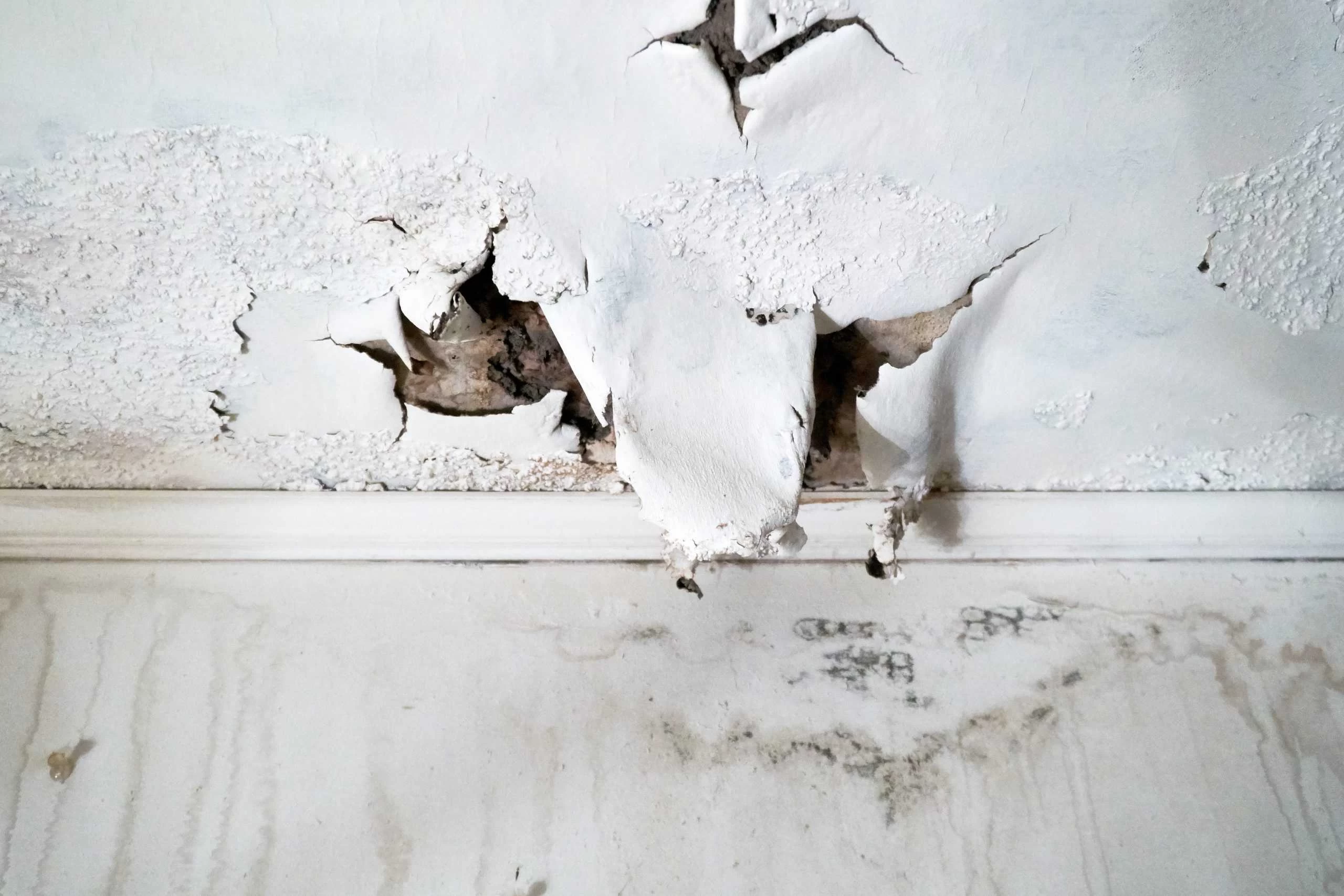
If the water event was weeks or months ago and you’re now noticing a musty smell, discoloration on walls or ceilings, or unexplained respiratory irritation, the same answer applies. Visible mold is almost always a sign that more is present behind the surface.
We’ve completed more than 5,000 projects across New York State over the past 12-plus years, and we work directly with insurance carriers — handling the claim paperwork and billing the insurance company directly so you’re not managing that process on top of everything else. If you’re in Nassau County and you’re not sure what you’re dealing with, Green Island Group is available 24/7 and can be on-site within an hour.