Summary:
You’ve probably closed that pool for the last time and you already know it. Maybe the repair quotes stopped making sense years ago. Maybe your realtor just told you it’s scaring buyers. Maybe the kids are grown and the yard has become a liability you’re paying to maintain.
Whatever got you here, you’re now looking at a real decision—not just whether to remove the pool, but how. And in Nassau County, that decision matters more than most contractors will tell you upfront. The method you choose affects your property taxes, your ability to build on that land later, and what you’re legally required to disclose when you sell. Here’s what you actually need to know.
What Pool Removal Contractors Actually Do in Nassau County
Pool removal isn’t a single service—it’s a sequence of regulated steps, and the complexity depends heavily on where you are in Nassau County. We require a demolition permit before any work begins. The county’s plan review fee runs $300, and we also need a rodent-free certification prior to demolition.
On top of that, Nassau County contains dozens of incorporated villages—Garden City, Rockville Centre, Great Neck, Oyster Bay, Long Beach—each with its own building department. Requirements for backfill standards, required inspections, and permit documentation vary from one municipality to the next. A contractor who’s done pool removals in Suffolk County or Queens isn’t automatically prepared for the specific procedural landscape here.
That’s why we focus exclusively on Nassau County work. We know the village-by-village variations, the inspection schedules, and the documentation each municipality expects. It’s not glamorous, but it’s the difference between a project that moves smoothly and one that stalls because a permit reviewer in your village flagged something unexpected.
Swimming Pool Removal Contractors: Partial Fill-In vs. Full Removal
These two methods are often presented as a simple cost trade-off. They’re not. The differences follow you long after the crew leaves.
A partial fill-in means the top portion of the pool shell is demolished, drainage holes are punched into the bottom, and the cavity is filled with the rubble plus gravel and clean fill. It’s faster—typically five to seven days—and it costs less. But the lot is permanently flagged as having a former pool. That filled area is not considered structurally sound for future construction. And in New York, you’re required to disclose a filled-in pool to buyers. Some Nassau County realtors will tell you this disclosure alone is enough to knock a meaningful amount off your sale price or extend your time on market.
Full removal is exactly what it sounds like. We excavate the entire pool structure and haul it off the property. Engineered backfill is brought in, compacted to structural standards, and the yard is properly graded and restored. The project takes ten to fourteen days and costs more. But when it’s done, the lot returns to fully buildable condition. No disclosure requirement. No restriction on future construction. No asterisk on the property record.
The right choice depends on what you’re planning to do with the space. If you want to build a deck, an addition, or an ADU where the pool sits, full removal is the only path that actually works—a geotechnical foundation investigation is required before you can build over any former pool site, and a partial fill-in won’t pass that test. If you’re selling and your realtor has flagged the pool as a deterrent, full removal gives you a cleaner property record to bring to the table. If you’re staying put, have no plans for the space, and the cost difference is genuinely prohibitive, a partial fill-in may be a reasonable option—as long as you go in with clear eyes about what it means.
One more thing worth knowing: Nassau County’s property tax system means that an inground pool increases your assessed value, and therefore your tax bill. Removing a pool—done properly and with the right documentation—opens the door to filing for a reduced assessment. That’s a real financial consideration in a county where property taxes are already among the highest in the nation.
Nassau County's High Water Table and What It Means for Your Pool Removal
This is the detail most out-of-area contractors miss entirely, and it’s one of the most important factors in Long Island pool removal.
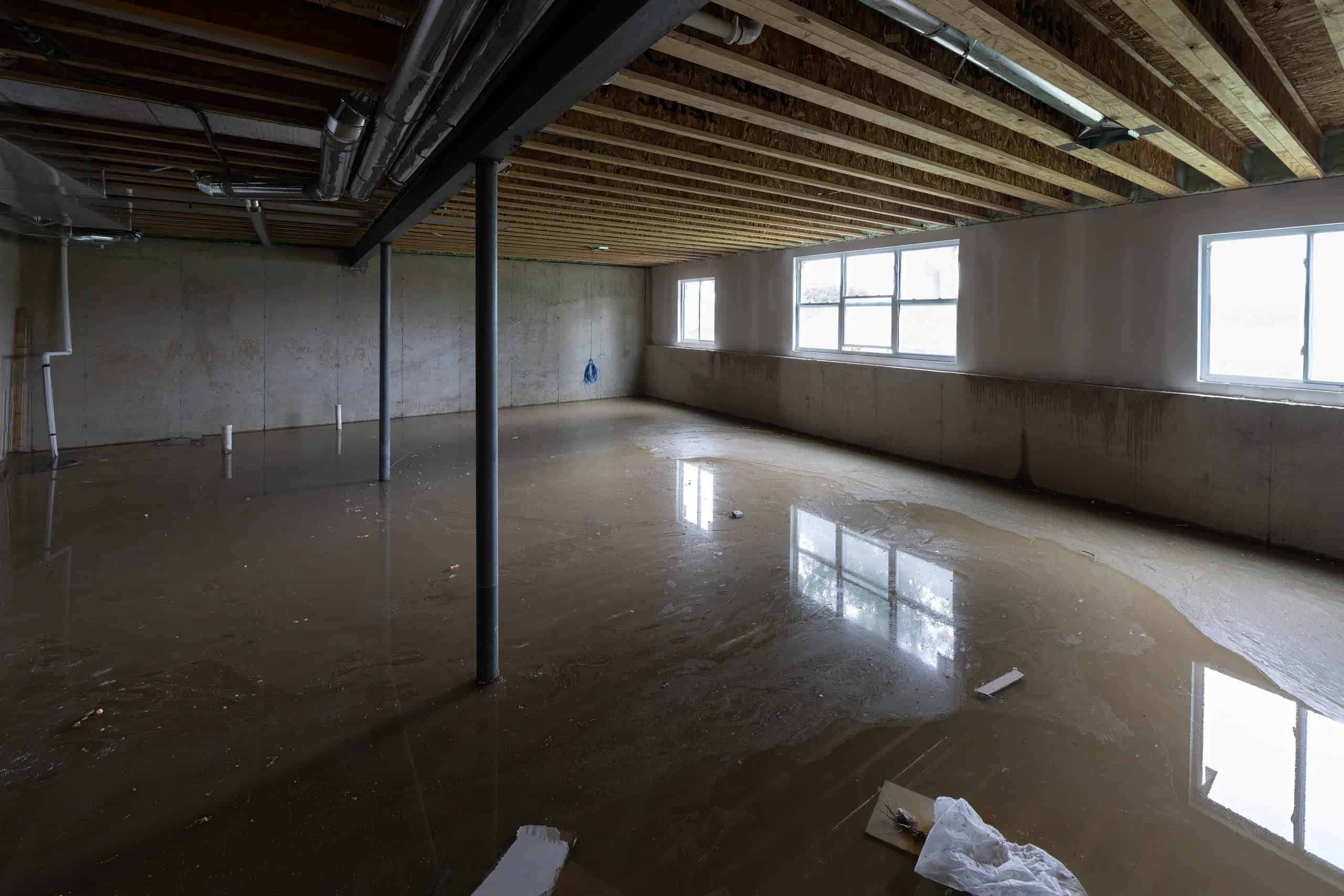
Nassau County’s proximity to the Atlantic Ocean and Long Island Sound means the water table is unusually shallow in many parts of the county. This is especially true in South Shore communities like Long Beach, Oceanside, Freeport, and Valley Stream—areas that also carry storm surge and flood risk from events like Hurricane Sandy and the nor’easters that followed. In these neighborhoods, groundwater intrusion during excavation is a genuine engineering challenge, not a hypothetical.
For partial fill-ins, proper drainage hole placement in the pool bottom isn’t optional—it’s what prevents hydrostatic pressure from pushing the empty shell upward over time. Contractors who don’t account for Nassau County’s water table conditions can create drainage and settling problems that show up years later, long after they’ve cashed your check. You end up with a sunken, uneven patch of yard and no one to call.
For full removal projects, the same water table conditions affect excavation planning, equipment selection, and backfill engineering. Engineered compaction isn’t just a quality upgrade—it’s what protects the structural integrity of the restored yard over multiple freeze-thaw cycles.
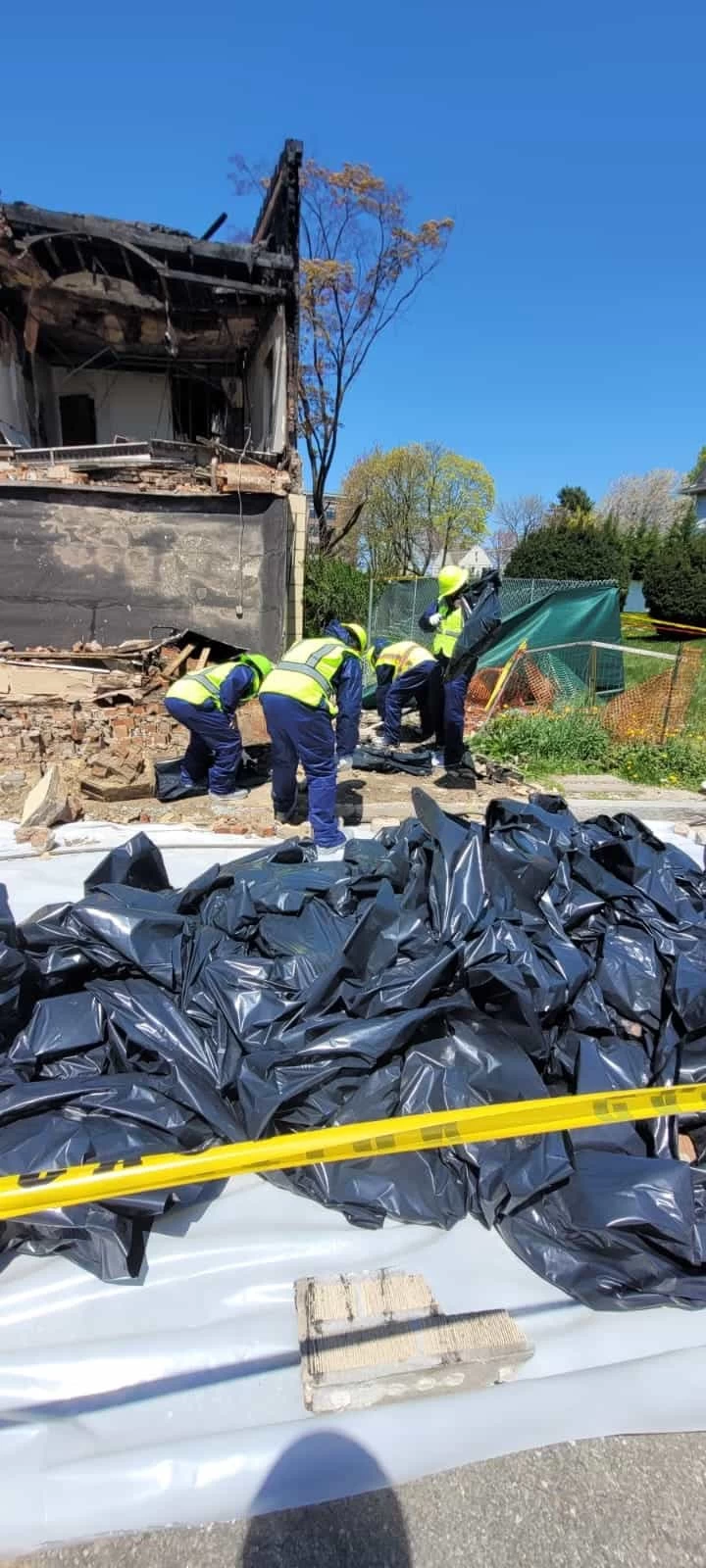
There’s also the matter of Nassau County’s housing stock. The majority of residential properties here were built during the post-WWII suburban boom of the 1950s and 1960s, and many of the pools were installed in the same era or through the 1980s. Homes built before 1980 commonly contain asbestos-containing materials—sometimes in pool equipment sheds, sometimes in decking underlayment, sometimes in adjacent structures that get disturbed during demolition. A contractor who isn’t equipped to identify and handle hazardous materials in-house will stop the job when they find something, leaving you to coordinate a separate abatement contractor before work can resume. We handle asbestos abatement in-house under NYS and USEPA regulations, which means no project stoppages and no surprise scope changes when older materials turn up.
Complete Demolition Services for Nassau County Properties
Pool removal is one piece of what we do. Green Island Group has been working across Nassau County for over 12 years, completing more than 5,000 restoration and demolition projects. We hold active contracts with Nassau County and multiple New York State agencies—including the NYS Office of General Services, the Dormitory Authority of the State of New York, and the NYS Office of Parks, Recreation and Historic Preservation. We’re also NYS and NYC M/WBE Certified.
That kind of track record doesn’t come from doing easy jobs. It comes from knowing how to handle the complicated ones—older properties, tight municipal timelines, projects where something unexpected turns up mid-excavation.
Residential Demolition Contractors vs. Junk Haulers: Why It Matters in Nassau County
A lot of homeowners searching for pool removal contractors end up with quotes from junk removal companies or general landscapers who offer demo as a side service. There’s nothing wrong with those businesses in their lane—but pool removal in Nassau County isn’t their lane.
Licensed residential demolition contractors are required to carry general liability insurance and workers’ compensation coverage under New York State law. We pull permits, manage the inspection schedule, and take responsibility for the work meeting code. When you hire an unlicensed operator who skips the permit process, you’re the one holding the liability if something goes wrong—an injury on your property, a code violation that surfaces at closing, a failed inspection that requires re-excavation. These aren’t hypothetical risks in Nassau County. They happen, and they’re expensive.
There’s also the question of what happens when the job gets complicated. A junk hauler who hits a layer of asbestos-containing material in your pool shed doesn’t have the credentials to handle it. They stop work, and you’re left coordinating a remediation contractor, restarting the permit process, and watching your timeline fall apart. We carry in-house asbestos abatement capability specifically because Nassau County’s older housing stock makes this a real scenario, not a rare one.
We also offer financing up to $200,000 at 0% APR through Enhancify. For a project that can run anywhere from $6,000 to $25,000 or more in the Nassau County market depending on pool size and method, that’s a meaningful option—and it’s one that most local contractors don’t offer at all.
What Nassau County Homeowners Actually Ask Before Removing a Pool
A few questions come up in almost every conversation we have with Nassau County homeowners about pool removal, and they’re worth addressing directly.
**Do I need a permit to remove a pool in Nassau County?** Yes, without exception. Nassau County requires a demolition permit before any pool removal begins, along with a rodent-free certification. The plan review fee is $300. We pull this permit as part of our scope—not asking you to handle it. If a contractor suggests you can skip the permit to save time or money, that’s a red flag worth taking seriously.
**Will removing my pool affect my property taxes?** Potentially, yes—in a good way. In Nassau County, inground pools are a factor in your assessed value. Removing a pool and properly documenting the work can support a tax assessment reduction. Nassau County’s formal grievance process allows homeowners to challenge assessments after removing improvements. It’s worth discussing with a local property tax professional after your project is complete.
**How long does pool removal take on Long Island?** A partial fill-in typically runs five to seven days from start to finish. Full removal takes ten to fourteen days, depending on pool size, access, and what turns up during excavation. We give you a realistic timeline before work begins—not an optimistic estimate that shifts once we’re on-site.
**What if asbestos turns up during the project?** For homes built before 1980, it’s a real possibility—in the pool equipment shed, in decking underlayment, or in adjacent structures. We handle asbestos abatement in-house, which means the project keeps moving. There’s no subcontractor delay, no project stop, and no separate mobilization cost.
**Should I do full removal or fill-in before selling?** It depends on your specific situation and your realtor’s read on the local market. In many Nassau County neighborhoods, particularly on the South Shore where lot sizes are smaller and buyer concerns about liability and maintenance are higher, full removal gives you a cleaner property record and eliminates the disclosure requirement. We’ll give you a straight answer based on your situation—not a recommendation based on what’s easier for us to execute.
Choosing the Right Pool Removal Contractor in Nassau County
The decision to remove a pool is usually straightforward. The decision about how to do it—and who to trust with it—is where things get complicated.
In Nassau County, you’re dealing with village-specific permit requirements, a water table that demands real engineering, an aging housing stock that raises the odds of hazardous materials, and a property tax system where the right documentation can actually save you money. These aren’t details a generalist contractor is going to walk you through.
If you’re ready to move forward—or just want a clear picture of what your specific project would involve—Green Island Group is available to walk through it with you. No pressure, no vague estimates. Just a straight conversation about your property, your timeline, and what the right approach actually looks like for your situation in Nassau County.