Summary:
You had it treated. Maybe a year ago, maybe two. Someone came in, sprayed something, pulled out some drywall, and told you it was handled. Then the smell came back. Or you spotted it again behind the same cabinet, in the same corner of the basement. That’s not bad luck — that’s a predictable outcome when the moisture source is never found or fixed. Mold doesn’t grow because of the mold. It grows because of the water. And until that part of the equation changes, the mold will keep coming back no matter how many times the surface gets treated.
What a Complete Mold Remediation Service Actually Includes
There’s a meaningful difference between cleaning up mold and actually remediating it. Cleaning removes what’s visible. Remediation is the full process — identifying where moisture is entering or accumulating, containing the affected area so spores don’t spread during removal, extracting contaminated materials, treating remaining surfaces, and then verifying through post-remediation testing that the environment is clear.
The part most companies skip — or handle incompletely — is the moisture source. It’s also the most important step. If a slow foundation leak, a failed pipe joint behind the wall, or a degraded roof flashing is still allowing water in, the conditions for mold growth never actually change. You can remove every visible colony in the house, and within weeks, the spores already present in the air will find that moisture and start the cycle again.
Why House Mold Removal Without Source Identification Almost Always Fails
Here’s something most homeowners don’t realize until after they’ve been through a failed remediation: bleach and surface treatments penetrate only about 1/16 of an inch. That’s enough to kill what’s sitting on the surface of drywall or tile grout, but mold doesn’t stay on surfaces. It grows into porous materials — wood framing, insulation, subfloor panels, drywall backing — and once it’s inside those materials, a surface spray doesn’t reach it.
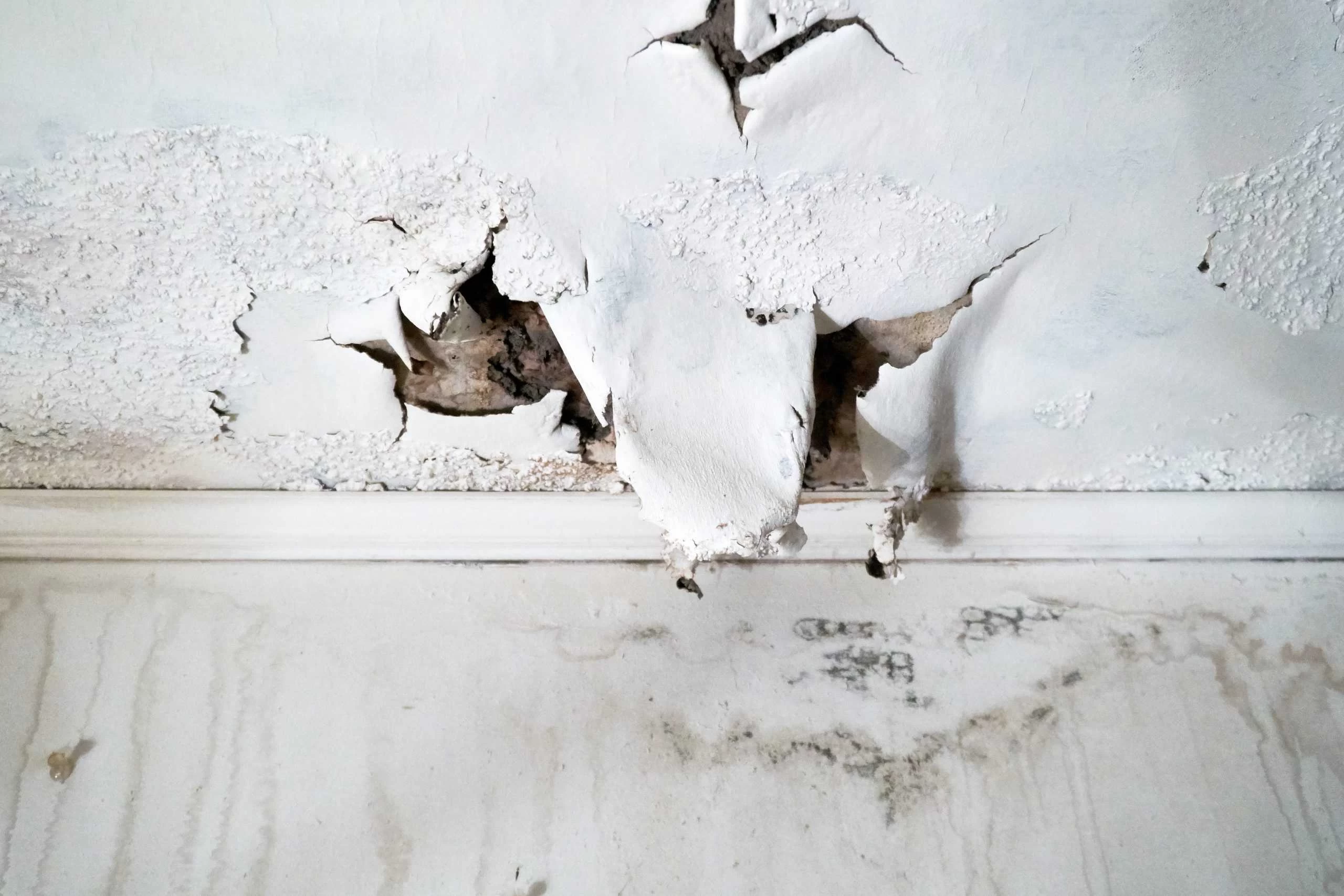
This is why the inspection phase matters so much. A proper inspection isn’t a walk-through with a flashlight. It uses moisture meters and thermal imaging cameras to detect elevated moisture levels inside walls, under flooring, and in ceiling cavities — places where mold is actively growing but completely invisible to the naked eye. Skipping this step means you’re treating a symptom while the underlying problem continues unchecked.
The same principle applies to HVAC systems. Mold growing inside ductwork can distribute spores throughout an entire house every time the system runs. A remediation that clears the bathroom or basement but doesn’t account for what’s in the ducts has left a significant source of ongoing contamination untouched. This is one of the more common reasons homeowners find mold recurring in rooms that were never originally affected — the air system is spreading it.
What source control actually means is identifying every pathway moisture is using to enter or accumulate in the home, then closing those pathways before or alongside the removal work. That might mean repairing a foundation crack, replacing compromised window flashing, fixing a slow plumbing leak, or improving ventilation in a poorly airflowed basement. The remediation work and the structural repair work have to happen together. If they’re treated as separate projects — or if the company doing the mold work can’t do the structural repair at all — there’s a gap in the process that the mold will eventually exploit.
Mold and Mildew Remediation: Understanding What You're Actually Dealing With
Mold and mildew are often lumped together, and while they’re related, they behave differently. Mildew tends to grow on surfaces — shower grout, window sills, tile — and is generally easier to treat because it stays on top of materials rather than growing into them. Mold is more aggressive. It colonizes porous materials, spreads through spores that become airborne during disturbance, and can establish hidden colonies inside wall cavities long before it becomes visible.
Both share the same root cause: moisture. And both will return if that moisture isn’t resolved. The distinction matters because homeowners who treat what looks like a mildew problem with a store-bought cleaner sometimes don’t realize they’re dealing with a deeper mold issue until the smell persists or the surface growth keeps returning. If you’re cleaning the same spot every few weeks, that’s not a cleaning problem — that’s a moisture problem presenting itself repeatedly.
The IICRC S520 standard — the professional benchmark for mold remediation — recognizes three distinct mold conditions based on the extent of contamination, ranging from normal fungal ecology to active mold growth. Proper protocol depends on which condition is present, which is why a legitimate remediation starts with a thorough assessment rather than an immediate quote. Any company that gives you a price before they’ve inspected the space thoroughly is guessing at the scope, and guessing at scope means the job is likely to be either incomplete or unnecessarily expanded.
What this means practically is that the assessment and the remediation need to be treated as connected steps, not separate services. The inspection informs the scope. The scope determines the protocol. And the protocol, when followed correctly, addresses both the existing contamination and the conditions that created it. That’s the full picture of what mold and mildew remediation is supposed to accomplish.
Water Damage Mold Growth in Nassau County Homes
Nassau County’s mold problem isn’t the same as the mold problem in a dry climate or a newer construction market. The conditions here are structurally different — and they make incomplete remediation significantly more likely to fail.
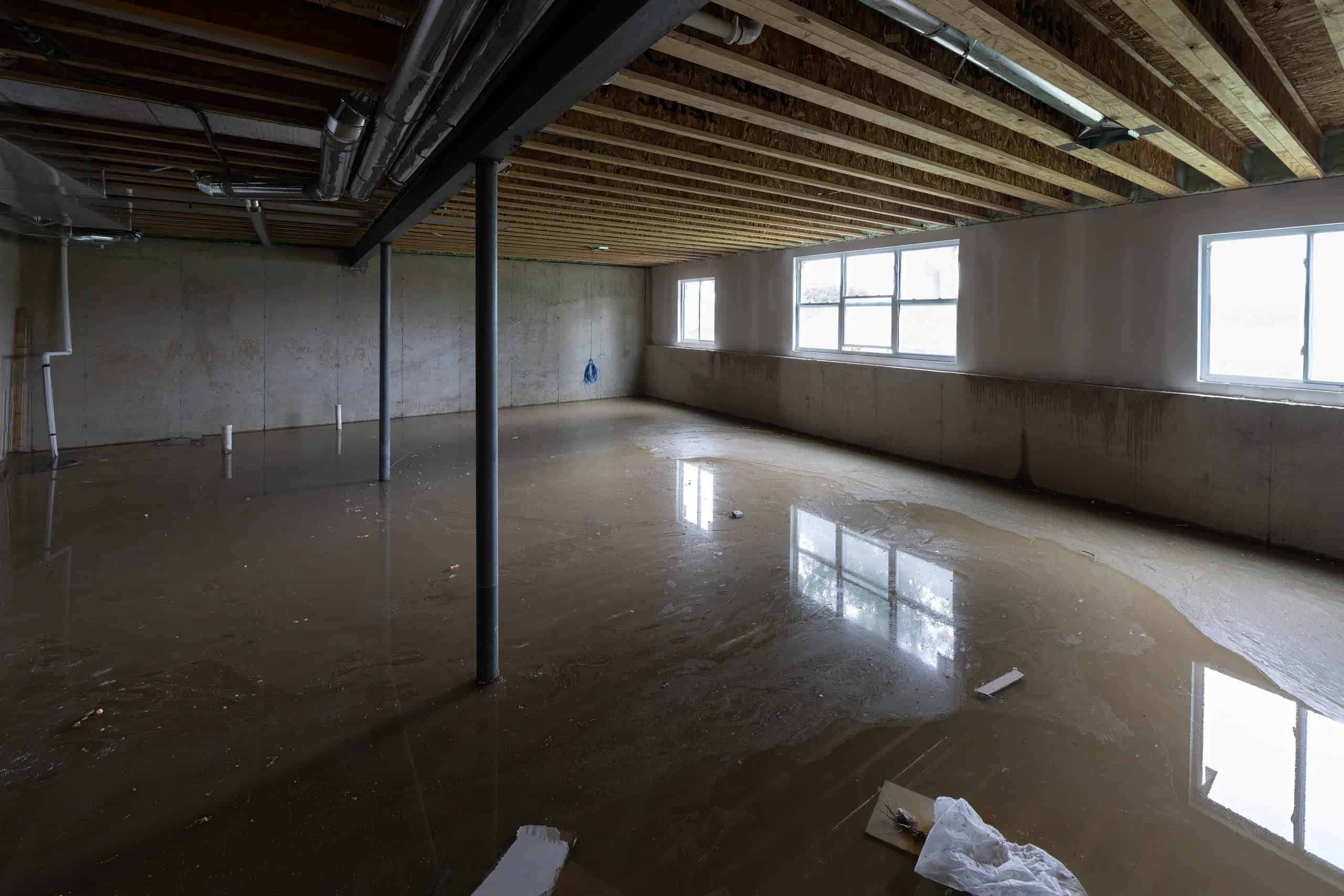
The south shore communities sit on barrier beach and bay fill. Long Beach, Freeport, Island Park, Merrick, Wantagh, the Five Towns — these neighborhoods have essentially no natural flood buffer, and sump pumps are standard equipment in most basements. Add Long Island’s high water table, which keeps ground moisture close to the surface year-round, and you have a market where basement moisture intrusion isn’t an occasional event. It’s a chronic condition that requires structural solutions, not just surface cleanup.
Why Nassau County's Aging Housing Stock Makes Source Control Harder to Find
Most of Nassau County’s housing was built between the 1940s and the 1970s. That’s not a knock on those homes — they were built to last, and many of them have. But aging infrastructure means aging plumbing, aging foundation waterproofing, and building materials that have had decades to develop slow leaks and micro-failures that don’t announce themselves until mold shows up somewhere.
A pipe joint that’s been weeping slowly behind a kitchen wall for two years doesn’t flood the house. It just keeps the wall cavity damp enough for mold to colonize. A foundation that was waterproofed in 1968 and never resealed doesn’t pour water into the basement. It allows enough seepage to keep the concrete block perpetually damp. These are the moisture sources that surface-only remediation misses completely — because they’re invisible without the right equipment and the right inspection process.
This is also part of the Hurricane Sandy legacy in Nassau County. The 2012 storm hit the south shore with a severity that displaced entire communities and left structural damage that, in some homes, was never fully resolved. Foundations that were compromised, waterproofing that was overwhelmed, crawlspaces that flooded and were dried out but never properly remediated — more than a decade later, those incomplete repairs are still producing mold problems. If you’re in a south shore community and you’ve had recurring mold since around 2013, there’s a reasonable chance the original water intrusion event was never fully addressed at the structural level.
The summer humidity compounds all of this. Long Island averages 70 to 75 percent relative humidity in July and August — above the EPA’s recommended indoor threshold of 60 percent. That means even without a flood or a plumbing failure, Nassau County homes face elevated mold risk every summer simply from the ambient air. Basements, crawlspaces, and poorly ventilated attics are particularly vulnerable because they trap that moisture without the benefit of air circulation or dehumidification.
What Nassau County Homeowners Should Actually Ask Before Hiring Anyone
If you’ve been through a remediation that didn’t hold, the instinct is often to find someone cheaper or faster. That’s understandable — but it’s usually the wrong variable to optimize for. The question isn’t who charges less. It’s who can actually close the moisture source, not just remove what’s currently growing.
A few things worth asking any company before you hire them: Do they hold a New York State mold remediation contractor license? New York State legally requires it for any company performing or approving mold remediation work — and not every operator in Nassau County is compliant. Do they hold a General Contractor license in Nassau County? This matters because identifying a moisture source and actually repairing it are two different things. A mold company that can’t perform structural repairs has to hand that work off to a second contractor, which creates a coordination gap and often a timeline gap during which the moisture source continues to do damage.
Do they use thermal imaging and moisture meters during the inspection, or are they doing a visual walkthrough? Do they perform post-remediation verification — actual clearance testing — to confirm the job is complete? Or do they pack up and leave you with their word that it’s handled?
We ask these questions not to complicate your decision, but because we’ve seen what happens when they go unasked. We hold a Nassau County General Contractor license alongside our mold remediation credentials, which means when we find a failing foundation seal or a slow leak behind a wall, we can repair it as part of the same project — not hand you a referral and wish you luck. We use thermal imaging on every inspection because the moisture sources that cause mold to return are almost never visible on the surface. And we don’t consider a job finished until clearance testing confirms the environment is clear.
We also handle insurance claims directly, which removes a significant source of stress for homeowners who are already dealing with enough. If financing is needed for work that falls outside coverage, we offer options up to $200,000 at 0% APR through Enhancify. The goal is to make it as easy as possible to do the job right the first time — because doing it twice costs more in every sense.
How to Make Sure Your Mold Remediation Actually Lasts
Mold remediation works when the moisture source is found, repaired, and verified — not just when the visible mold is removed. In Nassau County, where the water table is high, the housing stock is aging, and summer humidity pushes well past the threshold for mold growth, that source-control step isn’t optional. It’s the whole thing.
If you’ve had mold treated before and it came back, the remediation was incomplete. That’s not a character flaw of the previous company — it’s a structural gap in how a lot of mold work gets done. The fix is finding someone who can handle the full scope: inspection with the right equipment, removal under proper containment, structural repair of the moisture source, and documented clearance testing at the end.
If you’re in Long Beach, Freeport, Merrick, Wantagh, or anywhere else on Nassau County’s south shore — or if you’ve been dealing with a recurring mold problem in an older home — Green Island Group is worth a call. We’ve been working in this market for over 12 years, and we understand the specific conditions that make mold a harder problem here than most places. We’re available 24/7, and we’d rather help you understand the scope of the problem upfront than have you discover it again in six months.