Summary:
Most Nassau County homeowners assume that asking “are you licensed?” is enough. It isn’t. A contractor can say yes, hand you a business card, and still be operating without the specific registrations, certifications, and documentation that New York State and Nassau County actually require for demolition work. One contractor in Nassau County walked away with a $2,400 summons — not because they did the work badly, but because they didn’t have the right paperwork before they started. This guide tells you exactly what a legitimate demolition specialist must hand over before anyone picks up a tool on your property.
What Nassau County Law Actually Requires Before Demolition Begins
Nassau County isn’t like most markets. The county has its own Administrative Code — specifically Section 21-11 — that requires every contractor performing home improvement work, including demolition, to hold a Nassau County Home Improvement Contractor (HIC) license. This isn’t optional, and it isn’t covered by a New York State contractor registration alone. It’s a county-level requirement, enforced by Nassau County Consumer Affairs, which administers more than 10,000 active licenses across the county.
The consequences of hiring someone without it aren’t just theoretical. Post-Hurricane Sandy, Nassau County Consumer Affairs ran a sweep of unlicensed contractors working in storm-damaged neighborhoods. The group collectively faced $156,000 in fines, and vehicles used in the unlicensed work were impounded. A separate case resulted in a criminal conviction after an unlicensed contractor defrauded Nassau County homeowners and business owners out of more than $582,000.
The New York Department of Financial Services explicitly lists Nassau County as one of the areas of the state where unlicensed contractor work is illegal — not just inadvisable, illegal.
The Five Documents Every Licensed Demolition Specialist Must Provide
Before any professional demolition services begin on your Nassau County property, a legitimate contractor must be able to hand you five things. Not promise them. Not say they’re coming. Actually produce them.
**The first is a Nassau County Home Improvement Contractor License.** You can verify this directly through Nassau County Consumer Affairs. If a contractor can’t give you a license number you can look up, the conversation should end there.
**The second is proof of general liability insurance at a minimum of $2,000,000 in total coverage.** That threshold isn’t arbitrary — it’s what Nassau County and New York State require specifically for demolition contractors, which is more than four times the minimum required for most specialty contractors. The certificate should name you, the property owner, as an additional insured. If it doesn’t, their coverage protects them, not you.
**The third is workers’ compensation insurance.** This one protects you from a scenario most homeowners don’t think about: if a worker is injured on your property and the contractor doesn’t carry workers’ comp, you can be held liable. New York State mandates it for any contractor with employees.
**The fourth is a completed asbestos survey conducted by a certified New York State Asbestos Inspector.** This is required by law under 12 NYCRR Part 56 before demolition is performed on any building in New York State. Given that the majority of Nassau County’s housing stock was built between the 1940s and 1970s — think Levittown and the neighborhoods that followed — asbestos-containing materials are legally presumed to be present until a certified inspector says otherwise. If the contractor plans to skip this step or hasn’t arranged it yet, they’re not ready to start.
**The fifth is a rodent-free certification from the Nassau County Health Department.** Before demolition can legally proceed on any residential, commercial, or industrial property in Nassau County, the Health Department must inspect the premises and issue a certificate confirming it’s free of rodent infestation. It’s a Nassau County-specific requirement, and it’s not something you can skip or do after the fact. Contractors who don’t know about it are telling you something important about how well they know this market.
Why Permits Matter More Than Most Contractors Will Tell You
Permits are the item contractors most often try to hand off to the homeowner, and it’s worth understanding why that’s a problem. When a contractor pulls a permit in their own name, they’re taking on legal accountability for the work meeting code. When they ask you to pull it — or skip it entirely — that accountability shifts to you.
Unpermitted demolition work in Nassau County can create title problems when you go to sell your home. It can trigger fines against the property. It can void homeowner’s insurance coverage for claims related to that work. And if something goes wrong structurally, you’re the one holding the liability.
A legitimate demolition contractor in Nassau County will pull the permit themselves, in their own name, before work begins. They’ll know which building department to file with — whether that’s the Town of Hempstead, North Hempstead, Oyster Bay, or one of the incorporated villages — because the permit process isn’t identical across the county. An out-of-area contractor or someone new to Nassau County will often discover these nuances mid-project, which is exactly when your timeline starts to slip.
The broader point is this: the permit isn’t a formality. It’s the document that proves the work was done legally, inspected, and approved. For a property in Nassau County — where home values are among the highest in the country and buyers’ attorneys look at everything — that documentation matters long after the demolition crew has packed up and left.
What Happens When Asbestos Is Found — and Why It Affects Your Timeline
Here’s the part most homeowners find out too late. If the asbestos survey turns up positive — and in pre-1989 Nassau County homes, that’s a realistic outcome — demolition cannot legally begin until a NYSDOL-registered asbestos abatement contractor removes the affected materials. This is a separate step, with its own licensing requirements, its own permits, and its own timeline.
Contractors who don’t have abatement capability in-house will need to bring in a separate subcontractor, which adds coordination time, potential scheduling gaps, and another set of insurance and licensing documents to verify. For a homeowner trying to hit a construction start date, that gap can be the difference between a project that flows and one that stalls for weeks.
Building Abatement Demolition: Why One Contractor for Both Phases Matters
The term “building abatement demolition” refers to the full sequence: hazardous material removal first, structural demolition second. In theory, you can hire two separate contractors for these phases. In practice, that split creates real problems.
When abatement and demolition are handled by different companies, you’re managing two separate schedules, two separate insurance certificates, two separate scopes of work — and if anything goes wrong between the two phases, each contractor has a natural incentive to point at the other. Liability gaps in that handoff are common and genuinely difficult to resolve.
When one contractor handles both, the sequence is managed internally. The abatement crew and the demolition crew are working from the same project plan, with the same site safety protocols, under a single contract. If asbestos is discovered in an area that wasn’t initially flagged, the same team handles it — no delay, no renegotiation, no waiting for a second contractor to clear their schedule.
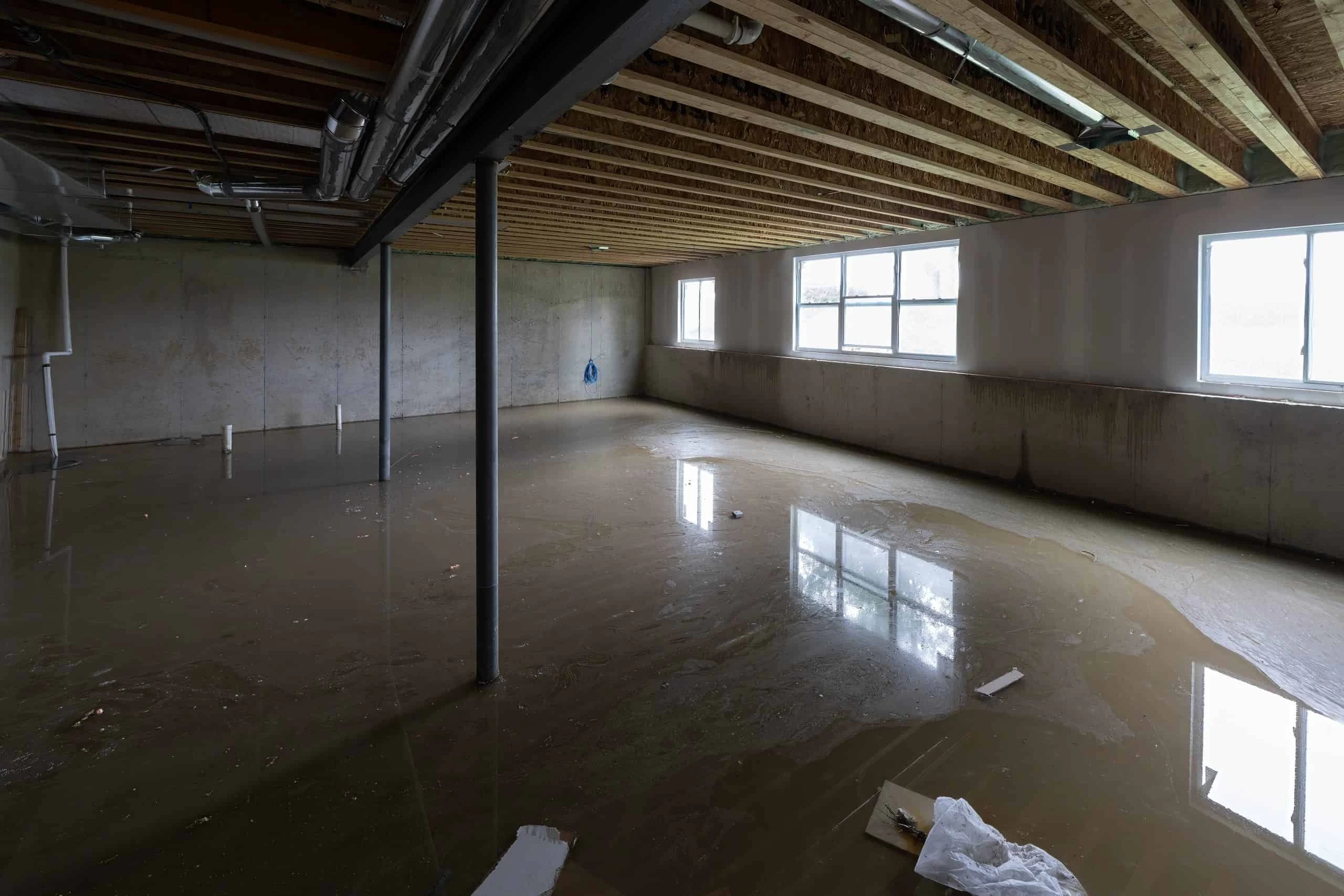
For Nassau County homeowners dealing with restoration-driven demolition — post-flood, post-fire, post-storm — this matters even more. When water damage has compromised structural elements and mold has set into the walls, you’re often looking at a project that moves through multiple phases quickly. Coordinating that across multiple contractors while also managing an insurance claim is a significant burden. Having a single contractor who can document the full scope, communicate directly with your insurer, and move through abatement and demolition without a handoff gap is a practical advantage, not just a convenience.
We handle both phases under one contract. We’re NYSDOL-registered for asbestos abatement and licensed for demolition in Nassau County, which means the survey, the abatement, and the demolition can move in sequence without the scheduling friction that comes from managing two separate companies.
Specialized Demolition Services in Nassau County: The Real Risk for Homeowners
There’s a version of this that plays out regularly in Nassau County, and it usually starts the same way: a homeowner gets three quotes, the lowest one wins, and six weeks later they’re dealing with a stop-work order, a permit that was never pulled, or a contractor who’s stopped returning calls.
The specialized demolition services that Nassau County projects require — asbestos-integrated workflows, rodent certifications, county-specific permits, proper insurance documentation — aren’t things a low-bid operator is pricing into their estimate. They’re cutting corners on the compliance steps that add cost and time, which is exactly how they come in cheaper. The homeowner doesn’t find out until the county shows up, or until the project stalls because the next contractor in the sequence won’t touch work that wasn’t properly permitted.
Nassau County Consumer Affairs actively investigates and prosecutes unlicensed home improvement contractors. The fines run from $500 to $5,000 per offense, with civil penalties of $100 per day. Imprisonment is authorized under the statute. And here’s the detail that most homeowners don’t know: an unlicensed contractor cannot sue you for breach of contract in New York, but you also lose significant legal recourse against them if the work is defective.
Nassau County’s coastal geography adds another layer. After major storm events — Sandy in 2012, Ida in 2021 — the county sees a surge in out-of-area contractors who move in quickly, offer low prices, and don’t carry the county-specific licensing that Nassau County requires. The Governor’s office issued explicit consumer alerts after Sandy warning Nassau County residents about exactly this pattern. If a contractor can’t show you a Nassau County HIC license number you can verify, that’s not a minor gap in their paperwork — it’s a legal problem that becomes your legal problem the moment work starts on your property.
Choosing a Licensed Demolition Specialist in Nassau County the Right Way
The five items — Nassau County HIC license, general liability insurance at $2,000,000 minimum, workers’ compensation coverage, a completed asbestos survey, and a rodent-free certification from the Nassau County Health Department — aren’t a wishlist. They’re the legal baseline for demolition work in this county. A contractor who can produce all five before work begins is telling you something real about how they operate. A contractor who can’t is telling you something real too.
Nassau County is one of the most actively enforced contractor licensing markets in New York State. That enforcement exists because the consequences of bad demolition work — asbestos exposure, structural damage to neighboring properties, title problems, unpermitted work — are serious and lasting. The paperwork isn’t bureaucratic friction. It’s the framework that protects you.
If you’re planning a demolition project in Nassau County, NY and want to talk through what the process actually involves — permits, abatement, sequencing, insurance — we’re available 24/7 and handle all of it under one contract. Reach out and we’ll walk you through exactly what your project requires before anything else happens.