Summary:
You’ve got three quotes on your kitchen table. The numbers are all over the place. One is half the price of another, and none of them explain why. That’s the part nobody warns you about — getting a mold removal quote is easy. Understanding what you’re actually comparing is another matter entirely.
This isn’t about spending more. It’s about helping you read what’s in front of you so you don’t end up paying twice. Here’s what a legitimate mold remediation quote looks like in Nassau County, NY, why certain line items are non-negotiable, and what their absence usually signals.
What a Mold Removal Quote Should Actually Include
Most homeowners assume a quote is just a number with a company name on top. In reality, a legitimate mold remediation quote is closer to a contract outline — it should tell you exactly what work will be done, how it will be contained, what gets removed, and what happens at the end to confirm the job is finished.
If a quote doesn’t answer those questions in writing, you have no basis for comparing it to anything else. In Nassau County, NY, where mold remediation is governed by New York State’s Article 32 licensing law, a quote that skips certain elements isn’t just incomplete — it may be coming from a contractor who isn’t operating legally to begin with.
The Line Items That Separate a Real Quote from a Rough Number
The first thing a legitimate quote needs is a detailed scope of work — not “mold remediation services,” but a specific description of which surfaces are being treated, what materials are involved, and what falls outside the project. Vague scope language is what enables change orders. Once work begins and walls come open, a contractor with a one-line quote can charge you for anything they find. A contractor with a defined scope has to stick to it or renegotiate in writing.
Second is a containment plan. Before any mold remediation begins, the affected area needs to be sealed off from the rest of your home using heavy polyethylene sheeting, with negative air pressure maintained so that disturbed spores move outward through a filtration system rather than drifting into your living space. If a quote doesn’t mention containment, ask about it directly. If the answer is vague, that tells you something.
Third is the equipment list. HEPA air scrubbers, negative pressure machines, and HEPA-filtered vacuums aren’t optional — they’re what makes the difference between removing mold and simply spreading it. A quote that doesn’t reference specific equipment gives you no way to verify that the right tools are being used.
Fourth is the antimicrobial treatment detail. The quote should specify what products will be applied and to which surfaces. Some antimicrobials are appropriate for concrete; others are formulated for wood framing. A blanket reference to “treatment” without specifics is a red flag.
Fifth is an explicit list of materials being removed. If drywall, insulation, or subfloor is coming out, that should be stated — with square footage — along with a disposal plan. Contaminated materials need to be properly bagged, transported, and disposed of. That process has a cost, and it should appear in the quote, not show up as a surprise line item after demolition.
Sixth — and this one surprises most people — is the post-remediation clearance protocol. The job isn’t done when the crew packs up. A clearance test, performed by a licensed mold assessor, confirms that spore counts have returned to acceptable levels and that the underlying moisture source has been addressed. In New York State, this assessment must be performed by a separate licensed entity from the company that did the remediation. If your quote doesn’t reference clearance testing at all, you’re looking at an incomplete picture of what this project will actually cost.
Why New York State Law Changes What You Should Expect on Any Quote
Here’s something most homeowners in Nassau County, NY don’t know when they start collecting quotes: New York State is one of the few states in the country that legally requires mold remediation contractors to hold a specific NYS Department of Labor Mold Remediation Contractor License. A general contractor license isn’t sufficient. A handyman license isn’t sufficient. The credential is separate, it’s required under Article 32 of the New York State Labor Law, and it’s been on the books since January 1, 2016 — enacted directly in response to the wave of mold remediation scams that followed Superstorm Sandy.
What that law also requires — and this is the part that trips people up — is that the company performing your mold assessment and the company performing your remediation must be two separate licensed entities. For any project involving 10 square feet or more of mold, a licensed NYS DOL Mold Assessor must first produce a written work plan specifying exactly what the remediator is authorized to do. The remediator executes that plan. A licensed assessor then performs the post-remediation clearance test. No single company can legally do all three on the same project.
Why does this matter for your quote? Because if you receive a quote from a company offering to inspect, remediate, and clear the job themselves — all in one package — that’s not a deal. That’s a legal problem. And if something goes wrong, your recourse becomes significantly more complicated.
Nassau County adds another layer. In addition to the NYS DOL licensing requirement, contractors working in Nassau County should also hold the Nassau County General Contractor License. It’s a separate local credential, and verifying both is the minimum due diligence before you sign anything. We hold both, along with our NYS DOL Asbestos License and USEPA Lead License — which matters in Nassau County specifically, where most homes were built before 1978 and mold remediation that involves opening walls often uncovers asbestos-containing materials or lead paint.
Basement Waterproofing and Mold Removal in Nassau County: Why Local Conditions Shape the Scope
Nassau County’s housing stock is older than most people realize. The median construction year for homes here is 1955 — built during the post-war suburban expansion that turned farmland into Levittown-era neighborhoods across the Town of Hempstead, North Hempstead, and Oyster Bay. Those homes were built before modern moisture management standards existed, before vapor barriers were standard, and often before bathroom exhaust fans were required to vent through the roof rather than into the attic.
That history shapes what a mold remediation scope looks like here. Long Island’s sandy, permeable soil and high water table mean basements in Nassau County deal with groundwater intrusion differently than homes in clay-heavy inland markets. Couple that with the coastal humidity that pushes into the 70–75% range during July and August — well above the 60% threshold where mold spores begin colonizing surfaces — and you have conditions that make mold a structural reality for many homeowners, not just a maintenance issue.
Mold Inspection and Remediation: Understanding the Separate Costs
One of the most common points of confusion when comparing quotes is that the mold assessment — the inspection, the moisture mapping, the written work plan — is a separate cost from the remediation itself. In New York, it has to be. The assessor and the remediator are legally required to be different licensed entities, which means you’re dealing with two separate scopes of work and, in most cases, two separate invoices.
This matters because a quote you receive from a remediation contractor doesn’t include the assessor’s fee. When you’re budgeting for a mold project in Nassau County, NY, you need to account for both. The assessment produces the work plan that the remediator is legally required to follow. The post-remediation assessment confirms the work was completed correctly. Neither of those is optional, and neither is typically included in a remediation-only quote.
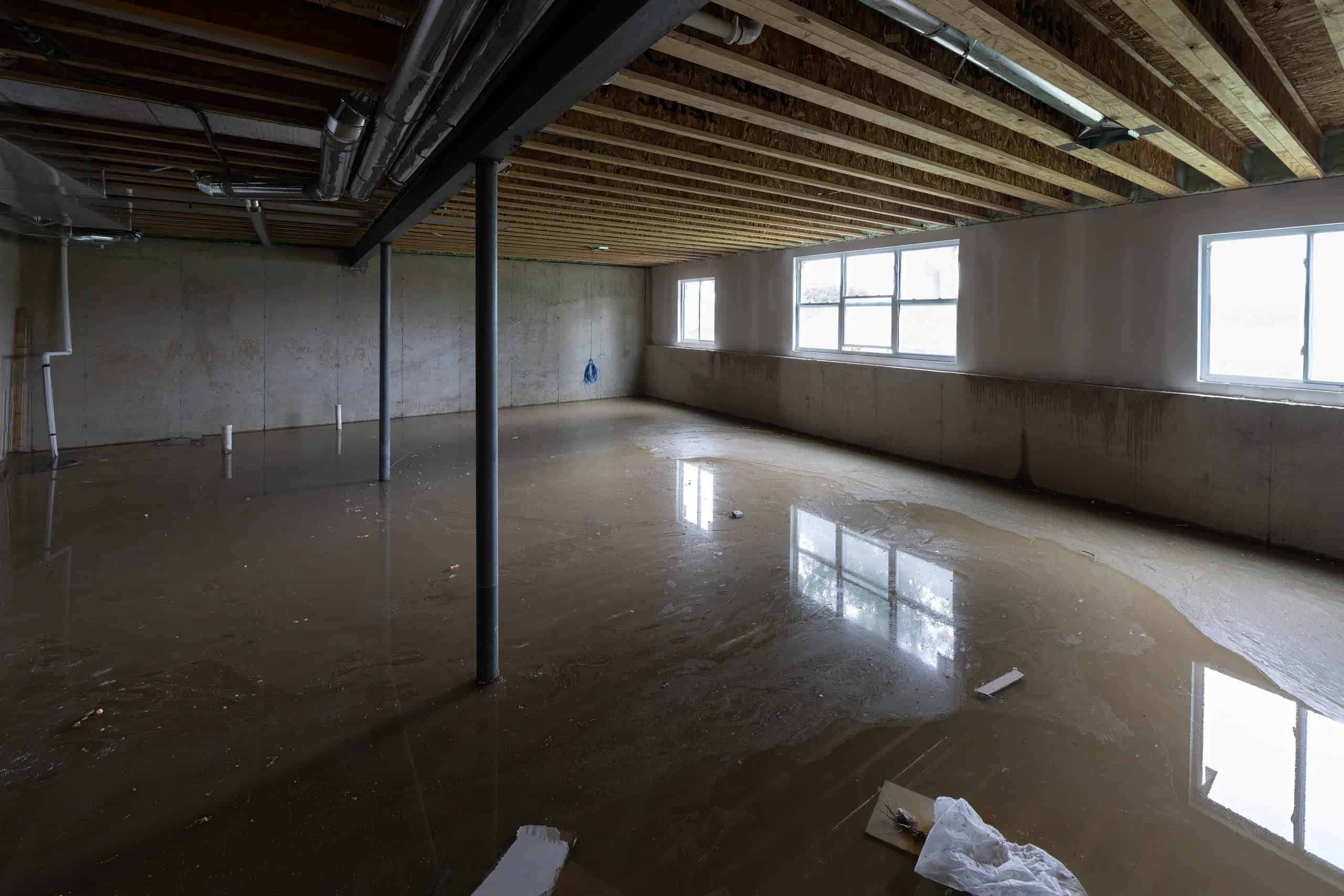
For Nassau County homeowners dealing with basement mold — which is the most common scenario given the water table and the age of the housing stock — the scope of a proper assessment often includes thermal imaging to detect moisture behind finished walls, moisture meter readings across multiple surfaces, and air sampling to establish baseline spore counts. That information shapes the remediation scope. A remediator working without a proper assessment is essentially guessing at the boundaries of the problem, and that guesswork tends to surface as change orders once the walls come open.
We use thermal imaging cameras and moisture meters as part of our own process to make sure the scope we’re working from reflects the actual conditions — not just what’s visible at the surface. In south shore communities like Long Beach, Freeport, and Oceanside, where Hurricane Sandy’s legacy is still showing up in foundation framing and below-grade spaces more than a decade later, that kind of thoroughness at the assessment stage isn’t extra. It’s the baseline.
What Happens When a Mold Removal Quote Comes In Too Low
Nassau County mold remediation runs $14 to $28 per square foot. That range exists because legitimate projects vary — by the extent of contamination, the materials involved, the equipment required, and the disposal costs. A quote that comes in significantly below that range almost always means something is missing from the scope.
The most commonly omitted items are containment (skipped to cut labor time), post-remediation clearance testing (left off because it requires a separate licensed assessor), and proper disposal of contaminated materials (replaced with less rigorous handling). Sometimes the antimicrobial treatment is swapped for encapsulant paint — a product that covers mold rather than addressing it, which looks fine for a few months and then fails.
The downstream cost of a failed clearance test, or of remediation that has to be redone, routinely exceeds whatever was saved on the initial quote. And if the contractor who did the original work wasn’t licensed under NYS Article 32, your options for recourse are limited. The law exists specifically because of what happened on Long Island after Sandy — unlicensed contractors doing incomplete work on flood-damaged homes, homeowners paying twice, and in some cases, structural damage that went unaddressed for years.
When you’re comparing quotes, the question isn’t which number is lowest. It’s which quote accounts for everything the job actually requires. A quote that includes a defined scope, a containment plan, an equipment list, specific antimicrobial products, a materials removal and disposal plan, and a reference to post-remediation clearance testing is a quote you can evaluate. Everything else is a rough number with a lot of assumptions baked in.
We handle insurance billing directly — claim paperwork, documentation, adjuster communication — so that piece doesn’t fall on you. For jobs that go beyond what insurance covers, or where coverage doesn’t apply, financing is available up to $200,000 at 0% APR through Enhancify. Both of those things matter in Nassau County, NY, where the age of the housing stock means mold remediation frequently involves more than just the mold itself.
Certified Mold Remediation Company in Nassau County: What to Look for Before You Commit
A legitimate mold removal quote tells you exactly what will be done, how it will be contained, what gets removed, and how you’ll know the job is finished. It references the licensed assessor’s work plan, it specifies disposal, and it accounts for post-remediation clearance testing — because in New York State, that’s what a compliant project looks like.
If a quote you’re holding doesn’t include those elements, ask for them in writing. If the contractor can’t or won’t provide them, that’s your answer.
Nassau County’s regulatory environment, aging housing stock, and local conditions make this market more specific than most. The contractors who know that — who hold the NYS DOL Mold Remediation Contractor License, the Nassau County General Contractor License, and the additional credentials for asbestos and lead — are the ones equipped to do the job once and do it right. If you’re ready to talk through what your project actually involves, Green Island Group is available around the clock and can get someone out to assess the situation quickly.