Summary:
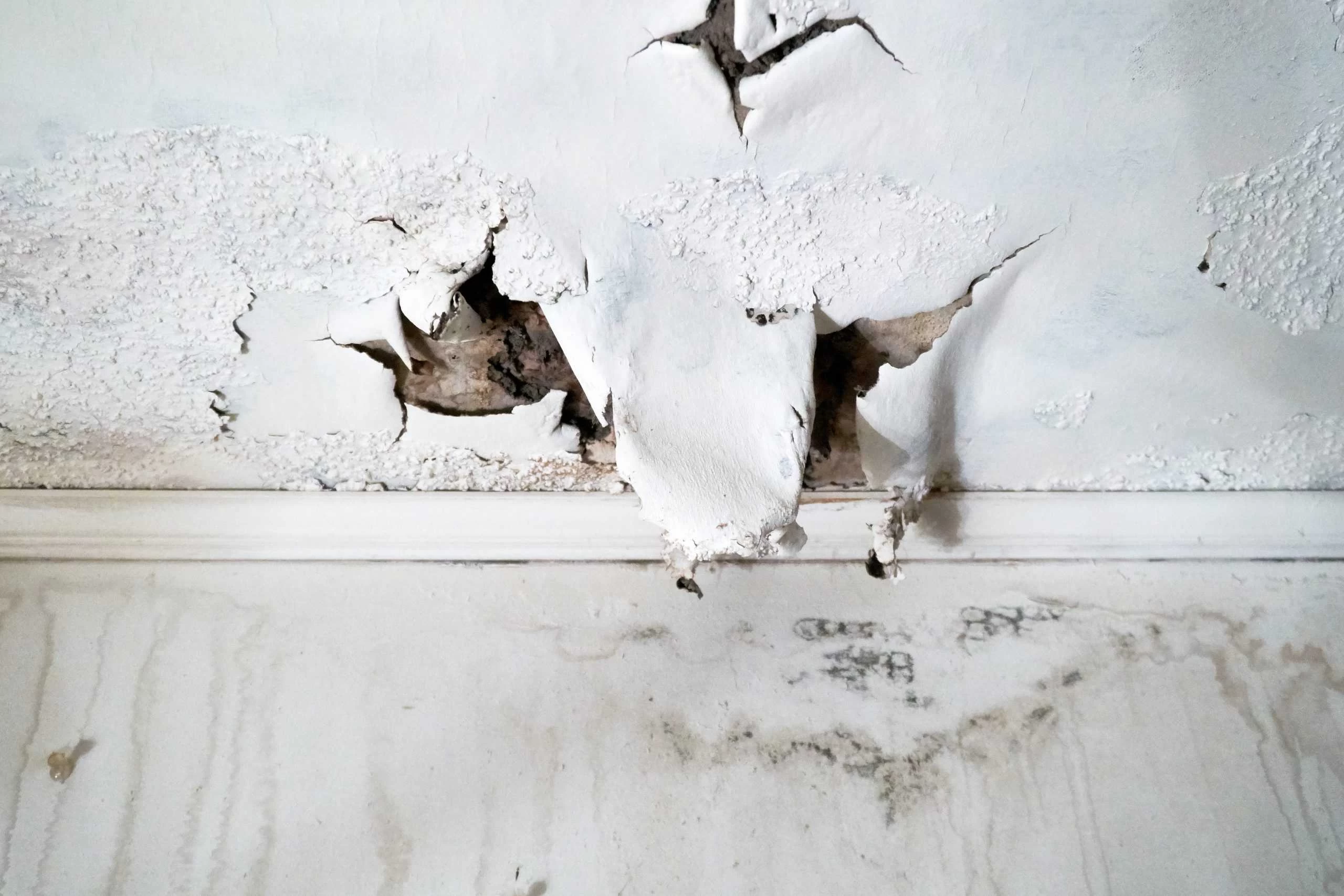
Most people searching for mold inspection costs aren’t just curious — they’ve already noticed something. A musty smell in the basement. Discoloration along a baseboard. A water stain that came back after the last heavy rain. You’re not in research mode anymore. You’re trying to figure out whether this is a $400 problem or a $4,000 one before you pick up the phone.
That’s a completely reasonable place to be. And it’s exactly why we put this together — to give you the kind of straight answers that most companies and national cost guides skip right over.
What Does a Mold Inspection Actually Include?
A mold inspection is a diagnostic. It’s not the cleanup — it’s the process of figuring out where mold is, how much there is, and what’s feeding it. A thorough inspection uses moisture meters and thermal imaging cameras to detect hidden moisture behind walls, under floors, and inside ceiling cavities that you’d never find with a visual walkthrough alone.
From there, we may recommend air sampling or surface testing — collecting spore samples that get sent to a lab to identify the mold species and measure concentration levels. That testing is a separate cost on top of the inspection itself, and it’s worth understanding the difference before you agree to anything.
The inspection ends with a written report. In New York, that report isn’t just a courtesy — it’s a legal requirement.
What New York State Law Requires Before Any Mold Work Begins
This is the part most Nassau County, NY homeowners don’t know, and it matters more here than in most other states. Under New York State’s Article 32 of the Labor Law — which took effect January 1, 2016 — all mold assessors, remediation contractors, and abatement workers must be licensed by the NYS Department of Labor. That’s not a suggestion. It’s the law, and it applies to every job.
More importantly, the law requires a strict separation between the person who inspects and the person who does the cleanup. A licensed NYS DOL Mold Assessor must inspect the affected area, identify the scope of the problem, and produce a written work plan before any remediation work of 10 square feet or more can legally begin. A separate licensed mold remediation contractor then carries out the work according to that plan. The same individual or company cannot legally perform both roles on the same project.
Why does this matter to you as a homeowner? Because it means the inspection isn’t just a formality — it’s the legal foundation for everything that follows. Without a properly licensed assessor producing that work plan, any remediation work done afterward is technically non-compliant. That creates real exposure: for unlicensed work, NYC Local Law 61 penalties range from $800 to $10,000.
When you’re vetting companies, ask directly: are your mold assessors licensed by the NYS DOL? Can you provide your license number? A company that hesitates on that question is a company worth walking away from. We’re fully licensed and compliant under Article 32 — and we’ll tell you that upfront, not after you’ve already signed something.
How Much Does a Mold Inspection Cost in Nassau County, NY?
National averages put mold inspection costs between $303 and $1,043, with a commonly cited midpoint around $670. An analysis of over 343,000 quotes from licensed inspectors found an average of $687, though the full range runs from $165 to nearly $2,967. That spread isn’t a mistake — it reflects real differences in scope, home size, access difficulty, and what the inspection actually includes.
For homes under 4,000 square feet, a standard non-invasive inspection typically runs $300 to $400. Larger or more complex properties push that number toward $700 to $1,000. If air or surface sampling is added — which involves sending physical samples to an accredited lab — expect to add $250 to $500 on top of the base inspection fee. Swab tests run roughly $180 to $320; air quality testing is typically $240 to $360.
In Nassau County, NY, a few local factors push costs toward the higher end of those ranges. The county’s housing stock is predominantly post-World War II construction — most single-family homes were built between the 1940s and 1970s, which means aging plumbing, older drainage systems, and original foundation work that was never designed with modern moisture management in mind. Levittown, built between 1947 and 1951, is the most well-known example, but the same construction era applies across Massapequa, Wantagh, Seaford, Baldwin, Merrick, and dozens of other communities throughout the county.
Older homes mean more hidden moisture pathways, more areas that require invasive inspection, and more variables that we need to account for. If drywall or other materials need to be removed to access a suspected mold area, that alone can add up to $700 to the inspection cost — not including putting the wall back together afterward. That’s a real number worth knowing before you assume the base inspection fee is the only cost involved.
Mold Removal Quote: What Comes After the Inspection
The inspection tells you what’s there. The remediation quote tells you what it costs to fix it. These are two separate conversations, and confusing them is one of the most common reasons homeowners feel blindsided by the final bill.
Nationally, mold remediation averages between $1,150 and $3,400, but extensive cases — particularly in larger homes or where mold has spread into structural materials — can reach $20,000. Black mold remediation specifically runs $800 to $8,000 depending on the affected area. Those numbers aren’t meant to alarm you. They’re meant to give you a realistic frame before you get a quote, so you’re comparing apples to apples when you do.
Air Duct Mold Removal Cost: Why HVAC Mold Is a Different Problem
Mold inside your HVAC system or air ducts is a categorically different situation from mold on a basement wall. When mold is growing in your ductwork, every time the system runs it’s distributing spores throughout the entire house — into every room, every time the heat or air conditioning kicks on. It’s not contained. It’s mobile.
That reality affects both the urgency and the cost. HVAC mold remediation is more complex than surface removal because it requires accessing and treating the interior of the duct system itself, not just the visible components. Depending on the extent of contamination, the age of the system, and how much of the ductwork is affected, costs can reach $10,000 or more. That’s not a number that gets thrown around lightly — it reflects the actual scope of work involved when a duct system has been compromised.
The reason HVAC mold often goes undetected longer than basement or crawl space mold is that it’s invisible. There’s no discoloration on a wall to notice. The only sign might be a persistent musty smell when the system runs, or unexplained allergy symptoms that seem worse indoors than outside. If either of those sounds familiar, it’s worth including the HVAC system in any mold inspection — not as an add-on, but as a core part of the assessment.
We use thermal imaging cameras and moisture detection equipment as part of every inspection, which helps identify temperature and humidity anomalies inside ductwork and mechanical spaces that a standard visual check would miss entirely. Finding it early is almost always less expensive than finding it after it’s had time to spread.
Here’s something worth understanding clearly: fixing the moisture source and removing the mold are two different jobs, and neither one replaces the other. If you waterproof the basement without removing existing mold, the mold is still there — it just won’t get worse from that particular water source. If you remove the mold without addressing why water is getting in, you’ll be back in the same situation within a season or two.
In Nassau County, NY, this isn’t a hypothetical. The South Shore communities — Freeport, Oceanside, Merrick, Wantagh, Seaford, Massapequa — sit at or near sea level with a consistently high water table. Basement moisture intrusion in these neighborhoods isn’t a sign that something went wrong with your house. It’s a structural reality of the geography. Groundwater seeps through foundation walls and floors regardless of whether there’s been surface flooding.
After a major storm event — the kind Nassau County, NY sees with nor’easters and, most memorably, Hurricane Sandy in 2012 — that baseline moisture problem compounds quickly. Many homeowners who dealt with Sandy flooding had remediation done in the immediate aftermath, often by companies that were overwhelmed with volume and working fast. Some of that work was thorough. Some of it wasn’t. If your home was affected and you haven’t had a proper post-remediation inspection since, there’s a real chance residual moisture and mold are still present in areas that were treated quickly rather than treated well.
The right approach is to address both problems together — assess the full scope of mold growth, remove it properly using HEPA filtration and antimicrobial treatment, and then identify and seal the moisture pathways that allowed it to develop in the first place. That’s how you solve the problem once instead of managing it indefinitely. We handle both sides of that equation under a single contract, which means no handoffs, no conflicting assessments from different vendors, and one clear line of accountability throughout the entire project.
Getting a Mold Inspection in Nassau County, NY: What to Do Next
If you’ve read this far, you probably already know you need an inspection. The question is who to call and what to expect when you do. Make sure whoever you hire is licensed by the NYS DOL under Article 32, ask for their license number before agreeing to anything, and understand that the inspection cost and the remediation cost are two separate conversations.
Mold moves fast. It can begin colonizing within 24 to 48 hours of water exposure, which means the longer you wait to get an assessment, the more you’re likely spending on the back end. That’s especially true in Nassau County, NY, where the combination of aging housing, high water table, and coastal humidity creates conditions that are genuinely more mold-prone than most other markets.
We’ve been working in Nassau County, NY for over 12 years, and we hold direct contracts with Nassau County and Suffolk County government — which means we’ve been vetted at a level most companies haven’t. We also handle direct insurance billing and offer financing up to $200,000 at 0% APR through Enhancify, so cost doesn’t have to be the reason you put this off. If you’re ready to get a straight answer about what’s in your home and what it’ll take to fix it, reach out to Green Island Group and we’ll get you started.