Summary:
Water damage doesn’t give you much time to research your options. Whether it’s a burst pipe soaking your finished basement in Merrick or storm surge creeping into a first floor in Massapequa, the clock starts the moment water makes contact with your home. Most homeowners call the first company they find and hope for the best. But the company you choose — and specifically, how well they know Nassau County — has a direct impact on what your home looks like six months from now. Here’s what that actually means in practice.
Long Island Water Damage: A Different Problem Than Most Markets
Long Island isn’t a typical suburban market when it comes to water damage risk. Nassau County sits between Long Island Sound to the north and the Great South Bay to the south, with a dense network of canals threading through communities like Freeport, Merrick, Bellmore, and Massapequa. That geography creates flooding dynamics that most out-of-area companies simply haven’t encountered before.
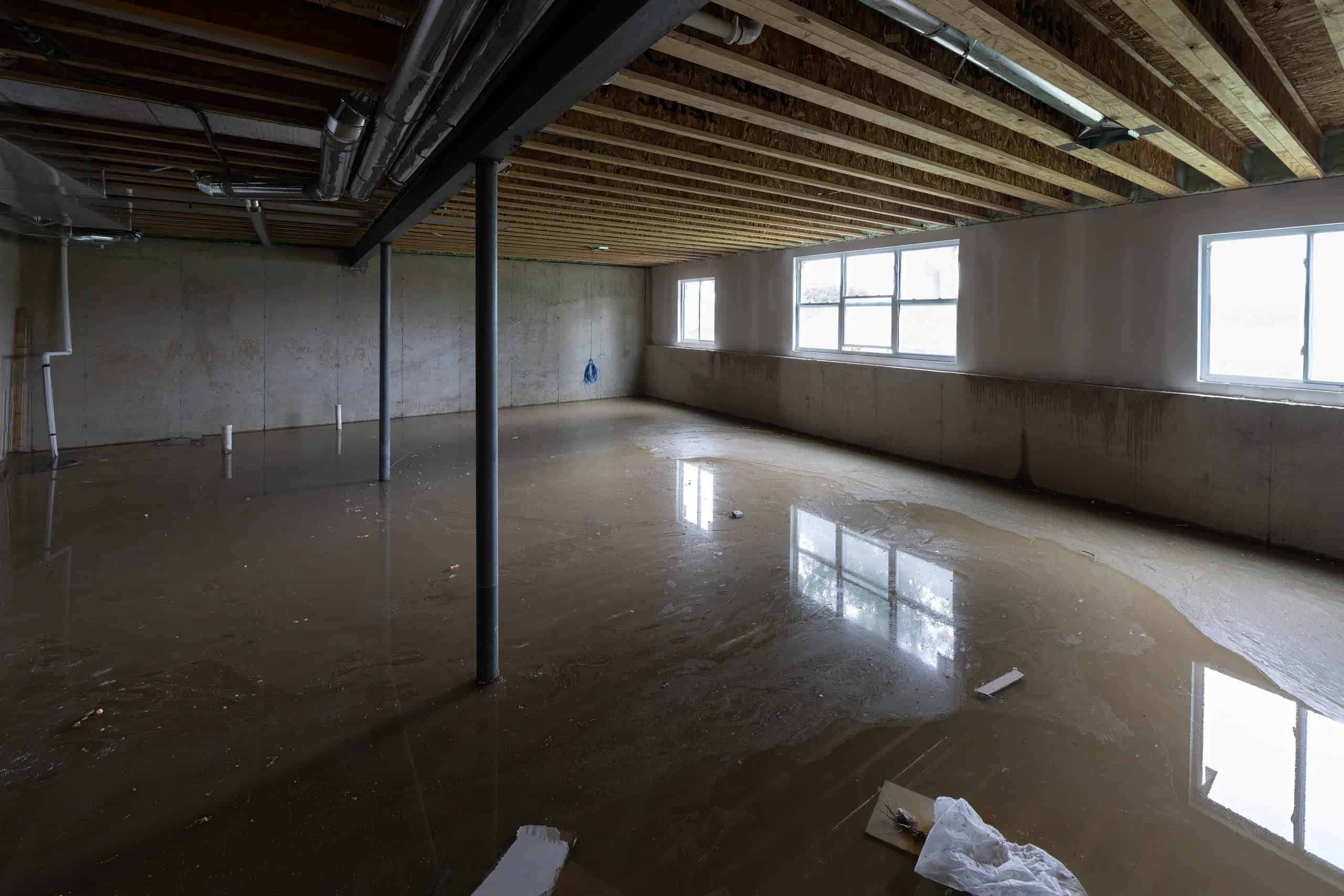
Add in Nassau County’s naturally high water table — a product of the island’s glacial geology — and you have a situation where basements can flood from groundwater pressure pushing up through the slab, not just from water coming in through windows or doors. That distinction matters for how a restoration crew approaches the job. A crew unfamiliar with this dynamic might miss the source entirely and focus only on visible water, leaving the underlying pressure unaddressed.
The Nassau County Housing Stock and What It Means for Water Damage
The majority of homes in Nassau County were built between 1945 and 1975. That’s a 30-year window of post-war construction that produced the classic Long Island suburb — cape cods, split-levels, and ranches in communities like Levittown, Oceanside, Baldwin, and East Meadow. Those homes are now 50 to 80 years old, and their plumbing reflects that age.
Galvanized steel pipes from that era corrode from the inside out. They don’t announce failure — they just give way one day, usually at a joint or connection, and release water into a wall cavity or subfloor before anyone notices. Copper supply lines from the same period are more durable, but the fittings, valves, and appliance connections around them have often never been replaced. A washing machine supply line that’s been in place since 1988 is not a question of if it fails — it’s when.
This matters for a water damage restoration company because the scope of damage in an older Nassau County home is rarely what it looks like on the surface. Water travels. It follows the path of least resistance through wall assemblies, insulation, and floor systems that were built before modern moisture barriers existed. A crew that knows this housing stock will look for moisture in places a less experienced team might not think to check.
There’s also the asbestos question. Pre-1980 construction in Nassau County frequently included asbestos-containing materials — floor tiles, pipe insulation, ceiling texture, and joint compound. When water damage requires demolition, a crew that isn’t aware of this creates a serious liability. Proper protocol requires testing and, if necessary, abatement before any structural work proceeds. This isn’t a technicality — it’s a health and legal issue that local experience helps you navigate correctly.
Nassau County's Flood History and What It Means for Restoration
Hurricane Sandy made landfall in October 2012 and flooded, damaged, or destroyed 74,736 structures in Nassau County alone. Long Beach sustained over $150 million in damage. The New York Rising reconstruction program directed more than $201 million to over 4,650 Nassau County residents in the years that followed. If you’ve lived here for any length of time, you know someone who went through it.
Sandy changed how Nassau County homeowners think about water damage risk — and it should change how restoration companies approach the work here. The South Shore communities most exposed to storm surge — Long Beach, Island Park, Oceanside, Freeport, Baldwin, Merrick, Bellmore, Wantagh, Seaford, and Massapequa — carry FEMA Zone AE and VE flood designations. Those designations affect not just insurance requirements but the documentation a restoration contractor needs to produce in order for a claim to be processed correctly.
There’s a critical insurance distinction that trips up a lot of Nassau County homeowners, and it’s one a locally experienced contractor should explain clearly: standard homeowners insurance does not cover flooding caused by rising bodies of water, storm surge, or overflowing creeks. That type of damage requires a separate flood insurance policy, typically through the National Flood Insurance Program. If you have both policies — which many South Shore homeowners do — the documentation requirements are different for each, and a contractor who doesn’t understand that distinction can inadvertently create gaps in your claim.
Nor’easters are the more frequent threat for most of Nassau County. The 2018 nor’easters, Hurricane Irene in 2011, and Tropical Storm Isaias in 2020 all caused significant flooding across Nassau County and beyond. These storms produce sustained wind-driven rain, roof damage, and coastal flooding that generates restoration work every year, not just in major hurricane years. A company with deep roots in this market has worked through all of it.
The Water Damage Restoration Process — What Should Actually Happen
Most homeowners don’t know what a proper restoration looks like until something goes wrong with a company that cut corners. The process isn’t complicated, but it requires the right equipment, the right sequence, and honest documentation at every step.
When we arrive at a Nassau County property, the first thing we do is assess — not just what’s visible, but what thermal imaging reveals inside wall cavities, under flooring, and in ceiling assemblies. Moisture hides. The goal of assessment is to find all of it before anything else happens.
Most Common Water Damage Claims and How Each One Gets Handled
The source of the water determines the category of damage, and the category determines the protocol. This isn’t arbitrary — it’s governed by the IICRC S500 Standard for Professional Water Damage Restoration, the industry’s governing framework for how restoration work should be assessed, executed, and documented.
Clean water from a burst supply line or a failed water heater is a Category 1 event. It sounds straightforward, but Category 1 water can degrade to Category 2 — gray water with potential contaminants — within 24 to 48 hours if it sits untreated in warm conditions. That escalation changes the scope of work, the cost, and the health risk. It’s one of the main reasons response time matters so much.
Category 2 events typically involve appliance overflow, dishwasher or washing machine discharge, or toilet overflow without solid waste. Category 3 — black water — involves sewage backup, flooding from rivers or storm surge, or any water that has been standing long enough to develop significant biological contamination. Each category requires a different level of containment, cleaning, and documentation.
The most common claims we see in Nassau County break down roughly like this: burst or failed supply lines in older homes, appliance failures (washing machines and dishwashers account for a significant share), basement flooding from storm events or sump pump failure, roof leaks from nor’easters, and sewer backups. Each one has a different entry point, a different affected area, and a different insurance path. A company that handles all of them regularly will move through the process faster and more accurately than one that mostly handles one type.
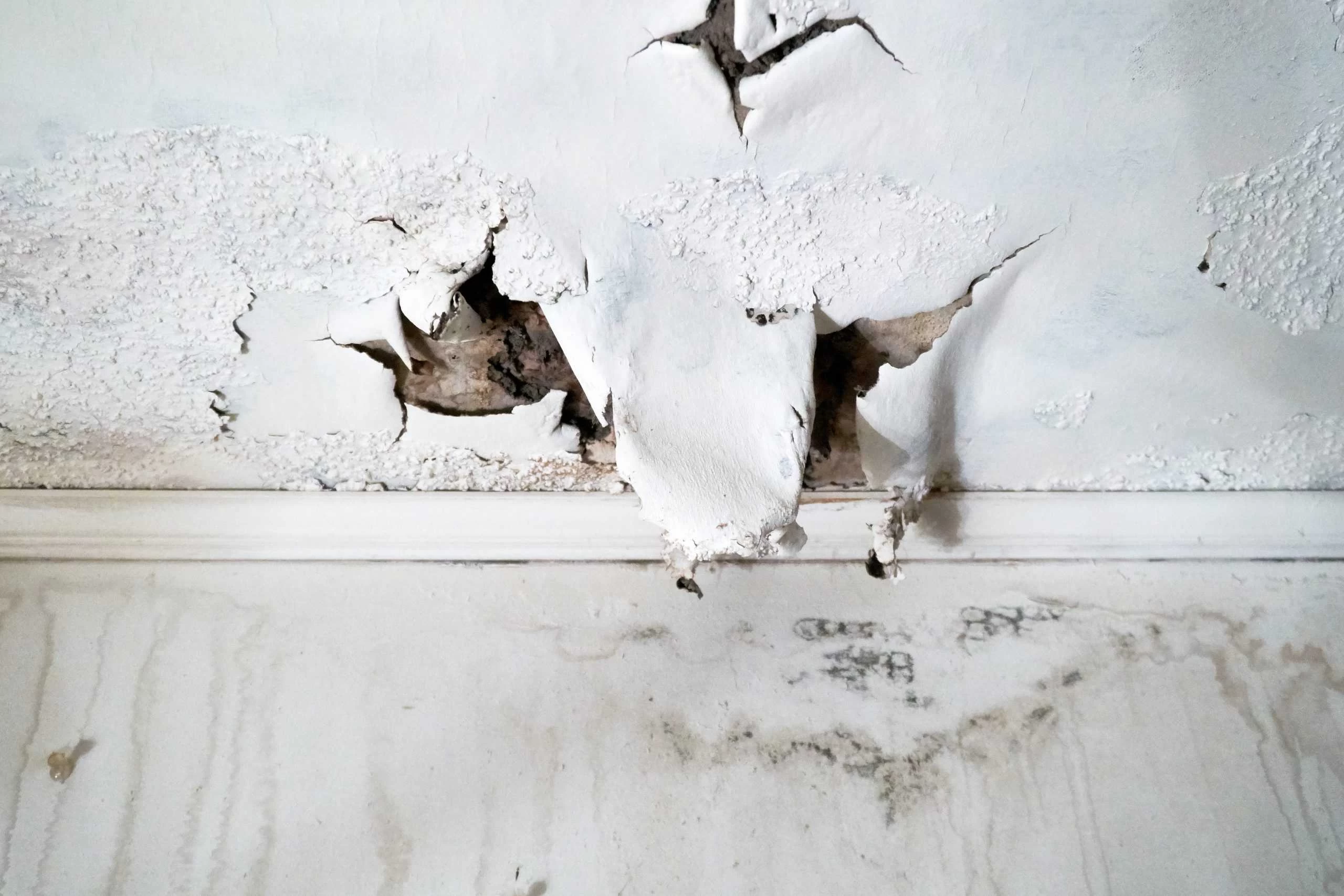
After extraction comes structural drying — air movers and commercial dehumidifiers running continuously, with moisture readings logged daily until the building materials reach acceptable levels. This is where a lot of companies fall short. Drying looks like it’s happening, but without documented readings, there’s no way to confirm the wall cavity or subfloor is actually dry before it gets closed up. Hidden moisture is where mold begins. The documentation isn’t bureaucratic — it’s the proof that the job was done right, and it’s what your insurance company needs to close the claim cleanly.
What Happens When Water Damage Requires More Than Just Drying
Here’s a scenario that plays out regularly in Nassau County: a homeowner has water damage in their finished basement. They call a restoration company, which extracts the water and sets up drying equipment. A few days later, the crew picks up the equipment and leaves. Then the homeowner notices a musty smell. They call a mold remediation company. That company arrives, finds moisture in the wall framing that wasn’t fully dried, and recommends opening the walls. Now there’s a general contractor involved for the rebuild. Three companies, three schedules, three sets of paperwork — and the timeline has stretched from two weeks to two months.
This is the multi-contractor coordination problem, and it’s more common than most homeowners expect. The gap between contractors is where projects stall, where mold establishes, and where costs multiply.
We handle the entire scope under one roof — water extraction, structural drying, mold remediation if it’s needed, demolition, and rebuild. When one company is responsible for the full outcome, there’s no handoff where something gets missed or where accountability gets diffuse.
For larger projects, we offer financing up to $200,000 at 0% APR through Enhancify. Restoration projects that involve mold remediation, structural repair, and interior rebuild can run $10,000 to $50,000 or more depending on scope. The financing option exists because cost shouldn’t be the reason someone waits to call — and waiting is exactly what makes water damage more expensive.
We also handle insurance billing directly and manage the claim paperwork. For Nassau County homeowners navigating the homeowners-versus-flood-insurance distinction, having a contractor who understands how to document and file both correctly is a material advantage. We’ve done it across thousands of projects in this market. We know what adjusters look for, and we document accordingly.
How to Choose the Right Water Damage Restoration Company in Nassau County
The questions worth asking before you let anyone start work: Are your technicians IICRC certified? Do you use thermal imaging to find hidden moisture? Will you provide drying logs and documentation throughout the process? Can you handle mold remediation and rebuild if it comes to that, or will I need to coordinate additional contractors?
A company that can answer those questions clearly, with specifics, is one that has done this work seriously. One that pivots to vague reassurances probably hasn’t.
We’ve been doing this work on Long Island for over 12 years, across more than 5,000 restoration projects in New York State. We hold active contracts with Nassau County, Suffolk County, and multiple New York State agencies — not because we’re the cheapest option, but because that level of accountability requires a track record. If your Nassau County home is dealing with water damage, Green Island Group is ready to help — 24 hours a day, seven days a week.