Summary:
Universal Design Solutions That Actually Look Good
Universal design creates bathrooms that work for people of all ages and abilities, incorporating features like wider doorways, no-step entrances, and accessible layouts that enhance quality of life for everyone. The key difference from traditional “accessible” design? These features are seamlessly integrated into beautiful, contemporary spaces.
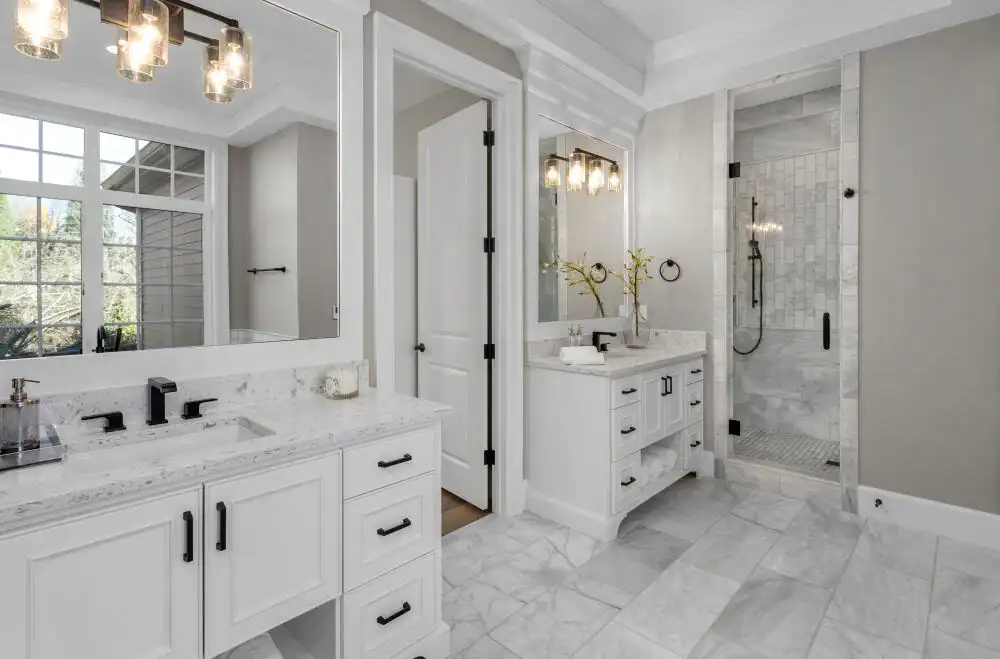
Modern ADA-compliant showers don’t have to feel clinical or basic—with thoughtful planning, modern finishes, and quality craftsmanship, you can create a safe, elegant, and functional bathroom. Think rainfall showerheads at multiple heights, sleek grab bars that double as towel bars, and non-slip surfaces that look like luxury stone.
Curbless Showers: The Gold Standard for Accessible Bathing
A curbless shower is a designated wet space free of barriers or obstacles at the entrance and exit, with no curbs, steps, or ledges to step over, often defined by glass panels or completely open and integrated with the rest of the bathroom. This design eliminates the most dangerous part of traditional showers—that awkward step over the tub edge where most bathroom falls occur.
A shower cannot be totally curbless unless the subfloor is recessed sufficiently to accommodate the combined thickness of all materials below the tile, with the size of the shower and drain placement being key factors in determining the required recess. In NYC, this often means working with existing structural limitations, but we know how to work within these constraints.
The installation requires careful attention to slope requirements—typically 1/4″ to 1/2″ per foot to the drain—with ADA mandating a maximum threshold height of 1/2″ and requiring at least 4 feet from entrance to drain. The result? A shower that’s not only safer but also creates a more spacious, modern feel in your bathroom.
The cost of remodeling a bathroom with a curbless shower can vary based on factors like bathroom size, materials used, and complexity, ranging from $10,000 to $45,000 on average. While it’s an investment, the safety benefits and increased home value make it worthwhile for most NYC homeowners planning to age in place.
Grab Bars That Don't Scream "Hospital"
Modern grab bars support universal design by making bathrooms usable for all ages and abilities, with newer models featuring sleek finishes and shapes that blend with contemporary décor. Gone are the days when safety meant sacrificing style.
Today’s options include decorative grab bars in brushed nickel, matte black, or custom colors that coordinate with your fixtures. Accent ring grab bars offer a modern, ring-like or horseshoe shape that fits around shower valves, providing stable support while blending seamlessly with bathroom design and appearing less noticeable than traditional straight bars, with prices ranging from $50 to $200.
Installing grab bars in NYC bathrooms costs between $200 and $350 on average, with total installation costs including labor and materials. Installing multiple grab bars is often less expensive when done all at once, with contractors typically charging around $250 to install three grab bars in one job.
A properly placed grab bar, anchored into wall studs or heavy-duty stainless toggle bolts, lowers fall risk by about one-third. The most effective placement includes vertical bars at shower entries and horizontal bars along back walls, positioned 33-36 inches above the floor for optimal support.
Navigating NYC DOB Requirements and Co-op Approvals
Any significant change to a bathroom will require filing for permits with the NYC DOB, typically done with an Alteration GC and Alt PL (formerly known as an Alteration Type 2). The complexity increases when you’re working in co-ops or condos, where building boards often impose additional requirements beyond city codes.
NYC’s Department of Buildings and many co-op boards can enforce accessibility-related rules during the approval process, with alteration applications potentially requiring compliance with NYC Building Codes for accessibility standards, particularly for bath layout changes, door location changes, and hallway expansions.
When Accessibility Compliance Gets Triggered
In most cases, a bathroom in a multifamily building in NYC must strictly adhere to the Americans With Disabilities Act, with bathroom renovations typically needing to comply with specific NYC accessibility requirements. Understanding when these requirements kick in can save you from costly surprises mid-project.
Chapter 11 of the 2022 NYC Building Code makes no distinction about ownership type—buildings containing multiple dwellings with elevators must comply with all accessibility provisions even if they’re co-ops or condominiums. This means your beautiful pre-war co-op isn’t exempt from modern accessibility standards when you renovate.
In bathroom renovations, you typically don’t need a permit for installing new tiles, flooring, lighting, and plumbing fixtures if they’re staying in the same location, though you may still need a Limited Alteration Application when modifying plumbing lines, such as replacing a tub with a shower.
The key is working with contractors who understand these nuances. We specialize in navigating the complex renovation landscape, understanding how to interpret DOB regulations, building codes, and board requirements while incorporating smart, functional design solutions.
Co-op and Condo Board Navigation
When working within a co-op, boards often have their own approval layers, and navigating that process can be challenging, requiring careful attention to alteration agreement requirements and building-specific renovation policies. Each building has its own personality and requirements, from the ultra-strict to the surprisingly flexible.
One issue people often encounter in co-op and condo buildings is the “Wet Over Dry” rule, which is not a building code but a preference within certain building management to not add wet areas over dry areas on the floor below. This can significantly impact your bathroom expansion or relocation plans.
If your bathroom isn’t ADA compliant (likely if it’s older), there may be additional updates needed to pass inspection, such as compliant door width, with boards requiring review of all plans and necessary DOB permits with their own architect sign-off.
We know to engage with building management early in the planning process. We’ll review your alteration agreement, coordinate with building architects, and ensure all approvals are in place before demolition begins. This prevents the nightmare scenario of work stopping mid-project due to compliance issues.
Creating Your Safe, Stylish Bathroom Sanctuary
The best accessible bathroom design doesn’t announce itself—it simply works beautifully for everyone who uses it. Modern universal design principles create spaces that feel luxurious and welcoming while providing the safety features you need for decades of comfortable use.
From curbless showers with rainfall heads to grab bars that look like designer hardware, today’s accessible bathrooms prove you don’t have to choose between safety and style. The key is working with contractors who understand both the technical requirements and the aesthetic possibilities.
When you’re ready to transform your NYC bathroom into a space that supports aging in place, we bring the expertise to navigate permits, approvals, and installations while creating the beautiful, functional bathroom you deserve.