Summary:
Your contractor pulled up the floor or opened a wall — and now everything’s stopped. Or maybe a home inspection flagged something and you’re trying to figure out what you’re actually dealing with before you call anyone. Either way, you’ve probably already found the national cost guides that throw out numbers like $1,200 to $3,280. Those figures aren’t wrong for the country at large, but they’re not what you’ll pay in Nassau County, NY. Long Island pricing runs higher — sometimes significantly — and the material involved changes everything. We’ve been handling asbestos abatement projects across Nassau County for over 12 years, and we know exactly what removal actually costs in this market, broken down by type, so you can go into any conversation with a contractor knowing what’s realistic.
Asbestos Removal Cost Per Square Foot in Nassau County, NY
The honest answer is that “asbestos removal” isn’t one job — it’s several different jobs depending on where the material is, what condition it’s in, and whether it’s friable. Friable materials crumble easily and release fibers into the air; non-friable materials like intact floor tile are lower risk until they’re cut, sanded, or disturbed. That distinction drives a lot of the pricing variation you’ll see.
Nationally, interior asbestos removal runs $5 to $20 per square foot. In Nassau County and across Long Island, expect to pay more — labor rates here run 25 to 40% above national averages, and New York State regulatory compliance adds real cost to every project. For friable materials, Long Island pricing typically falls between $20 and $65 per square foot. For non-friable materials like floor tile in good condition, the range is lower, but still above what the national guides quote.
Asbestos Ceiling Removal Cost in Nassau County
Popcorn ceilings are one of the most common asbestos discoveries in Nassau County’s mid-century homes — and one of the more complex removal jobs. The material is sprayed-on texture, which means it’s inherently friable once disturbed. Any cutting, scraping, or sanding releases fibers into the air, which is why the containment setup for ceiling work is more intensive than for floor tile.
In Nassau County, popcorn ceiling removal with confirmed asbestos typically costs $3 to $8 per square foot, but that base rate doesn’t tell the whole story. Setup, containment, and disposal fees are added on top, and for ceiling work specifically, full room containment is required — the material can rain down and contaminate the entire space below if it isn’t properly wet-saturated before removal begins. A small bedroom ceiling project can land anywhere from $1,500 to $3,500 once everything is factored in. Larger open-plan areas cost more.
Homes built before 1981 are the ones to watch. If you’re not sure whether your ceiling texture contains asbestos, a certified inspector needs to test it before anyone touches it. That inspection typically runs $250 to $850 for a residential property — and it’s not optional under New York State regulations. You cannot legally begin abatement without a survey.
One thing worth knowing: ceiling removal is not always the only option. If the texture is intact and you’re not planning to disturb it, encapsulation — essentially sealing the material so fibers can’t escape — is a legal alternative that costs $2 to $6 per square foot nationally. A licensed inspector’s recommendation, not a contractor’s preference, should determine which approach is appropriate for your situation.
Cost to Remove Asbestos Floor Tile in Nassau County
If your Nassau County home was built between the late 1940s and the mid-1970s — which describes a significant portion of the housing stock in communities like Levittown, Merrick, Uniondale, and Hempstead — there’s a very good chance the vinyl floor tiles in your basement, kitchen, or hallway contain asbestos. The 9-inch and 12-inch square tiles from that era almost universally do. What surprises a lot of homeowners is that the black mastic adhesive beneath the tile frequently contains asbestos too, even when the tile itself tests negative.
Floor tile is non-friable in intact condition, which is why the “leave it alone” advice is technically valid when the tile is undamaged and will stay that way permanently. The moment you’re doing a kitchen gut, a basement renovation, or any project that requires pulling up that floor, the material has to be addressed properly before other trades can continue.
In Nassau County, floor tile removal runs $8 to $15 per square foot in 2026. A typical small project — say, 100 to 200 square feet — lands between $1,500 and $3,500. Larger areas, or projects where the mastic adhesive also tests positive, push that number higher. The adhesive is often the more complicated part of the job because it requires different removal techniques than the tile itself.
This is exactly the scenario that stops renovation projects cold. A general contractor pulls up a section of old tile to prep the subfloor, discovers the characteristic 12-inch squares, and legally cannot continue until a licensed abatement contractor has cleared the area. That’s not the contractor being overly cautious — it’s New York State law under Industrial Code Rule 56. Every day the project sits is money out of your pocket, which is why fast response time matters as much as price when you’re in this situation.
Asbestos Insurance Coverage: What Nassau County Homeowners Actually Get
This is the question almost every homeowner asks, and the answer is more nuanced than most people expect. Standard homeowners insurance policies classify asbestos as a pollutant, and they explicitly exclude pollutant cleanup. If you discover asbestos during a planned renovation — a kitchen remodel, a bathroom update, a basement finishing project — your policy almost certainly won’t cover the abatement cost. That’s a pre-existing condition, and insurers treat it as a maintenance issue, not a covered loss.
The exception is when a covered peril disturbs the asbestos. If a storm damages your roof and exposes asbestos-containing shingles, or a burst pipe requires demolition of pre-1980 walls, or fire damage triggers abatement as part of the restoration — in those cases, the asbestos removal may be covered as part of the repair claim. The key word is “may.” It depends on your specific policy language and your insurer’s interpretation of the claim.
When Does Insurance Cover Asbestos Removal After Storm or Water Damage?
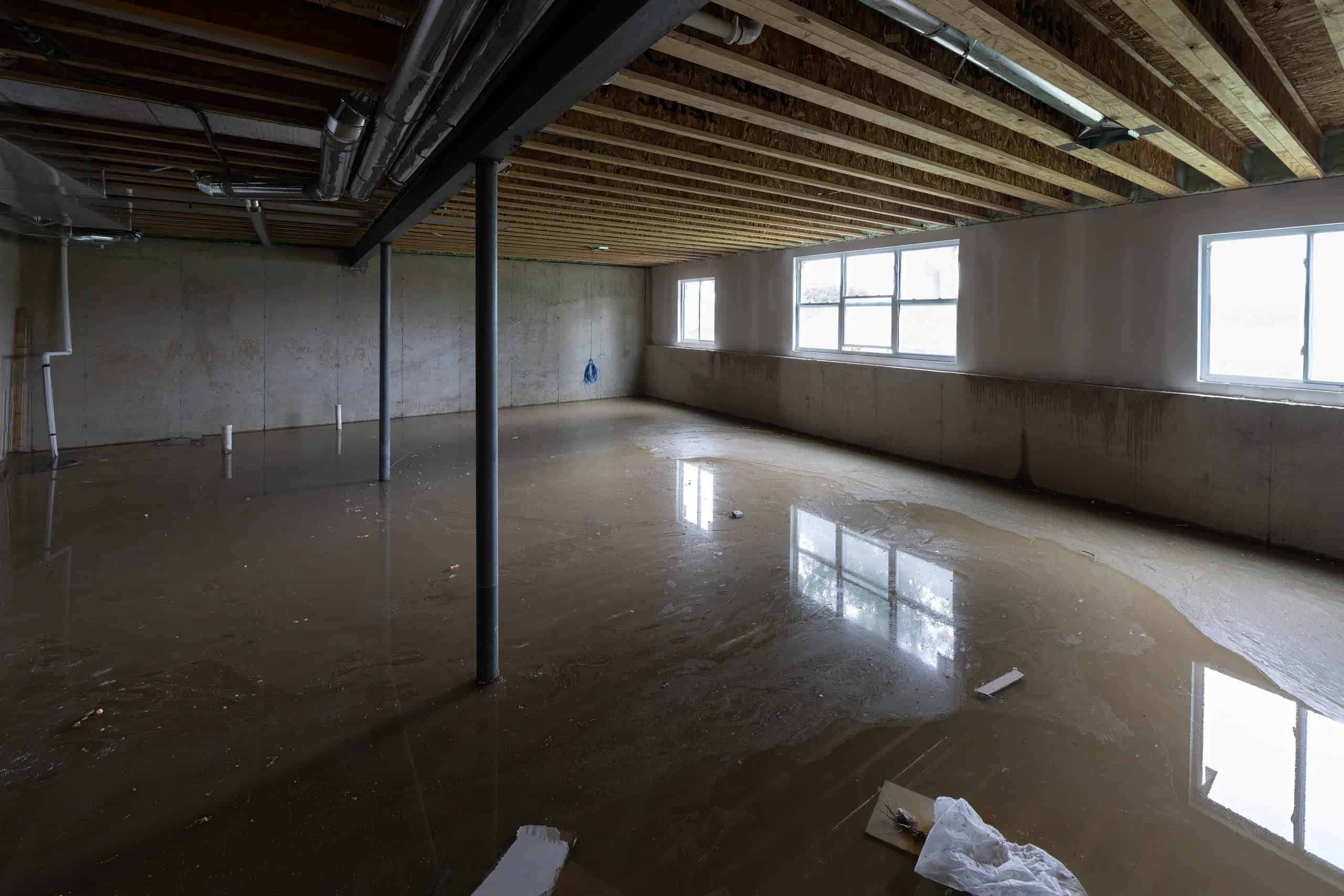
Nassau County’s South Shore communities — Long Beach, Oceanside, Freeport, Baldwin, Merrick, Bellmore, Wantagh, Seaford, and Massapequa — sit in FEMA-designated flood zones, and storm-related water damage in these neighborhoods is a recurring reality. When that damage affects a pre-1980 home and restoration work requires demolishing walls, flooring, or insulation, the asbestos question comes up fast.
Here’s how the coverage question generally plays out: if the water damage itself is a covered peril under your policy, and the restoration work requires disturbing asbestos-containing materials, the cost of abatement as part of that restoration may be included in your claim. The damage has to be the trigger — not the asbestos itself. Your insurer will want documentation: the inspector’s survey, the abatement contractor’s scope of work, and the air clearance test results at the end.
Navigating that process while also managing an active restoration project is genuinely complicated. We handle insurance claims directly — billing the carrier, managing the paperwork, and coordinating the documentation so you’re not stuck in the middle between your adjuster and your contractor. For homeowners in Nassau County dealing with both water damage and asbestos in the same project, that matters. You’re already dealing with enough.
It’s also worth knowing that some insurers offer asbestos riders — optional add-on coverage for owners of pre-1980 homes. If you haven’t looked into whether your policy has one, or whether one is available through your carrier, it’s worth the conversation before you need it.
Asbestos Removal Permit Requirements in Nassau County, NY
One of the most common points of confusion for Nassau County homeowners is the permit question — especially for anyone who has been reading guidance written for New York City. NYC requires DEP permits for asbestos abatement, which adds cost and complexity. Nassau County does not. Long Island projects are governed by New York State Industrial Code Rule 56, enforced by the NYS Department of Labor Asbestos Control Bureau, but the NYC DEP permit layer doesn’t apply here. That’s a meaningful distinction when you’re comparing quotes.
What does apply in Nassau County: before any renovation, repair, or demolition that might disturb asbestos-containing materials, a certified asbestos inspector must perform a thorough survey of the affected area. That survey has to identify any presumed asbestos-containing material, conduct bulk sampling where needed, and produce a written report. That report must be submitted to the local permit-issuing authority and kept on-site throughout the abatement work. No demolition or renovation work can legally begin until abatement is complete.
The Town of North Hempstead, for example, explicitly requires certified asbestos removal company documentation as part of any demolition permit application. This isn’t a formality — it’s a hard stop in the permitting process.
After the abatement work is done, air clearance testing is required to confirm the space is safe. A licensed industrial hygienist collects air samples and the results have to meet clearance standards before the area can be reopened. That clearance documentation is also what you’ll need if you’re selling the home, filing an insurance claim, or bringing other contractors back in to continue the renovation.
We are fully licensed under New York State Industrial Code Rule 56, and we’ve been operating under these requirements in Nassau and Suffolk County for over 12 years. We know what the local building departments need, how to move through the permit process efficiently, and how to keep your project timeline from stretching out longer than it has to. For homeowners with a stalled renovation, that experience is worth a lot.
Getting an Accurate Asbestos Removal Estimate in Nassau County, NY
If there’s one thing to take away from all of this, it’s that national cost guides are a starting point at best. Nassau County’s older housing stock, local labor rates, and New York State regulatory requirements all push real project costs above what those averages suggest. The material type, the condition it’s in, and whether a covered insurance event is involved all shape what you’ll actually pay.
What doesn’t change: the work has to be done by a licensed contractor, with a certified inspection beforehand and air clearance testing at the end. Cutting corners on any of those steps creates legal and financial exposure that costs far more than the abatement itself.
If your project has stopped because of an asbestos discovery, or you’re trying to get ahead of it before a renovation begins, Green Island Group is available around the clock to assess the situation, provide a written scope, and get your project moving again. Call us or request an estimate online — we’ll walk you through exactly what you’re looking at and what it costs.