Summary:
You got a number from your insurance company. Maybe it felt reasonable. Maybe it felt like they barely looked at the damage. Either way, you’re here because you want to know what “fair” actually looks like — and that’s a smart question to ask before you sign anything.
The average insurance payout for water damage falls somewhere between $11,605 and $13,954, depending on the source. But that average doesn’t tell you much on its own. What actually determines your settlement is a combination of your policy type, the cause of the damage, and — more than most people realize — the quality of the documentation behind the claim.
Home Insurance Water Damage: What's Actually Covered and What Isn't
Standard homeowners insurance covers water damage when it’s sudden and accidental. A pipe bursts overnight, an appliance malfunctions, a water heater fails — those events typically fall within coverage. What policies routinely exclude is everything that built up over time: gradual leaks, seepage through the foundation, groundwater infiltration, and flooding from external sources.
For Nassau County, NY homeowners, that last category matters more than most. Long Island’s South Shore communities — Long Beach, Freeport, Oceanside, Baldwin, Merrick — face real Atlantic exposure. Coastal flooding from storms isn’t covered under a standard homeowners policy. That requires a separate flood insurance policy through the National Flood Insurance Program, which caps building coverage at $250,000 and contents at $100,000, with separate deductibles for each.
Does Home Insurance Cover Foundation Water Leaks in Nassau County?
This is one of the most common questions we hear from Nassau County homeowners, and the honest answer is: it depends on how the water got in.
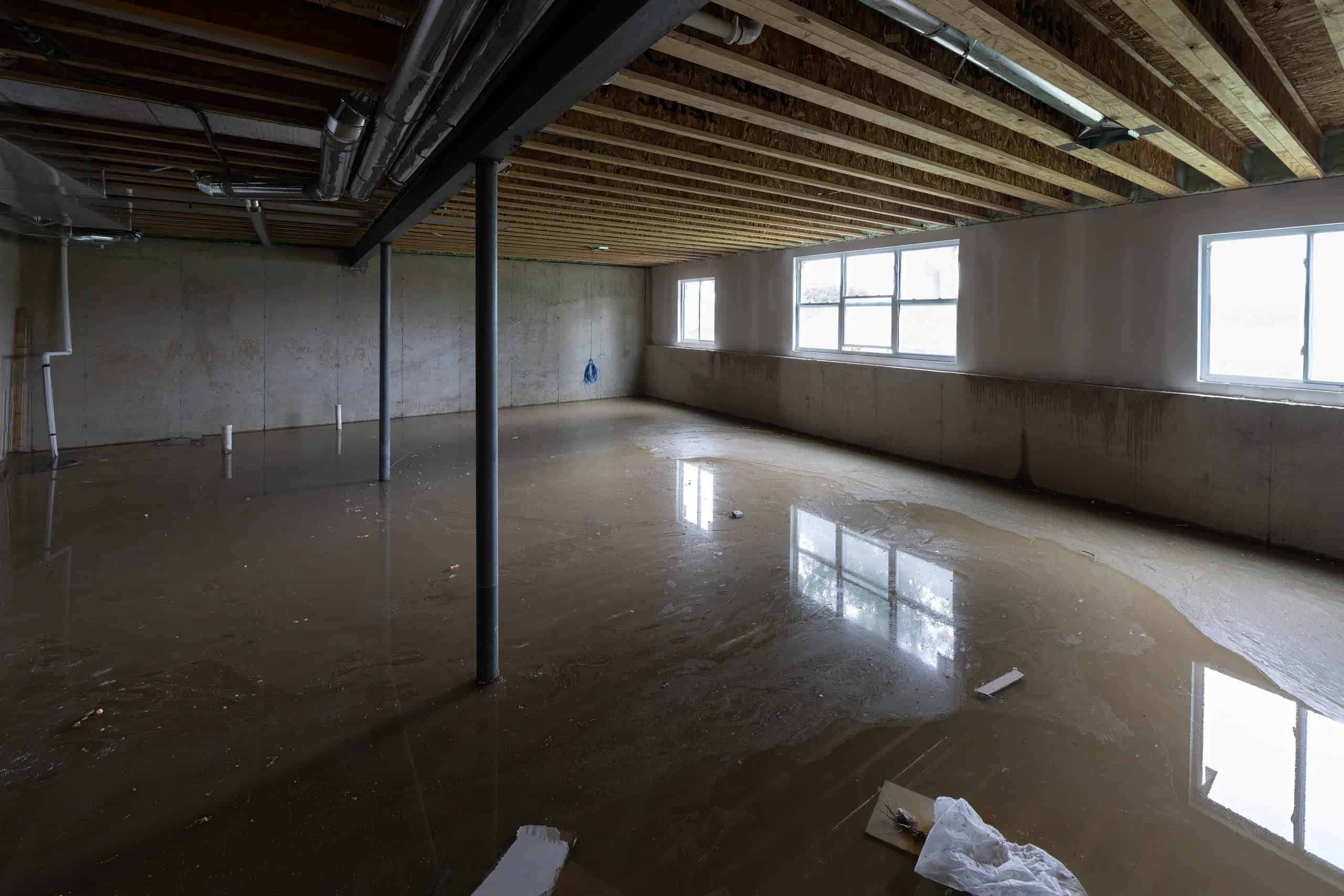
If a sudden event — a burst pipe, a collapsed drain line — caused water to enter and damage your foundation, that’s typically covered under a standard homeowners policy. But if water is seeping in gradually through the block or concrete, that’s a different story. We see insurers classify that as gradual damage or lack of maintenance, and they exclude it. The same goes for groundwater infiltration, which is a chronic issue across much of Nassau County due to the area’s naturally high water table.
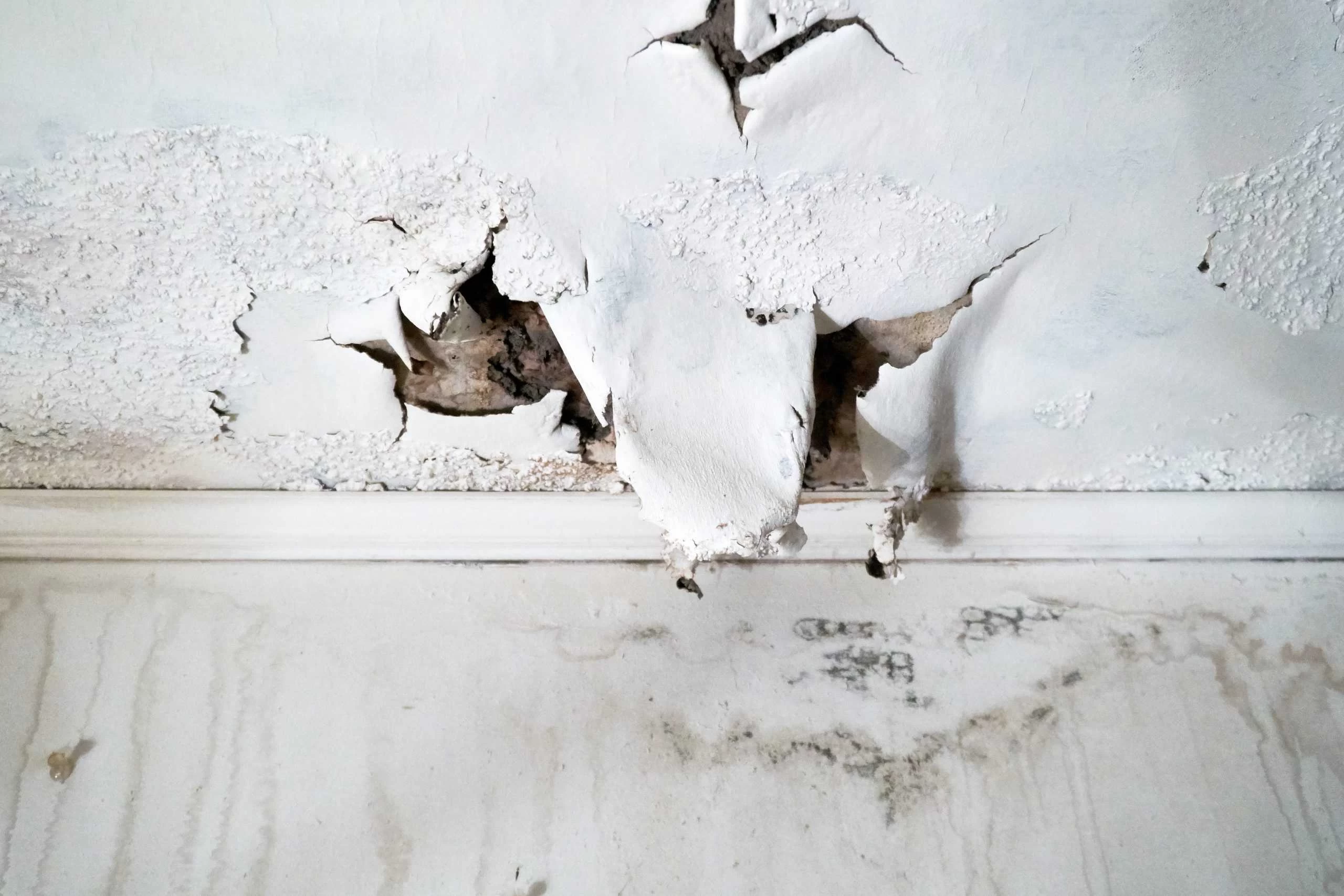
This distinction matters enormously in a county where the housing stock is dominated by post-war construction. Most of the homes in Levittown, Uniondale, Hicksville, and the surrounding communities were built in the late 1940s through the 1960s. Those aging block foundations were not designed with modern water management in mind, and they show it. Hairline cracks, efflorescence on the walls, that persistent musty smell in the basement — these are signs of gradual seepage, and they’re almost never covered by a standard policy.
What can help is a water backup endorsement, which is a rider you add to your existing homeowners policy. It covers damage caused by water backing up through a drain or sewer line — a separate situation from flooding but one that’s equally common in older Nassau County homes with aging drain systems. If you don’t currently have that endorsement, it’s worth reviewing your policy before the next storm season.
The August 2024 flash flooding event across Nassau and Suffolk counties was a sharp reminder of how quickly these gaps surface. Many homeowners discovered after the fact that their standard policies didn’t cover what they thought they did. New York’s HCR made emergency assistance funds available to income-eligible homeowners in the aftermath — but that’s a safety net with strict eligibility requirements, not a substitute for proper coverage.
If you’re unsure whether your foundation water damage qualifies as a covered event, the best starting point is a thorough inspection by a certified restoration contractor who can document the cause, the category, and the scope before the adjuster makes a determination.
Foundation Water Damage Coverage: ACV vs. RCV and Why It Changes Everything
Even when foundation or structural water damage is covered, the settlement amount can vary dramatically depending on one factor most homeowners don’t think about until it’s too late: whether their policy pays Actual Cash Value or Replacement Cost Value.
Actual Cash Value means the insurance company pays what the damaged materials are worth today — after depreciation. Replacement Cost Value means they pay what it actually costs to replace those materials with new ones. On a substantial water damage claim involving subfloor systems, finished basement materials, or structural drying of aging construction, the difference between ACV and RCV can reach tens of thousands of dollars.
In Nassau County’s older housing stock, this gap is especially significant. A finished basement in a Levittown-era home might have flooring, drywall, insulation, and mechanicals that are decades old. Under an ACV policy, the insurance company depreciates all of it. Under an RCV policy, they pay to replace it at current material and labor costs. If you’re not sure which type of policy you have, that’s the first thing to look up before you accept any settlement offer.
This is also where documentation becomes the deciding factor. Insurance adjusters work from a scope of loss — a line-by-line breakdown of every affected material and system. If the scope is incomplete, the settlement will be too. Hidden moisture behind walls, saturated subfloor systems, and water that has wicked up into framing don’t show up in a visual inspection. They require thermal imaging cameras and calibrated moisture meters to find and document. When that documentation exists and is formatted to align with how adjusters evaluate claims, the scope of loss reflects the full extent of the damage. When it doesn’t, homeowners leave money on the table — not because the insurance company is necessarily acting in bad faith, but because undocumented damage simply doesn’t exist in the claim file.
Water Damage Claim Denied? Here's What That Actually Means
A denial isn’t always the end of the road, but it feels that way. You’ve been paying premiums for years, something goes wrong, and the response you get is a letter explaining why they won’t pay. That’s a frustrating place to be.
The most common reasons water damage claims get denied in New York come down to a short list: the damage is classified as gradual rather than sudden, the cause is tied to flooding rather than a covered peril, there’s an argument that lack of maintenance contributed to the loss, or the documentation submitted with the claim didn’t capture the full scope. Each of these has a different path forward, and none of them are automatically final.
Why Water Damage Claims Get Denied — and What You Can Do About It
“Gradual damage” is the most common denial basis, and it’s also one of the most contested. Insurers use this language to describe damage that developed over time rather than from a single identifiable event. The problem is that the line between a sudden failure and a gradual condition isn’t always obvious — and it’s almost never obvious without a detailed inspection.
A pipe that fails catastrophically after years of slow corrosion might be classified as gradual damage by an adjuster doing a surface-level inspection. But a certified restoration contractor who documents the point of failure, the timeline of water migration, and the structural impact of the event can tell a different story — one that supports coverage rather than exclusion.
Sewer and drain backup is another common denial trigger. Standard homeowners policies typically exclude this unless you’ve added a water backup endorsement. If your claim involves water that entered through a floor drain, toilet, or utility sink during a heavy rain event, you’re likely dealing with a backup situation rather than a covered sudden event — and that distinction will show up in the denial language.
A denied claim can be supplemented or appealed. If the original claim was submitted without comprehensive documentation — no moisture mapping, no thermal imaging, no psychrometric logs — there may be grounds to reopen it with a more complete scope. That process works best when a qualified contractor is involved from the start, because the documentation they produce is the same language adjusters use to evaluate claims.
We work directly with insurance carriers throughout Nassau County, handle all the claim paperwork, and bill insurance directly — no upfront costs to you. If a claim has already been filed and the settlement feels wrong, that’s a conversation worth having before you accept it.
What to Do Immediately After Water Damage to Protect Your Claim
Most homeowners don’t realize that their policy requires them to take reasonable steps to prevent further damage — immediately, not after the adjuster has visited. Waiting for an insurance inspection before beginning mitigation can actually create grounds for a reduced settlement or partial denial, because additional damage that occurred during the wait may be classified as preventable.
The practical implication is that calling a restoration contractor and calling your insurance company should happen in the same window. You document the damage, you report it to your carrier, and you begin mitigation — in that order, and as quickly as possible.
The reason the timing matters isn’t just procedural. Mold can begin forming within 24 to 48 hours in the conditions that follow water damage — warm temperatures, elevated humidity, wet organic materials. Nassau County’s coastal climate makes that window even tighter in summer months. A water damage event that gets properly dried and documented within that window is a restoration job. One that doesn’t can become a mold remediation project on top of everything else.
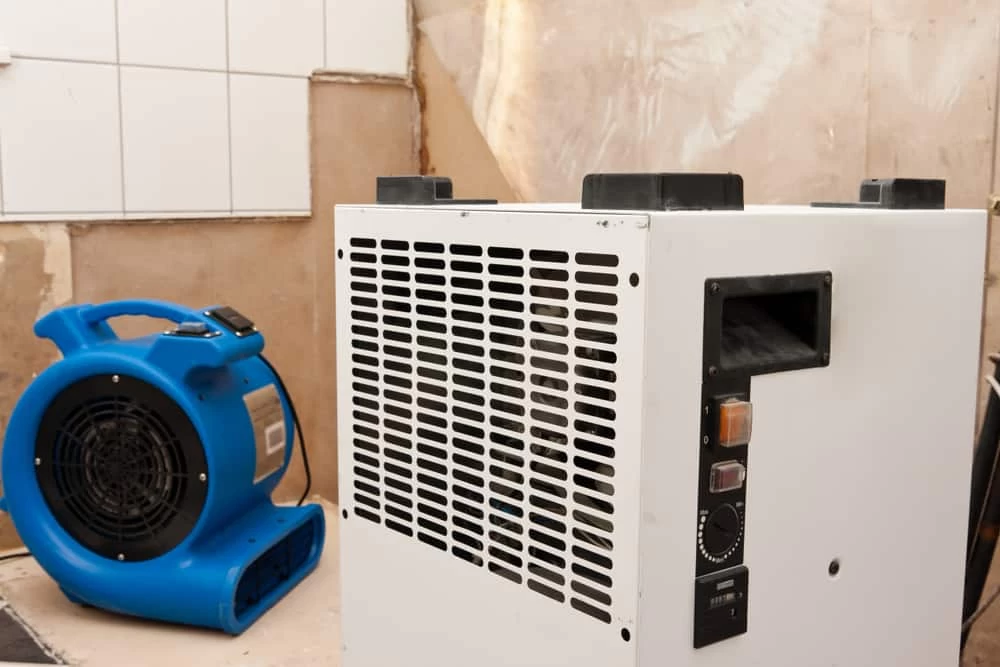
Industrial-grade equipment makes a real difference here. Commercial LGR dehumidifiers and high-volume air movers dry structural materials far faster than anything available at a hardware store. Thermal imaging identifies moisture pockets that visual inspection misses entirely. These tools produce the drying logs and moisture readings that insurance adjusters require as proof that the work met industry standards.
We hold IICRC certifications in Water Damage Restoration, Applied Structural Drying, and Applied Microbial Remediation — the same standards that insurance adjusters reference when they evaluate a restoration scope. We also carry NYS DOL Mold licenses for both assessment and remediation, which is a legal requirement in New York that most general contractors don’t meet. For Nassau County’s pre-1978 housing stock, we also hold USEPA Lead and Asbestos certifications — because restoration work in older homes often uncovers materials that require licensed handling before the job can be completed.
If you’re in the middle of a water damage situation right now, the most important thing you can do is start the process. Financing through Enhancify is available up to $200,000 at 0% APR for work that falls outside your coverage — so the gap between what insurance pays and what the repairs actually cost doesn’t have to stop you from getting the job done right.
How to Know If Your Water Damage Settlement Is Actually Fair
The average insurance payout for water damage gives you a benchmark, but it doesn’t tell you whether your specific settlement reflects the full scope of what happened in your home. That depends on your policy type, the cause of the damage, and whether everything that needed to be documented actually was.
Nassau County homeowners face a particular set of challenges — aging housing stock, a high water table, coastal flood exposure, and policies that often cover less than people expect. Understanding where those gaps are before you accept a settlement is the difference between a fair outcome and one you’ll regret.
If something feels off about your claim — or if you’re dealing with active water damage right now and want to make sure the process starts right — we’re available 24/7 and handle everything from documentation to direct insurance billing. Reach out and we’ll walk through it with you.