Summary:
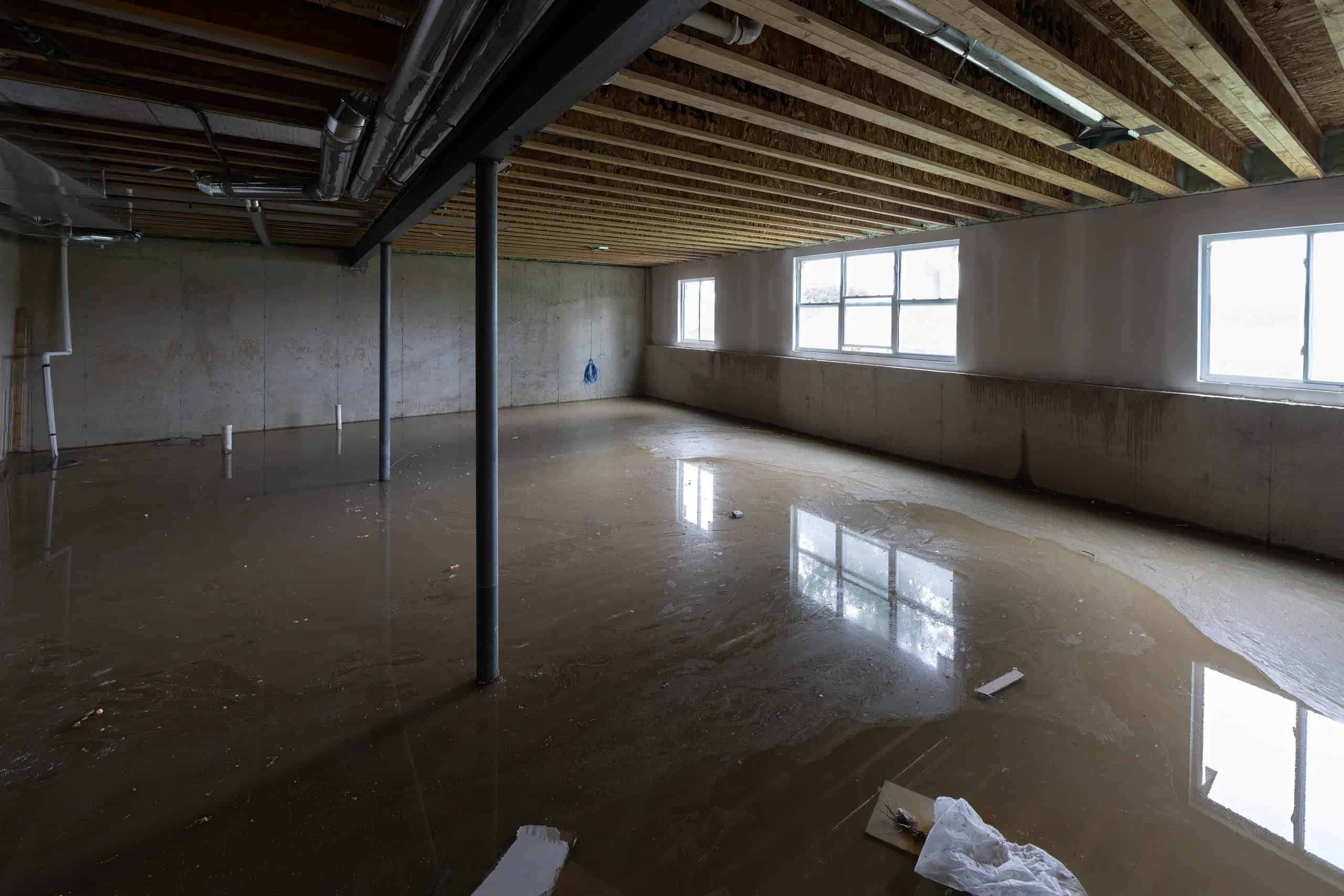
Your basement flooded. Maybe it was a sump pump failure during a storm, a burst pipe during a cold snap, or water coming in from the ground after heavy rain. Whatever the cause, you’re now standing in several inches of water wondering two things: how bad is this going to get, and who’s going to pay for it?
For most Nassau County homeowners, the answer to that second question involves a lot of assumptions — most of them wrong. FEMA doesn’t cover what you think it covers. Flood insurance doesn’t either. And the gap between what you expect and what you’ll actually receive can run into the tens of thousands of dollars. Let’s clear that up.
Basement Flood Restoration Starts With Understanding What FEMA Actually Is
Most people use “FEMA” as shorthand for any kind of federal disaster help — but there are actually two completely separate programs, and confusing them is one of the most expensive mistakes a Nassau County homeowner can make.
The first is FEMA Individual Assistance (IA). This is the program you hear about after major disasters — it’s only available when the President issues a formal disaster declaration for your area. Not every flood qualifies. If your basement floods during a typical nor’easter or after a pipe bursts, there may be no declaration, which means no FEMA IA at all.
The second is the National Flood Insurance Program, or NFIP. This is an insurance product you purchase in advance — not emergency aid. Every municipality in Nassau County participates in NFIP, so flood insurance is available to every homeowner here. But you have to buy it before the water comes in. A flood insurance policy doesn’t take effect until 30 days after purchase. You can’t buy it after a flood and file a claim for that same event.
What Does NFIP Flood Insurance Actually Cover in a Nassau County Basement?
Here’s where most homeowners get blindsided. NFIP flood insurance does cover certain things in your basement — but the list is a lot shorter than you’d expect, and the exclusions are where the real money lives.
NFIP building coverage does cover foundation elements, electrical and plumbing systems, HVAC equipment, water heaters, built-in appliances, permanently installed flooring, drywall for walls and ceilings, and cleanup costs. If your furnace, water heater, or electrical panel gets destroyed in a flood, you’re likely covered. That’s meaningful.
What it does not cover is where things get painful. NFIP does not cover finished basement improvements — meaning the walls you drywalled and painted, the floors you installed, the drop ceiling you put in, or any of the furniture and personal belongings down there. If you have a finished basement in Merrick, Massapequa, or Levittown with a home office, a family room, or a spare bedroom — none of that is covered under a standard NFIP policy. The program treats your finished basement as a luxury improvement, not a structural necessity.
This matters enormously in Nassau County, where postwar homes in communities like Bellmore and Hicksville were built with full basements that families have been finishing and renovating for decades. A basement that cost $40,000 to finish can be completely destroyed in a flood — and NFIP will pay nothing toward restoring it to the way it was. Building coverage under NFIP maxes out at $250,000 for residential structures, and contents coverage does not typically apply to belongings stored in your basement or lowest floor.
The average NFIP flood insurance premium in New York runs around $700 a year. That’s not a lot of money given what’s at stake — but only if you buy the policy before you need it.
Flooded Basement Cleaning — What FEMA Individual Assistance Will and Won't Pay For
If a Presidential Disaster Declaration is issued for Nassau County — which has happened before, most notably after Hurricane Sandy in October 2012 — you may be eligible to apply for FEMA Individual Assistance regardless of whether you have flood insurance. This is separate from NFIP. It’s federal aid, not insurance.
But FEMA IA has its own strict limits. Home Repair Assistance through FEMA is designed to cover items that affect the safety, sanitation, and basic functionality of your home — structural components, critical utilities, essential systems. It is not designed to restore your basement to its pre-flood condition. FEMA is not going to pay to rebuild your finished family room or replace your furniture. The program covers what’s needed to make the home livable again, not what’s needed to make it the way it was.
Sandy is the reference point for most Nassau County homeowners when it comes to FEMA assistance. That storm caused catastrophic flooding across the south shore — communities like Long Beach, Oceanside, Freeport, Atlantic Beach, and Lido Beach were devastated. FEMA’s own analysis found that 89 percent of Nassau County’s flooded area after Sandy fell within the high-risk zones on revised flood maps — but 11 percent did not. That 11 percent represents thousands of homeowners who had no flood insurance and were not in a zone they expected to flood. Many of them learned the hard way exactly what FEMA IA does and doesn’t cover.
FEMA assistance, when it’s available at all, is a partial safety net. It keeps the lights on and the roof over your head. It does not fund a full basement water restoration. For that, you need either a solid NFIP policy, private flood insurance, or a restoration company that can help you navigate the gap — and document your losses in a way that maximizes whatever coverage you do have.
Basement Flood Restoration in Nassau County — What the Process Actually Looks Like
Understanding your coverage is step one. Getting your basement professionally restored is what actually stops the damage from compounding.
Water damage moves fast. Mold begins growing within 24 to 48 hours of water intrusion. In a Nassau County basement with high humidity and limited airflow, that window can close even faster. Every hour you wait before extraction begins is an hour the damage spreads into walls, under flooring, and into structural materials that are much more expensive to remediate once mold takes hold.
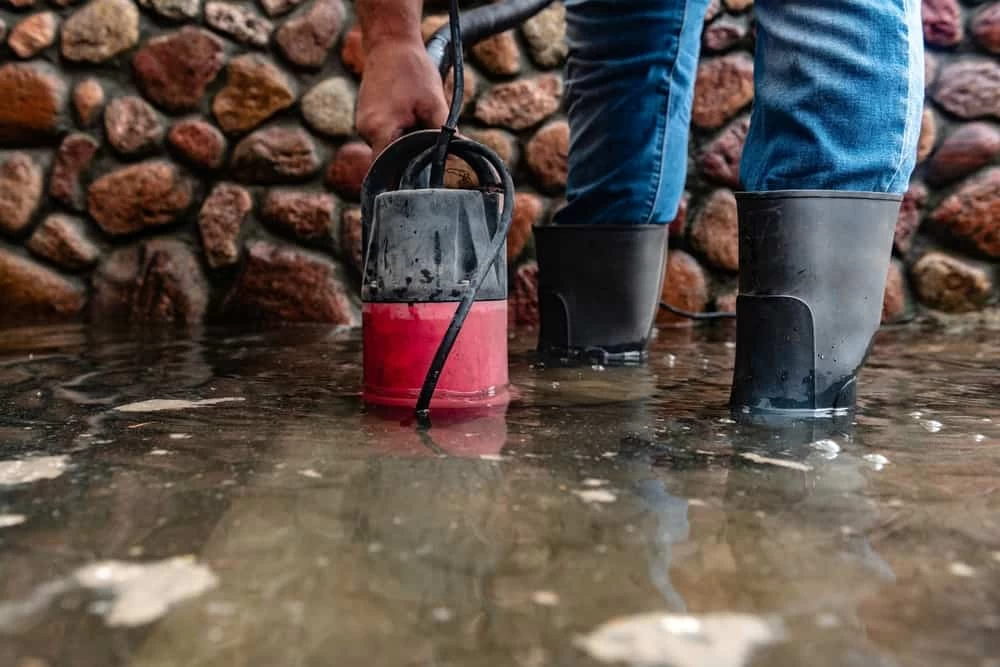
The restoration process, done right, follows a clear sequence: assess the extent of the damage, extract standing water with industrial equipment, dry and dehumidify the space using commercial-grade air movers and dehumidifiers, then sanitize and restore. The difference between that process and renting a shop vac from a hardware store is not just speed — it’s the equipment’s ability to pull moisture from inside wall cavities and subfloor materials where consumer tools simply can’t reach. That hidden moisture is what causes mold to show up six weeks later.
Basement Restoration Water Damage — Why Nassau County Homes Have Unique Challenges
Nassau County isn’t just any suburban market. The combination of geography, housing stock, and infrastructure creates a set of water damage conditions that are genuinely different from inland areas — and that affect how a basement restoration job needs to be scoped and priced.
Start with the water table. On the south shore of Nassau County, the water table sits extremely close to the surface. In communities like Oceanside, Baldwin, and Freeport, sump pumps aren’t optional — they’re essential equipment in virtually every basement. When a storm knocks out power and the sump pump stops running, water doesn’t just seep in — it comes up from below. That’s a different problem from a burst pipe or a roof leak, and it requires a different approach to extraction and drying.
Then there’s the housing stock. Nassau County’s postwar building boom produced hundreds of thousands of homes in the 1950s, 1960s, and 1970s — the colonials and split-levels that define neighborhoods from Levittown to Merrick to Syosset. A lot of that housing has original cast-iron plumbing that’s now 40 to 55 years old. Pipes at that age don’t fail on a schedule, but they fail. When they do, the water damage is typically Category 1 — clean water from a supply line — but the volume can be significant and the structural exposure is real.
There’s also the lead paint factor. Any Nassau County home built before 1978 is presumed to have lead-based paint on surfaces that may need to be disturbed during water damage restoration. That adds a remediation layer that general contractors aren’t always equipped to handle, and that NFIP coverage doesn’t account for in any meaningful way. Working with a contractor who follows NYS, NYC, and USEPA regulations isn’t just a preference in this market — it’s a practical necessity.
How to Document Your Basement Flood Damage for an Insurance Claim
One of the most overlooked parts of the NFIP claims process is documentation — specifically, the kind of documentation that adjusters actually need to process your claim efficiently and fully. Most homeowners don’t know what to gather, and underdocumented claims get underpaid.
Before any restoration work begins, photograph everything. Every wall, every floor, every piece of equipment, every piece of damaged furniture or personal property. Don’t move anything before you’ve documented it. If you have a furnace, central air unit, water heater, or other basement equipment, note the manufacturer, model, serial number, and capacity — NFIP adjusters are required to record this information during the claims process, and having it ready speeds things up considerably.
You’ll also need to file a Proof of Loss with your flood insurance provider within 60 days of the loss. This is a formal, signed document that itemizes your damages and the dollar amounts you’re claiming. Miss that deadline and you may forfeit your right to payment entirely.
This is where working with a restoration company that handles insurance billing directly makes a real difference. We’ve been through this process hundreds of times. We know what adjusters look for, how to document structural drying in a way that satisfies IICRC S500 standards — the same standards insurance companies use to evaluate whether restoration work was done correctly — and how to make sure nothing falls through the cracks in the paperwork. We bill your insurance company directly, which means no upfront costs on your end and no claim paperwork for you to navigate alone.
For costs that fall outside your coverage — finished basement improvements that NFIP excludes, personal belongings, or damage that exceeds your policy limits — we offer financing up to $200,000 at 0% APR through Enhancify. That bridges the gap between what insurance pays and what full restoration actually costs.
What Nassau County Homeowners Should Do After a Basement Flood
The biggest mistake you can make after a basement flood is waiting — waiting to call, waiting to see if it dries out on its own, waiting to figure out the insurance situation before you start the restoration. Every one of those delays costs you more in the end.
Here’s what actually matters: FEMA and NFIP are two different programs with different eligibility rules, and neither covers your finished basement the way you probably assumed. Document everything before restoration begins. File your Proof of Loss within 60 days. And get a professional on-site before the 24 to 48 hour mold window closes.
If you’re in Nassau County and you’re dealing with a flooded basement right now — or you want to make sure you’re prepared before the next storm season — Green Island Group has been handling exactly this for over 12 years across Nassau and Suffolk County. We’re available around the clock, we bill insurance directly, and we know this area well enough to scope the job correctly the first time.