Summary:
If mold came back after your last remediation, the contractor didn’t fail you by accident. They failed you because their guarantee — if they gave you one at all — didn’t actually commit to anything. That’s more common than most homeowners realize, especially here on Long Island where Nassau County’s coastal humidity, aging housing stock, and flood-prone neighborhoods create some of the most persistent mold conditions in the state.
This page lays out exactly what a black mold remediation contractor must put in writing before work begins, and why that document is the only thing standing between a real fix and another expensive disappointment.
What a Legitimate Mold Remediation Guarantee Actually Covers
A lot of companies advertise a “mold-free guarantee” or a “lifetime warranty.” Those phrases mean almost nothing without specifics behind them. The question isn’t whether a contractor offers a guarantee — it’s what that guarantee actually obligates them to do if the mold returns.
A real written guarantee should commit the contractor to completing the remediation to a standard confirmed by independent clearance testing, addressing the moisture source that caused the growth in the first place, and returning at no additional cost to re-clean the area if clearance results aren’t met. If those three things aren’t in writing, you don’t have a guarantee. You have a marketing phrase.
Why Most Mold Warranties Fail the Homeowner
Here’s the problem with most mold remediation warranties: they contain exclusions that quietly swallow the entire promise. Language like “does not cover regrowth related to moisture, water intrusion, humidity, or the home environment” sounds reasonable until you realize that mold always requires moisture to grow.
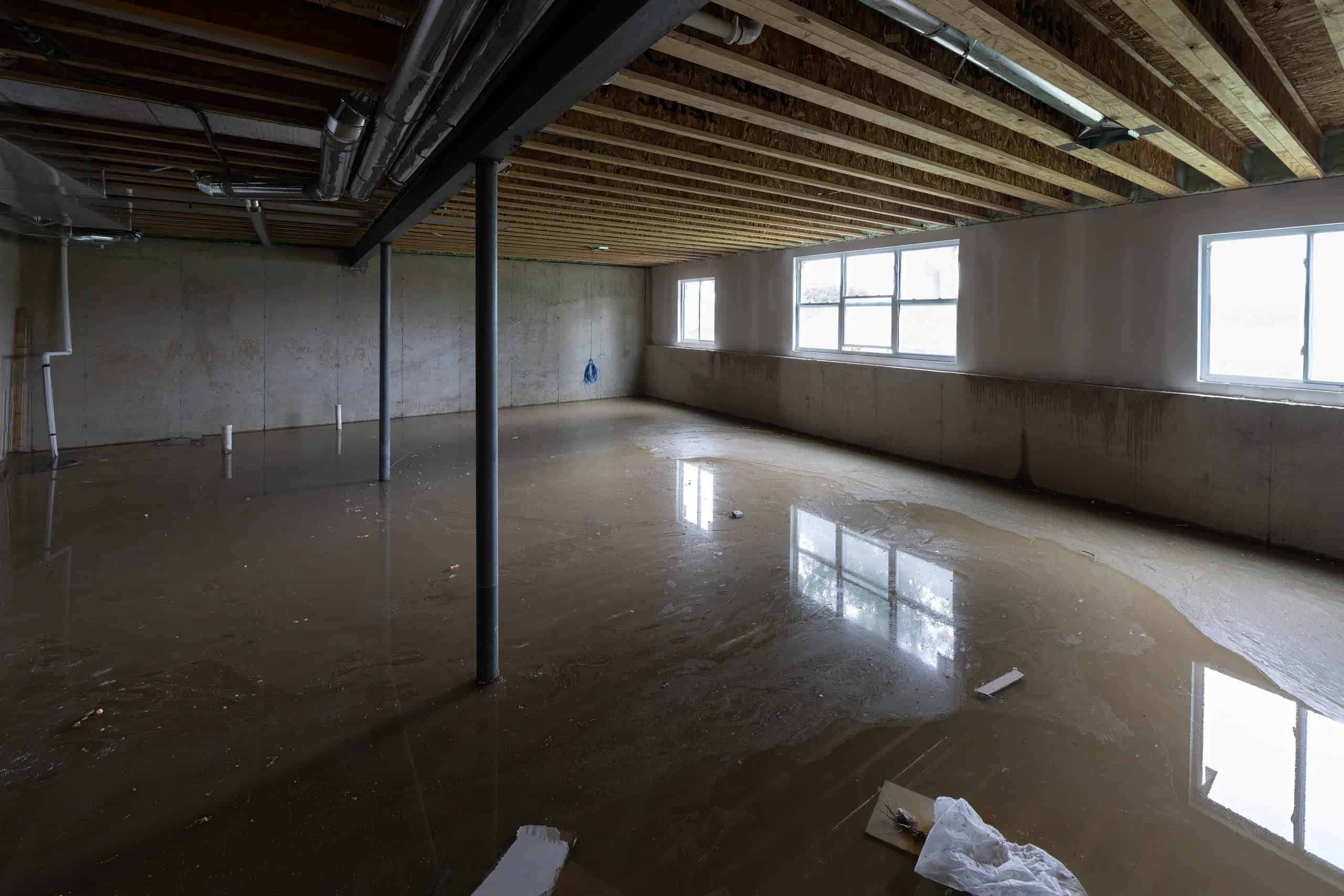
A warranty that excludes moisture-related regrowth may cover almost nothing in practice. Think about what that means for a home in Freeport, Massapequa, or Long Beach — South Shore communities in Nassau County where basement flooding after nor’easters is a recurring reality, not a freak event. Or for a Cape Cod in Levittown or Bethpage where ice dams push meltwater under the shingles every winter, soaking the attic floor and top plate in ways that don’t show up as ceiling stains until months later.
In those homes, moisture is the permanent background condition. A warranty that excludes it is a warranty that never pays out.
What a legitimate guarantee should include instead is a commitment tied to the quality of the work itself: the mold was fully removed, clearance testing passed, and the identified moisture source was corrected as part of the scope. That’s what the contractor controls. That’s what they should stand behind.
The other thing most homeowners don’t ask about — and most contractors don’t volunteer — is who performs the clearance testing. Post-remediation clearance testing is the only objective confirmation that the job was done correctly. It measures airborne spore counts and surface contamination after the work is complete.
But if the same contractor who did the remediation also performs their own clearance testing, there’s an obvious conflict of interest: they’re grading their own work. Independent clearance testing, conducted by a separate industrial hygienist or testing firm, is the standard that actually protects you. Before you sign any contract, ask specifically whether clearance testing is included, who performs it, and what happens if it fails.
What New York State Law Requires Before Any Remediation Begins
New York is one of the only states in the country with a mandatory mold remediation licensing law. Under Article 32 of the New York Labor Law, any mold remediation project covering 10 square feet or more requires a licensed NYS Department of Labor Mold Assessor to inspect the property and produce a written work plan before the remediator can touch anything.
The remediator cannot legally deviate from that work plan without assessor approval. This matters for you as a homeowner for two reasons. First, it means you’re legally entitled to a written scope of work before any remediation begins — not a verbal estimate, not a handshake agreement, a documented plan. Second, it means the assessor and the remediator must be separate entities.
A company that offers to inspect your home and then immediately sell you remediation services is operating in a legally and ethically murky space. The assessor’s job is to give you an honest picture of what’s actually there. That independence is the point.
New York has been stepping up enforcement of these requirements in 2025, particularly on larger projects and any work involving public or government-owned buildings. For homeowners in Nassau County, where pre-1978 construction is the norm and mold remediation projects frequently uncover asbestos or lead paint in the process, the written work plan isn’t just a legal formality — it’s the document that defines what the contractor is authorized to do and protects you if the scope changes unexpectedly.
You can verify whether a contractor holds the required NYS DOL Mold Remediation Contractor license directly through the Department of Labor’s online search tool. If a contractor can’t point you to their license number, that’s not a minor oversight. In New York, it means the work isn’t legal.
How to Evaluate Black Mold Removal Contractors in Nassau County
Comparing mold remediation bids is harder than it looks, because two proposals can describe completely different scopes of work while quoting similar prices. One contractor may include containment, HEPA air scrubbing, independent clearance testing, and moisture source correction. Another may propose to clean visible surfaces and call it done.
Both call it “mold remediation.” The way to cut through that is to ask for a written scope of work before you agree to anything. A legitimate scope should specify what materials are being removed, what containment methods will be used, how airborne spores will be controlled during the work, what happens to the debris, and how completion will be verified.
If a contractor resists putting those details in writing, that tells you something important.
What to Look for in a Commercial Mold Remediation Company
Commercial mold remediation carries a different set of requirements than residential work, and not every contractor is equipped for both. For property managers, facility owners, and business operators in Nassau County, the stakes are higher: operational continuity, employee health, regulatory compliance, and liability documentation all come into play in ways that a standard residential project doesn’t require.
A commercial mold remediation company should be able to provide detailed written documentation of the scope, timeline, and containment plan before work begins — not just for the client’s peace of mind, but because commercial projects often involve insurance carriers, building inspectors, and in some cases government oversight. The contractor needs to be fluent in that documentation process, not just capable of the physical work.
We hold the full license stack that large-scale projects often require: NYS DOL Mold Remediation Contractor, NYS DOL Asbestos, USEPA Lead, IICRC Water and Fire Damage certification, and a Nassau County General Contractor license. When a commercial remediation project uncovers asbestos in pipe insulation or floor tiles — which happens regularly in Nassau County’s older commercial and institutional buildings — we handle it in-house without stopping the project to bring in a separate subcontractor.
Our commercial remediation work includes contracts with institutions like the NYS Office of General Services, the Dormitory Authority State of New York, the NYS Office of Mental Health, and Nassau and Suffolk County directly. Those contracts require a level of accountability, compliance, and documentation that doesn’t leave room for shortcuts. We bring that same standard to every commercial project we take on, regardless of size.
Crawl Space Mold Removal in Nassau County: Why It's a Different Problem
Crawl spaces get overlooked. They’re out of sight, difficult to access, and easy to ignore until the musty smell starts migrating into the living space above — or until a home inspection flags it as a defect right before a sale. Under Nassau County’s new mold disclosure requirements for residential property sales, effective June 14, 2023, that’s a more consequential discovery than it used to be.
Crawl space mold remediation is genuinely different from treating mold in a finished basement or on drywall. The environment is tighter, ventilation is limited, and the primary structural material — wood framing, floor joists, subfloor sheathing — is porous and absorbs moisture differently than gypsum board. In many Nassau County homes built in the 1950s and 1960s, the crawl space has either no vapor barrier or a deteriorated one, which means ground moisture is constantly evaporating upward into the wood.
The mold isn’t a one-time event. It’s a condition that recurs until the moisture pathway is closed.
A proper crawl space mold removal scope should include physical removal or HEPA vacuuming of contaminated materials, antimicrobial treatment of affected wood surfaces, installation or replacement of a vapor barrier, and post-remediation clearance testing to confirm the work was successful. If a contractor quotes you crawl space mold removal without mentioning the vapor barrier, they’re treating the symptom and leaving the cause in place.
We assess crawl space conditions with thermal imaging cameras that detect moisture invisible to the eye — not just the visible growth on the surface. That distinction matters, because crawl space mold that’s been growing for months rarely stays contained to the area you can see from the access hatch.
Choosing the Right Black Mold Remediation Contractor in Nassau County
Before you hire anyone for black mold remediation in Nassau County, ask for three things in writing: the contractor’s NYS DOL Mold Remediation Contractor license number, a written scope of work based on a licensed assessor’s work plan, and a guarantee that specifies clearance testing by an independent party and a commitment to return if results aren’t met. If a contractor can’t or won’t provide all three, keep looking.
Nassau County’s housing stock, its coastal exposure, and its aging infrastructure make mold a recurring challenge — not a one-time fix. The homes here deserve contractors who understand that and are accountable to it in writing, not just in their sales pitch.
If you’ve been through a failed remediation before or you’re dealing with mold in a crawl space, a commercial property, or an older home with potential asbestos complications, we’re the call to make. We’re available 24/7, we handle insurance paperwork directly, and we don’t consider the job finished until clearance testing confirms it.