Summary:
Most Nassau County homeowners don’t think about their pipes until water is coming through the ceiling. By then, the clock is already running. You have roughly 24 to 48 hours before moisture trapped inside your walls creates conditions where mold begins to grow—and Long Island’s freeze-thaw winters are exactly the kind of environment that catches people off guard.
This guide is for homeowners who want to understand what they’re actually dealing with before the emergency hits, what to look for if you suspect hidden damage, and what a real restoration involves from the moment water enters your home.
How to Identify a Water Leak Inside a Wall
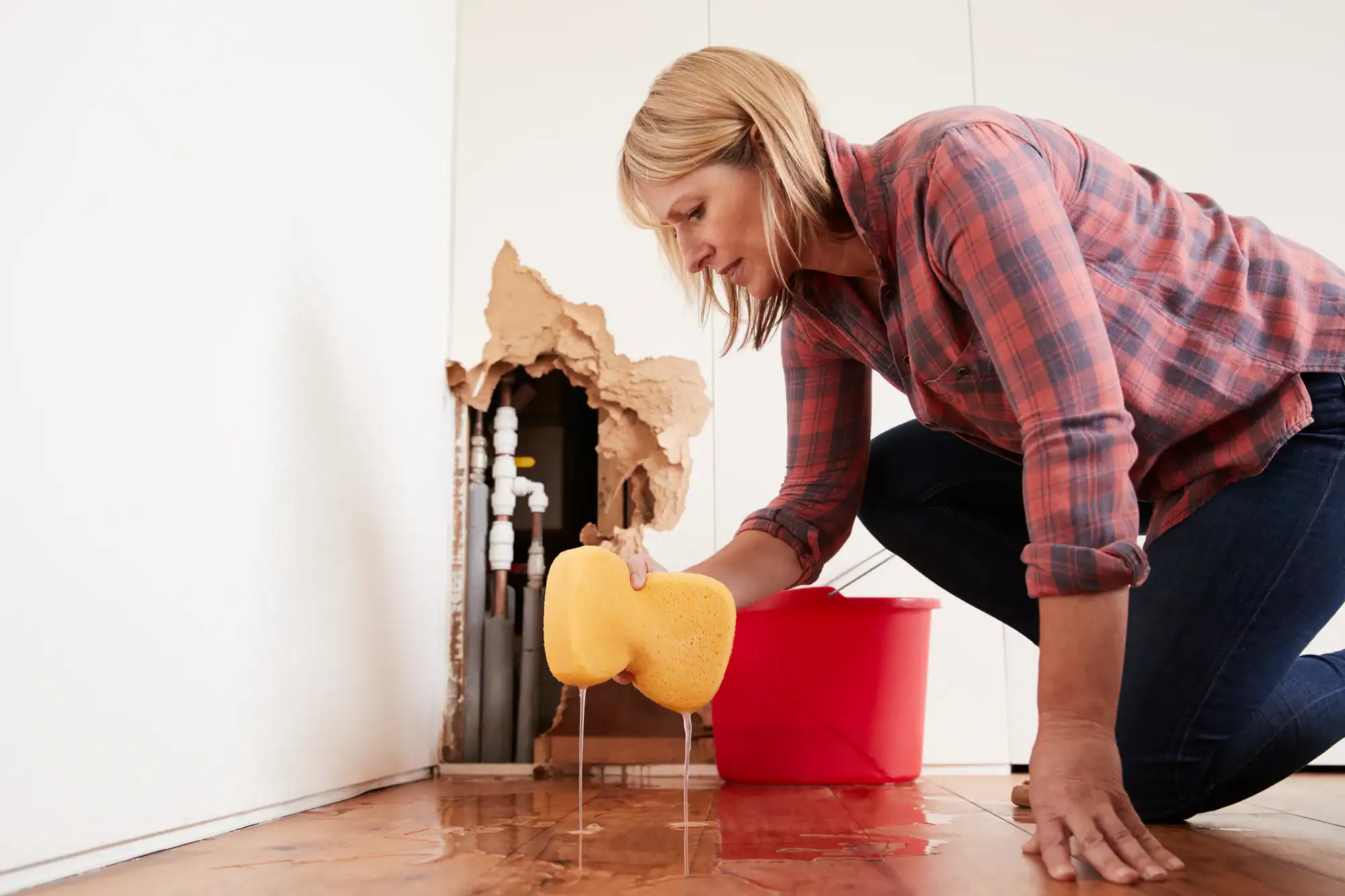
The frustrating thing about a water leak inside a wall is that by the time you notice something, the damage has usually been building for a while. You might see a faint stain on the ceiling, feel a soft spot in the drywall, or catch a musty smell that doesn’t go away no matter how much you clean.
What’s harder to catch are the subtler signs—a slow but unexplained rise in your water bill, paint that starts bubbling along a baseboard, or a section of flooring that feels slightly spongy underfoot.
In Nassau County’s older housing stock, where a large share of homes were built in the postwar decades, these signs are more common than people expect. Pipes in homes from that era were often routed through exterior walls and unheated crawl spaces—locations that leave them exposed to the freeze-thaw cycle Long Island gets every winter.
Why a Leak Inside a Wall Is Harder to Find Than You'd Think
When water escapes a pipe inside a wall, it doesn’t just pool in one spot. It follows the path of least resistance—soaking into insulation, wicking along wood framing, spreading across the subfloor, and sometimes traveling several feet from the actual break before it becomes visible. A stain on your living room ceiling might trace back to a pipe in a completely different part of the house.
This is where the standard approach of “I’ll look around and see if I can find it” falls short. Moisture meters and thermal imaging cameras detect temperature differentials and moisture levels that the naked eye simply can’t see. Thermal imaging, in particular, can show exactly where wet insulation is hiding inside a wall cavity—without opening a single panel unnecessarily.
For Nassau County homes built before 1978, there’s an added layer of concern. Disturbing walls in homes of that age can uncover asbestos pipe insulation or lead-based paint. A contractor who isn’t licensed to handle those materials under New York State Department of Labor and USEPA regulations legally cannot complete the full scope of the job. We hold those certifications in-house, which means we don’t have to stop the job when something unexpected turns up.
The longer water sits inside a wall, the more complex the restoration becomes. Insulation that’s been wet for days loses its effectiveness and typically needs to be replaced. Wood framing that stays damp long enough will begin to degrade. Once mold takes hold—which the EPA and CDC note can happen within 24 to 48 hours of water exposure—you’re no longer dealing with a drying job. You’re dealing with a remediation.
What Water Damage Inside Walls Actually Does Over Time
Most people picture water damage as something visible—a soaked carpet, a puddle on the floor, a ceiling that’s clearly wet. The more serious damage usually happens out of sight.
When water gets into a wall cavity and stays there, it saturates the insulation, softens the drywall, and begins breaking down the wood framing behind it. None of this is visible from the outside until the damage is already significant.
In Nassau County, where the housing stock skews older and many homes have original or near-original framing, this matters more than it might in a newer construction market. Older wood absorbs moisture more readily, and homes with outdated insulation don’t dry out the way modern materials do. A wall that looks fine from the outside can be harboring weeks of accumulated moisture damage.
Mold is what most homeowners worry about—and for good reason. It doesn’t need much: moisture, a surface to grow on, and time. Give it 24 to 48 hours in the right conditions and it will colonize insulation, drywall, and wood framing in ways that aren’t reversible with drying alone.
New York State’s 2016 Mold Law requires that mold remediation be performed by a separately licensed contractor—this isn’t optional. Many general contractors and plumbers simply cannot satisfy this requirement. We hold the NYS DOL Mold Remediation license, which means if mold is found during a burst pipe job, we can address it without stopping the project or bringing in a third party.
Water damage inside walls isn’t a problem that stabilizes on its own. It gets worse. Every day that moisture stays trapped in a wall assembly is another day of structural degradation, another day of mold risk, and another day that the eventual restoration becomes more involved and more expensive.
What the Water Damage Restoration Process Actually Looks Like
There’s a lot of confusion about what “water damage restoration” involves—partly because the term gets used loosely to mean anything from running a fan in a wet room to a full structural drying and reconstruction project. The actual process, done correctly, follows a defined sequence governed by IICRC S500, the industry standard for professional water damage restoration.
We’re IICRC-certified in Water Damage Restoration, Applied Structural Drying, and Applied Microbial Remediation. That’s not a formality—it’s the framework our technicians use on every job, and it’s what insurance adjusters look for when they evaluate whether a restoration was performed to standard.
Step-by-Step: How a Burst Pipe Restoration Actually Works
The first thing that happens when we arrive is assessment. Before any equipment goes down, we need to understand the full scope of the water intrusion—where it came from, where it traveled, and what materials it has affected. We map the moisture throughout the affected area using thermal imaging and moisture meters so we know exactly what needs to be dried and can document the baseline for your insurance claim.
Once we have a clear picture, we move to extraction. Standing water gets removed using industrial extractors—not shop vacs, not residential wet-dry equipment. The difference in capacity is significant, and it matters for how quickly the drying phase can begin.
After extraction, we set up commercial-grade dehumidifiers and air movers throughout the affected area. This is where the 24 to 48 hour window becomes critical. The goal is to remove moisture from the air and from building materials fast enough to prevent mold colonization. Residential fans and consumer dehumidifiers simply don’t move enough air or pull enough moisture to achieve this in a wall assembly or subfloor.
Throughout the drying process, we monitor moisture levels and document readings. This documentation serves two purposes: it confirms that drying is progressing correctly, and it creates the paper trail your insurance company needs. We handle direct billing with insurers, which means we manage the documentation, the damage reports, and the adjuster communication—you don’t have to.
Once structural drying is complete and moisture readings confirm the materials are dry, we move to reconstruction. For Nassau County homes where hazardous materials were encountered—asbestos pipe wrap, lead paint—those are addressed under the appropriate NYS DOL and USEPA certifications before reconstruction begins.
Why Burst Pipe Repair Is More Complex in Nassau County
Nassau County has a specific combination of factors that makes burst pipe events more complicated than they might be elsewhere—and understanding them helps explain why the contractor you choose matters as much as how fast they arrive.
The housing stock is the starting point. Communities like Levittown, Hempstead, Valley Stream, Mineola, Freeport, and Elmont are filled with homes built between the 1940s and 1970s. Many of these homes still have their original or near-original plumbing—galvanized steel pipes that have a typical lifespan of 40 to 70 years. A lot of that pipe is already past its expected service life, which means it’s more brittle, more prone to freeze cracking, and more likely to fail in ways that cause significant water intrusion rather than a slow, manageable drip.
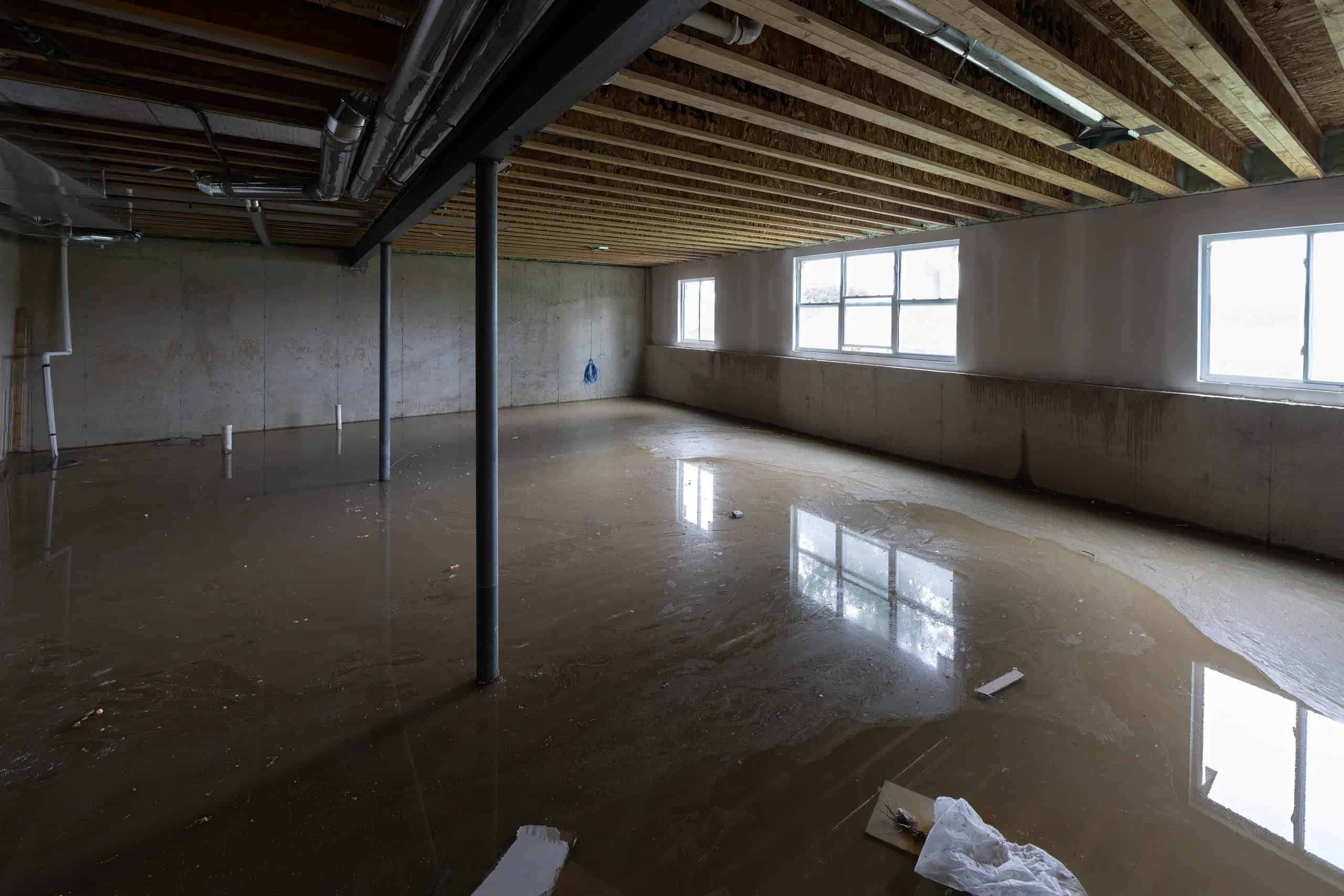
Long Island’s high water table adds another layer. When a pipe bursts and water enters a basement or crawl space, it doesn’t always drain away cleanly. In low-lying areas across Nassau County, groundwater can compound the flooding, increasing the volume of water that needs to be extracted and complicating the drying timeline.
Then there’s the freeze-thaw cycle. Nassau County’s maritime climate means winters are punctuated by sharp cold snaps—temperatures that drop below 20°F where pipes freeze—followed by rapid warming. Pipes don’t typically burst during the freeze itself. They burst during the thaw, when ice melts and pressure releases suddenly. That lag between the freeze event and the visible damage is one reason homeowners are sometimes caught off guard.
We hold a Nassau County General Contractor license, which is a local, specific credential—not a generic statewide authorization. We also contract directly with Nassau County as a government client, and we carry NYS OGS Approved Emergency Response Contractor status, which means the State of New York has already audited our credentials, insurance, and compliance. That level of vetting matters when you’re inviting a crew into your home to handle a situation that has the potential to involve hazardous materials, significant structural damage, and a complex insurance claim.
When to Call for Burst Pipe Repair in Nassau County
If you’re reading this before anything has gone wrong, that’s the best position to be in. The weeks before Nassau County’s freeze season sets in are the right time to check on pipes in unheated crawl spaces, make sure your heating system is serviced, and know who you’d call if something happened at 2 a.m. in February.
If you’re reading this because you’ve already noticed a stain, a smell, or something that doesn’t feel right—don’t wait to see if it resolves. Water damage inside walls doesn’t stabilize. It compounds. And the 24 to 48 hour window before mold becomes a serious risk moves faster than most people expect.
Green Island Group is available around the clock, handles direct insurance billing, and carries every license required to manage a burst pipe event from extraction through reconstruction—including mold, asbestos, and lead certifications that most contractors in this market simply don’t hold. If you’re in Nassau County and you want to talk through what you’re seeing, give us a call.