Summary:
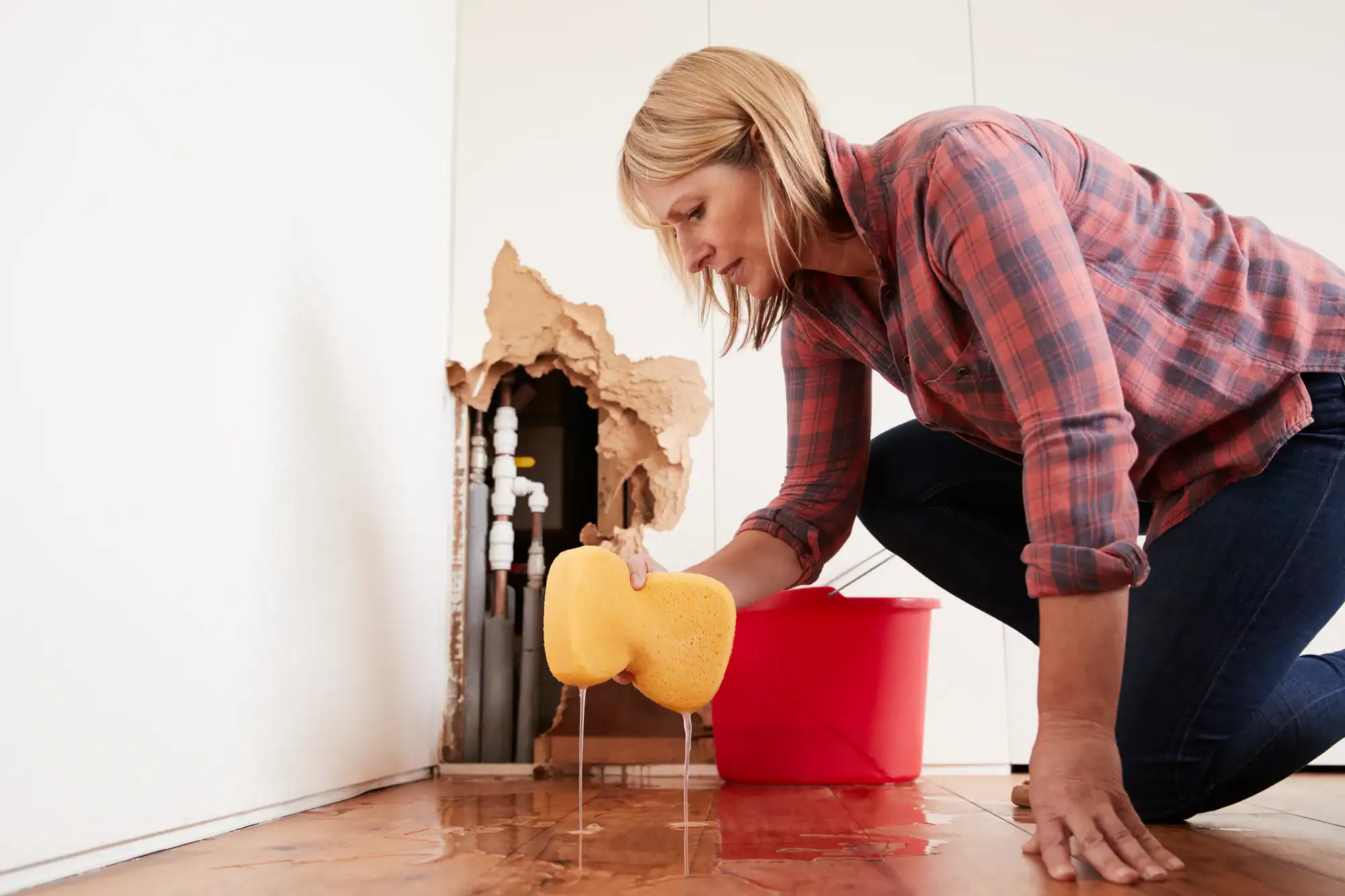
The pipe is fixed. The water is mopped up. You’ve got a fan running and you’re hoping for the best.
Here’s the problem: the part of a burst pipe event that causes the most damage is already underway, and you can’t see it. Water has moved into your walls, soaked into your subfloor, and settled into materials that won’t dry on their own for days — or weeks. In Nassau County, where most homes were built before 1980 and coastal humidity stays high well into fall, that window closes faster than most people expect.
What follows is an honest breakdown of what’s actually happening inside your home after a pipe bursts — and what it takes to stop it from becoming a much bigger problem.
The Water Damage Restoration Process: What Happens Hour by Hour
The first 24 hours after a pipe bursts are the most consequential. Within minutes of a rupture, water begins absorbing into drywall, wood framing, subfloor panels, and flooring materials. What looks like a wet floor is often the surface layer of a much deeper saturation problem.
By the time you hit the 24-hour mark, materials are swelling and warping. Between 24 and 48 hours, mold can begin developing in any area that retains moisture — and in Nassau County’s humid coastal climate, that window can be even shorter during summer months. Past 48 hours, visible mold growth becomes likely, structural wood can start to deteriorate, and the scope of what needs to be replaced rather than dried expands significantly.
Professional restoration is designed around this timeline. The goal isn’t just to remove standing water — it’s to stop the clock on hidden moisture before the damage compounds.
Burst Pipe Repair Services: Fixing the Pipe vs. Fixing the Damage
One of the most common mistakes homeowners make after a pipe bursts is assuming the job is done once the plumber leaves. The plumber fixes the pipe. That’s the right first call. But the water that already escaped — the water that soaked into your walls, ran under your flooring, and pooled inside your wall cavities — that’s a completely separate problem, and it doesn’t go away on its own.
A burst pipe repair service handles the plumbing. A water damage restoration company handles everything the water touched after it left the pipe. Those are two different scopes of work, and confusing them is one of the primary reasons homeowners end up with mold problems weeks after they thought the situation was resolved.
We start with water extraction — removing standing and absorbed water using industrial-grade equipment that goes well beyond what a shop vac or consumer dehumidifier can do. After extraction comes moisture detection, which is where thermal imaging cameras become essential. Thermal imaging reveals moisture hiding inside wall cavities, beneath tile, and under subfloor panels — areas that look dry on the surface but are still saturated underneath. Without this step, you’re guessing.
From there, the drying phase begins. We position commercial air movers and dehumidifiers according to IICRC S500 standards — the governing framework for professional water damage restoration — and track moisture readings daily until target levels are reached. Only when moisture readings confirm the structure is dry does the reconstruction phase begin: replacing drywall, repairing or replacing flooring, and addressing any mold that developed during the process.
In Nassau County specifically, this process carries an additional layer of complexity. A significant portion of the county’s housing stock was built before 1978, which means lead paint is presumed present on any surface, and asbestos may exist in floor tiles, insulation, or joint compound. Any restoration work that involves removing drywall or disturbing building materials in a pre-1978 home legally requires NYS DOL Asbestos Handler certification and USEPA Lead and RRP certifications. A contractor without those credentials cannot legally complete the job — they have to stop and subcontract, which adds time and cost at exactly the moment you need things to move quickly.
We hold every required certification in-house, which means we can take a job from emergency extraction through full reconstruction without handing it off. That’s not a credential list for a brochure — it’s the reason we can complete a job in Levittown or Garden City from the first call through the final inspection without stopping.
Water Damage Carpet Cleaning: When It Can Be Saved and When It Can't
Carpet is one of the first casualties of a burst pipe, and one of the most misunderstood. The question isn’t just whether the carpet is wet — it’s what kind of water it’s wet with, and how long it’s been sitting.
Water damage is categorized by contamination level. A burst supply line or a failed pipe fitting typically produces Category 1 water — clean water from a pressurized supply source. In a Category 1 scenario, carpet that has been extracted and dried within 24 to 48 hours may be salvageable, depending on the padding underneath and the extent of saturation. The padding almost always needs to go regardless, because it retains moisture long after the surface feels dry.
Once water has been sitting for more than 48 hours, or if it has any contact with sewage, drain backflow, or ground-level flooding, the classification changes. Category 2 and Category 3 water events introduce contamination that makes carpet cleaning insufficient — the carpet needs to come out. Attempting to clean and dry contaminated carpet in place is one of the more reliable ways to create a serious mold problem inside the floor assembly.
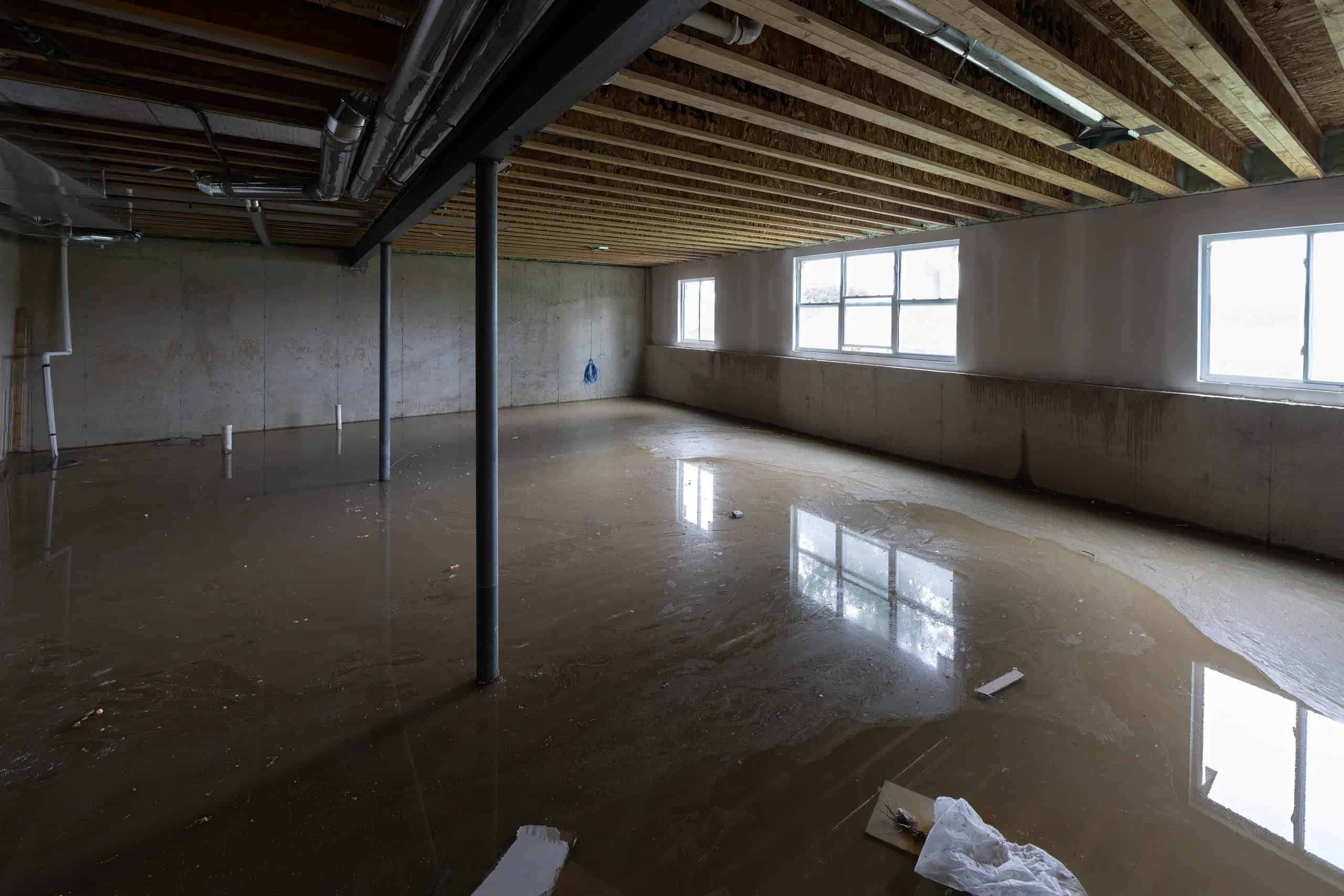
In Nassau County, this matters more than in most markets. The South Shore communities — Long Beach, Freeport, Oceanside, Baldwin, Wantagh, Seaford, and Massapequa — sit in FEMA flood zones where a burst pipe in a basement can coincide with groundwater seepage, especially during heavy rain or spring thaw. What starts as Category 1 water from a pipe can quickly become a mixed-contamination scenario when it meets the water table. Homes in central Nassau, like those in Hempstead Village and Uniondale, face similar risks from aging infrastructure and flat-grade lots where water has nowhere to drain.
We assess the water category before any cleaning or drying decision is made. That assessment determines the right course of action — and it’s the step that prevents a well-intentioned DIY cleanup from turning into a mold remediation job three weeks later.
Water Damage Floor Repair Cost: What Nassau County Homeowners Are Actually Paying
Cost is the question everyone has but few people ask directly. The honest answer is that it depends on how quickly you act, what materials are involved, and how far the water traveled before it was stopped.
For a typical Category 1 burst pipe event in Nassau County and the broader Long Island market, restoration costs run from $2,500 to $7,500 for the mitigation phase alone. When structural reconstruction is involved — replacing subfloor, drywall, and flooring — costs can reach $10,000 to $50,000 or more for larger projects. New York metro labor rates run 15 to 20 percent above national averages, and Nassau County’s older housing stock adds variables that newer construction doesn’t have. Floor repair specifically runs from $225 to $3,300 depending on material type and the extent of subfloor damage beneath it.
The good news is that burst pipe damage from a sudden and accidental event is typically covered by standard homeowners insurance. The less obvious news is that how the claim is documented and written up has a significant impact on what gets paid.
Does Homeowners Insurance Cover Burst Pipe Water Damage in Nassau County?
In most cases, yes. A burst pipe that ruptures suddenly — from freezing, pressure failure, or a fitting that gives out — is classified as a sudden and accidental event under standard homeowners insurance policies. That means the water damage it causes is typically covered, including extraction, drying, structural repairs, and flooring replacement.
What’s not covered is gradual damage. If a pipe has been slowly leaking behind a wall for months and the damage built up over time, insurers treat that as a maintenance issue and deny the claim. Flood damage from external water — storm surge, overland flooding, or groundwater — requires separate flood insurance and is not part of a standard homeowners policy. That distinction matters especially in Nassau County’s South Shore communities, where a heavy storm can blur the line between a pipe event and a flood event.
The documentation piece is where many claims run into trouble. Insurers require detailed moisture readings, scope-of-work documentation, and evidence of the damage extent before and after mitigation. We handle the insurance paperwork directly — writing the scope, documenting moisture readings, and billing the carrier — so you’re not navigating that process on your own while also dealing with a disrupted home.
For homeowners whose damage exceeds coverage limits, or who need work done before a claim resolves, we offer financing up to $200,000 at 0% APR through Enhancify. That exists specifically so that cost doesn’t become a reason to delay work that needs to happen now.
Why Nassau County's Aging Housing Stock Makes Burst Pipe Damage Worse Than You'd Expect
Nassau County’s post-World War II housing boom produced hundreds of thousands of Cape Cods, ranch homes, and split-levels in communities like Levittown, Hicksville, Uniondale, and Garden City. Those homes were built fast, built well for their era, and are now 60 to 80 years old. That age matters when a pipe bursts.
Galvanized steel supply pipes — common in homes built before the 1970s — corrode internally over decades. When they fail, the water they release isn’t always clean. Corrosion byproducts can push a burst pipe event from Category 1 into Category 2 territory, which changes what materials can be saved and what has to go. Cast iron drain lines in these same homes can crack, collapse, or back up under the stress of a sudden pressure event, adding a secondary contamination risk that wasn’t part of the original failure.
Pre-1978 construction also means lead paint on walls, ceilings, and trim — and potentially asbestos in floor tiles, pipe insulation, or textured ceiling material. Any restoration that requires cutting into drywall, removing flooring, or disturbing original building materials triggers New York State’s lead-safe work practice requirements and, in many cases, asbestos protocols. A company that doesn’t hold the right certifications legally cannot complete that work.
We hold a Nassau County General Contractor license alongside NYS DOL Mold, NYS DOL Asbestos Handler, USEPA Lead, and USEPA RRP certifications. That’s not a list of credentials for a brochure — it’s the reason we can take a job from the first call through the final inspection without stopping. It also means the homeowner in Levittown with original 1950s flooring doesn’t have to coordinate three separate contractors while their subfloor is open and their family is displaced. One call, one crew, one point of contact through the entire process.
We’ve been doing this work across Nassau and Suffolk County for over 12 years and have completed more than 5,000 restoration projects across New York State. That track record doesn’t happen by accident.
What to Do After a Burst Pipe in Nassau County
Shut off the water. Move what you can. Then call a restoration company before you do anything else — including running fans or waiting to see if it dries on its own.
The 24-hour window is real. Mold can begin developing within 24 to 48 hours of water exposure, and Nassau County’s coastal humidity makes that timeline even tighter in the warmer months. The damage you can’t see — inside walls, under flooring, in the subfloor — is almost always worse than what’s visible on the surface. Acting quickly is the single most effective thing you can do to control the scope and cost of what comes next.
If you’re dealing with a burst pipe right now, or if you’ve recently had one and you’re not sure whether it was fully dried out, reach out to Green Island Group. We respond 24/7, handle the insurance paperwork directly, and have the licenses to complete the full job — not just part of it.