Summary:
If your carpet is wet right now, you’re probably not looking for a lecture on water damage categories. You want to know one thing: do I have to replace this, or can it be fixed?
The honest answer is — it depends on a few specific factors, and most of them can be assessed quickly. The type of water, how long it’s been sitting, what’s underneath the carpet, and whether your home was built before 1978 all play a role. In Nassau County especially, that last factor changes the picture more than most people realize.
Here’s what you actually need to know to make that call.
When Can Water-Damaged Carpet Actually Be Saved?
The answer starts with where the water came from. The IICRC — the organization that sets the industry standard for water damage restoration — classifies water into three categories, and that classification drives almost every decision we make.
Category 1 is clean water: a burst supply line, a leaking water heater, an overflowing sink. If the water is clean and you call us within 24 to 48 hours, there’s a reasonable chance the carpet itself can be dried, cleaned, and kept. Category 2 involves water with some contamination — a washing machine overflow, a dishwasher leak. Salvage is possible, but more complicated. Category 3 is sewage, rising floodwater, or seawater. If your carpet contacted Category 3 water, it cannot be adequately sanitized and needs to come out. Full stop.
Why the carpet pad is almost always replaced — even when the carpet isn't
Here’s something that trips up a lot of homeowners: the carpet can look and feel dry on the surface while the padding underneath is still completely saturated. Carpet fibers shed moisture relatively quickly. The foam or fiber pad beneath them doesn’t — it holds water against the subfloor for days, sometimes weeks, creating exactly the conditions mold needs to take hold.
This is why we almost universally replace the pad even when the carpet itself is salvageable. It’s not upselling. It’s the only way to actually dry the system. If the pad stays wet, you’ll have a mold problem under a dry-looking carpet, and you won’t know it until you smell it.
The subfloor matters too. Concrete subfloors dry slowly but hold up reasonably well. Wood subfloors — common in Nassau County’s post-WWII Cape Cods and split-levels — can warp, cup, and rot when moisture sits on them. Particle board and OSB subfloors, used in some renovation work, deteriorate quickly and often need replacement even when the carpet above them could have been saved. If the subfloor is compromised, the carpet is coming up regardless of its condition.
Persistent odor after drying is not a cosmetic problem. It means bacterial contamination has penetrated into the carpet backing or the subfloor material. Odor-sealing products exist, but they’re temporary when the contamination runs that deep. If the smell doesn’t clear after thorough professional treatment, replacement is the right answer — not another round of deodorizer.
How to find a water leak inside a wall before it reaches your carpet
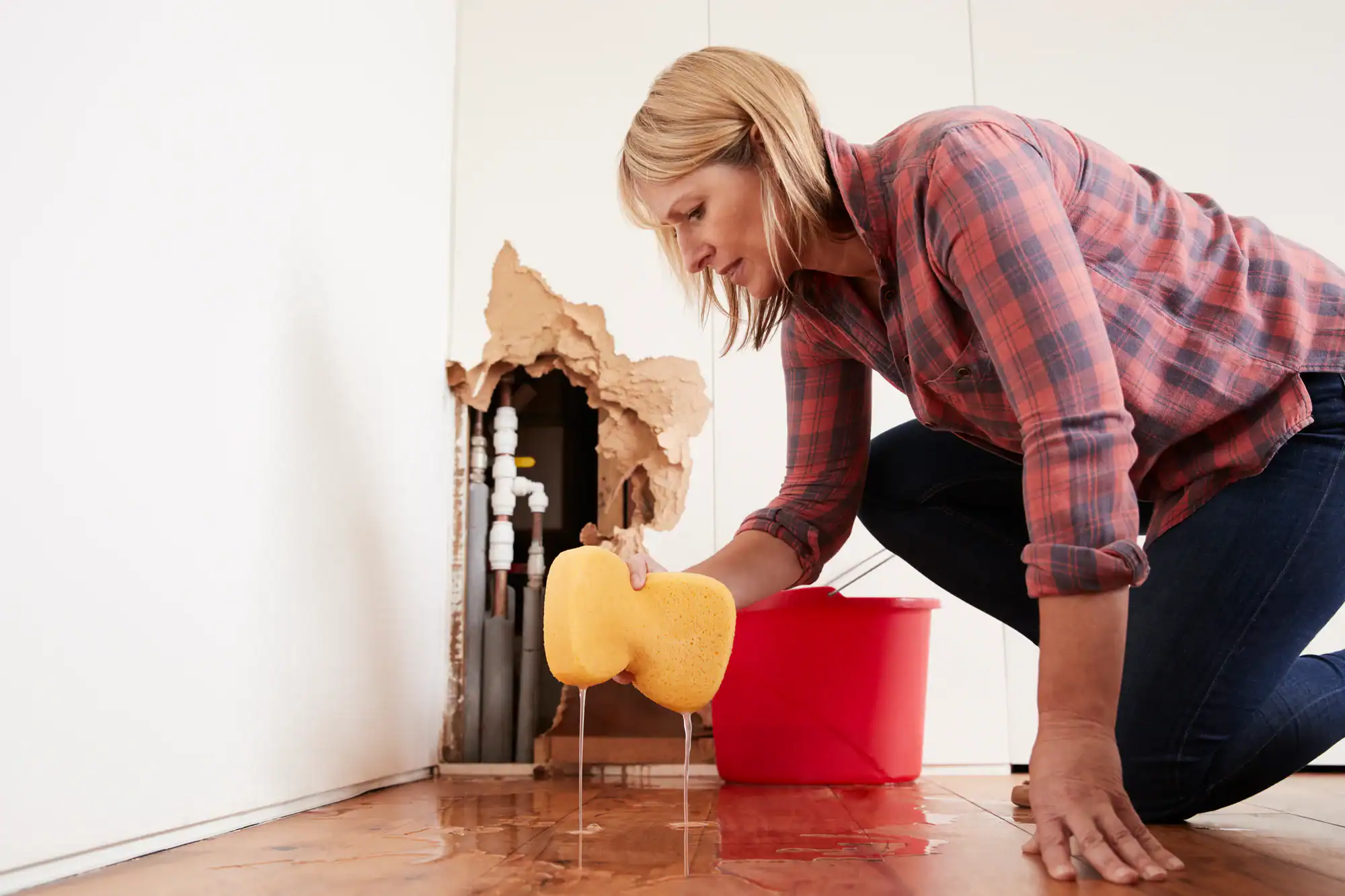
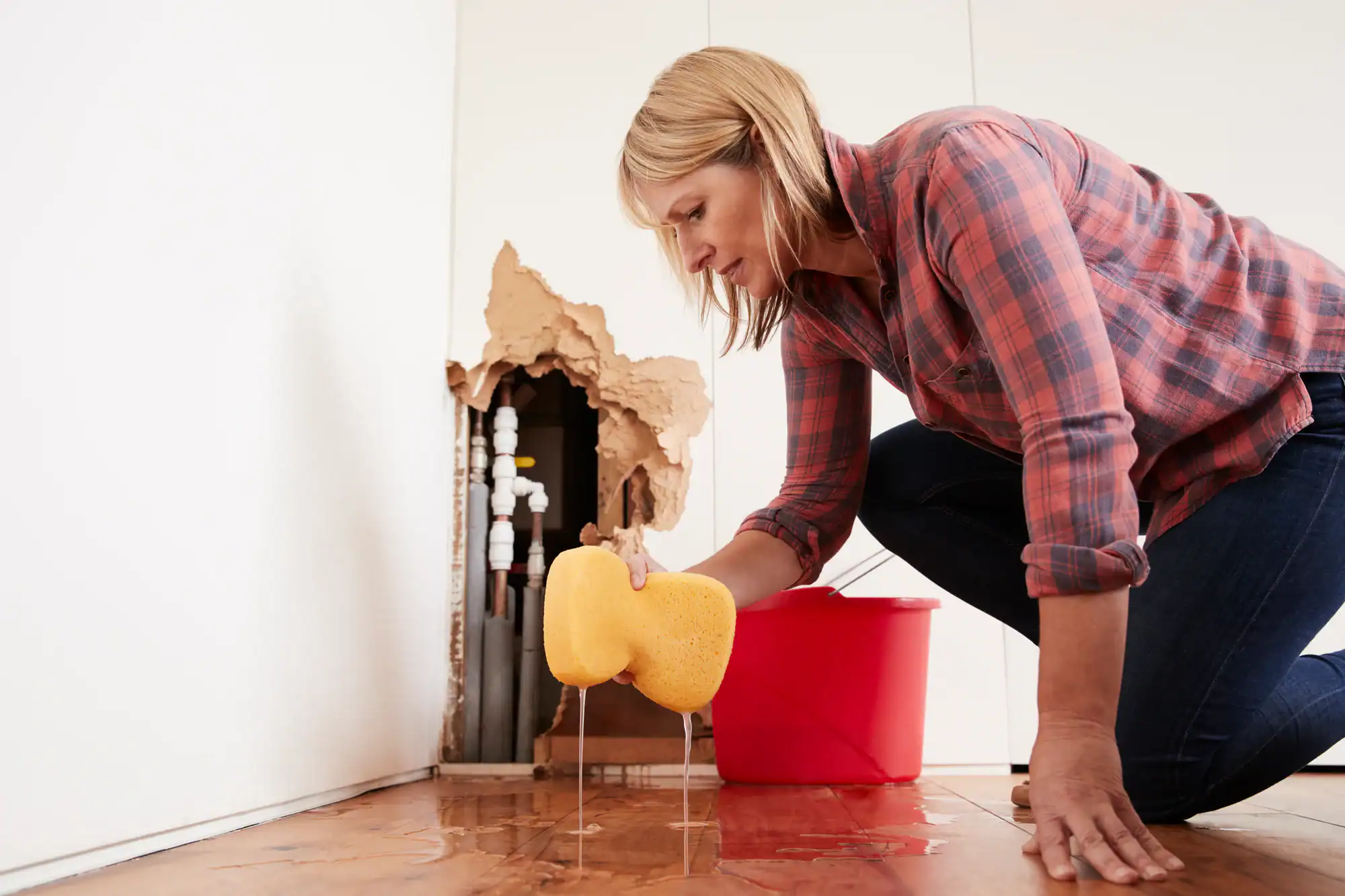
Not every carpet water damage situation starts with something obvious. A lot of them start with a slow, hidden wall leak — a pinhole in a supply line, a failing joint behind drywall — that drips quietly for days before the carpet near that wall starts to feel soft or smell musty.
By the time the carpet is visibly wet, the damage has usually already spread. The pad is saturated. The subfloor may be compromised. The drywall above the wet area is likely damaged too, even if it looks fine from the outside.
The signs of a wall leak that’s reached your carpet are worth knowing. Wet carpet near a wall with no visible spill source is the most obvious one. Soft, discolored, or slightly swollen drywall just above the wet area is another. Bubbling paint, staining along the baseboard, or a musty smell concentrated along one wall all point in the same direction.
In Nassau County’s older homes — particularly the 1950s and 1960s construction common in Hempstead, Uniondale, and Merrick — original galvanized steel and cast iron plumbing is reaching the end of its useful life. Slow leaks from aging pipes are not unusual. They’re just not always obvious.
The professional tool for finding these leaks without tearing open every wall is a thermal imaging camera. It detects temperature differences in wall surfaces — wet areas read cooler, and they show up clearly on the camera’s display. We use thermal imaging as part of our initial assessment for exactly this reason. It tells us where the moisture is, how far it’s traveled, and whether the source has been addressed — before we start any drying work. Finding the leak first isn’t optional. Drying carpet over an active leak just delays the problem.
Drywall water damage repair and carpet replacement often go hand in hand
Water doesn’t respect category lines. A burst pipe that soaks your carpet almost certainly also damaged the drywall — especially if the water traveled along a wall or the source was inside one. The lower sections of drywall absorb moisture quickly, and once drywall is saturated, it loses structural integrity and becomes a surface for mold growth.
This is where the coordination problem shows up for a lot of homeowners. They call a carpet cleaner for the floor and a separate contractor for the walls, and end up managing two timelines, two invoices, and two sets of people who may not be communicating with each other. We handle both — water extraction, carpet removal, drywall assessment and repair, structural drying, and reconstruction — under one roof. One point of contact from the initial emergency call through the final walkthrough.
What Nassau County homeowners need to know before lifting old carpet
This is the part of the conversation that most restoration content skips entirely — and it’s the part that matters most if your home was built before 1978.
Nassau County’s housing stock is old. The median build year for the county’s 482,000 housing units is 1955. Communities like Levittown, Hempstead, Uniondale, and Massapequa are filled with Cape Cods, split-levels, and ranch homes that were built during the post-WWII construction boom — and many of them still have their original flooring systems underneath decades of carpet and padding.
That original flooring often includes asbestos floor tiles. The adhesive used to install those tiles — called mastic — frequently contains asbestos as well. When water damage occurs and carpet needs to come up, those tiles and that adhesive are exposed. If they’re disturbed without proper testing and handling, asbestos fibers become airborne. That’s not a theoretical risk. It’s a documented hazard in a significant portion of Nassau County’s older housing stock.
We hold a New York State Department of Labor asbestos abatement license, which means when we lift water-damaged carpet in an older Nassau County home, we can identify what’s underneath, test it if needed, and handle it safely as part of the same job — without the homeowner needing to bring in a third party or delay the project waiting for separate contractors.
If you have an older home in Nassau County and you’re dealing with water-damaged carpet, this is not a detail to figure out after the fact. It needs to be part of the plan from the start.
Fire restoration and carpet water damage: Why they're the same problem
Most people don’t think about water damage when they think about a house fire. But firefighting efforts produce enormous amounts of water — and that water ends up in the carpet, the walls, the subfloor, and anywhere else it can travel before it’s extracted.
Post-fire water damage is actually among the most serious carpet damage scenarios, because the water involved is rarely clean. It’s mixed with smoke residue, fire suppressant chemicals, soot, and whatever was burning. That puts it squarely in Category 2 or Category 3 contamination territory — meaning the carpet almost always needs to come out, not just be dried.
There’s also a timing problem. Fire restoration jobs involve a lot of moving parts: structural assessment, smoke and soot remediation, odor elimination, and reconstruction. Water-damaged carpet in the middle of a fire restoration job can get overlooked or deprioritized — and the longer it sits, the worse the mold risk becomes. Smoke already bonds to porous materials like carpet fibers and backing. Add moisture and warmth, and you have a compounding problem.
We handle fire restoration and water damage mitigation as part of the same scope of work. That matters because the carpet, the drywall, and the structural drying all need to be coordinated — not sequenced by separate contractors working off separate timelines. If you’re dealing with fire damage in Nassau County and the carpet is wet from firefighting water, it needs to be addressed as part of the fire restoration process, not as a separate job you schedule later.
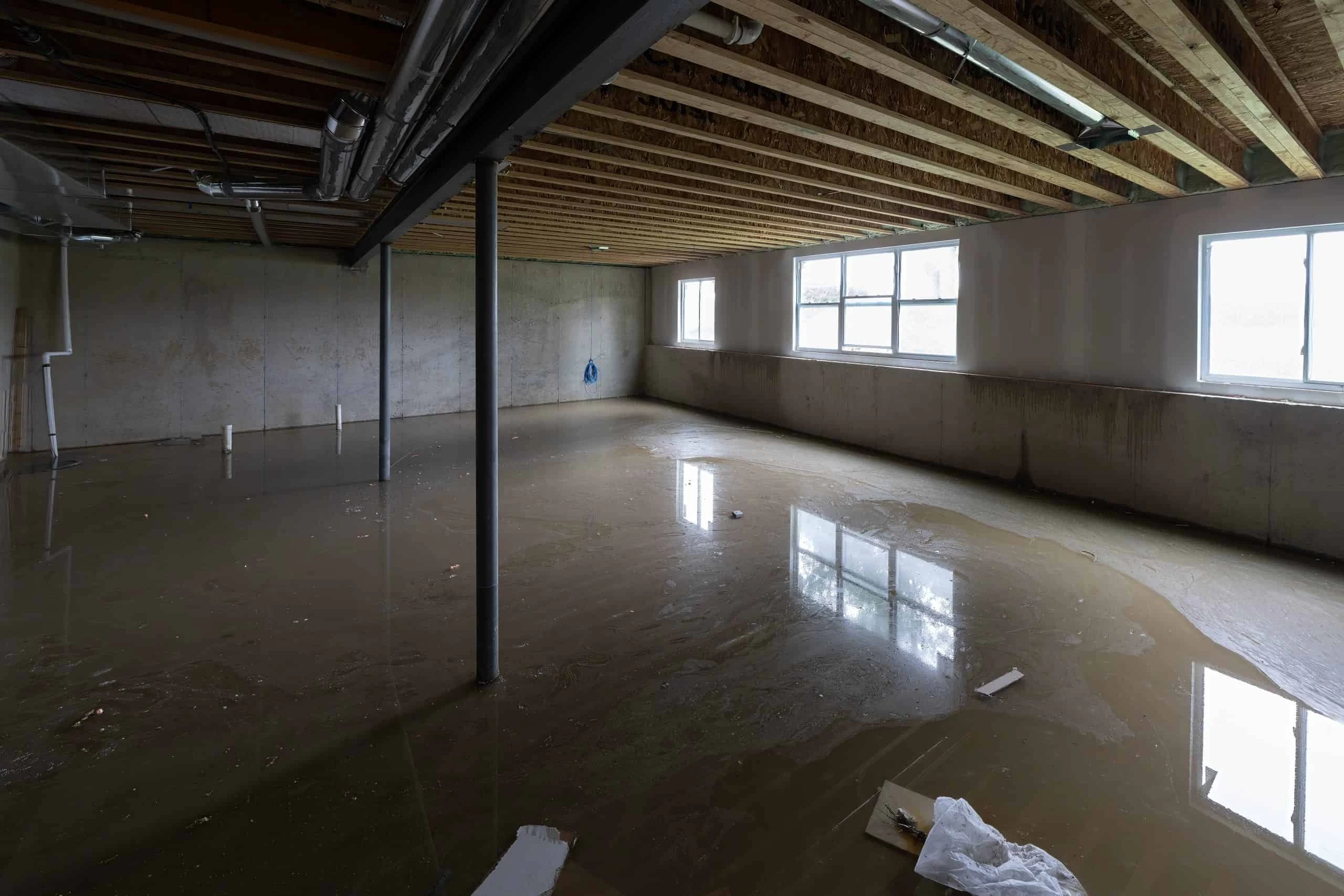
For South Shore Nassau communities — Long Beach, Freeport, Oceanside, and Massapequa — there’s an additional layer. Storm surge events from the Atlantic produce Category 3 floodwater that carries contaminants from the bay and surrounding drainage systems. Carpet that contacts that water is not a salvage situation. It’s a replacement and full decontamination situation, and it needs to be handled by contractors with the right certifications and equipment to do it safely.
Carpet water damage repair in Nassau County: What to do right now
The decision between saving and replacing water-damaged carpet isn’t complicated once you have the right information. It comes down to the type of water, the time elapsed, the condition of the pad and subfloor, and — in Nassau County’s older homes — what’s underneath the carpet before anyone pulls it up.
What makes this harder than it sounds is that most of the critical factors aren’t visible from the surface. Wet padding under dry-looking carpet. Moisture inside a wall that’s already reached the subfloor. Asbestos tiles under a 1950s Cape Cod in Levittown. These are the things that turn a manageable situation into a much bigger problem when they’re missed.
If you’re dealing with water-damaged carpet in Nassau County and you want a straight answer about what you’re actually looking at, we’re available 24 hours a day. We’ll assess the damage, explain exactly what we find, and handle everything from extraction through reconstruction — including the parts most contractors aren’t licensed to touch.