Summary:
If you’re managing a commercial property in Nassau County and you need a building taken down — or significantly stripped out — you already know this isn’t a simple job. There are permits to pull, environmental surveys to run, and a county building department with its own specific requirements that can catch out-of-area contractors off guard. And that’s before anyone picks up a sledgehammer.
What most property owners and general contractors want is straightforward: a licensed team that handles the whole thing, doesn’t create surprises, and keeps the project on schedule. This page explains what that actually looks like — and what to watch for when you’re choosing who to hire.
What Commercial Demolition Services Actually Involve
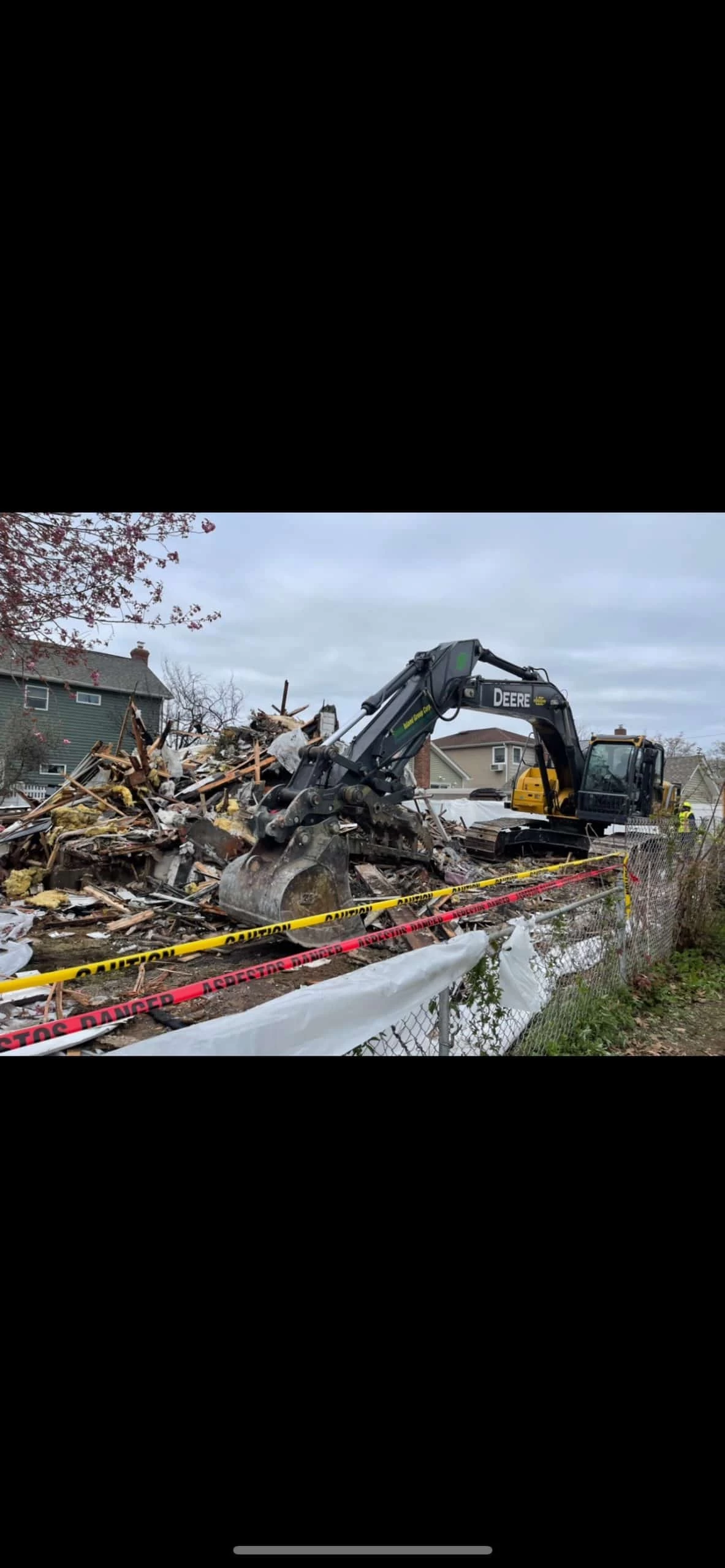
Commercial demolition isn’t a single task — it’s a sequence of steps that have to happen in the right order. Before any structural work begins, a licensed contractor needs to assess the building for hazardous materials, coordinate utility disconnections, and obtain the appropriate permits from Nassau County’s Building Department.
For most commercial buildings in Nassau County — especially anything built before 1980 — that assessment almost always turns up asbestos-containing materials. Floor tiles, ceiling tiles, pipe insulation, roofing compounds: these were standard in mid-century commercial construction, and Nassau County’s commercial corridors along Hempstead Turnpike, Sunrise Highway, and Old Country Road are full of buildings from that era.
Skipping that step isn’t just dangerous — it’s illegal. And if a contractor disturbs asbestos without proper abatement, the liability falls on the property owner, not just the contractor.
What Building Demolition Companies Need to Do Before Work Starts
The pre-demolition phase is where most project delays actually originate — and where the difference between a qualified contractor and an underprepared one becomes obvious.
In Nassau County, the permit process for commercial demolition involves several layers. You’ll need a demolition permit from the Nassau County Building Department, which requires a rodent-free certification before it can be issued. That certification is specific to Nassau County — it’s not a statewide requirement, and contractors who primarily work in New York City or Suffolk County sometimes miss it entirely, causing costly delays right at the start of the project.
Beyond that, if the project is near a county road, involves sewer connections, or requires a dumpster placed on county property, you’ll need to coordinate with Nassau County’s Department of Public Works. If there are flammables or combustibles on-site, the Nassau County Fire Marshal needs to be in the loop as well.
Then there’s the asbestos question. Under New York State law, any commercial building that may contain asbestos-containing materials must be surveyed by a certified asbestos investigator before demolition work begins. If asbestos is found — and in Nassau County’s older commercial stock, it usually is — a licensed abatement contractor must remove it before structural work can proceed. The abatement itself requires an A-TRU permit, and the entire process, including permit review, can take three to six weeks or more.
This is why working with a contractor who holds a NYS Department of Labor Asbestos license matters so much. Most local demolition companies don’t have it. They either skip the step, which creates serious legal exposure, or they subcontract it to someone else, which adds time, cost, and coordination risk to your project. We handle asbestos abatement in-house, which means one contract, one point of contact, and no gaps between trades.
For general contractors and developers managing larger projects across Nassau County — in Westbury, Hicksville, Mineola, or anywhere else in the county — that kind of coordination matters. A demolition subcontractor who creates scheduling problems doesn’t just delay their phase. They delay everything downstream.
Full Building Demolition vs. Selective Demolition — Which Does Your Project Need?
This is one of the most common questions we hear from commercial property owners, and the answer isn’t always obvious from the outside.
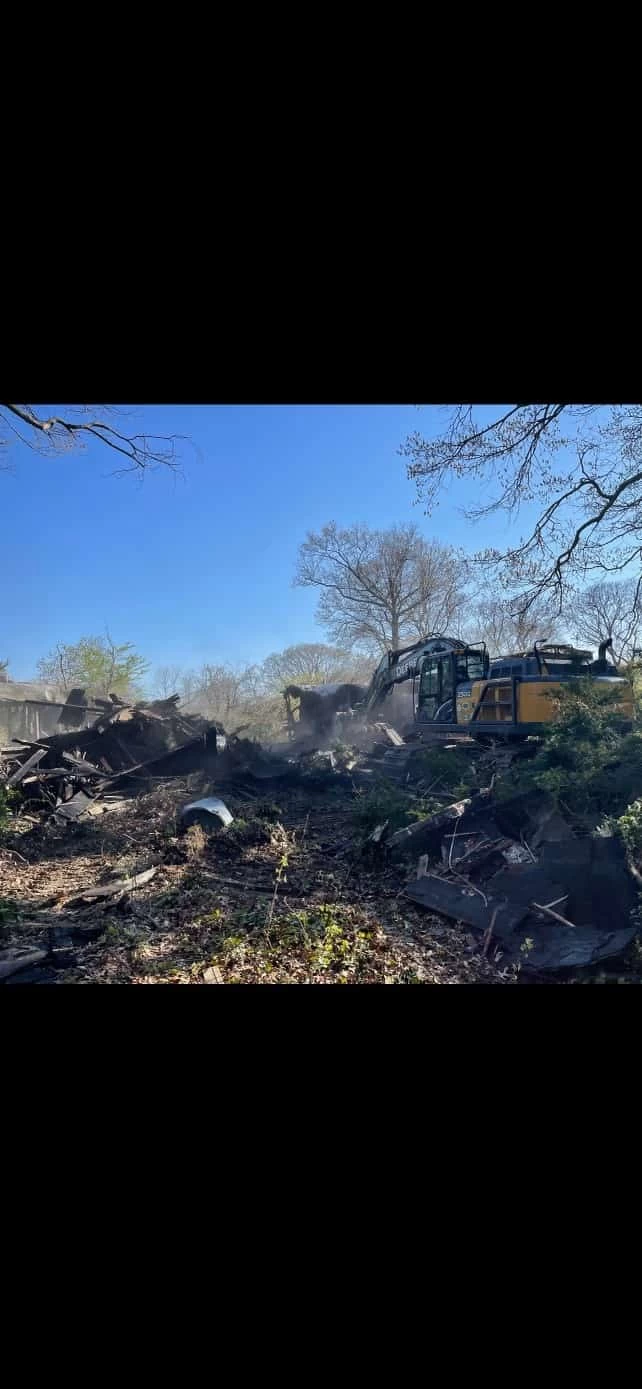
Full building demolition means the entire structure comes down. This is the right approach when a building is beyond practical renovation, when a developer is clearing a site for new construction, or when a storm-damaged or fire-compromised structure has been deemed unsafe to occupy or repair. Nassau County’s South Shore communities — Long Beach, Oceanside, Freeport — saw significant commercial property damage after Superstorm Sandy, and some of those properties required full demolition before rebuilding could begin. Emergency situations like that demand a contractor who can respond quickly and manage the entire process under pressure.
Selective demolition is different. It means removing specific structural elements, hazardous materials, or interior components while preserving the rest of the building. This is the more common approach for tenant improvement projects, floor plate conversions, or commercial renovation work where the shell stays but the interior is being completely reconfigured. Selective asbestos abatement — targeting only the materials that need to be removed rather than treating the whole building — is often the faster and more cost-effective path for Nassau County commercial clients.
The right answer depends on the building’s condition, the project’s end goal, and what the environmental survey turns up. A qualified contractor will walk you through that assessment before any work begins, not after. If someone is pushing you toward full demolition without doing a proper evaluation first, that’s worth questioning.
We offer both approaches and have the equipment, licensing, and experience to execute either one correctly — including the environmental compliance work that comes with it.
Choosing the Right Building Demolition Company in Nassau County
There are a handful of contractors in Nassau County who offer some form of commercial demolition. The differences between them matter more than most buyers realize until something goes wrong.
The baseline question isn’t whether a contractor has done demolition work before. It’s whether they are specifically licensed to do commercial demolition in Nassau County, whether they can legally handle asbestos abatement in-house, and whether they carry the insurance coverage that protects you — not just themselves — if something goes sideways on-site.
Hiring an unlicensed or underinsured contractor for a commercial demolition project can result in stop-work orders, fines from the building department, loss of insurance coverage for project-related damage, and work that has to be redone at your expense. The cheaper bid usually reflects something missing.
How Construction Demolition Companies Should Handle Licensing and Compliance
When you’re vetting construction demolition companies for a Nassau County project, there are specific credentials worth asking about directly — not just taking at face value.
A Nassau County General Contractor license is not the same as a Suffolk County or New York City license. Nassau County issues its own GC license, and a contractor needs it specifically to pull permits and perform GC-level work within the county. We hold that license, along with separate licenses for Suffolk County and New York City, which matters for developers and general contractors working across the Long Island and metro area.
The NYS Department of Labor Asbestos license is a state-issued credential that authorizes a contractor to legally perform asbestos abatement in New York. It’s not a certification a company can buy or self-report — it’s issued by the state and publicly verifiable. Most local demolition-only companies don’t hold it. We do, and it’s one of the primary reasons commercial clients and GCs bring us in on projects involving older buildings.
We also carry full liability insurance and workers’ compensation coverage. For a commercial property owner, this is critical. If a worker is injured on your site and the contractor doesn’t have workers’ comp, that claim can come back to you. If there’s property damage and the contractor is underinsured, you’re covering the gap. These aren’t hypothetical scenarios — they’re common ones. Verifying coverage before signing anything is worth the five minutes it takes.
For clients working on publicly funded projects — school district renovations, municipal buildings, state agency facilities — there’s an additional layer. Many government contracts in New York require or strongly prefer a certified Minority/Women-Owned Business Enterprise contractor. We hold NYS MBE, NYS WBE, and NYC MWBE certifications, along with NYS SBE and PANY/NJ DBE designations. If your project has a public funding component, that certification can determine whether we’re even eligible to bid — and we are.
Frequently Asked Questions About Commercial Demolition in Nassau County
**Do I need a permit for commercial demolition in Nassau County?**
Yes, and the process involves more steps than most people expect. Nassau County requires a demolition permit from the Building Department, and before that permit can be issued, you’ll need a rodent-free certification — a specific Nassau County requirement that applies to all commercial and industrial buildings. If the project involves asbestos abatement, an A-TRU permit is also required before abatement work begins. Projects near county roads or involving sewer connections will bring Nassau County’s Department of Public Works into the process as well. We handle the full permit process on behalf of our clients, which means you’re not managing that paperwork on top of everything else.
**Does my commercial building in Nassau County have asbestos?**
If it was built before 1980, there’s a strong likelihood that some form of asbestos-containing material is present. Nassau County’s commercial building stock — the strip malls, office parks, and light industrial buildings that line corridors like Hempstead Turnpike and Northern Boulevard — is heavily concentrated in the 1950s through 1970s. Asbestos was standard in floor tiles, ceiling tiles, pipe insulation, and roofing materials during that period. The only way to know for certain is a survey by a certified asbestos investigator, which has to happen before demolition work begins under New York State law. Finding asbestos during a survey isn’t a crisis — it’s a manageable step in the process. Finding it after someone has already started work is a much bigger problem.
**How long does commercial demolition take?**
It depends heavily on the scope and what the pre-demolition survey turns up. A straightforward interior selective demolition on a smaller commercial space might take a week or two. A full building demolition with asbestos abatement, permit processing, and site clearing can take two to three months from the initial survey to final site cleanup. The best thing a contractor can do is give you an honest timeline upfront — not the shortest number that gets the contract signed.
**What if I can’t cover the full cost upfront?**
We offer financing up to $200,000 at 0% APR. For commercial demolition projects, that covers a significant portion of the work at the small-to-mid commercial scale. If cost timing is a concern, it’s worth asking about before you assume the project has to wait.
What to Do Before You Start a Commercial Demolition Project in Nassau County
The short version: start earlier than you think you need to, and make sure the contractor you hire is actually licensed for the specific work your project requires. Nassau County’s permit process has more steps than most markets, and the asbestos compliance requirements for older commercial buildings add real time to the front end of any project.
The contractors who create problems are usually the ones who skip the environmental survey, don’t hold a Nassau County GC license, or subcontract the hazmat work to someone else without telling you. Those gaps show up as delays, fines, and unexpected costs — not on the bid, but during the project.
If you’re planning a commercial demolition project in Nassau County — whether it’s a full teardown in Hempstead, a selective interior demo in Garden City, or an emergency structural removal on the South Shore — we have the licensing, the equipment, and the in-house asbestos abatement capability to handle it from start to finish. Reach out to talk through what your project actually needs.