Summary:
If you’re planning to remove a driveway, slab, pool deck, or basement floor in Nassau County, you’ve probably already noticed that the quotes you’re getting don’t all line up. Some are surprisingly low. Some don’t mention permits. Some don’t mention asbestos at all. That gap isn’t random—it usually reflects what a contractor is planning to skip.
Nassau County’s housing stock is old, the regulations are specific, and the projects that look simple on the surface have a way of getting complicated fast. Here’s what you actually need to know before you hire anyone.
Why Concrete Removal in Nassau County Is More Complicated Than It Looks
The average single-family home in Nassau County is 73 years old. That puts it squarely in the era when asbestos-containing materials were standard in residential construction—floor tiles, pipe insulation, joint compound, popcorn ceilings, transite siding.
When you break up a concrete slab that’s been sitting in a 1952 Cape Cod or split-level across Nassau County, you’re often disturbing materials that haven’t been touched since the Eisenhower administration. That matters because New York State Code Rule 56 requires a licensed pre-demolition asbestos survey before any structural demolition begins on a pre-1980 building. It’s not optional, and it’s not something you can skip by calling the project a “renovation.”
The survey has to be performed by a licensed contractor, and if asbestos is found above the regulatory threshold, abatement has to happen before demolition continues—with a 10-working-day advance notification filed with the NYS DEC before work begins.
What Happens When a Contractor Finds Asbestos Mid-Job
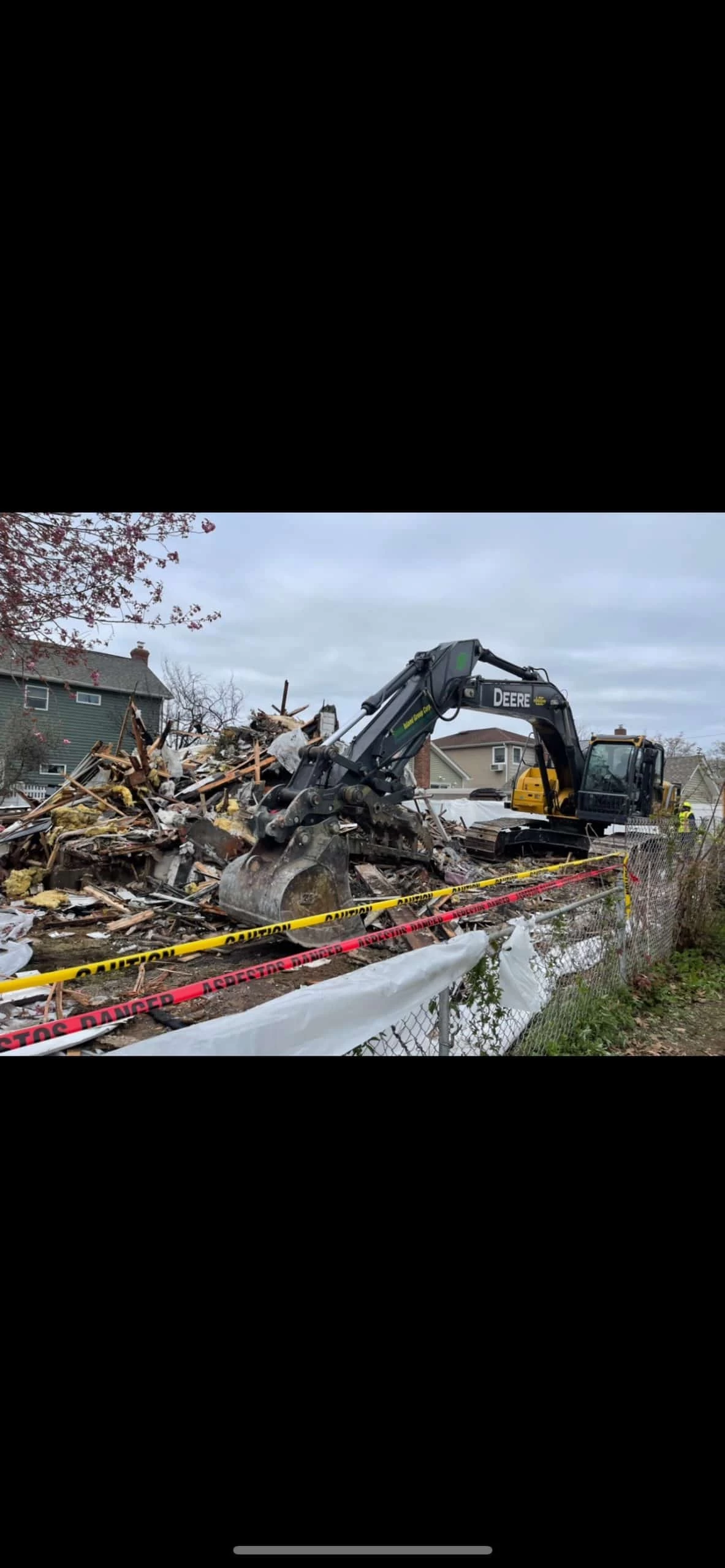
This is where a lot of Nassau County demolition projects fall apart. A contractor starts breaking up a slab or pulling down a wall, discovers what looks like asbestos-containing material, and has to stop.
If they don’t hold a NYS DOL Asbestos Handler certification and don’t have a licensed abatement team in-house, they’re legally required to stop work at that point. Then you’re making calls to find a separate abatement company, waiting for availability, waiting for the DEC notification window to clear, and watching your project timeline stretch from days into weeks.
That scenario plays out constantly in Nassau County because so much of the housing stock was built between the 1940s and late 1970s—the peak era for asbestos use in residential construction. The Cape Cods in Garden City, the ranch homes in Levittown, the split-levels in Merrick and Massapequa—virtually all of them were built with materials that require a survey before you touch them. It’s not a worst-case scenario. It’s the baseline.
When we take on a concrete removal or demolition project in Nassau County, the asbestos survey is part of the process from day one. Our team holds NYS DOL Asbestos Handler certification, and we handle abatement in-house—so if the survey turns up asbestos, we don’t stop the project and hand it off to someone else.
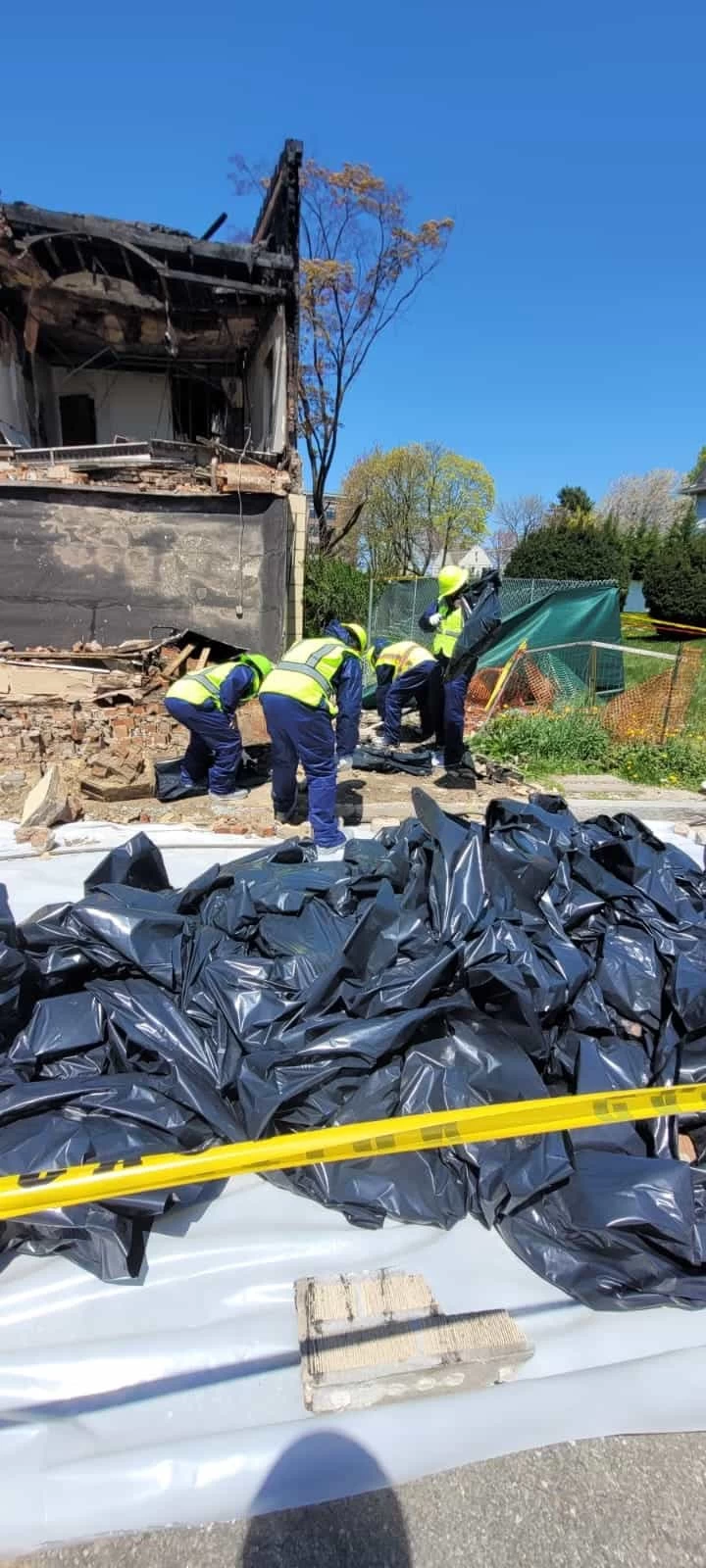
We file the required DEC notification, complete the abatement under proper containment, and keep the project moving. For homeowners in Nassau County, that means one contractor, one timeline, and no scrambling to find a second company mid-job. The quote you get from us reflects the full scope of the project—survey, abatement if needed, demolition, and disposal—rather than a low number that grows once the walls come open.
Do You Need a Permit to Remove Concrete in Nassau County?
The short answer is: often yes, and it depends on what you’re removing and where. Nassau County has its own building department with its own permit requirements, and many of the incorporated villages and towns within the county have additional local requirements on top of that.
A driveway removal in Garden City might require a permit that the same job in Hempstead doesn’t—and that’s before you factor in whether the project involves a pool, a foundation, or any structural element. Nassau County’s Building Department handles demolition permits and can be reached at (516) 571-3678.
Understanding which permits apply to your specific project, in your specific municipality, requires familiarity with how Nassau County’s regulatory structure actually works—something out-of-area contractors frequently don’t have. We hold a Nassau County General Contractor license, which is a separate credential from New York State licensing. It’s not uncommon for contractors licensed at the state level to operate in Nassau County without the county-specific license—and that creates problems when it comes time to pull permits.
We’re set up to handle the permitting process correctly from the start, which matters more than most homeowners realize until something goes wrong. Beyond permits, concrete disposal in New York carries its own requirements. Concrete debris must go to a permitted facility, and disposal fees typically run between $51 and $100 per ton. Some contractors don’t include those fees in their initial quote, which is part of why estimates in this space can look so different from each other. We include disposal in our scope so there are no surprises at the end of the job.
Types of Concrete Removal and Demolition Work We Handle in Nassau County
Concrete removal is usually the starting point, not the whole job. A driveway comes out because a new one is going in. A pool deck gets demolished because the pool is being removed. A basement slab gets broken up because the drainage system underneath it needs to be replaced.
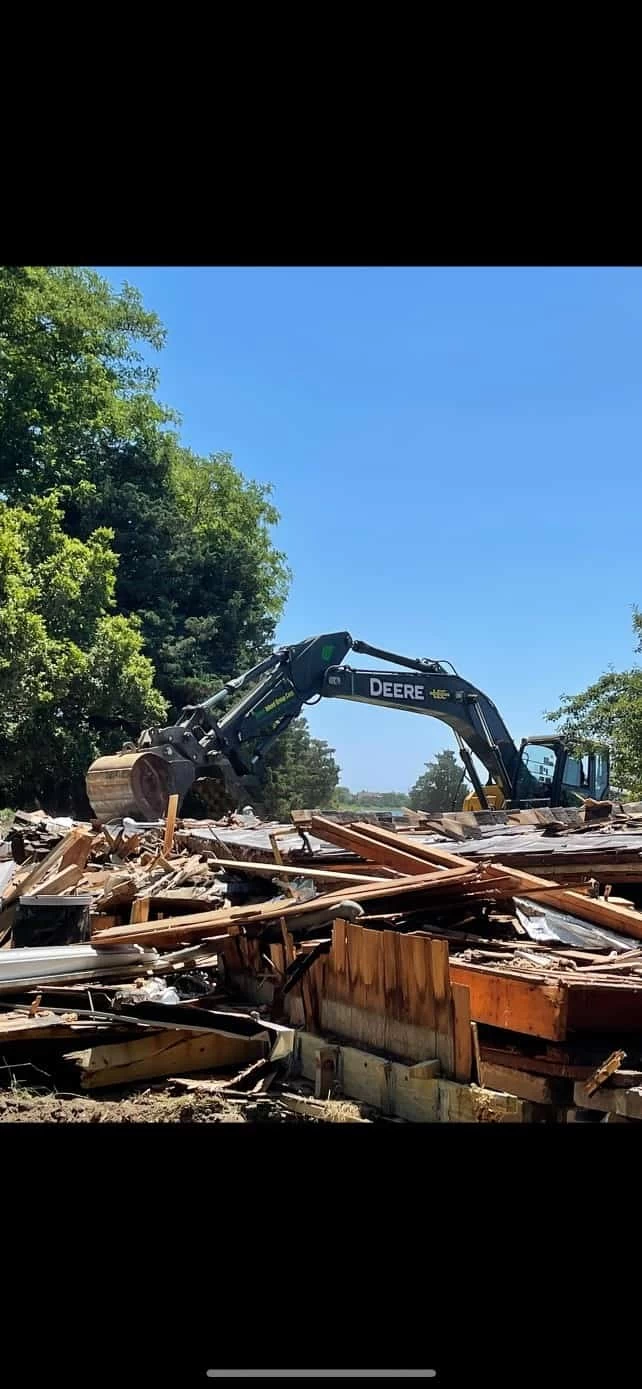
The concrete removal is step one—and what comes after it depends on what’s underneath. We handle the full range of demolition work that Nassau County homeowners and commercial property owners actually need: residential and commercial demolition, selective interior demolition, pool demolition, bathroom demolition, concrete slab removal, conduit and sanitary trenching, patching, and landscape demolition.
For projects that reveal asbestos, lead paint, or mold—which is common in Nassau County’s older building stock—we handle abatement in-house rather than subcontracting it out.
Asbestos in older homes isn’t a fringe concern in Nassau County—it’s the statistical norm. The U.S. Census Bureau’s 2019 American Community Survey found that more than half of all homes still standing in the United States were built before 1980. In Nassau County, where the average home is 73 years old, that number skews even higher.
The post-WWII suburban building boom that created Levittown and filled out the South Shore communities used asbestos-containing materials extensively—floor tiles, popcorn ceilings, pipe wrap, joint compound, and transite siding were all standard. The types of asbestos-containing materials most commonly found during demolition in Nassau County homes include vinyl floor tiles and the adhesive beneath them, textured ceiling coatings, pipe and boiler insulation, cement board siding, and drywall joint compound.
Not all of these materials are immediately visible, and not all of them are friable (meaning they release fibers easily under normal conditions). But demolition—breaking, cutting, grinding, removing—changes that. A material that’s stable sitting in a wall becomes a hazard the moment a saw blade hits it.
Our asbestos abatement process follows NYS Code Rule 56 and EPA NESHAP standards. That means a licensed survey before work begins, proper containment and negative air pressure during removal, disposal at a permitted facility, and post-abatement air monitoring to confirm clearance before the space is reopened.
We hold NYS DOL Asbestos Handler certification and carry USEPA Lead certification and USEPA RRP certification for projects that also involve lead paint—which, in pre-1978 Nassau County homes, is essentially all of them. The certifications aren’t credentials for a brochure. They’re the legal requirements for doing this work correctly in New York State.
Asbestos gets most of the attention in pre-demolition discussions, but it’s rarely the only hazardous material in a Nassau County home of this age. Lead paint was used in residential construction through 1978, and the EPA’s Renovation, Repair and Painting rule (RRP) requires that any contractor paid to perform work disturbing paint in a pre-1978 home hold EPA RRP certification. That applies to demolition work, not just painting contractors—a distinction that a lot of homeowners don’t know to ask about.
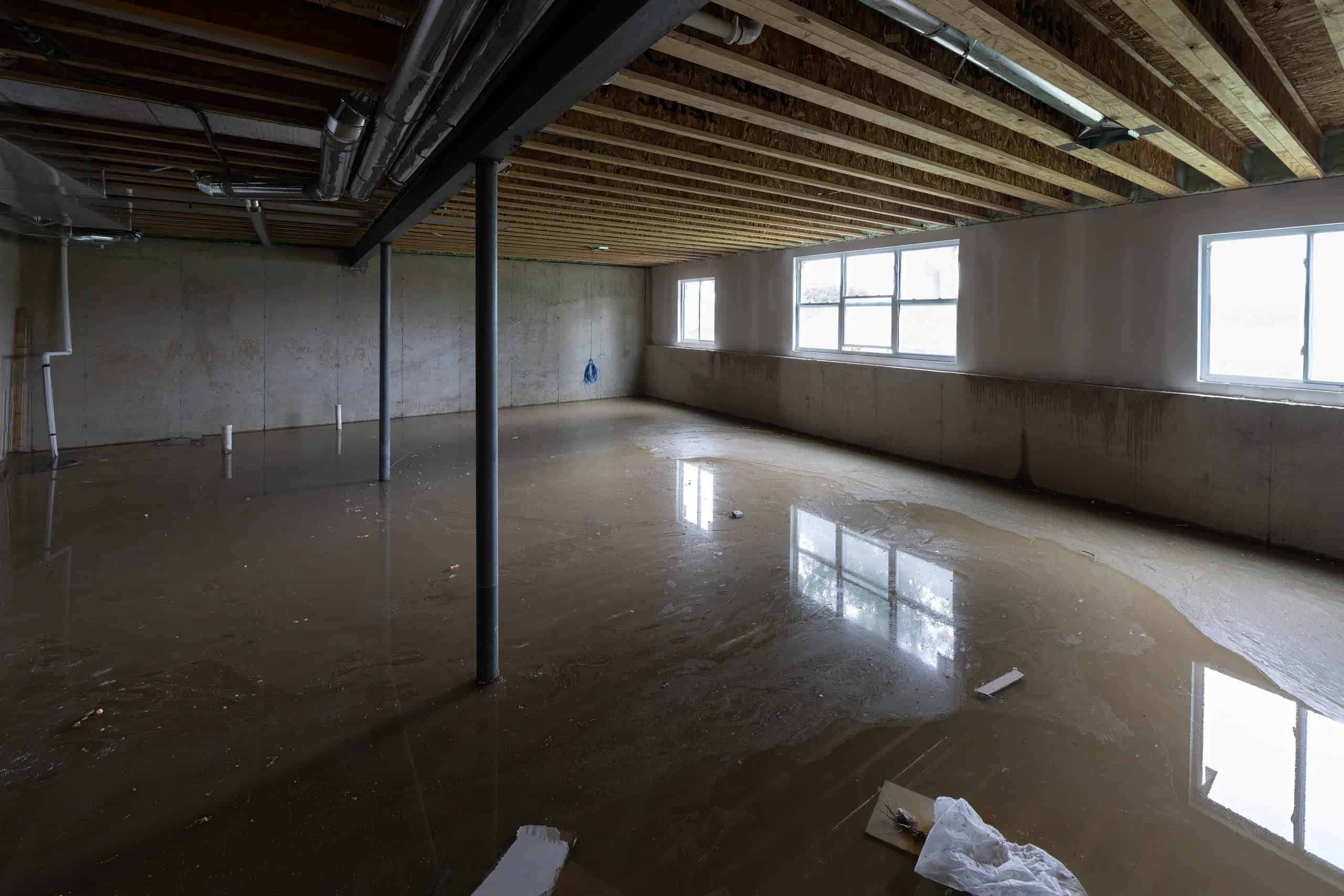
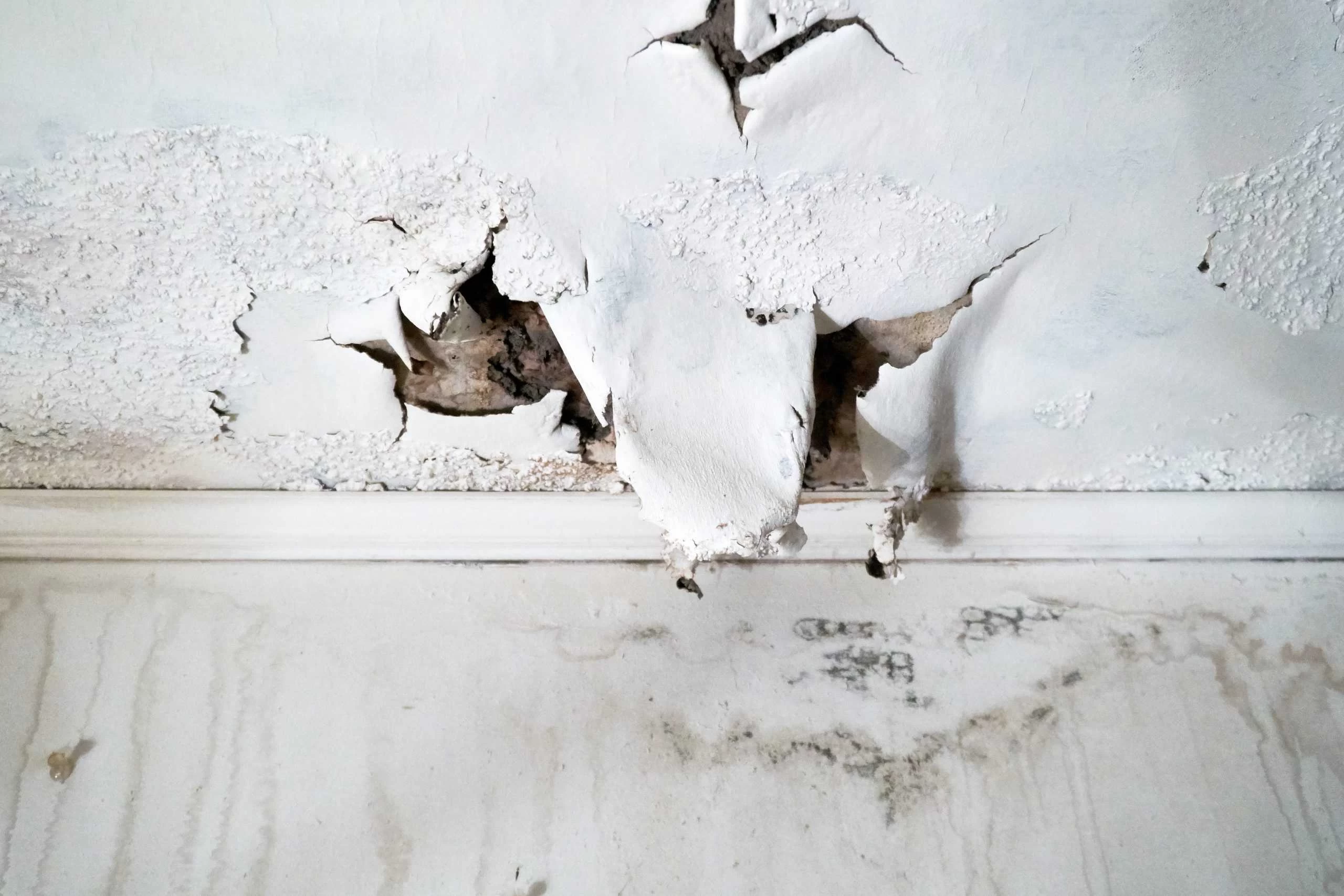
Mold is the other common discovery. Nassau County’s coastal geography—bordered by the Atlantic Ocean to the south and Long Island Sound to the north—means high humidity, high water tables, and recurring storm damage from nor’easters and coastal flooding. Basements, crawl spaces, and concrete slabs that have been exposed to moisture over decades frequently have mold growth that isn’t visible until demolition opens up the space.
Finding mold mid-project doesn’t have to derail the timeline if the contractor handling the demolition is also equipped to handle remediation. We hold IICRC certification for water and fire damage, and our team handles mold remediation as part of the same scope when it’s discovered during a demolition project.
The practical effect for Nassau County homeowners is that one contractor manages the full sequence—concrete removal, abatement, remediation, and whatever comes next—rather than the homeowner coordinating between multiple companies with different schedules and different accountability. For projects triggered by storm damage or water damage, we also handle direct insurance billing, which means we work with the insurance carrier directly and manage the claim paperwork rather than leaving that to the homeowner.
How to Choose the Right Concrete Removal Contractor in Nassau County
The question worth asking any contractor before you hire them isn’t “how much?” It’s “what happens if you find asbestos?” If the answer involves calling someone else, stopping work, or figuring it out later—that’s your answer about how the project will go.
Nassau County’s housing stock is old enough that hazardous material discovery during demolition isn’t a possibility to hedge against. It’s a probability to plan for. The contractors who handle it well are the ones who’ve built the capability in-house, hold the right certifications for New York State and Nassau County specifically, and give you a quote that reflects the full scope of the job from the start.
Green Island Group has been doing this work on Long Island for over 12 years. If you’re looking at a concrete removal, demolition, or abatement project in Nassau County and want a straight answer about what it involves and what it will cost, reach out and we’ll walk through it with you.