Summary:
If your basement flooded, you’re probably not in the mood for a lecture. You want to know what happened, what to do next, and whether you’re going to be dealing with mold in your walls for the next six months. Those are fair questions, and they deserve real answers.
Nassau County has its own flood story — one that doesn’t get told often enough. The causes are different here, the risks compound faster than most homeowners expect, and the window to act is shorter than it feels in the moment. Here’s what you actually need to know.
Why Nassau County Basements Flood: The Water Table Problem
Most flood damage content treats flooding like a weather event — something that happens to you during a storm and then stops. In Nassau County, that’s only part of the picture.
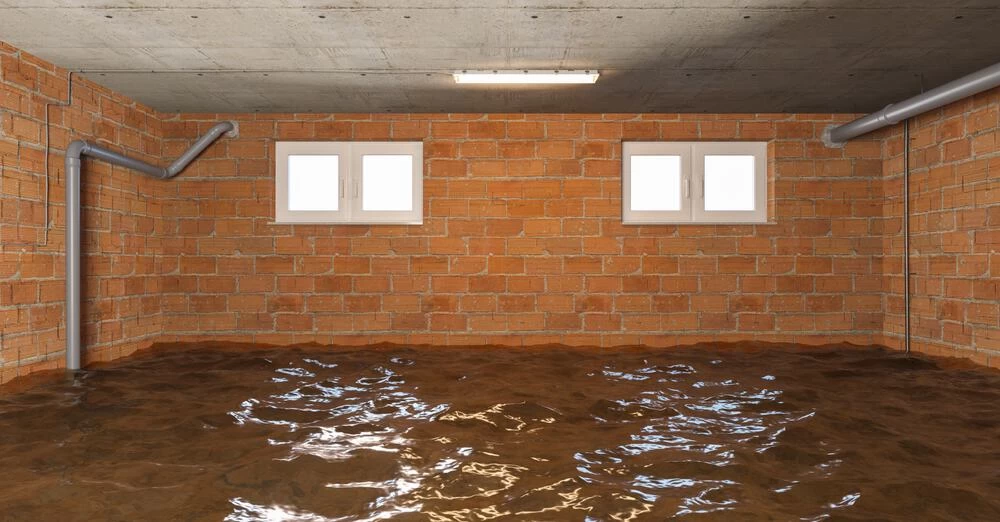
The county sits on a glacially deposited aquifer system, which means the water table is naturally high across much of Long Island. When it rains heavily, that table rises fast. When a sump pump fails during a power outage — which happens regularly during nor’easters and summer storms — groundwater doesn’t wait for an invitation. It finds the lowest point in your home, and that’s usually your basement.
Then there’s the housing stock. A large portion of Nassau County homes were built between the 1940s and 1970s. Those foundations weren’t designed with today’s rainfall intensity in mind, and the waterproofing systems that were installed decades ago have had a long time to degrade. Aging sewer and stormwater infrastructure compounds the problem — during heavy rain events, system backups push water into basements from below, not just from above.
The Step-by-Step Flood Damage Restoration Process
When you call us after a flood, here’s what the work actually looks like — not the brochure version, but the real sequence.
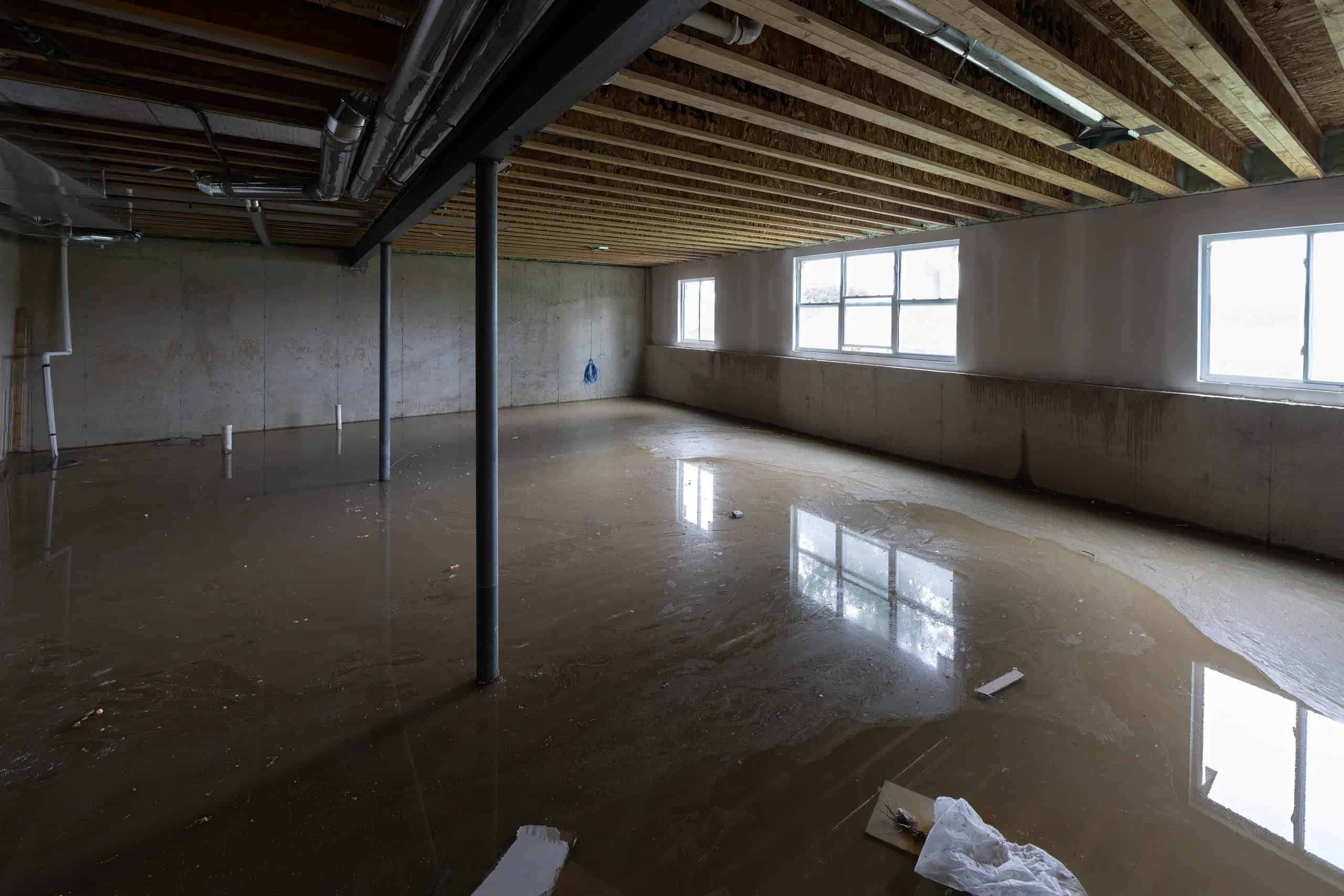
The first priority is getting the water out. That means industrial-grade water extractors and truck-mounted vacuums, not the shop vac from your garage. The volume of water in a flooded basement and the speed at which it needs to be removed require equipment that operates at a fundamentally different scale than anything available at a hardware store. Every hour of standing water increases the damage to flooring, drywall, framing, and anything stored in the space.
Once the standing water is gone, the drying phase begins — and this is where most DIY attempts fall apart. The water you can see is not the water that causes the most damage. Moisture migrates into wall cavities, gets absorbed by wood framing, and hides under flooring where it sits undisturbed. We position commercial dehumidifiers and air movers throughout the space to pull moisture out of the structure itself, not just the air. This phase typically runs three to five days, depending on how saturated the materials are.
Throughout the drying process, we monitor moisture levels with thermal imaging cameras and precision moisture meters. This isn’t optional — it’s how we confirm the job is actually done. A basement that feels dry to the touch can still have moisture readings inside the walls that will fuel mold growth weeks later. The drying isn’t complete until the instruments say it is, not until the floor stops feeling wet.
After structural drying comes sanitization. If the flooding involved gray water — from a washing machine overflow, drain backup, or rainwater mixed with contaminants — or black water from sewage or a contaminated source, the sanitization step involves hazmat-level protocols. That’s a meaningful distinction. Clean water from a burst pipe is handled differently than water that backed up from a sewer line, and the equipment and protective measures required are not the same.
The final phase is reconstruction: replacing damaged drywall, flooring, insulation, and any structural elements that couldn’t be salvaged. A complete restoration brings the space back to its pre-flood condition, which means the job isn’t done when it’s dry — it’s done when it looks and functions the way it did before.
Why Waiting After a Basement Flood Repair Is Expensive
This is the part most homeowners underestimate, and it’s worth being direct about it.
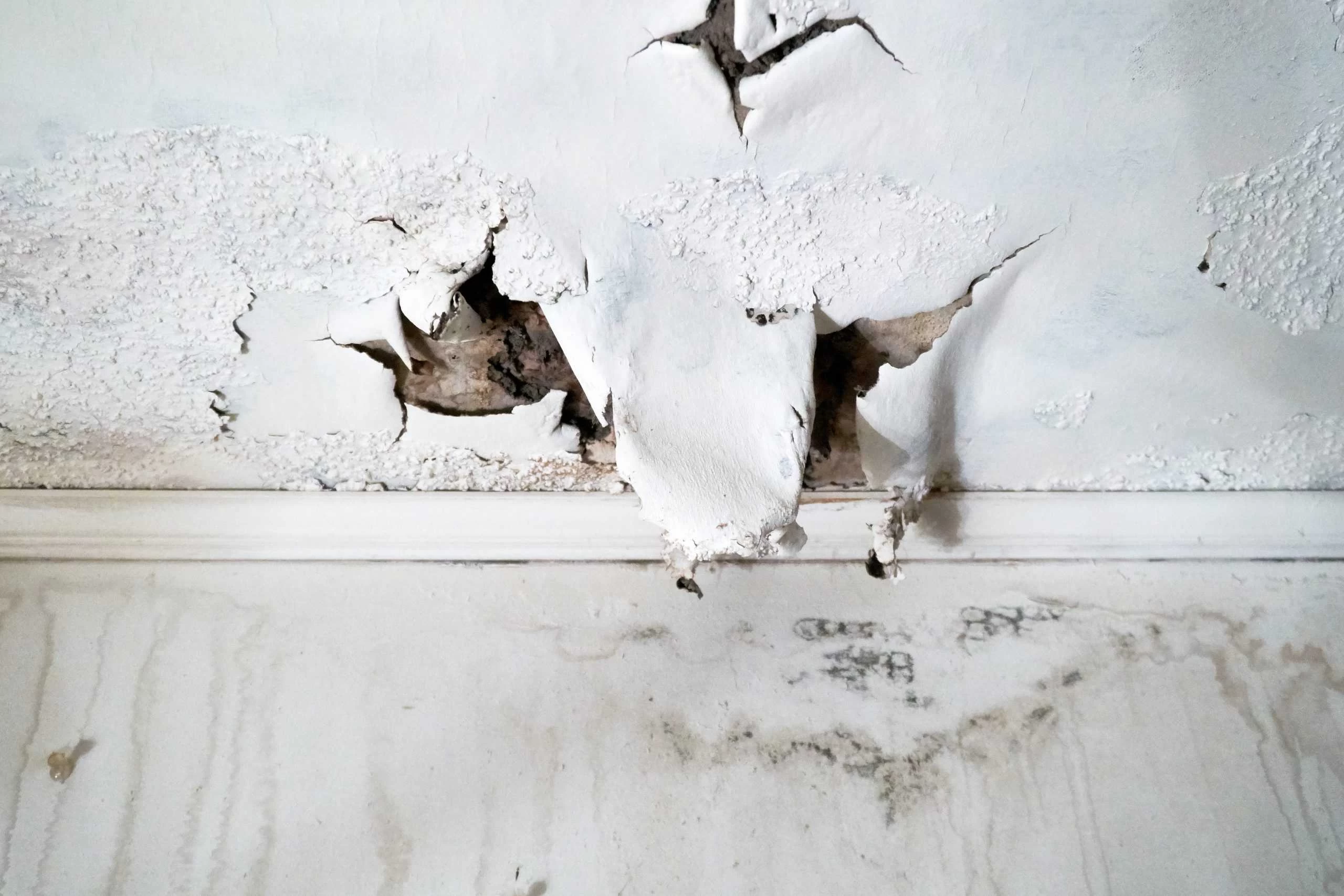
Mold begins growing within 24 to 48 hours of water exposure. Not after the basement is fully dried out — while the moisture is still present, including inside walls and under flooring. That window isn’t a guideline or a rough estimate. It’s a biological reality driven by how quickly mold spores activate in the presence of moisture and organic material like wood framing and drywall paper.
What this means practically is that a flooded basement that “seems to be drying out” on its own is not a basement you have time to monitor and reassess over the next few days. By the time visible mold appears on a wall surface, it has typically been established inside that wall for a while already. The visible growth is the late sign, not the early warning.
The delay objection is understandable. Calling a restoration company feels like a big step, especially when you’re not sure what your insurance covers or what the cost will look like. But the cost of addressing a flooded basement promptly is not in the same category as the cost of addressing a flooded basement plus an active mold problem. The structural remediation required once mold has established itself in framing and insulation is a significantly larger project than the original water damage would have been.
Nassau County’s August 2024 flooding — which dropped 9.4 inches of rain in 24 hours and prompted a Governor’s State of Emergency for Nassau and Suffolk counties — put this dynamic on full display. Homeowners who acted within the first day or two were dealing with water damage. Homeowners who waited to see how things dried out were, in many cases, dealing with mold remediation weeks later. The flooding event was the same. The outcomes were not.
What to Look for in a Nassau County Flood Restoration Company
Not every company that shows up after a flood is equipped to do the full job. In New York State, mold remediation requires a specific NYS Department of Labor Mold License. A contractor who extracts the water but isn’t licensed for mold remediation can’t legally complete the work — which means you may end up coordinating multiple companies at a moment when coordination is the last thing you have bandwidth for.
Beyond licensing, the equipment question matters more than most homeowners realize. Residential dehumidifiers cannot achieve the moisture extraction rates required to dry a flooded structure to IICRC standards. If the company arriving at your door is using equipment you could rent at a hardware store, that’s worth asking about.
We carry commercial-grade drying equipment on every truck and maintain our own mold license. One call, one company, start to finish — no coordination required on your end.
Does Homeowners Insurance Cover Flood Damage Restoration?
This is one of the most common questions after a flooding event, and the answer depends on what caused the flooding.
Standard homeowners insurance typically covers sudden, accidental water damage — a burst pipe, a washing machine supply line that failed, a water heater that gave out. What it generally does not cover is flooding from external sources: storm surge, overland flooding, or water that enters the home from outside during a weather event. That type of coverage requires a separate flood insurance policy, typically through the National Flood Insurance Program or a private carrier.
Here’s something that surprises a lot of Nassau County, NY homeowners: more than one-third of NFIP flood insurance claims come from properties outside designated high-risk flood zones. You don’t have to be in a FEMA Special Flood Hazard Area on the south shore to experience flood damage — plenty of inland Nassau County neighborhoods have learned that the hard way during heavy rain events when stormwater systems backed up.
If you’re not sure what your policy covers, the best move after a flood is to call us. We handle the insurance process directly on behalf of our clients — managing the claim paperwork, documenting the damage, and billing the insurer directly so there are no upfront costs during the emergency. That removes the financial uncertainty that causes homeowners to delay, and delay is the one thing you genuinely cannot afford when the clock on mold growth is already running.
It’s also worth knowing that financing is available for projects not fully covered by insurance. We offer financing up to $200,000 at 0% APR through Enhancify for situations where coverage gaps leave homeowners with out-of-pocket costs.
How to Know If Your Basement Was Dried Properly After a Flood
This question comes up often from homeowners who’ve had previous flooding — either they handled it themselves or used a company they’re not sure about, and now they’re wondering if the job was actually done right.
The honest answer is that you can’t tell by looking. A basement that appears dry, smells okay, and feels normal to the touch can still have moisture readings inside wall assemblies that are well above safe levels. The only way to confirm that structural drying is complete is with instruments — thermal imaging cameras that reveal temperature differentials indicating moisture behind surfaces, and precision moisture meters that measure the actual moisture content of wood framing and drywall.
A professional restoration company should be able to show you those readings before they close out a job. If a company extracted the water and left without performing moisture monitoring, that’s not a completed restoration — it’s the first step of one.
For Nassau County homeowners specifically, this matters because of how the housing stock is built. Many homes from the mid-20th century have wall assemblies and subfloor systems that trap moisture effectively. A finished basement with drywall over wood framing over a concrete slab is a system with multiple layers where moisture can hide. Getting the floor dry doesn’t mean the framing behind the drywall is at a safe moisture level.
We use thermal imaging and moisture monitoring on every job, and we don’t consider a project complete until the readings confirm it. That documentation also protects you — if a mold issue surfaces later and there’s a question about whether the restoration was done properly, the moisture logs from the job are your evidence that it was.
The broader point is that flood damage restoration isn’t a one-step process, and the step most likely to be skipped — because it takes time and requires specialized equipment — is the one that determines whether the work holds up over the long term.
What to Do After a Flood in Nassau County
The short version: act quickly, don’t rely on fans and a hardware store dehumidifier, and make sure whoever you call is licensed to handle the full scope of the work — including mold remediation if it comes to that.
Nassau County’s combination of high water table, aging housing stock, and coastal flood exposure means that flooding here tends to be more complicated than a simple water extraction job. The causes are often structural or geological, not just weather-driven, and the restoration has to account for that.
If you’ve had a flood — or you’re dealing with one right now — Green Island Group is available 24 hours a day, seven days a week. We’ve been doing this work on Long Island for over 12 years, and we handle everything from water extraction through final reconstruction, including the insurance process. One call, one company, start to finish.