Summary:
How Modern Thermal Fogging Eliminates Deep Smoke Odors
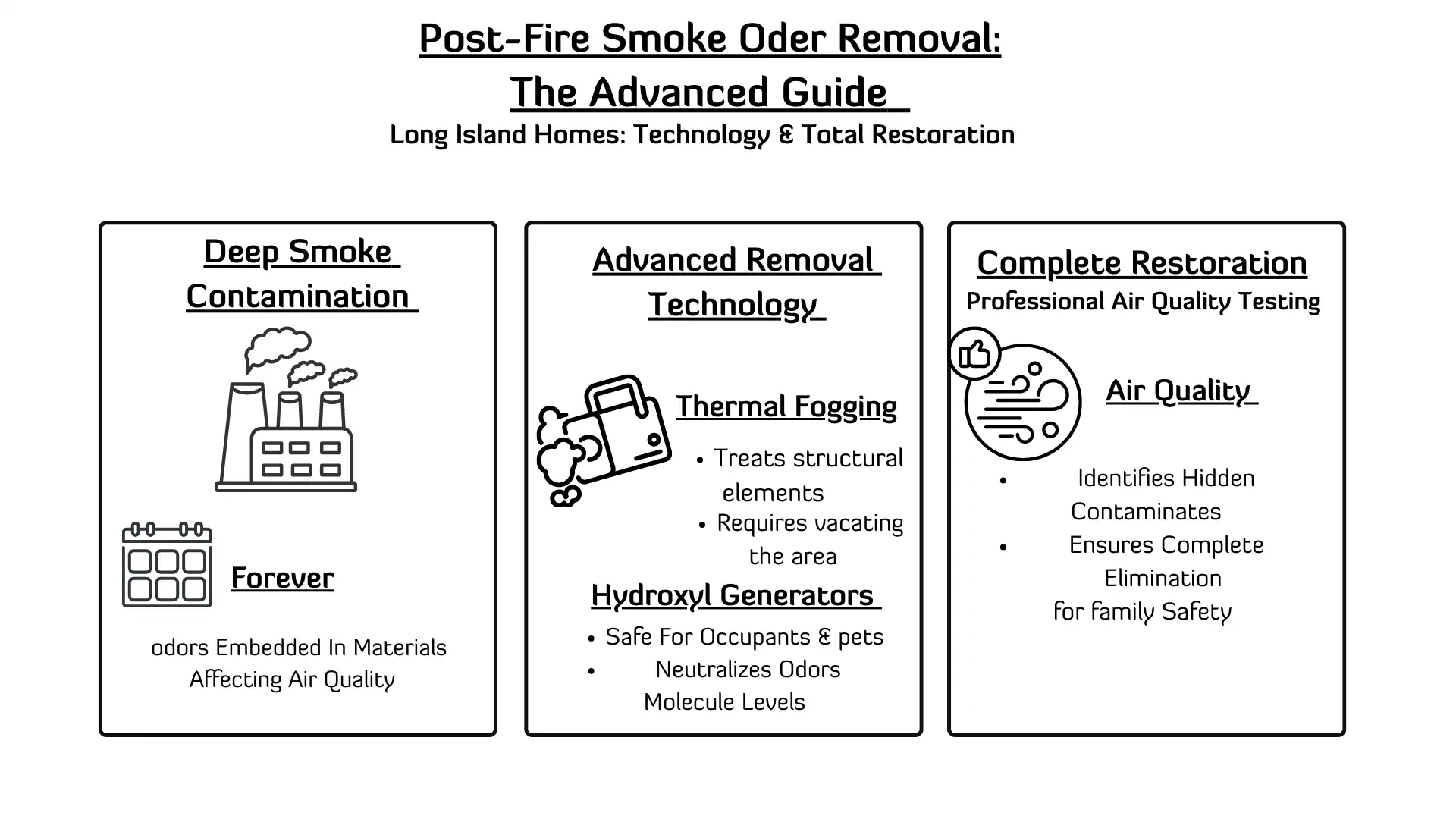
Thermal fogging works by heating a deodorizing solution until it becomes a fine mist that behaves exactly like smoke particles. This isn’t just clever—it’s essential for effective odor removal.
The process heats a deodorizer and sprays it in fog form, allowing the mixture to penetrate even the most difficult spots to access and attach to smoke particles to absorb them. Think of it as fighting fire with fire: the deodorizing fog follows the same path smoke took during the fire, reaching into cracks, behind walls, and into porous materials where traditional cleaning can’t go.
Beyond neutralizing smoke odor, thermal fogging minimizes health issues associated with carcinogenic debris, which is crucial since living in a space with remaining smoke particles can lead to respiratory problems.
What Thermal Fogging Removes vs. What It Doesn't
Understanding thermal fogging’s capabilities helps you set realistic expectations. This method excels at neutralizing odor molecules that have penetrated deep into porous materials like drywall, wood, and fabric. Thermal fogging is one of the most thorough techniques available, heating and vaporizing a solvent-based deodorizing agent that creates a fine mist mimicking smoke particle behavior, allowing solvent particles to chemically alter odor molecules at their source.
However, thermal fogging doesn’t physically remove soot deposits or clean visible damage. It’s specifically designed for odor elimination, not surface cleaning. You’ll still need traditional cleaning methods for walls, ceilings, and furniture before or after fogging treatment.
The process also requires the space to be unoccupied during treatment, similar to ozone generators. While thermal fogging often takes center stage, it’s most effective when paired with additional odor control methods and cleaning solutions designed for soot and smoke residue on non-porous surfaces.
For Long Island homes, thermal fogging proves particularly effective after cooking fires—which account for the majority of residential fires in our area. The method’s ability to penetrate kitchen cabinets, behind appliances, and into ventilation systems makes it invaluable for eliminating stubborn grease-fire odors.
When Thermal Fogging Makes the Most Sense
Thermal fogging works best for moderate to severe smoke damage where odors have had time to penetrate building materials. A thermal fogger can be a great asset to completely engulf an area, getting the fogging solution in every nook and crevice, recreating fire-related properties of heat and pressurization so porous material picks up deodorant droplets the same way they picked up smoke odors.
This method proves ideal when you’re dealing with protein fires (cooking incidents), synthetic material combustion, or fires that smoldered for extended periods. The longer smoke particles have to embed into materials, the more thermal fogging’s deep-penetration capabilities become necessary.
Consider thermal fogging when other methods haven’t fully eliminated odors, when you’re dealing with valuable items that can’t be replaced, or when the affected area includes hard-to-reach spaces like attics, crawl spaces, or inside wall cavities. The process involves using a specialized deodorizing solution heated until it turns into a fine, penetrating mist so light it can seep into cracks, crevices, and porous surfaces in the same way smoke did during the fire.
The main limitation is timing—thermal fogging requires complete evacuation of the space during treatment and adequate ventilation afterward. For Long Island families, this typically means arranging temporary accommodations, but the results often justify the inconvenience when dealing with persistent smoke odors that affect daily life and property value.
Hydroxyl Generators: The Game-Changer for Occupied Spaces
Hydroxyl generators represent a significant advancement in fire restoration technology. These machines produce hydroxyl radicals that break apart odor molecules, converting contaminants into carbon dioxide and water through a relatively simple process that doesn’t require additional intervention by masking agents, chemicals, and oils.
What sets hydroxyl generators apart is safety. Unlike thermal foggers and ozone generators, hydroxyl generators are safe to use around people and sensitive materials, allowing them to be plugged in, turned on, and run constantly while cleaning crews work throughout the home.
This means faster restoration timelines and less disruption to your daily life—a crucial advantage for Long Island families who can’t easily relocate during restoration.
How Hydroxyl Technology Actually Works
Hydroxyl generators use the same molecules that mother nature uses to clean and scrub the environment, produced through the decomposition of hydroperoxide. This technology recreates these natural cleaning molecules to fight and combat odor by neutralizing odor molecules and gases through breaking down their chemical bonds once attached.
The process mimics what happens naturally in the atmosphere when sunlight creates hydroxyl radicals that break down pollutants. Hydroxyl generators eliminate odors from porous materials by operating on the same principles as sunlight exposure for deodorizing. This natural approach means no chemical residues, no toxic byproducts, and no need to worry about harmful exposure.
For volatile organic compounds (VOCs) that often accompany smoke damage, hydroxyl generators prove particularly effective. These molecules are effective at breaking down not only smoke odors but also volatile organic compounds in the air, and unlike ozone, hydroxyls are safe for use in occupied spaces.
The technology also addresses a common concern in fire restoration: cross-contamination. Since hydroxyl generators can run continuously during other restoration activities, they prevent odor molecules from resettling in cleaned areas—a problem that sometimes occurs with intermittent treatments.
Why Hydroxyl Generators Excel for Long Island Fire Restoration
Hydroxyls tend to be the preferred method because they can eliminate or minimize business downtime. For Long Island homeowners and businesses, this translates to faster return to normal operations and reduced secondary costs from extended displacement.
The continuous operation capability proves especially valuable during Long Island’s harsh winters when finding temporary housing becomes more challenging and expensive. While the process of eliminating odor might take slightly longer than thermal fogging or ozone, the overall time saved by being able to work on other restoration tasks while deodorization is ongoing makes hydroxyl generators on par—if not better—time-wise.
Hydroxyl generators also handle the complex mixture of contaminants common in modern fires. When synthetic materials burn—common in today’s homes filled with plastics, synthetic fabrics, and composite materials—they create a cocktail of chemical compounds that traditional methods struggle to address completely. Hydroxyl generators leave no residue behind and allow for continuous restoration while preventing damage to sensitive materials that could accidentally get left behind.
This technology proves particularly effective for Long Island’s older homes where fires may disturb lead paint or asbestos-containing materials. The gentle, continuous action helps manage airborne particles without the aggressive air movement that might spread contamination to unaffected areas.
HEPA Air Scrubbing and Professional Air Quality Testing Complete the Process
Modern fire restoration isn’t complete without addressing airborne particles and confirming air quality meets safety standards. HEPA air scrubbing uses strategic ventilation to ensure removal of airborne particles during restoration, while professional air quality testing confirms the restoration’s effectiveness.
Accurate testing results inform the use of HEPA filtration systems, ventilation protocols, and specific cleaning techniques to restore air quality. Without proper testing, restoration efforts can fall short, leaving behind hazardous conditions for occupants. This is especially critical for Long Island families, where post-fire mold prevention becomes essential due to our humid coastal climate.
We combine these technologies with professional air quality verification to ensure your home isn’t just odor-free—it’s genuinely safe for your family’s long-term health. Our comprehensive approach addresses both visible and invisible fire damage effects to deliver complete restoration you can trust.