Summary:
If you’re dealing with lead paint in a Nassau County home — whether you found it mid-renovation, got flagged during a sale, or received a compliance notice — the first thing you’ll do is search for a lead abatement contractor. And the first thing every contractor’s website will tell you is that they’re “licensed and certified.”
That phrase means almost nothing on its own. In New York, there are different types of lead certifications, different regulatory programs, and different legal requirements depending on what work is actually being done. Getting the wrong contractor for your specific situation isn’t just inconvenient — it can leave you with a job that doesn’t satisfy the law and a hazard that’s still there.
Here’s what you actually need to know.
Certified Lead Abatement Contractor: What the Certification Actually Covers
There are two separate EPA certification tracks that come up when you’re looking for a lead abatement contractor in New York, and most homeowners don’t realize they’re different programs with different legal triggers.
The first is the EPA’s Renovation, Repair, and Painting Rule — commonly called the RRP Rule. Any contractor working in a pre-1978 home who disturbs more than six square feet of lead-painted surface must be certified under this program. It covers incidental disturbance of lead paint during renovation work.
The second is full EPA Lead-Based Paint Abatement Firm Certification, which is required when a project is specifically structured to permanently eliminate lead hazards — not just work around them.
The distinction matters because an RRP-certified firm is not automatically authorized to perform full abatement. If your project is ordered by a government agency, involves HUD-assisted housing, or requires a written abatement specification as a permanent fix, you need a contractor holding abatement firm certification — not just RRP.
RRP vs. Full Lead Abatement Certification: What's the Difference in Practice
Think of it this way. RRP certification is the baseline requirement for any contractor doing renovation work in older housing. It covers lead-safe work practices — containment, HEPA vacuuming, proper disposal — to prevent lead dust from spreading during a project that isn’t specifically about lead removal.
A kitchen remodel in a 1965 Levittown home, for example, requires the contractor to hold RRP certification because the work will disturb painted surfaces that likely contain lead.
Full lead abatement certification goes further. It’s the credential required when the entire purpose of the project is to permanently eliminate or control lead hazards — not as a byproduct of renovation, but as the primary scope of work. This includes encapsulation with a certified encapsulant, enclosure of lead-painted surfaces, or complete removal.
Projects that fall under this category require a certified abatement supervisor on-site, a written abatement plan, and post-clearance testing to confirm the job is done.
New York is one of the states where the EPA directly enforces the Lead-Based Paint Abatement and Evaluation Program — meaning there’s no state-run alternative program. Contractors working in Nassau County must apply for EPA firm certification directly.
On top of that, New York State has its own DOL licensing requirements for lead abatement work, and that state license requires annual renewal — separate from the EPA’s five-year certification cycle. A contractor who renewed their EPA certification three years ago but let their NYS DOL license lapse is not currently authorized to perform lead abatement in New York, regardless of what their website says.
This is the part that most contractor pages don’t explain, and it’s the part that matters most when you’re comparing bids. Asking to see both the EPA firm certification and the current NYS DOL license is a reasonable request. Any legitimate contractor will hand those over without hesitation.
How to Verify a Lead Abatement Contractor's Credentials Before You Hire
Verification is simpler than most people expect, but you have to actually do it. The EPA maintains a searchable database of certified lead abatement firms. You can look up a contractor by firm name and confirm whether their certification is current and what activities they’re certified to perform.
For the NYS DOL license, the New York State Department of Labor maintains its own records. A contractor who is genuinely certified will know their firm certification number and won’t hesitate to share it.
Beyond the certifications themselves, there are a few other things worth confirming before any work begins. Lead abatement involves hazardous material handling, and the insurance requirements are specific. You want to confirm the contractor carries workers’ compensation, property damage liability, personal liability, and lead liability coverage. General liability alone isn’t enough.
Ask them to name their insurance provider and verify the policy is current — not just take their word for it.
You also want to ask about post-abatement clearance testing. This is a step that some contractors treat as optional or skip entirely, but it’s required for any project conducted under a formal abatement specification. Clearance testing involves dust wipe sampling analyzed by a certified laboratory to confirm that lead dust levels in the work area meet EPA clearance standards.
A project isn’t finished when the crew packs up — it’s finished when clearance is achieved and documented. If a contractor can’t explain what clearance testing is or treats it as an add-on, that’s a problem.
For Nassau County property owners dealing with a government-ordered abatement or a compliance requirement under the new NYS Lead Rental Registry Program — which takes effect in November 2025 and requires landlords of pre-1980 multi-unit buildings to certify their units lead-safe every three years — the documentation from clearance testing is part of what you’ll need to demonstrate compliance. Getting that paperwork right from the start matters.
Lead Paint Removal Contractor: What Happens When Lead Shows Up Mid-Renovation
Nassau County’s housing stock is overwhelmingly pre-1978. Levittown was built between 1947 and 1951. The neighborhoods running along the Southern State Parkway and the south shore communities from Freeport to Massapequa were largely built in the same era.
When you renovate a home in Nassau County, you’re almost always working in a building that has lead paint somewhere.
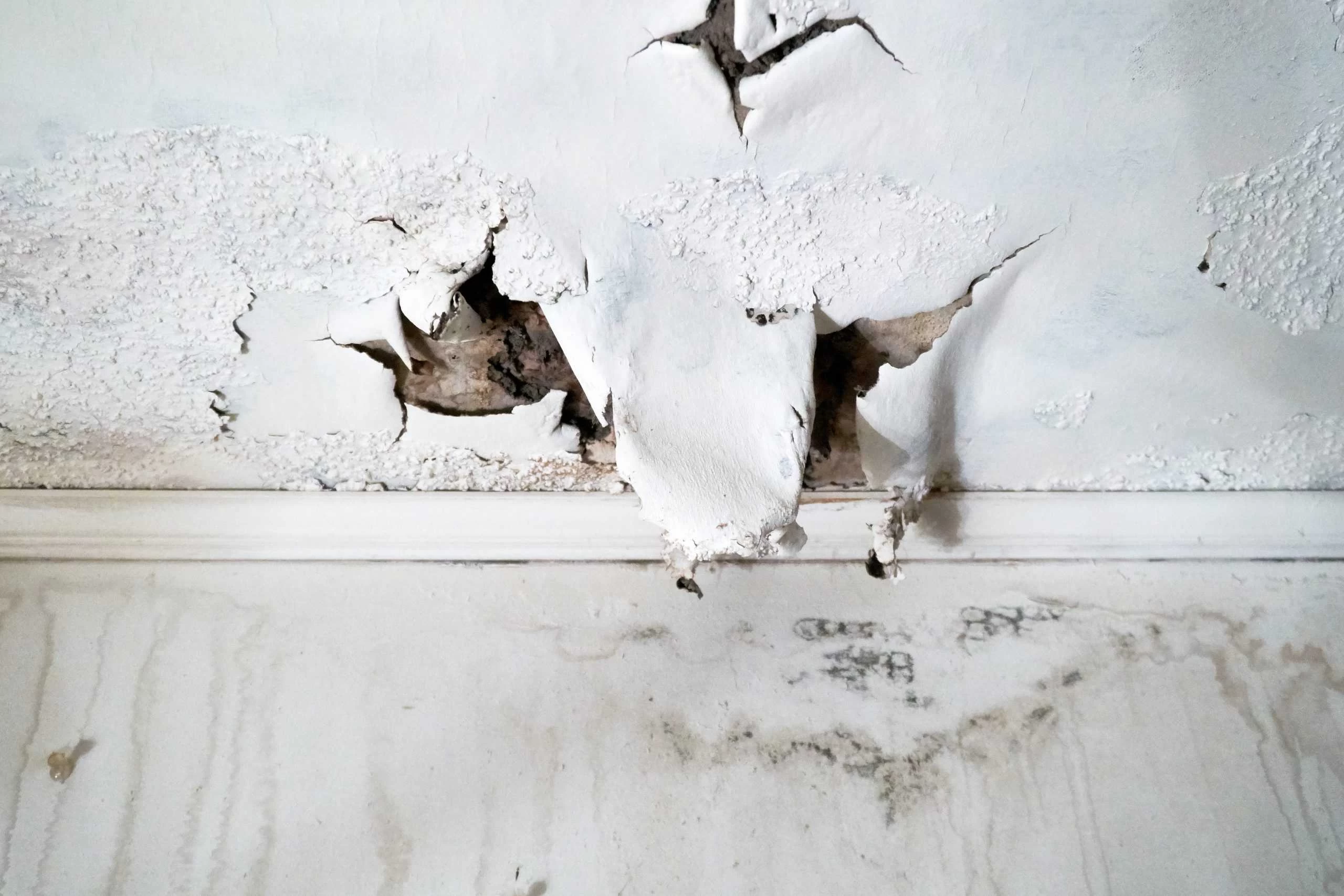
Most of the time, it’s manageable. A contractor with RRP certification handles the disturbance safely and the project moves forward. But sometimes a renovation uncovers a more significant lead condition — deteriorated paint on a large surface area, or a scope that shifts from incidental disturbance to something that legally requires full abatement. When that happens, a contractor who only holds RRP certification has to stop.
What to Do When a Renovation Uncovers Lead Paint in a Nassau County Home
This is one of the most common and least-discussed scenarios in the lead abatement world. A homeowner in Garden City or Oceanside starts a bathroom renovation. The contractor opens up a wall and finds deteriorating lead paint on a large surface.
The RRP-only contractor is now in a gray area — the scope has potentially shifted to something that requires abatement certification, not just lead-safe renovation practices. The project stops. A new contractor has to be brought in. The timeline stretches. Costs go up.
The way to avoid this is to start with a contractor who holds both credentials — RRP certification for the renovation work and full EPA Lead-Based Paint Abatement Firm Certification for the abatement work. That way, if the scope changes mid-project, the same team can handle it without stopping work or coordinating a handoff to a subcontractor.
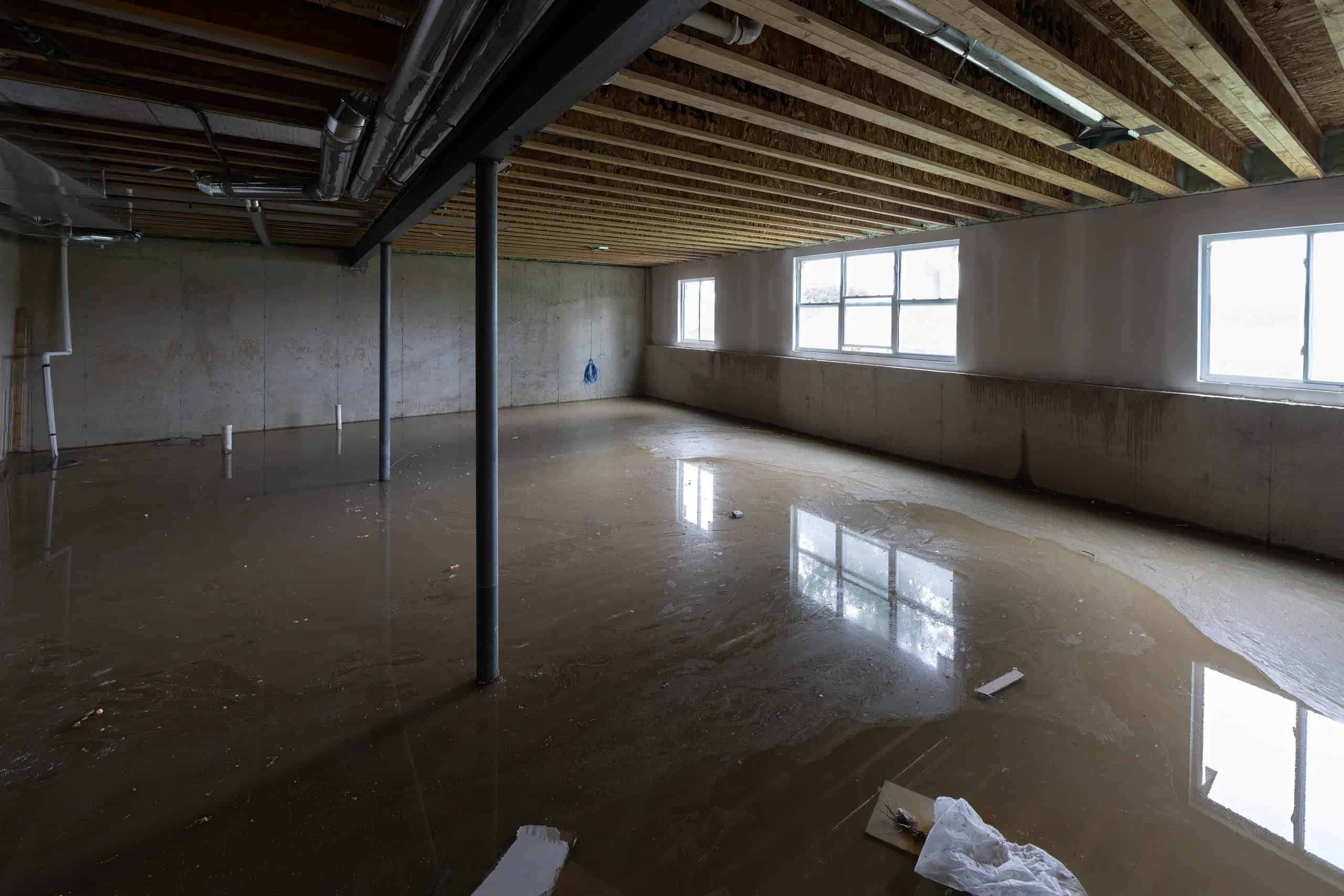
This matters even more when you factor in Nassau County’s coastal exposure. The south shore communities along the Wantagh State Parkway and Meadowbrook State Parkway corridors experience recurring storm surge and flooding. When floodwater damages walls, ceilings, and floors in a pre-1978 home, it doesn’t just create a water damage problem — it can disturb lead-painted surfaces and generate lead dust.
A contractor who handles water damage restoration and holds active lead abatement certifications can address both problems in a single mobilization. A contractor who handles only water damage restoration will need to stop when they hit lead, and a contractor who handles only lead abatement won’t have the equipment or certification for the water damage side.
We hold both. Our team carries active USEPA Lead Abatement Firm Certification, USEPA RRP Certification, and NYS DOL certifications for lead and asbestos — along with IICRC certification for water and fire damage restoration. If a project starts as a flood cleanup and turns into a lead abatement job, we don’t have to stop and call someone else.
Getting an Asbestos Removal Quote When Lead and Asbestos Are Both Present
Lead paint and asbestos tend to travel together in Nassau County’s older housing stock. A home built in the 1950s or 1960s might have lead paint on the walls, asbestos in the floor tiles, and asbestos insulation on the pipes — all in the same building. This is common, not unusual.
And it creates a real problem when a contractor is certified for one but not the other.
An RRP-certified contractor who hits asbestos during a lead abatement project cannot legally continue working with the asbestos present. They have to stop, bring in an asbestos abatement contractor, wait for that work to be completed and cleared, and then return to finish the lead work. Every handoff adds time, coordination risk, and cost.
If the asbestos contractor’s schedule doesn’t align with yours, the project sits.
We hold active NYS DOL Asbestos Handler certification alongside our lead certifications. When a Nassau County renovation or remediation project involves both hazards — which is more often than not in homes built before 1978 — we can handle both scopes under one contract. One mobilization, one point of contact, one clearance process.
For homeowners who’ve already been through the experience of a project stalling because two different contractors couldn’t coordinate their schedules, the difference is significant.
If you’re planning a renovation in an older home and want to understand what you’re actually dealing with before the work starts, an inspection and risk assessment is the right first step. That assessment will tell you where lead and asbestos are present, what condition they’re in, and what the appropriate abatement approach is. From there, you can get a realistic scope and a quote that accounts for both hazards — not a quote that gets revised upward when something unexpected shows up during demolition.
We’ve contracted directly with Nassau County, Suffolk County, the NYS Office of General Services, and other public entities. The NYS OGS Approved Emergency Response Contractor designation isn’t something you get by submitting a form — it requires vetting. We mention it not to impress, but because it’s a reasonable proxy for the kind of documentation and compliance standards we hold ourselves to on every project, public or private.
Lead Abatement Contractors in Nassau County: What to Ask Before You Sign
The short version: ask for the EPA firm certification number, ask for the current NYS DOL license, ask about lead liability insurance specifically, and ask how clearance testing is handled. Any contractor who can answer those four questions clearly and without hesitation is worth talking to further. Any contractor who gets vague is telling you something.
Nassau County’s housing stock means this isn’t a niche concern — it’s the reality for most homeowners planning any kind of renovation or restoration work. The pre-1978 construction that defines communities from Hempstead to Long Beach to Hicksville means lead paint is the baseline assumption, not the exception.
If you have questions about what your specific project requires, or you want to understand what certifications apply to your situation before committing to anything, Green Island Group is available 24/7 and happy to walk through it with you.