Summary:
If you’ve been getting quotes for lead paint removal and every contractor sounds equally qualified, that’s a problem. In New York, lead abatement isn’t just a skill — it’s a regulated activity with specific federal and state certifications required by law. A general contractor’s license doesn’t cover it. Neither does experience alone.
If you’re in Nassau County, where the majority of homes were built before 1960, the odds that your home has lead-based paint are high — and knowing how to vet the contractors you’re considering is one of the most important things you can do before the work begins.
What Lead Paint Abatement Contractors Are Actually Licensed to Do
Lead paint abatement and lead paint removal aren’t interchangeable terms in the eyes of the law. Abatement refers specifically to the permanent elimination of lead-based paint hazards — full removal, enclosure, or encapsulation carried out under a formal regulatory framework. It requires specific credentials that go beyond a standard home improvement contractor license.
In New York, those credentials come from two separate sources: the EPA and the New York State Department of Health. Both matter, and neither one alone is sufficient on its own.
Understanding this distinction protects you. A contractor who is certified for renovation work under the EPA’s RRP Rule is not automatically authorized to perform full lead abatement. These are different certifications, covering different scopes of work, with different training requirements. Knowing which one applies to your situation — and confirming that your contractor holds the right one — is the starting point for any lead abatement project in Nassau County.
EPA Certification vs. State Certification: What Nassau County Contractors Must Hold
Here’s something that surprises a lot of homeowners: New York is one of only a handful of states where the EPA — not the state — directly administers the lead abatement certification program. That means if a contractor is performing lead abatement work in Nassau County, they must hold EPA firm certification applied for directly through the federal EPA program. There is no state-issued credential that substitutes for it.
EPA firm certification is required for any company performing lead abatement in pre-1978 housing or child-occupied facilities. It’s valid for five years and must be renewed. But firm certification alone isn’t the whole picture. The individual workers and supervisors on your project need their own certifications.
The EPA administers individual credentials for several distinct roles in New York: the lead abatement worker, who performs the physical removal under supervision; the lead abatement supervisor, who oversees the project and requires either one year of experience as a certified worker or two years in a related field; the lead inspector, who conducts surface-by-surface testing using XRF technology; and the lead risk assessor, who evaluates the full scope of hazards and performs post-abatement clearance testing.
Each of those roles requires separate training and separate certification. When you’re evaluating a contractor, you’re not just asking whether the company is certified — you’re asking whether the people who will actually be in your home hold the right individual credentials for the work they’re doing.
On top of the EPA requirements, New York State maintains its own lead abatement contractor certification through the NYS Department of Health. This is a separate layer, not a replacement for EPA certification. A fully compliant lead abatement contractor in Nassau County needs both. Contractors performing renovation or restoration work are also required to hold a Nassau County Home Improvement Contractor license — a local licensing requirement on top of the federal and state layers.
We hold active EPA firm certifications: NAT-F122209-1, NAT-F122209-2, and LBP-F122209-1. Those aren’t marketing claims — they’re verifiable credentials you can look up in the EPA’s Lead Professional Registry before you sign anything.
Lead Paint Removal Contractor vs. RRP-Certified Renovator: Why the Difference Matters
This is one of the most common points of confusion for Nassau County homeowners, and it’s worth taking a moment to get it right. The EPA’s Renovation, Repair and Painting Rule — commonly called the RRP Rule — applies to contractors who perform renovation work that disturbs painted surfaces in pre-1978 homes. If you’re renovating a kitchen or bathroom in a home built before 1978, your contractor is required to be RRP-certified.
That certification requires an eight-hour course from an EPA-accredited provider and covers lead-safe work practices: containing the work area, using HEPA vacuums, wet-cleaning methods, and providing written documentation of the work performed.
RRP certification is important. But it does not authorize a contractor to perform full lead abatement. Those are two different things. Full abatement — the complete removal or permanent enclosure of lead-based paint — requires the abatement certifications described above. If a contractor tells you they’re “lead certified” without specifying which certification they hold, that’s worth clarifying before work begins.
Why does this matter so much in Nassau County? Because of the housing stock. Communities like Levittown, Hempstead, Uniondale, Merrick, Massapequa, and Freeport are dominated by Cape Cods, ranches, and colonials built between the mid-1940s and the early 1960s — right in the peak era of lead paint use. According to HUD’s American Healthy Homes Survey, 76 percent of homes built before 1960 contain lead-based paint. In Nassau County, where that describes the majority of the housing inventory, the chances of encountering lead paint during a renovation are not a remote possibility. They’re the default assumption.
When a contractor opens a wall in one of those homes and finds lead paint, the project doesn’t stop — not if the contractor holds both RRP certification and full abatement certification. We carry both. That means the same crew handling your renovation can legally manage the lead hazard on the spot, without bringing in a separate subcontractor, without delays, and without your project sitting idle while you make phone calls.
The penalties for getting this wrong are not minor. EPA violations for RRP infractions can reach $37,500 per violation per day. In 2024, one landlord faced a $150,000 fine for repeated violations. Hiring a contractor who holds the right credentials isn’t a formality — it’s the difference between a completed project and a legal and financial problem.
Lead Abatement Contractor Requirements for Nassau County Property Owners
If you own a pre-1978 property in Nassau County — whether it’s a single-family home, a rental, or a multi-unit building — the regulatory environment around lead paint is changing in ways that are directly relevant to you. New York State’s Lead Rental Registry is expected to take effect in November 2025, requiring landlords with pre-1978 rental properties to register and document lead-safe compliance.
That’s not a distant concern for Nassau County landlords in communities like Hempstead, Freeport, and Long Beach, where rental housing density is high and the housing stock is old. Understanding what’s required — and confirming that the contractor you hire is qualified to satisfy those requirements — is the most practical thing you can do right now.
How to Verify a Lead Abatement Contractor's Credentials in New York
Verifying a contractor’s lead abatement credentials in New York is straightforward once you know where to look. The EPA maintains a searchable Lead Professional Registry where you can confirm a firm’s certification status, the names of certified individuals associated with that firm, and the specific roles they’re certified to perform. This is a public database, and any contractor performing lead abatement in Nassau County should be findable in it.
When you’re evaluating contractors, ask for the firm’s EPA certification number directly. Ask which individual on the crew holds lead abatement supervisor certification. Ask whether the firm also holds NYS DOH lead abatement contractor certification. And for work in Nassau County, confirm that the contractor holds a Nassau County Home Improvement Contractor license.
A contractor who can answer all of those questions clearly and provide documentation is operating at the standard the law requires. One who gets vague or defensive is worth reconsidering.
Beyond credentials, there are practical questions that matter just as much. Ask how the work area will be contained and whether HEPA vacuums will be used. Ask whether occupant relocation is required for your specific project and for how long. Ask who performs post-abatement clearance testing — ideally, this should be an independent certified inspector, not the same contractor who did the removal. And ask for a written scope of work that specifies the abatement method and clearance protocol before you sign anything.
We hold active contracts with Nassau County government directly, as well as with the NYS Office of General Services, the Dormitory Authority State of New York, and several other state agencies. Government entities vet contractors thoroughly before awarding contracts — that’s a level of third-party credibility that goes beyond a claim on a website. Our NYS and NYC M/WBE certification adds another layer of formal accountability, and our 12-plus years in business across Long Island and the five boroughs means this isn’t work we’re figuring out as we go.
What Happens When Lead Paint Is Found During a Nassau County Renovation
This scenario plays out regularly in Nassau County, and it catches homeowners off guard every time. A kitchen remodel in Levittown, a bathroom gut in Merrick, a basement restoration in Uniondale after a flood — the contractor opens the walls and finds deteriorating lead paint. Work stops. Now what?
If your contractor isn’t certified for lead abatement, the answer is: you wait. You wait while they refer you to someone else, while that someone else schedules an estimate, while you coordinate between two separate companies and try to figure out who’s responsible for what. In a home with children, that delay isn’t just inconvenient — it’s a health concern.
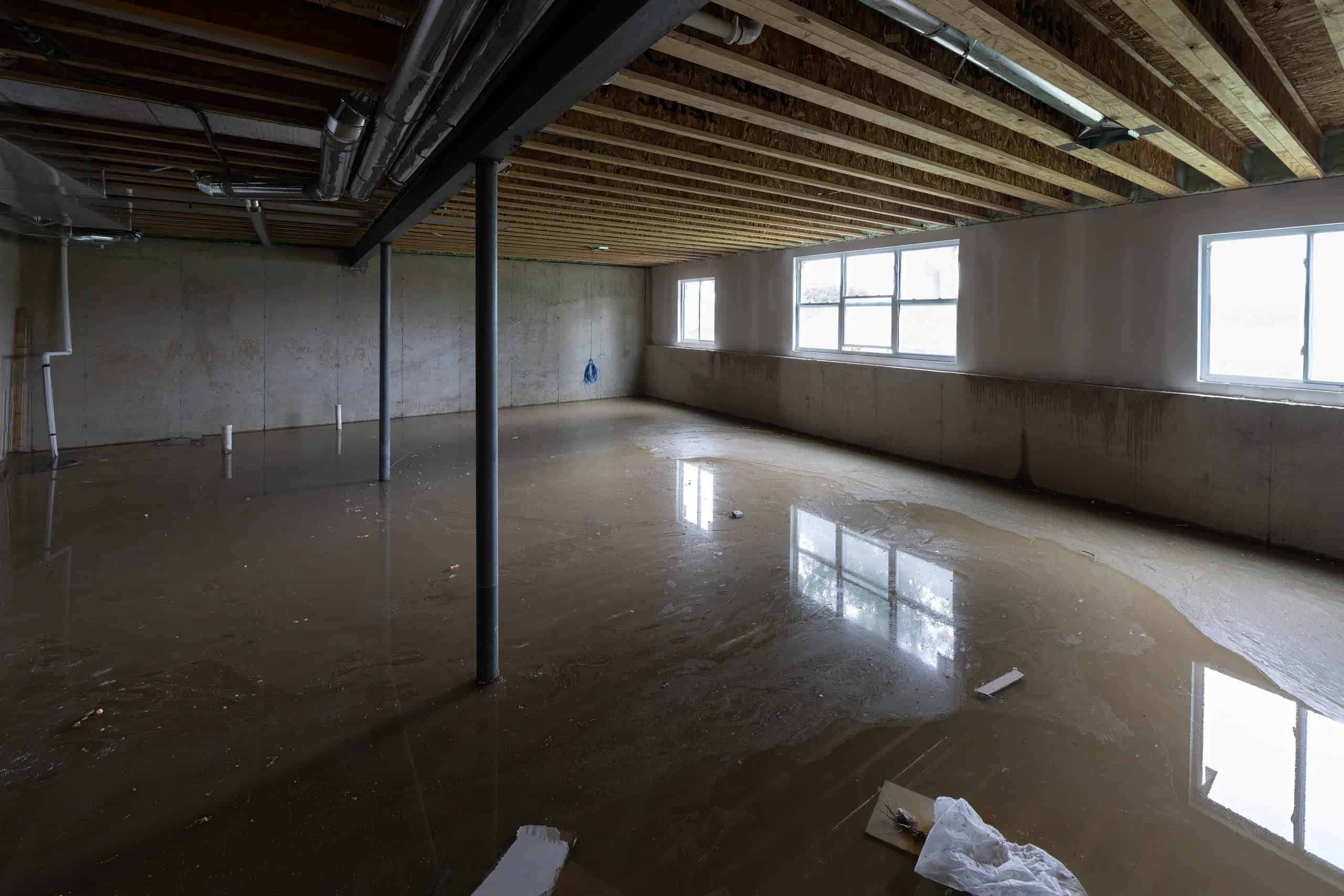
Nassau County’s coastal location compounds this. The county sits between the Atlantic Ocean to the south and Long Island Sound to the north, and its high water table means flooding and water intrusion are regular events. When water damage affects walls and flooring in a pre-1978 home, it often disturbs lead paint in the process — creating an immediate hazard that intersects with the restoration work. That’s not a hypothetical. It’s a pattern we see consistently across Nassau County communities.
The reason our multi-certification model matters in this context is practical: we hold EPA Lead Abatement Certification, EPA Lead RRP Certification, NYS DOL Asbestos Handling License, and NYS DOL Mold Remediation License simultaneously. When lead paint turns up mid-renovation, or when a water damage restoration uncovers it, the same crew can handle it. No subcontractors, no scheduling gaps, no project sitting open while you coordinate between separate companies.
We also offer financing up to $200,000 at 0% APR through Enhancify, which matters when the scope of a project expands unexpectedly — and we handle insurance billing directly when the work is part of a covered claim, so you’re not managing paperwork on top of everything else.
In Nassau County’s housing stock, encountering lead paint isn’t a worst-case scenario. It’s a common one. The question is whether your contractor is set up to handle it without stopping the project.
Hiring Lead Based Paint Abatement Contractors in Nassau County: What to Walk Away With
The core takeaway is simple: not every contractor who mentions lead paint is legally authorized to remove it. In New York, full lead abatement requires EPA firm certification, individual certifications for the workers and supervisors on-site, and NYS DOH lead abatement contractor certification — all as separate, verifiable credentials. For work in Nassau County, add a Nassau County Home Improvement Contractor license to that list.
If you’re a homeowner planning a renovation in a pre-1978 home, or a landlord preparing for New York’s incoming Lead Rental Registry requirements, confirming those credentials before you hire is the most important step you can take. Ask for certification numbers. Look them up. Get a written scope of work that includes post-abatement clearance testing.
If you want to talk through what your specific project requires — or you need a contractor who can handle lead abatement alongside mold, asbestos, water damage, or an ongoing renovation — Green Island Group is available 24/7 and has been doing this work across Nassau County and Long Island for over 12 years.