Summary:
If you’ve found mold in your home — or you’re dealing with water damage and worried about what comes next — you’re probably getting conflicting information. Some contractors say it’s a quick fix. Some quotes come back shockingly high. And somewhere in the back of your mind, you’re wondering whether the problem is bigger than what you can actually see.
That’s a reasonable concern, especially in Nassau County, where the combination of an aging housing stock, a high water table, and decades of coastal flooding creates mold conditions that most national guides simply don’t account for. Here’s what you actually need to know.
What Mold Remediation Service Actually Involves
Mold remediation is not the same as mold removal. Removal is one step in a longer process. Remediation covers the full scope: assessing where the mold is and why it’s there, containing the affected area so spores don’t spread during the work, removing contaminated materials, treating surfaces with antimicrobial agents, and then restoring the space to its pre-damage condition.
The distinction matters because a contractor who only removes visible mold — without addressing the moisture source or checking inside wall cavities — is setting you up for a repeat problem within months. Real remediation solves the cause, not just the symptom.
In New York State, the process is also governed by law in ways most homeowners don’t know about until something goes wrong.
What New York's Article 32 Mold Law Means for You
New York State passed Article 32 of the Labor Law specifically to protect property owners from unqualified mold contractors. Any mold project covering ten square feet or more requires a licensed professional — and that license is issued by the NYS Department of Labor, not a private certification body. It has to be renewed every two years, and you can verify any contractor’s license status directly through the NYS DOL’s online search tool.
Here’s the part most homeowners never hear about: the same company cannot legally both assess and remediate your project. The assessor and the remediator must be two separate, independently licensed entities. This isn’t a technicality — it’s a legal firewall designed to prevent conflicts of interest. An assessor who also sells remediation services has a financial incentive to find more mold than actually exists. The law removes that incentive entirely.
Before any remediation work begins, the licensed assessor must produce a written work plan that specifies exactly what the remediator is required to do. That document is your protection. If the remediator deviates from it, or if the project fails post-remediation clearance testing, they are legally responsible for re-cleaning at no additional cost to you.
If a contractor offers to assess and remediate your property themselves, that’s not a convenience — it’s a violation of New York law. Asking to see a contractor’s NYS DOL Mold license before any work begins isn’t being difficult. It’s the first reasonable question any informed homeowner should ask.
Mold and Mildew Specialist vs. General Contractor: Why It Matters in Nassau County's Older Homes
A general contractor can tear out drywall. What they can’t legally do in New York — without the right license — is remediate mold on a project of any meaningful size. In Nassau County specifically, the stakes of getting this wrong are higher than most people realize.
A significant portion of Nassau County’s housing was built during the post-World War II development boom, particularly in communities like Levittown, which went up between 1947 and 1951. Homes from that era frequently contain asbestos in floor tiles, joint compound, pipe insulation, and ceiling texture — materials that get disturbed the moment someone starts cutting into walls to address mold. Lead paint is another co-occurring concern in pre-1978 construction.
A licensed mold and mildew specialist who only holds a mold license cannot legally handle those materials. A contractor who holds NYS DOL Mold, NYS DOL Asbestos, and USEPA Lead certifications can manage the entire scope without stopping work, calling in a subcontractor, or leaving you to coordinate between multiple companies while your home sits open and exposed.
This is the practical reality of mold remediation in Nassau County’s older neighborhoods. It’s not a theoretical concern. It’s a situation that comes up regularly in homes throughout Merrick, Baldwin, Freeport, and Oceanside — and it’s one of the main reasons we built our team around holding every license the work actually requires. When we start a job and find asbestos-containing materials behind the wall, we don’t have to stop. We handle it in-house, under our own licenses, and keep the project moving.
Mold Remediation and Restoration: What Happens After the Mold Is Gone
Remediation gets the mold out. Restoration gets your home back. These are two different phases, and a lot of contractors only do the first one — leaving you to find someone else to handle the repairs, the drywall replacement, the painting, and whatever else got torn out during the process.
We handle both. Once the mold is gone and clearance testing confirms the space is clean, we restore the affected areas: replacing materials, sanitizing surfaces, and returning the property to the condition it was in before the damage.
For homeowners dealing with a mold problem that also involves water damage or structural issues, having one company manage the full scope from emergency response through final restoration is a meaningful difference — not just in convenience, but in timeline and cost.
Does Homeowners Insurance Cover Mold Remediation in Nassau County?
This is one of the most common questions we get, and the honest answer is: it depends on what caused the mold. Insurance policies generally cover mold when it results directly from a covered event — a burst pipe, storm flooding, or another sudden water damage incident. Mold that developed over time from a slow leak or deferred maintenance is typically excluded.
That distinction matters a lot in Nassau County, where Superstorm Sandy in 2012 left a lasting footprint of moisture damage across Long Beach, Island Park, and Freeport. Some of those homes were improperly dried or never fully remediated after the storm, and the mold that developed in the years since exists in a complicated gray zone when it comes to insurance coverage.
We handle insurance claims directly. That means we communicate with your adjuster, document the damage in the way insurance companies need to see it, and manage the paperwork — so you’re not trying to navigate a claim while also dealing with an uninhabitable room or a health concern in your home. There are no upfront costs when insurance is involved, and for projects that fall outside of coverage, we offer financing up to $200,000 at 0% APR through Enhancify.
The average professional mold remediation runs around $2,363, with a range of $373 to $7,000 depending on the scope. Severe, whole-home infestations can reach $15,000 to $30,000. Those are real numbers, and we’d rather you know them upfront than be surprised later.
How Quickly Does Mold Grow After Water Damage — and Why Timing Is Everything
Mold begins colonizing within 24 to 48 hours of moisture exposure. It’s a documented biological fact, and it’s the reason emergency response time is one of the most important things to evaluate when choosing a mold remediation company.
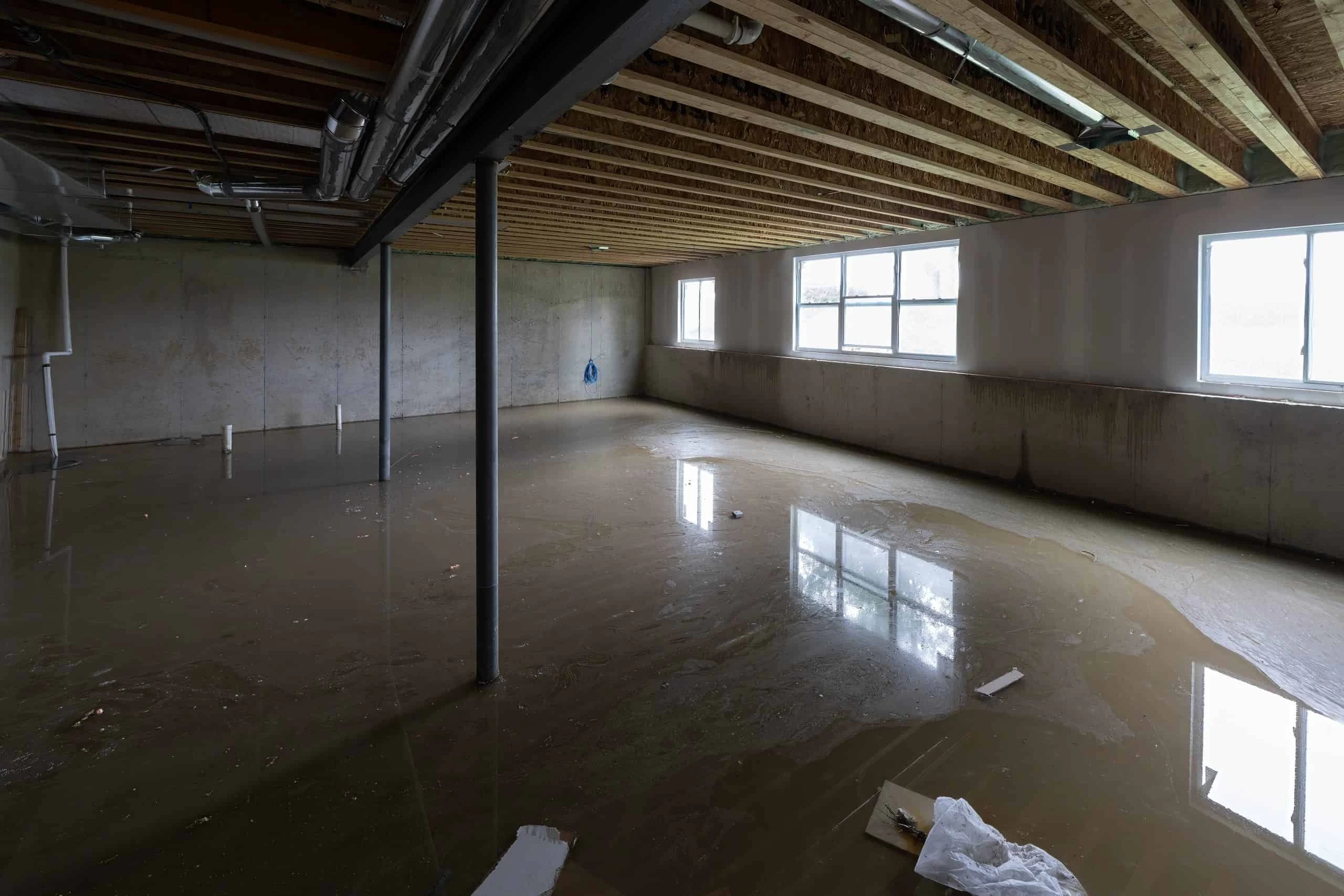
Nassau County’s geography makes this especially relevant. The county sits on a glacially formed landscape with an unusually shallow water table, which means basement water intrusion is a structural reality for a large share of older homes — not a rare event. Add in the coastal storm exposure along the South Shore and the dense development patterns that make moisture problems in one unit a potential concern for neighboring units, and you have a market where mold can escalate faster than most people expect.
When we respond to a call, we use thermal imaging cameras to detect moisture inside wall cavities, under subfloors, and behind insulation — areas where mold can establish itself long before there’s any visible sign on the surface. We set up containment using 6-mil polyethylene barriers and run HEPA air scrubbers that maintain negative pressure in the work zone. That negative pressure is what keeps mold spores from migrating to the rest of your home during the remediation process.
We’re available around the clock because the 24 to 48 hour window doesn’t wait for business hours. If you’ve had a pipe burst, a basement flood, or significant water intrusion from a nor’easter, the time to call is now — not after the weekend. We serve Nassau County, Suffolk County, and Queens, and we can mobilize quickly when the timeline matters.
Choosing the Right Mold Remediation Company in Nassau County
The most important things to verify before hiring anyone: confirm their NYS DOL Mold license is current, make sure they understand that assessment and remediation must be handled by separate licensed parties, and ask whether they can manage co-occurring hazards like asbestos or lead in-house. In Nassau County’s older housing stock, those questions aren’t hypothetical.
A mold problem that’s handled correctly the first time doesn’t come back. One that’s handled with surface treatments and no moisture source resolution will. The difference usually comes down to who you call and what licenses they actually hold when they show up.
Green Island Group has been doing this work on Long Island for over 12 years. If you’re dealing with mold — or you’re not sure yet whether you are — reach out. We’ll give you a straight answer.