Summary:
After a storm rolls through Nassau County — whether it’s a nor’easter off the Atlantic or a flash flood like the one in August 2024 that dropped nearly ten inches of rain in a single day — the last thing you want to do is spend hours researching contractors. You want someone qualified, someone local, and someone who will actually show up.
The problem is that “local” and “national” don’t always mean what they appear to on a website. Understanding the real difference between a locally rooted storm damage restoration company and a national franchise operation can save you weeks of delays, unexpected costs, and serious headaches with your insurance company. Here’s what you need to know.
Water Fire Restoration Companies: Local vs. National Franchise — What's Actually Different
The name on the truck doesn’t tell you who owns the business, who trained the crew, or whether they’ve ever worked in a post-WWII Cape Cod with a basement that sits at the water table. National franchise brands like SERVPRO or 1-800 Water Damage are independently owned and operated locations. The corporate brand sets general training guidelines, but each franchisee runs its own operation — its own staffing, its own equipment, its own quality standards.
That matters enormously in a market like Nassau County, where the housing stock, flood geography, and regulatory environment are specific enough that generalist knowledge just doesn’t cut it. A contractor routing calls through a regional hub may not know the Town of Hempstead permit process, may not carry every NYS-required license, and may not have a crew available in your neighborhood when demand spikes after a major storm event.
What Contractor Water Damage Work Actually Requires in New York State
New York State has some of the most specific licensing requirements in the country for restoration work — and Nassau County’s housing stock makes those requirements directly relevant to almost every storm damage project.
The majority of homes in Nassau County were built between the 1940s and 1970s. That’s Levittown-era construction — Cape Cods, ranches, split-levels — and it means pre-1978 materials are the norm, not the exception. Any restoration work that touches walls, ceilings, or structural elements in these homes can trigger mandatory requirements under three separate regulatory frameworks: the NYS Mold Law (Article 32), which requires a NYS Department of Labor Mold Remediation License; the NYS DOL Asbestos Handler License, required for any abatement work in older structures; and the USEPA Lead (RRP) Certification, required for renovation and repair in pre-1978 homes.
These aren’t technicalities. Unlicensed mold remediation in New York State carries civil penalties of up to $10,000 per violation. If a contractor performs mold or asbestos work without the proper licenses and your insurance company finds out, it can complicate your claim — or void coverage for that portion of the work entirely.
We carry all three of those licenses, along with a Nassau County General Contractor License and approval as an Emergency Response Contractor through the NYS Office of General Services. That last credential means we hold active government contracts with Nassau County, the NYS Office of General Services, DASNY, and multiple state agencies — organizations that vet contractors rigorously before awarding emergency response work.
When you’re comparing restoration companies after a storm, asking to see their license numbers takes about two minutes. It’s worth doing. Not every company operating in Nassau County holds the full stack of credentials that the work legally requires.
The Handoff Problem: Why Single-Phase Providers Cost You More Time Than Money
Here’s something most homeowners don’t find out until they’re already in the middle of a claim: many national franchise operations handle mitigation — the emergency extraction, drying, and stabilization — and then stop. Reconstruction gets handed off to a separate subcontractor or local general contractor, and that’s where projects fall apart.
After the August 2024 flooding in Nassau County, which triggered a Governor’s State of Emergency and left communities like Oceanside, Baldwin, and Long Beach dealing with widespread water intrusion, homeowners who used single-service providers often waited weeks between the drying phase and the start of repairs. That gap isn’t just an inconvenience. Mold can begin growing on a wet surface within 24 to 48 hours of water intrusion — that’s not a marketing claim, it’s the threshold established by the IICRC S520 Standard for Professional Mold Remediation. Every day between extraction and reconstruction is a day that mold risk compounds in walls that look dry on the surface.
When mitigation and restoration are handled by two different companies, you also become the project manager by default. You’re coordinating schedules, relaying information between contractors, and absorbing delays that neither company feels fully responsible for. Meanwhile, your insurance company is receiving documentation from two separate sources, which creates inconsistencies that slow claim processing.
We handle the full sequence in-house — extraction, structural drying, mold prevention, and reconstruction — on one project timeline, with one point of contact, and one complete scope going to your insurance carrier. That continuity isn’t a convenience feature. In a market where demand surges after every major storm, it’s the difference between a project that wraps in weeks and one that drags into months.
Water Damage Long Island: Why Nassau County's Geography Changes Everything
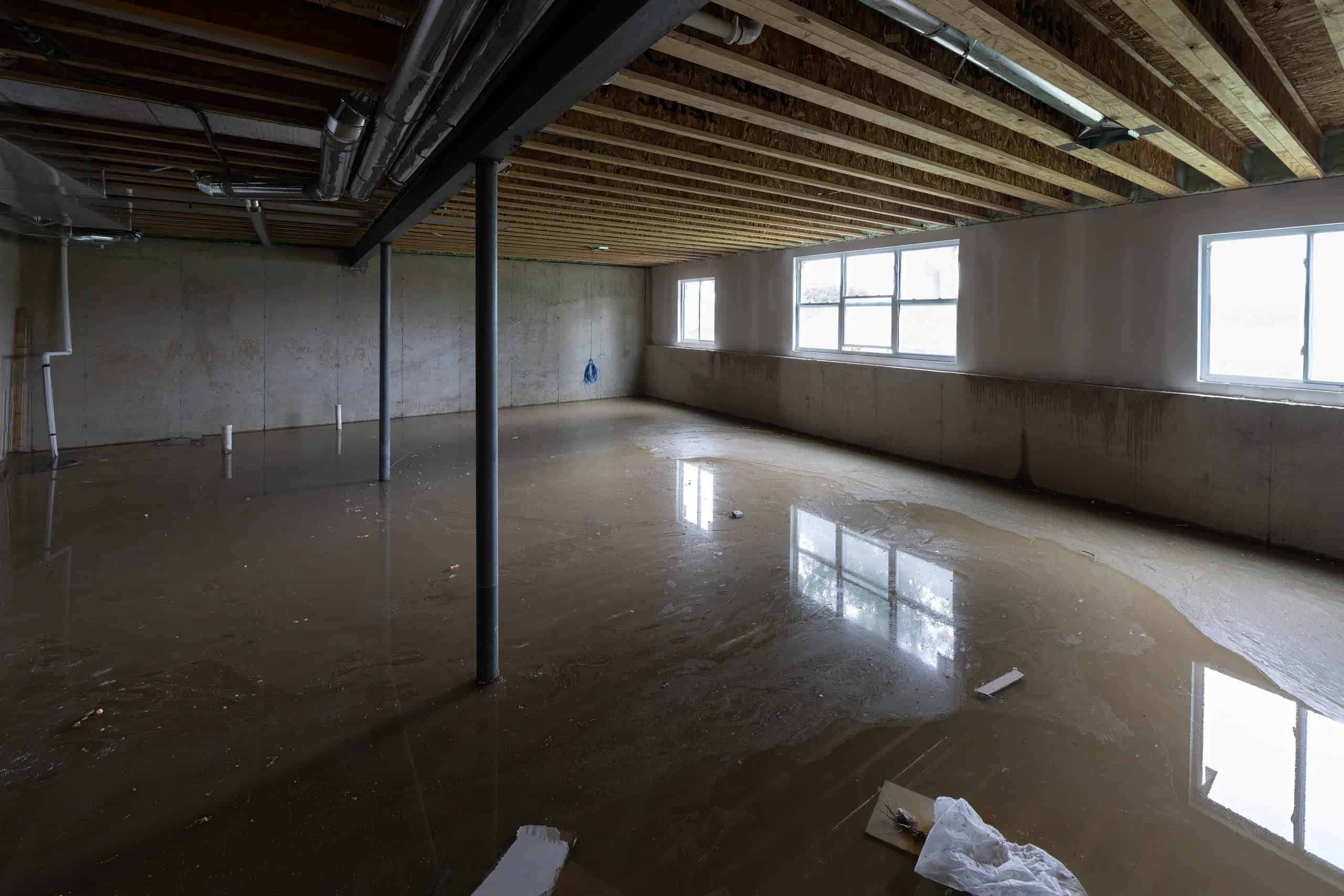
Nassau County doesn’t experience storm damage the way most of the country does. The county sits at the intersection of three distinct water risk systems: Atlantic coastal surge from the south shore, Long Island Sound tidal influence from the north, and an interior groundwater system where the water table in much of western Nassau sits so close to the surface that basements are effectively below it during heavy rain events.
That geography shapes what restoration work looks like here. It’s why Hurricane Sandy damaged or destroyed more than 74,000 structures in Nassau County alone — exceeding FEMA 100-year base flood elevations at every recording station. It’s why Long Island water damage from nor’easters, tropical storms, and summer flash floods is a recurring reality for south shore communities from Freeport to Massapequa to Long Beach, not a once-in-a-generation event.
How Nassau County's Flood Zones Affect Your Restoration Options
If your home sits in a FEMA Zone AE or Zone VE designation — which covers significant portions of Nassau County’s south shore, including communities along the bays in Island Park, Oceanside, and the Long Beach barrier island — the restoration process involves layers that don’t apply in lower-risk areas. Zone VE properties face wave action requirements in addition to base flood elevation standards. Any reconstruction that touches the structure may require permits and elevation documentation that a contractor unfamiliar with Nassau County’s specific flood zone map simply won’t anticipate.
This is the kind of local knowledge that doesn’t come from a franchise training manual. It comes from having worked in Nassau County specifically — knowing which municipalities require what, understanding how the Town of Hempstead handles storm damage permits, and having a working relationship with the local regulatory process rather than learning it on your project’s timeline.
There’s also the insurance dimension. Approximately 60 to 70 percent of storm restoration projects require “supplements” — additional submissions to the insurance carrier for damage that wasn’t visible during the initial assessment. A contractor who isn’t experienced with Nassau County’s specific construction types and flood patterns is more likely to miss items that should be documented. That means costs that should be covered by your claim end up coming out of your pocket instead. We use Xactimate, the same estimating software insurance adjusters use, which keeps our documentation consistent with what your carrier expects and reduces the friction around supplements.
The broader point is that Long Island water damage — particularly in Nassau County’s coastal and near-coastal communities — requires a contractor who treats the local environment as a known variable, not a surprise. The high water table, the pre-1978 construction, the specific FEMA designations, the permit processes: these are things we’ve navigated on thousands of projects across Nassau County, not things we’re figuring out for the first time on yours.
Can You Choose Your Own Storm Damage Contractor, or Does Your Insurance Company Dictate the Choice?
This is one of the most common questions homeowners ask after filing a storm damage claim — and the answer is almost always yes, you can choose your own contractor.
Insurance companies often have preferred vendor programs, and adjusters may suggest or even push those vendors during the claims process. But preferred vendor programs are structured to control costs for the insurer, not to optimize outcomes for you. The majority of policyholders exercise their right to hire independently. You are generally entitled to hire a licensed contractor of your choosing, and your insurance company is required to pay the covered portion of a legitimate, documented claim regardless of who performed the work.
What matters to your carrier is documentation quality, proper licensing, and scope accuracy — not which company name is on the estimate. That’s why using Xactimate matters, why carrying the correct NYS licenses matters, and why having a contractor who understands how to submit supplements correctly matters. A well-documented claim from a fully licensed local contractor will process just as smoothly — often more smoothly — than one from a preferred vendor, because there’s no ambiguity about the scope or the credentials.
If you’re in Nassau County and your insurance company is steering you toward a specific vendor, it’s worth asking that vendor directly: Do you hold a NYS DOL Mold Remediation License? An Asbestos Handler License? A Nassau County General Contractor License? Who specifically will be on my project from start to finish, and will you handle reconstruction or hand it off? The answers will tell you a lot about what your experience is going to look like.
We offer direct insurance billing, handle the claim paperwork on your behalf, and work as your advocate with the adjuster — not as a subcontractor who hands the file back to you once the drying equipment is picked up. For homeowners who need to start work before a claim is fully processed, we also offer financing up to $200,000 at 0% APR through Enhancify, which means the 24 to 48 hour window for preventing mold growth doesn’t get lost to payment logistics.
How to Choose the Right Storm Damage Restoration Company in Nassau County
The decision comes down to a few concrete things: who holds the right licenses for New York State work, who can handle the full project without handing it off mid-stream, and who actually knows Nassau County’s housing stock, flood geography, and permit processes well enough to do the job without learning on your time.
National franchise brands offer name recognition. What they can’t offer is the institutional knowledge that comes from years of restoration work specifically in Nassau County — or the government contracts with Nassau County and the NYS Office of General Services that reflect a verified track record of emergency response performance.
If you’ve experienced storm damage and you’re trying to figure out who to call, Green Island Group is a Nassau County-based contractor with the licenses, the local experience, and the full-service capability to handle your project from the first call through the final repair. We’re available around the clock, and a real person will answer.