Summary:
You started a renovation. Or maybe a home inspection flagged something. Either way, someone said the word “asbestos,” and now you’re not sure what happens next — how long it takes, how disruptive it is, or whether your family needs to be out of the house for a week.
That uncertainty is exactly what this guide is for. We’re going to walk you through the asbestos removal process from start to finish, in plain language, so you can stop guessing and start making informed decisions. By the end, you’ll know what a legitimate abatement job actually looks like — and what red flags to watch for when comparing contractors.
What Is Asbestos Abatement and When Do You Actually Need It?
“Asbestos abatement” is the regulatory term that covers any professional handling of asbestos-containing materials — whether that means full removal, encapsulation, or enclosure. People use “removal” and “abatement” interchangeably, and for most residential projects, that’s fine. What matters is understanding when the law requires you to act.
In New York, any renovation of a building constructed before 1974 requires a mandatory asbestos survey before work begins. That’s not a suggestion — it’s a requirement under NYS Industrial Code Rule 56, one of the most comprehensive asbestos regulations in the country. If the survey finds asbestos-containing materials that will be disturbed during your project, a licensed contractor has to handle them. DIY removal isn’t a gray area in New York. It’s illegal, regardless of how small the area is.
Why Nassau County Homes Are at Higher Risk Than Most
Nassau County has a median home construction year of 1955. Let that sink in for a moment. The majority of homes in Levittown, Hempstead, Westbury, Uniondale, Valley Stream, and Elmont were built during the peak years of asbestos use — when it was a standard material in floor tiles, pipe insulation, ceiling texture, siding, and roofing. Of Nassau County’s 482,044 housing units, 76.2 percent are detached single-family homes, and 82 percent are owner-occupied. That means the cost and responsibility of dealing with asbestos lands squarely on homeowners.
What makes this particularly tricky is that asbestos doesn’t always look like a problem. The original vinyl floor tiles in a Levittown Cape Cod basement can appear perfectly intact. The pipe insulation wrapped around a steam boiler in a Merrick colonial might not be visibly damaged. But the moment you disturb those materials — during a kitchen gut, a bathroom remodel, a furnace replacement, or a basement finish — you’ve created an exposure risk that requires professional handling.
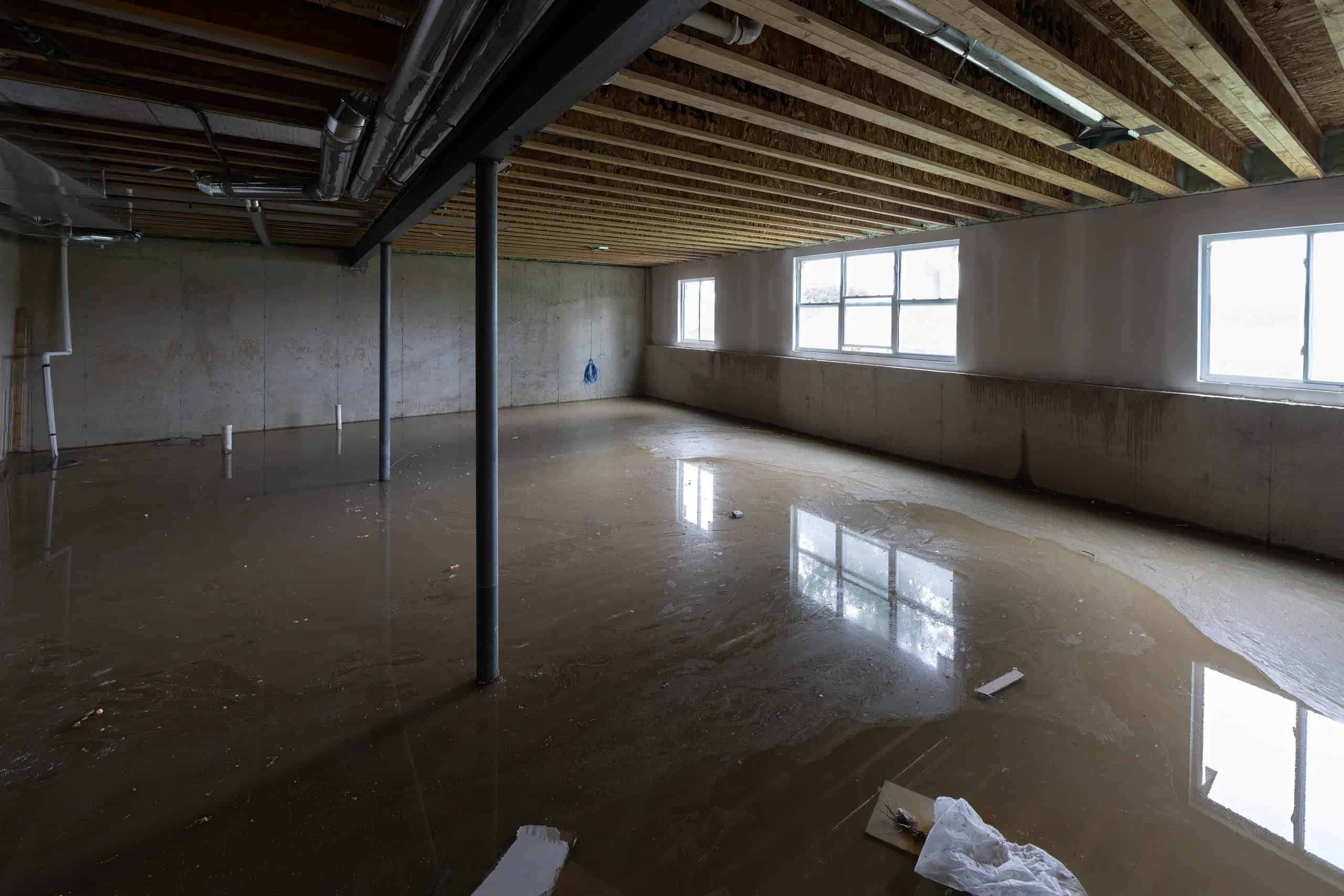
South Shore communities like Long Beach, Oceanside, Freeport, and Massapequa face an additional layer of complexity. Homes in these areas have dealt with coastal flooding and storm damage over the years, particularly since Hurricane Sandy. Water damage restoration projects in pre-1980 homes routinely uncover asbestos during the tear-out phase. It’s not unusual for a homeowner to call us about water damage and discover midway through the project that their floor tiles or pipe insulation need to be addressed before the rebuild can continue.
The regulatory landscape adds another layer. Nassau County’s proximity to New York City means some projects near the border may also trigger NYC DEP notification requirements on top of the standard NYS Code Rule 56 process. A contractor who only knows one set of rules can leave you with a non-compliant project — and the liability that comes with it.
The Asbestos Removal Process, Step by Step
Here’s what a legitimate abatement job actually looks like from the moment we arrive to the moment you get the all-clear.
It starts with assessment and planning. Before any material is touched, we evaluate the site — what type of asbestos-containing material is present, how much of it, and what condition it’s in. Friable asbestos (material that can be crumbled by hand) poses a higher immediate risk than non-friable asbestos, and the approach differs accordingly. We pull permits and file any required notifications with the appropriate agencies.
Next comes containment. The work area is sealed off with polyethylene sheeting and placed under negative air pressure using HEPA-filtered air scrubbers. This setup pulls air inward so fibers can’t migrate to other parts of your home. Warning signs go up. Nobody enters the containment zone without full PPE — Tyvek suits, full-face respirators, and gloves.
Then comes the actual removal. Our workers wet the material before disturbing it to suppress fiber release. Asbestos waste is carefully removed, double-bagged in labeled, leak-tight containers, and staged for disposal. Nothing gets rushed here. The goal is to get the material out without releasing fibers into the air.
Once removal is complete, the area is thoroughly cleaned using HEPA vacuums — not standard shop vacs, which can’t capture particles small enough to be dangerous. After cleanup, an independent industrial hygienist conducts air clearance testing. This is the step that separates a completed job from a certified-safe job. If the air test passes, you get documentation. If it doesn’t, work continues until it does. That clearance certificate matters — for your own peace of mind, for insurance purposes, and for any future buyer of your home.
Finally, asbestos waste is transported by licensed hazardous waste carriers to approved disposal facilities. It can’t go in a standard dumpster. Disposal costs are typically included in our quotes, but it’s worth confirming that upfront.
Asbestos Tile, Siding, and Popcorn Ceiling Removal: What's Different
The core process described above applies to every asbestos project. But the specific material being removed affects how the work is done, how long it takes, and what it costs. The three most common scenarios we see in Nassau County homes are floor tile removal, siding removal, and popcorn ceiling work — and each one has its own nuances worth understanding before you get quotes.
Knowing what you’re dealing with helps you evaluate whether a contractor’s approach makes sense — and whether their quote covers everything it needs to.
Asbestos Tile Removal: The Basement and Kitchen Floor Problem
Asbestos floor tiles were used extensively from the 1920s through the late 1970s. In Nassau County’s post-war housing stock, they’re almost a given in basements and original kitchens. The tiles themselves often aren’t the only issue — the mastic adhesive used to bond them to the subfloor frequently contains asbestos as well, which means removal involves both the tile and the adhesive layer beneath it.
The cost for asbestos tile removal runs $5 to $15 per square foot. A typical 300-square-foot basement comes out to roughly $2,500 to $5,000. A single-room project like this usually takes one to two days from containment setup to clearance testing.
What matters most with tile removal is keeping the material intact during removal. Intact, non-friable tiles that are carefully pried up release far fewer fibers than tiles that are ground, sanded, or broken. A contractor who cuts corners on the wet method or rushes the removal to save time is creating an exposure problem, not solving one. When you’re evaluating quotes, ask specifically how we handle the mastic — it’s a detail that separates experienced contractors from ones who are just going through the motions.
One more thing worth knowing: in New York, you cannot legally dispose of asbestos tile in a regular dumpster or at a standard transfer station. Licensed disposal is a mandatory line item in any legitimate quote. If a quote doesn’t include it, ask where it went — because it has to go somewhere.
Asbestos Siding Removal and Popcorn Ceiling Removal Cost in Nassau County
Cement asbestos board siding — sometimes called transite — was a common exterior material on post-war Long Island homes through the 1970s. It’s durable, which is part of why so much of it is still in place decades later. Asbestos siding removal typically costs $7 to $10 per square foot. For a full home with 2,000 square feet of siding, that puts the total in the range of $14,000 to $20,000, including disposal.
Exterior asbestos work has its own set of challenges. The material has to be carefully removed without breaking it into smaller pieces, which means no power tools that generate dust, no pressure washing, and no shortcuts on the containment setup even though the work is outdoors. Some homeowners ask whether siding can be encapsulated — painted over or covered with new siding — rather than removed. In some cases, encapsulation is a legitimate option, but it depends on the condition of the material and local regulatory requirements. It’s worth having that conversation with us rather than assuming one approach or the other.
For popcorn ceiling removal, the cost picture changes significantly when asbestos is involved. Standard popcorn ceiling removal without asbestos runs $1.25 to $3.50 per square foot. Once asbestos is confirmed, that range jumps to $5 to $20 per square foot depending on the scope and condition of the material. Encapsulation — sealing the ceiling rather than removing it — runs $2 to $6 per square foot and is sometimes appropriate when the ceiling is in good condition and won’t be disturbed by future work. Full removal is typically required if you’re planning to repaint, retexture, or install new lighting that involves cutting into the ceiling.
Popcorn ceilings were common in homes built before 1981, and Nassau County has no shortage of them. If your home was built between the late 1950s and early 1980s and still has the original ceiling texture, it’s worth testing before you do anything that disturbs it — including something as routine as installing a ceiling fan.
What to Do Next If You Think You Have Asbestos in Your Nassau County Home
The most important thing to take away from this guide is simple: don’t disturb it until you know what you’re dealing with. If your home was built before 1980 and you’re planning any renovation that involves floors, ceilings, walls, or mechanical systems, a pre-renovation asbestos survey isn’t just a good idea — it’s required by New York law for buildings constructed before 1974.
If you’ve already discovered something that looks like it could be an asbestos-containing material, stop the work. Don’t sand it, drill through it, or try to remove a small piece to test it yourself. Call a licensed contractor to assess it properly.
Green Island Group has been handling asbestos abatement across Nassau County for over 12 years. We work directly with insurance companies, offer financing up to $200,000 at 0% APR through Enhancify, and respond 24/7 — including when you find something unexpected on a Friday afternoon with a contractor crew standing by. If you have questions about what you’re dealing with or want to understand what a project like yours typically involves, reach out to Green Island Group and we’ll give you a straight answer.