Summary:
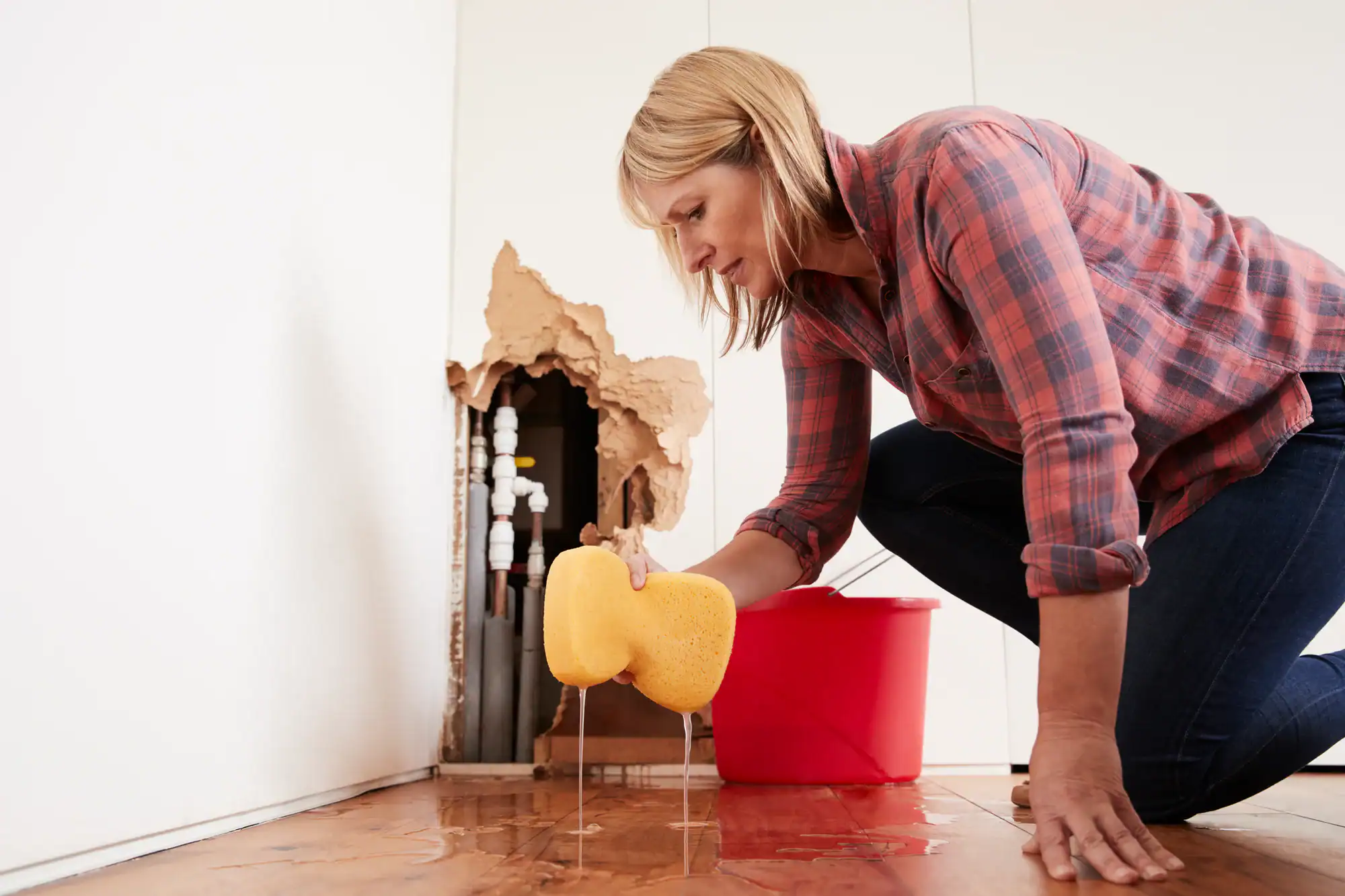
If you’re searching for water damage restoration costs, you’re probably not doing it out of casual curiosity. Something happened — a burst pipe, a flooded basement, water coming through the ceiling — and now you’re trying to figure out what it’s going to cost you before someone takes advantage of that urgency.
That’s a smart instinct. Nassau County homeowners face a specific set of risks that make water damage both more common and more expensive than the national averages you’ll find on most websites. Here’s what you actually need to know — the real numbers, what drives them up, and what you can do to protect yourself.
Water Damage House Repair Costs: What Nassau County Homeowners Are Actually Paying
The national average for water damage restoration sits around $3,814 to $3,864, according to data from Angi and HomeAdvisor. But Nassau County, NY isn’t the national average. Labor costs on Long Island run 20 to 35 percent above the national baseline, and the housing stock here — much of it built between 1945 and 1970 — adds complexity that newer construction simply doesn’t have.
For a contained Category 1 loss, like a burst pipe or appliance failure caught quickly, Nassau County homeowners are typically looking at $2,500 to $8,000. For South Shore communities — Long Beach, Oceanside, Island Park, Freeport, Baldwin, Merrick, Bellmore, Wantagh, Seaford, and Massapequa — a full flood restoration can run $30,000 to $65,000. Those communities sit in FEMA-designated flood zones, many of which were redrawn after Hurricane Sandy pushed the flood line farther inland than it had ever been mapped before.
The range is wide because the variables are wide. How fast you called someone matters enormously. So does the source of the water, which floor it affected, and whether mold has had time to take hold.
Water Damage House Repair Costs by Area: Basements, Kitchens, and Living Spaces
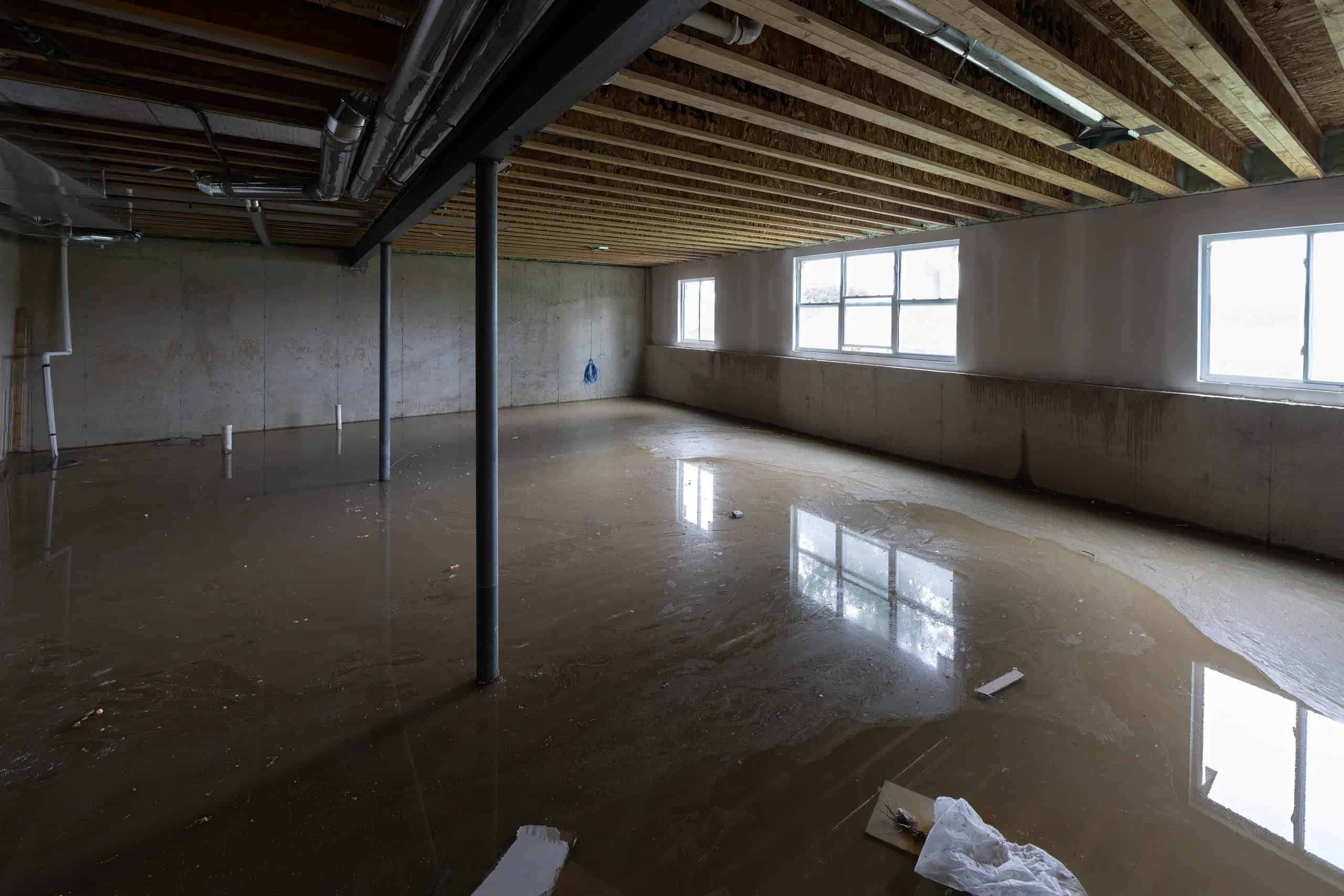
Cost varies significantly depending on where in the home the damage occurred. Basements tend to be the most expensive to restore in Nassau County — not because they’re larger, but because of the county’s unusually shallow water table. In South Shore neighborhoods, the water table can sit just a few feet below grade.
That means a heavy nor’easter or a sump pump failure during a power outage doesn’t just bring surface water in — it can push water up through the foundation. Restoring a flooded basement that’s been sitting for more than 24 hours almost always involves mold prevention treatment on top of extraction and drying, which adds $500 to $6,000 or more depending on how far the mold has spread.
Kitchens and bathrooms fall in the mid-range. A dishwasher line failure or a slow leak under a sink that’s gone unnoticed for weeks can saturate the subfloor and the cabinet bases before anyone realizes it’s happening. By the time you smell something, the damage is already deeper than it looks. Repairs in these spaces typically run $1,500 to $8,000 depending on how far the moisture traveled and whether the cabinetry or flooring needs to be replaced.
Living areas and finished rooms are often the most visible but not always the most expensive — unless the water came from above. A ceiling that’s been dripping water into a finished room for any length of time can mean compromised drywall, saturated insulation, and structural damage to the framing above. Nassau County’s older homes also frequently have plaster ceilings rather than standard drywall, which changes both the repair method and the cost.
At the lower end of the scale — a minor appliance leak caught immediately, limited to a small area, Category 1 clean water — you might be looking at $450 to $1,500. At the higher end, a whole-home flooding event with Category 3 contamination (sewage backup, storm surge) can exceed $50,000. Most Nassau County homeowners dealing with a real water damage event land somewhere between $3,000 and $15,000 when it’s all said and done.
Why Water Damage Costs Run Higher in Nassau County Than the National Average
Three things drive water damage costs higher in Nassau County than what you’ll read on most national cost guides.
The first is the housing stock. The majority of homes here were built in the postwar suburban boom — the 1940s through the 1960s. Galvanized steel pipes from that era corrode from the inside out, often without any visible warning until they fail. Cast iron drain lines deteriorate. Foundation waterproofing systems installed fifty or sixty years ago have long exceeded their design life. When water damage happens in these homes, the restoration scope almost always includes older materials that require more labor-intensive handling.
The second is the water table. Across much of Nassau County — and especially south of Sunrise Highway — the water table is high enough that basement flooding isn’t just a risk during major storms. It’s a recurring seasonal reality. Sump pump failures, ground saturation after heavy rain, and spring snowmelt all create conditions that don’t exist in the same way in higher-elevation markets.
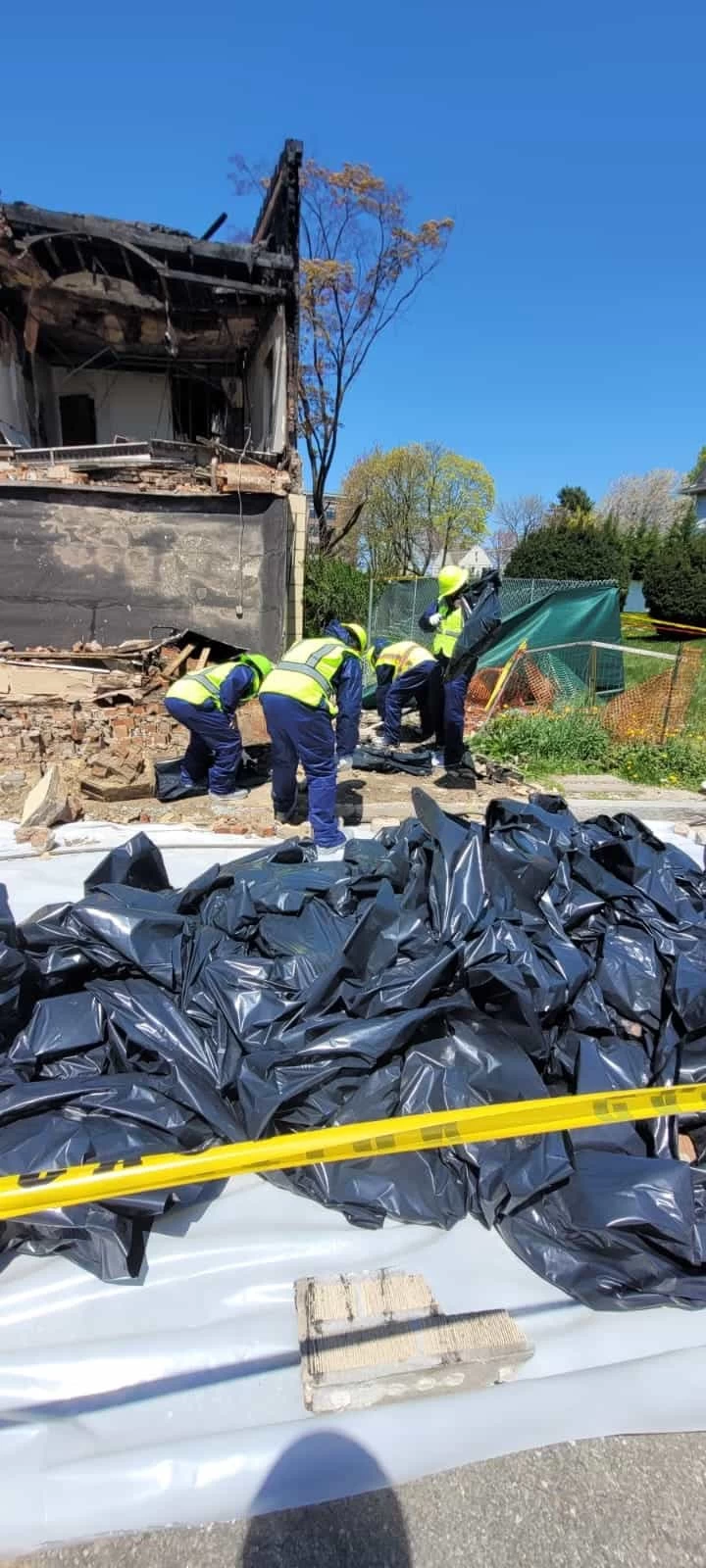
The third is regulatory complexity. New York State requires specific licensing for mold remediation under the NYS Mold Assessment and Remediation Law. In Nassau County’s older housing stock, water damage events frequently turn up asbestos-containing materials — floor tiles, pipe insulation, ceiling texture — that require licensed abatement before restoration can continue. Not every company you call is licensed to handle this. The ones that aren’t will either stop work mid-job or subcontract it to someone else, which adds time, cost, and coordination risk.
We’re licensed for both mold remediation and asbestos abatement in New York State, which means we can handle what’s actually in these homes — not just the surface damage.
Average Insurance Payout for Water Damage: What to Expect From Your Claim
The average insurance payout for a water damage claim runs between $12,514 and $13,954, according to data from the Insurance Information Institute and HouseCashin. But that figure comes with a lot of context that the average homeowner doesn’t know going in.
Water damage and freezing account for roughly 24 to 27 percent of all homeowner insurance claims nationally — it’s the most common type of property loss after wind and hail. What’s covered depends entirely on how the damage happened, and the line between “covered” and “not covered” is where a lot of Nassau County homeowners get surprised.
What Homeowners Insurance Covers — and What It Doesn't
Standard homeowners insurance covers water damage that is sudden and accidental — a pipe that bursts, an appliance that fails, a roof that’s breached by a storm. What it does not cover is flooding from external sources: storm surge, heavy rain entering through the ground, or a rising water table pushing up through your foundation. That type of damage requires a separate flood insurance policy, either through the National Flood Insurance Program (NFIP) or a private insurer.
For Nassau County homeowners — particularly those in South Shore communities that were remapped into flood zones after Hurricane Sandy — this distinction is critical. If your home is now in a FEMA-designated flood zone and you don’t have a separate flood policy, a storm surge event that fills your basement is not covered by your homeowners policy. Full stop.
Gradual damage is also excluded. If a slow leak under your sink has been dripping for months and you didn’t catch it, your insurer will likely argue that the damage was the result of neglect rather than a sudden event. The same applies to maintenance failures — a sump pump that wasn’t serviced and eventually failed during a storm. Whether those arguments hold up depends on documentation and how the claim is presented.
This is where the adjuster dynamic matters. Insurance adjusters work for the insurance company, not for you. Their job is to evaluate the claim accurately — but “accurately” is often a matter of interpretation, and initial offers are frequently conservative. There are documented cases of adjusters offering settlements that were less than half the legitimate claim value. One example: an adjuster offered $6,200 on a claim that was properly documented and negotiated to $14,800. The homeowner who accepted the first offer left more than $8,000 on the table.
We handle direct insurance billing and work with adjusters on your behalf. That means we document the damage with thermal imaging and moisture readings, prepare estimates using the same Xactimate software adjusters use, and communicate directly with your insurer throughout the process. You don’t pay upfront, and you don’t have to fight the claim alone.
Water Damage Ceiling and Floor Repair Costs in Nassau County
Ceilings and floors are the two areas where hidden damage most often gets missed — and where a rushed or incomplete restoration comes back to haunt homeowners months later.
For ceiling water damage repair, costs range from $300 to $800 for minor damage — a small stain, limited to one area, with no structural involvement. Moderate damage, where the drywall or plaster has been compromised and insulation above may be saturated, runs $800 to $2,500. Severe ceiling damage involving structural framing, widespread insulation replacement, or multiple affected areas can exceed $10,000. In Nassau County’s older homes, plaster ceilings are common, and plaster repair requires different skills and materials than standard drywall work — which affects both the timeline and the cost.
The most important thing to understand about ceiling damage is what you can’t see. Water that enters through a ceiling stain has almost always traveled from somewhere else — a pipe above, a roof breach, an HVAC condensate line. The visible stain is where the water stopped, not where it started. Treating only the stain without tracing the source and checking the cavity above for moisture is how mold problems develop behind walls and in insulation, showing up six months later when the air quality in the room starts to change.
For floor water damage repair, the cost depends heavily on the flooring type. Laminate and carpet absorb water quickly and typically need to be replaced rather than dried in place — budget $200 to $550 for minor repairs on the low end, with full replacement costs running higher depending on material and square footage. Hardwood flooring — which is extremely common in Nassau County’s postwar homes — runs $8 to $25 per square foot to replace. Subfloor repairs, which are frequently necessary when water has penetrated beneath the finished floor, add another $500 to $1,000 or more depending on the extent of the damage.
Tile is the most water-resistant flooring type, but it’s not immune. Water that gets beneath tile through grout lines or a compromised membrane can saturate the subfloor without any visible surface damage. Thermal imaging is the only reliable way to detect moisture beneath a tile floor without pulling it up — which is why we use it as a standard part of every assessment, not an optional add-on.
Getting a Fair Price on Water Damage Restoration in Nassau County, NY
The most expensive mistake Nassau County homeowners make isn’t hiring the wrong company — it’s waiting too long to hire anyone. Mold begins forming within 24 to 48 hours of water intrusion. A $3,000 extraction job that sits for three days can become a $12,000 mold and water remediation. Speed is the single most effective cost-control decision you can make.
The second most expensive mistake is accepting the first number you’re given — whether that’s a contractor’s quote or an insurance adjuster’s settlement offer. Know what the work actually involves, ask for a written scope before anything starts, and make sure whoever you hire is licensed in New York State for mold and, if your home is older, asbestos.
We’ve been working in Nassau County for over 12 years. We know the housing stock, we know the flood zones, and we know what water damage in a 1960s South Shore split-level actually looks like versus what it looks like in a newer North Shore colonial. If you’re trying to figure out whether a quote is fair, whether your claim is being handled right, or whether the job that was done was actually done completely — Green Island Group is worth a call.