Summary:
You noticed water where it shouldn’t be. Maybe it’s a wet basement, a stain spreading across the ceiling, or a pipe that let go overnight. Your next thought is probably: does insurance cover this?
The honest answer is: it depends — and the details matter more than most people expect. Standard homeowners insurance covers some water damage situations and excludes others, and the line between the two isn’t always obvious. For Nassau County homeowners dealing with aging homes, coastal conditions, and flood zone complications, the picture gets even more nuanced. Here’s what you actually need to know.
Does Homeowners Insurance Cover Water Leaks?
The short answer is yes — but only under specific circumstances. Homeowners insurance typically covers water damage that is sudden and accidental. A pipe that bursts overnight, a washing machine hose that fails without warning, a roof that takes storm damage and lets water in — these are the kinds of events a standard HO-3 or HO-5 policy is designed to handle.
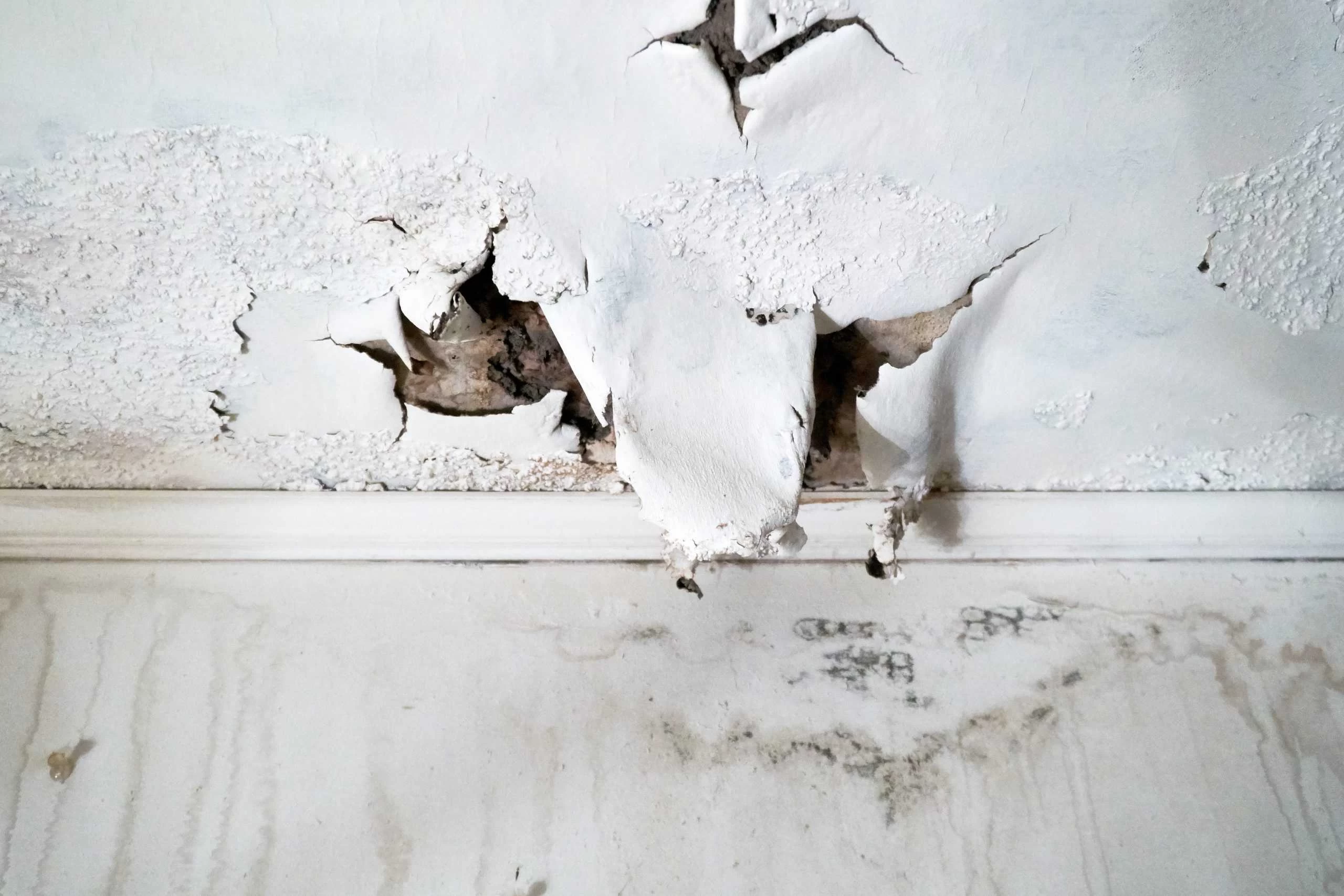
What it doesn’t cover is gradual damage. If a slow drip under your kitchen sink has been quietly rotting the cabinet floor for months, that’s considered a maintenance issue. Insurers draw a hard line there, and some carriers now define “gradual” as anything that’s been going on for more than two weeks — which is a much shorter window than most homeowners assume.
What Does Home Insurance Cover for Leaks — and What Gets Excluded?
A standard homeowners policy will generally cover water damage from a burst pipe, a sudden appliance failure, an overflowing bathtub, or rain that enters through a roof damaged by a covered storm event. Those are the cleaner-cut cases. The claim gets filed, an adjuster comes out, and if the documentation is solid, the process moves forward.
The exclusions are where things get complicated. Flooding from an external source — meaning water that rises from the ground, comes in through a foundation, or overtops from a storm drain — is not covered by homeowners insurance at all. That requires a separate flood insurance policy through the National Flood Insurance Program (NFIP). Sewer backup and sump pump failure are also excluded from most standard policies unless you’ve added a specific endorsement.
Mold is another area where people get surprised. Even if the original water damage is covered, many insurers cap mold remediation benefits at $5,000 to $10,000 unless you purchased a mold rider separately. In a humid coastal environment like Nassau County, where mold can establish itself within 24 to 48 hours of water intrusion, that cap can run out fast.
One thing worth knowing: the way damage is documented matters as much as the damage itself. Insurance companies look for evidence that the damage was sudden, that you acted quickly to stop it from spreading, and that the affected area was reasonably maintained beforehand. If that documentation is incomplete or inconsistent, even a legitimate claim can get pushed back.
Is a Foundation Leak Covered by Insurance?
This is one of the most common questions we hear, and unfortunately the answer is usually no — at least not under a standard homeowners policy. Foundation leaks are almost always classified by insurers as a structural or maintenance issue rather than a sudden event. Water seeping through foundation walls due to soil pressure, a high water table, or years of gradual deterioration falls squarely into excluded territory.
There are narrow exceptions. If a foundation crack happened suddenly — say, as a direct result of a specific storm event — and you can document that timeline clearly, some carriers will consider it. But that’s the exception, not the rule, and it requires strong documentation to support.
This matters a great deal in Nassau County, where the south shore’s sandy, porous soil means the water table is naturally high. In communities like Island Park, Oceanside, and the low-lying parts of Freeport and Merrick, the water table can rise significantly during heavy rain, pushing moisture through basement walls and floor drains even in structurally sound homes. That kind of intrusion is groundwater infiltration — and standard homeowners policies don’t cover it.
If you’re in a FEMA-designated flood zone, which includes large portions of Nassau County’s south shore after the post-Sandy map revisions, your NFIP flood policy may provide some coverage for this type of event. But NFIP policies have their own limits and exclusions, and they don’t cover everything homeowners assume they do either. Understanding which policy applies to which type of water damage is genuinely confusing — and getting it wrong can mean filing under the wrong policy and having both deny the claim.
Does Insurance Cover Basement Leaks in Nassau County Homes?
Basement coverage is its own category, and it trips up a lot of Nassau County homeowners. The general rule: if the water came from inside your home — a burst pipe, a failed water heater, an overflowing appliance — your homeowners insurance likely covers the resulting damage. If the water came from outside — groundwater, storm surge, a backed-up municipal drain — you’re typically looking at a gap in coverage.
Nassau County’s housing stock makes this especially relevant. A large portion of the county’s homes were built in the post-World War II era, from Levittown’s mid-century construction to the older neighborhoods in Hempstead, Valley Stream, and Elmont. These homes have aging plumbing systems that are more prone to sudden failures — which is actually the scenario most likely to be covered. But they also have older foundations that are more susceptible to the gradual seepage that insurers exclude.
What Nassau County Homeowners Near the South Shore Should Know About Flood vs. Water Damage Coverage
If you live in Long Beach, Island Park, Massapequa, Wantagh, or any of the south shore communities that were reshaped by Hurricane Sandy in 2012, your coverage situation is more layered than the average homeowner’s. After Sandy, FEMA updated Nassau County’s flood maps and reclassified many previously low-risk properties into high-risk zones. That change forced a lot of homeowners to add NFIP flood insurance — often without a clear explanation of how it interacts with their existing homeowners policy.
Here’s the practical reality: your homeowners policy and your NFIP policy cover different things, and the line between them isn’t always intuitive. Homeowners insurance responds to water damage from internal sources and storm-related roof damage. NFIP flood insurance responds to flooding from external water sources — storm surge, overflowing waterways, and surface flooding. A backed-up sewer or a failed sump pump during a storm? Neither policy automatically covers that without a specific endorsement.
In Long Beach specifically, where Reynolds Channel sits to the north and the Atlantic Ocean to the south, back-bay flooding and ocean-side surge behave differently and can affect the same property in different ways during a single storm event. We’ve worked on properties there where the damage involved multiple water sources — which means the claim had to be carefully documented and split between policies. That kind of situation requires someone who knows what they’re looking at, not just a general contractor with a dehumidifier.
What to Do When Insurance Denies Your Water Damage Claim
A denial letter is not necessarily the end of the road, but it does require a fast and organized response. The most common reasons insurers deny water damage claims in Nassau County are: the damage is classified as gradual rather than sudden, the cause is excluded under the policy (flooding, seepage, sewer backup), or the documentation submitted with the claim was insufficient to establish the timeline and scope of damage.
If your claim was denied for gradual damage, the first question to ask is whether that classification is accurate. Some insurers apply that label broadly, even to situations where the damage was genuinely sudden but wasn’t discovered immediately — a hidden pipe leak behind a wall, for example. If you can establish through moisture readings, professional inspection reports, and photographic evidence that the damage occurred within the policy’s covered window, a denial can sometimes be challenged.
Documentation is where most homeowners lose ground. Insurance adjusters work from evidence, and if the evidence package submitted with the initial claim was thin — a few photos and a verbal description — there’s not much for them to work with. A professional restoration assessment creates a different kind of record: thermal imaging results, moisture meter readings at multiple points, a written scope of work, and a clear timeline. That’s the kind of documentation that gives adjusters what they need to approve a claim, and it’s also what supports an appeal if the initial decision goes the wrong way.
One more thing worth mentioning for Nassau County homeowners specifically: older homes that undergo water damage restoration sometimes reveal asbestos-containing materials or lead paint during the work — particularly in homes built before 1978, which describes a significant portion of the county’s housing stock. When that happens, the restoration has to pause until those materials are handled properly, which affects both the timeline and the cost. We hold NYS DOL certifications for both asbestos and mold remediation, as well as USEPA lead certifications, so we can manage that in-house without stopping the job or bringing in a separate contractor. That matters when you’re trying to document an active claim and minimize the window during which your home is exposed.
Getting the Right Help After a Water Leak in Nassau County
Water damage insurance is genuinely complicated, and Nassau County’s combination of aging homes, coastal geography, and post-Sandy flood zone changes makes it more complicated than most markets. The coverage question — does insurance cover this? — almost always has a longer answer than homeowners expect, and the outcome often depends on how quickly you act and how well the damage is documented.
What we’ve seen over 12 years and more than 5,000 restoration projects is that the homeowners who fare best are the ones who start mitigation immediately, document everything thoroughly, and work with someone who understands both the restoration process and the claims process. Waiting for insurance approval before starting work can actually make things worse — both for the property and for the claim itself.
If you’re dealing with a water leak right now, or you’ve already received a denial and aren’t sure what to do next, we’re here to help. We work directly with insurance adjusters, handle the documentation, and offer financing up to $200,000 at 0% APR for situations where coverage falls short. Reach out and let’s figure out the right path forward for your property.