Summary:
You notice something — a musty smell in the basement, a soft spot in the floor near the bathroom, a water stain on the ceiling that keeps coming back. Nothing dramatic. Nothing you can point to and say “that’s definitely a problem.” But something’s off, and you know it.
That in-between stage — where you suspect damage but can’t confirm it — is exactly where Nassau County homeowners get stuck. And it’s where the most costly mistakes happen, because waiting is rarely neutral. Water that isn’t found keeps moving. Here’s what professional water mitigation actually involves, how hidden damage gets detected, and what it means for your insurance coverage.
What Water Mitigation Actually Involves
Water mitigation is the phase that happens before any repairs or rebuilding. The goal is straightforward: stop the damage from spreading. That means extracting standing water, drying out structural materials, controlling humidity, and documenting everything before the restoration work begins.
It’s a distinct process from water restoration, and the order matters. You can’t properly restore a floor or a wall that still holds moisture inside it. Skipping or rushing through mitigation is the most common reason homeowners end up with mold problems weeks after a job is supposedly finished.
We use industrial-grade extractors, commercial dehumidifiers, and air movers that generate significantly more airflow and moisture removal than anything available at a hardware store. But the equipment is only as useful as the assessment that guides it — and that’s where detection methods make all the difference.
How Professionals Find Hidden Water Damage Behind Walls and Under Floors
The part of water damage that causes the most long-term harm is usually the part you can’t see. Water moves through building materials quickly — into wall cavities, under subfloor systems, into insulation batts, behind baseboards — and it does all of this within hours of an event. By the time visible symptoms show up, like staining, warping, or a persistent odor, the hidden damage has often been developing for days.
Our detection starts with thermal imaging. A thermal camera reads temperature differentials across surfaces — and wet materials hold temperature differently than dry ones. That contrast shows up on the camera as a visible anomaly, flagging areas of suspect moisture without cutting a single piece of drywall. It’s not a perfect tool on its own, which is why the next step matters.
Moisture meters confirm what the thermal camera identifies. A technician probes the flagged areas to get an actual moisture content reading — a number, not a guess. This two-step process, thermal imaging followed by moisture meter confirmation, consistently identifies around 30% more affected area than a visual inspection alone. That’s not a minor difference. That’s the difference between drying a home completely and leaving behind the exact conditions mold needs to establish.
In Nassau County’s older housing stock — much of it built between 1945 and 1970 — this matters even more. Cape Cods, split-levels, and ranch homes with finished basements often have original plumbing that’s now 50 to 70 years old. Galvanized steel pipes corrode from the inside and develop pinhole leaks that go undetected for months. The water doesn’t pour out; it seeps slowly into the surrounding framing and insulation, invisible until the damage is significant.
When thermal imaging flags a wall cavity that a moisture meter confirms is wet, we can use a borescope to inspect inside without opening the entire wall. It’s a small camera on a flexible cable that threads through a drilled hole and gives a direct view of what’s happening inside the structure. For a homeowner who wants to understand what they’re actually dealing with before authorizing a full scope of work, this kind of evidence is invaluable.
Where Hidden Water Damage Accumulates Most Often in Nassau County Homes
Knowing where to look is half the job. In Nassau County specifically, certain locations come up again and again — and they’re not always the obvious ones.
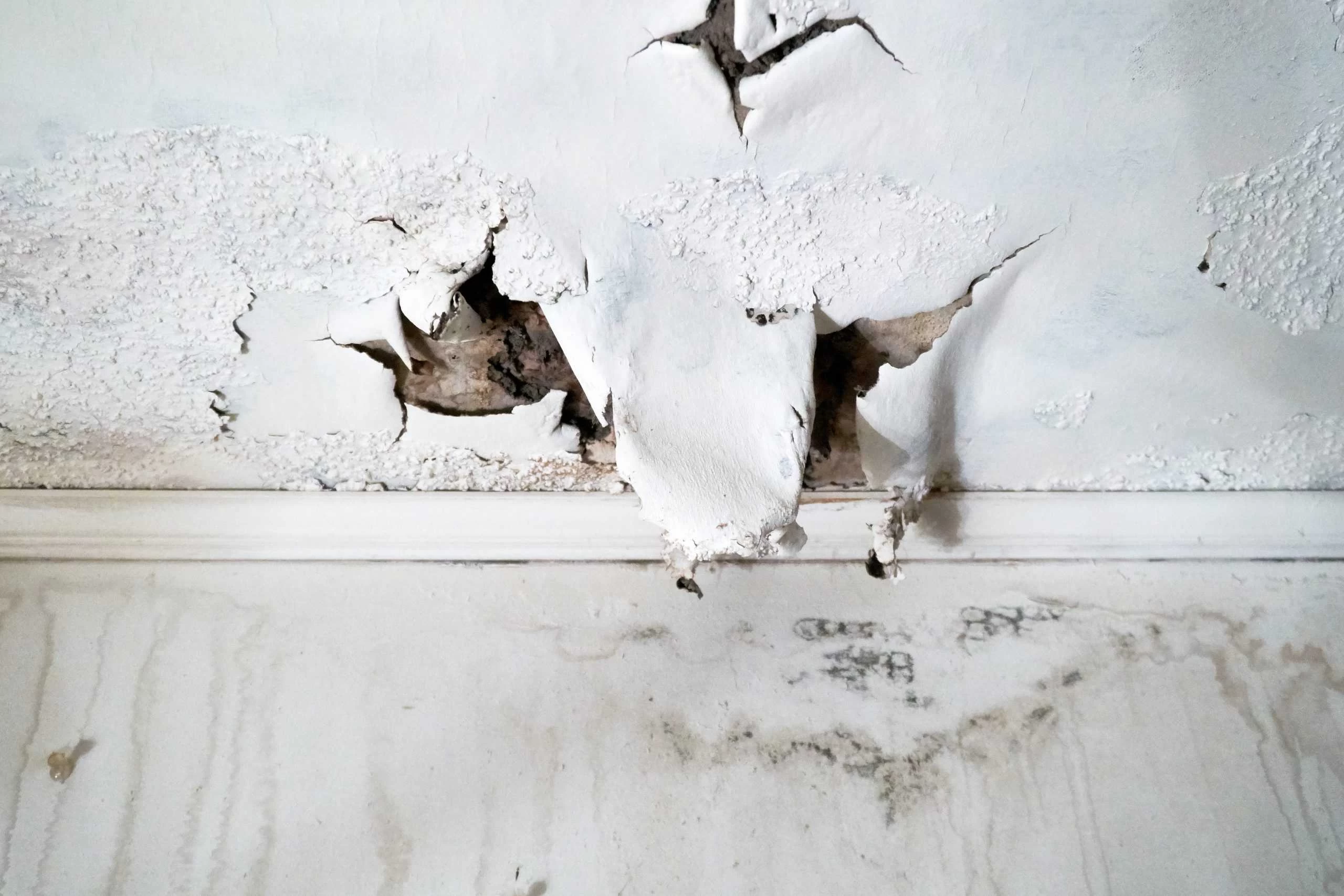
Basement walls are the most common site of hidden moisture intrusion in this area. Nassau County’s South Shore communities sit on naturally high water tables, particularly in areas near the Great South Bay. In neighborhoods like Massapequa, Merrick, and Freeport, hydrostatic pressure — the constant push of groundwater against foundation walls — creates slow, ongoing moisture intrusion that doesn’t look like a flood. It looks like efflorescence on the block wall, a slightly damp smell, or paint that keeps peeling. Homeowners often live with these signs for years before understanding what’s actually happening.
Bathroom walls are another consistent problem area, especially in homes where original tile work hasn’t been updated. Grout fails, caulk shrinks, and water finds its way behind the tile and into the wall cavity. It’s slow enough that you don’t notice it day to day, but over months it saturates the framing and creates conditions for mold that won’t be visible until the wall is opened.
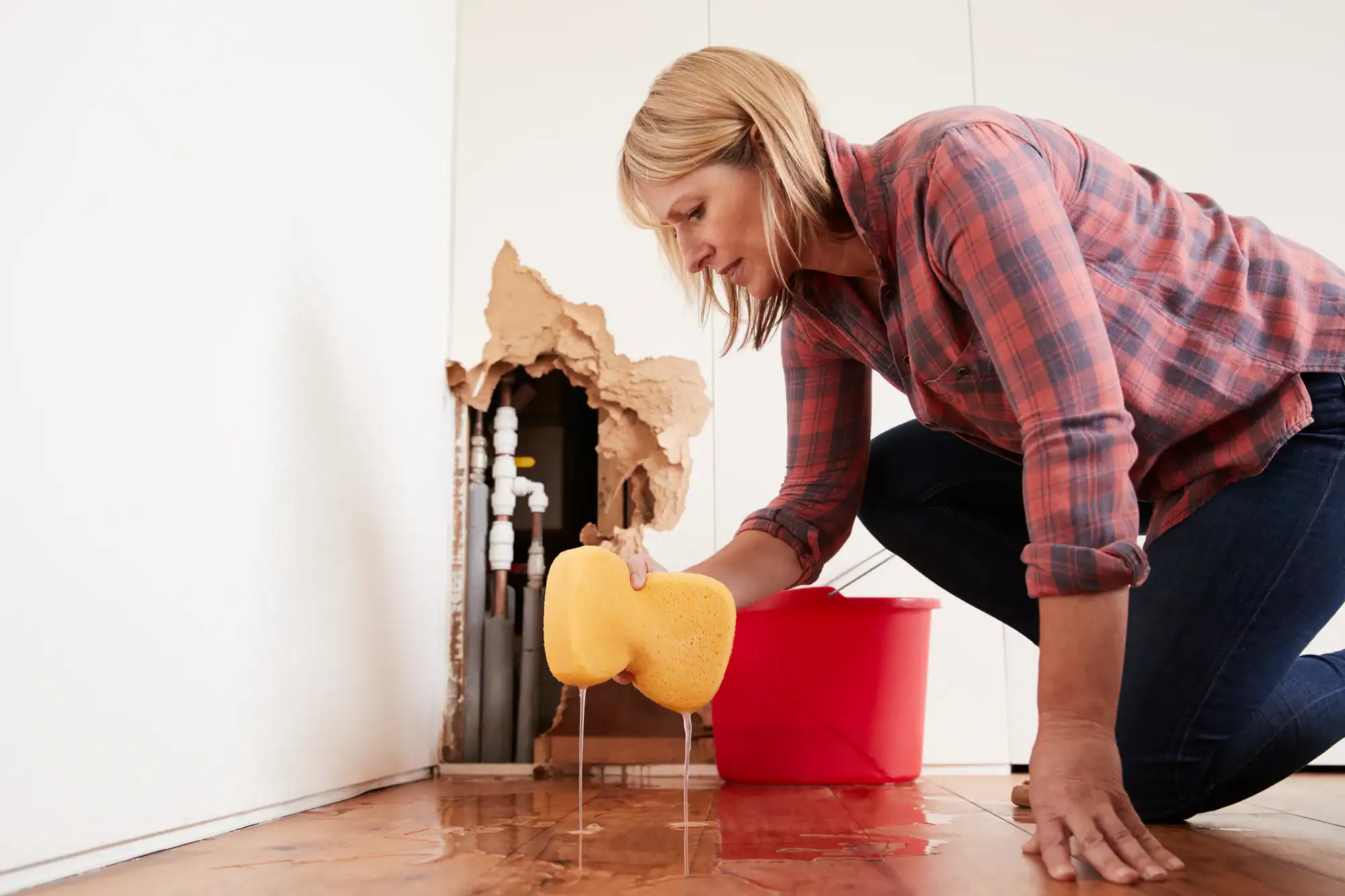
Under kitchen and bathroom flooring is where some of the most expensive hidden damage accumulates. A slow leak under a dishwasher or a supply line that weeps slightly behind a vanity can saturate the subfloor over months without any surface sign. By the time the floor feels soft underfoot, the subfloor and potentially the framing below it are already compromised.
Roof and attic spaces, particularly in older homes with inadequate flashing or aging shingle systems, allow wind-driven rain to enter during nor’easters — a weather event Nassau County deals with every year. That moisture works its way down through insulation and ceiling assemblies before it ever shows up as a stain on the ceiling below.
The common thread across all of these locations is that the damage is happening in spaces you don’t regularly see. Professional detection methods exist specifically to reach these areas without tearing apart a home to find them.
Insurance Coverage for Hidden Water Damage
Insurance coverage for water damage is one of the most misunderstood topics in home ownership, and the stakes are high enough that it’s worth understanding before you’re in the middle of a claim.
The core principle in most standard homeowners policies is this: sudden and accidental damage from an internal source is covered. Gradual damage, flooding from external sources, and long-term seepage typically are not. Where it gets complicated is when hidden damage is discovered — damage that was sudden in origin but wasn’t found until much later.
How that damage is documented and presented to an adjuster makes a significant difference in how the claim is handled. We document every step of the mitigation process in a format that adjusters can work with directly — moisture readings with timestamps, thermal images of affected areas, a clear scope of work tied to what the detection process revealed. That documentation doesn’t just support your claim; it protects you if the scope expands as hidden damage is uncovered, because the evidence trail shows exactly what was found and when.
Will Insurance Cover Hidden Water Damage Found During Mitigation?
This is the question we hear most often from Nassau County homeowners, and the honest answer is: it depends on the origin of the damage and how well it’s documented.
If a pipe failed suddenly — a joint gave way, a supply line burst, a fitting cracked — and the resulting water traveled into wall cavities or under floors without being immediately visible, most standard policies will cover that damage even if it wasn’t discovered right away. The key is establishing that the damage originated from a sudden, accidental event rather than a slow leak that developed over time.
Some policies now include a 14-day rule: if the damage was occurring for more than 14 days before discovery, coverage may be denied on the basis that the homeowner should have noticed sooner. This is where professional documentation becomes critical. Moisture meter readings, thermal imaging captures, and a detailed written assessment of the damage pattern can establish the scope and, in many cases, support the argument that the damage was not visible or detectable without professional equipment.
Where claims get complicated in Nassau County specifically is the distinction between water intrusion from plumbing and water intrusion from the ground or from storm events. South Shore homeowners in flood-prone communities like Long Beach, Oceanside, or Freeport often have damage that involves both — a storm event that raises the water table and drives moisture through foundation walls, combined with internal plumbing stress from the same event. Standard homeowners insurance handles these two sources very differently, and an adjuster will work to separate them.
Foundation Water Damage Coverage on Long Island: What Homeowners Need to Know
Foundation water damage sits in a complicated part of most insurance policies, and Long Island’s coastal geography makes it more relevant here than in most parts of the country.
When foundation damage results from a sudden plumbing failure — a pipe in the slab leaks, a supply line in the crawl space fails — that damage is generally covered under a standard HO-3 policy as sudden and accidental. The foundation itself may or may not be covered depending on the policy language, but the resulting water damage to surrounding materials usually is.
What’s almost universally excluded is foundation damage from external water sources. Flooding from storm surge, hydrostatic pressure from a rising water table, and gradual seepage through foundation walls are not covered by standard homeowners insurance. For Nassau County properties in FEMA-designated flood zones — and the county’s own Office of Emergency Management estimates that over 300,000 county residents live in flood zones — a separate flood insurance policy through the National Flood Insurance Program or a private carrier is the only way to cover these scenarios.
This matters practically because Nassau County’s geology creates conditions that blur the line between the two. In low-lying South Shore communities, a heavy rain event doesn’t just flood streets — it raises the water table, which pushes against foundation walls from below and from the sides simultaneously. That pressure finds the path of least resistance, whether that’s a crack in the block, a failed waterproofing membrane, or an aging floor drain. The resulting moisture in the basement looks the same regardless of whether it came from the ground or from a pipe, but its insurance treatment is entirely different.
Before any restoration work begins on a foundation moisture issue, a thorough assessment should document the likely source, the extent of affected materials, and any secondary concerns — including, in older Nassau County homes, the possibility that water damage has exposed asbestos-containing materials in floor tiles, pipe insulation, or joint compounds. Homes built before 1980 have a meaningful chance of containing these materials, and disturbing them without proper abatement creates a separate liability. We hold in-house asbestos abatement capability, which means that if detection reveals that kind of exposure, the project doesn’t stop while a second contractor is sourced. The work continues under one roof.
Getting Water Mitigation Right the First Time in Nassau County
The most expensive water damage is the kind that gets missed. Not the burst pipe you find immediately — the slow intrusion behind the bathroom wall, the subfloor that’s been wet for months, the foundation seepage that reads as “just a little damp” until the mold shows up.
Professional water mitigation done thoroughly — with thermal imaging, moisture meter confirmation, and complete structural drying verified by calibrated readings — closes the gaps that incomplete work leaves open. And in Nassau County’s housing stock, where aging infrastructure and coastal conditions create circumstances that most restoration companies aren’t fully equipped to handle, that thoroughness is the difference between a job that holds and one that comes back.
If you’re dealing with visible damage, a suspicious smell, or a home inspection that flagged moisture you can’t locate, we serve Nassau County with 24/7 emergency response, direct insurance billing, and the detection capabilities to find what other assessments miss. Reach out — the sooner the assessment happens, the more options you have.