Summary:
You found water in your home. Maybe it’s a burst pipe, a backed-up sump pump, or a slow leak that finally made itself known behind a wall. Whatever the cause, the first call you make sets everything in motion — and the first question you’ll probably hear is whether you need water mitigation or water remediation.
Most people use those terms interchangeably. They’re not the same thing. Understanding the difference tells you what’s actually happening to your home, what comes next, and whether the company you’re calling can handle both — or just one. Here’s what you need to know before that call.
What Is Water Mitigation and How Does It Differ from Remediation?
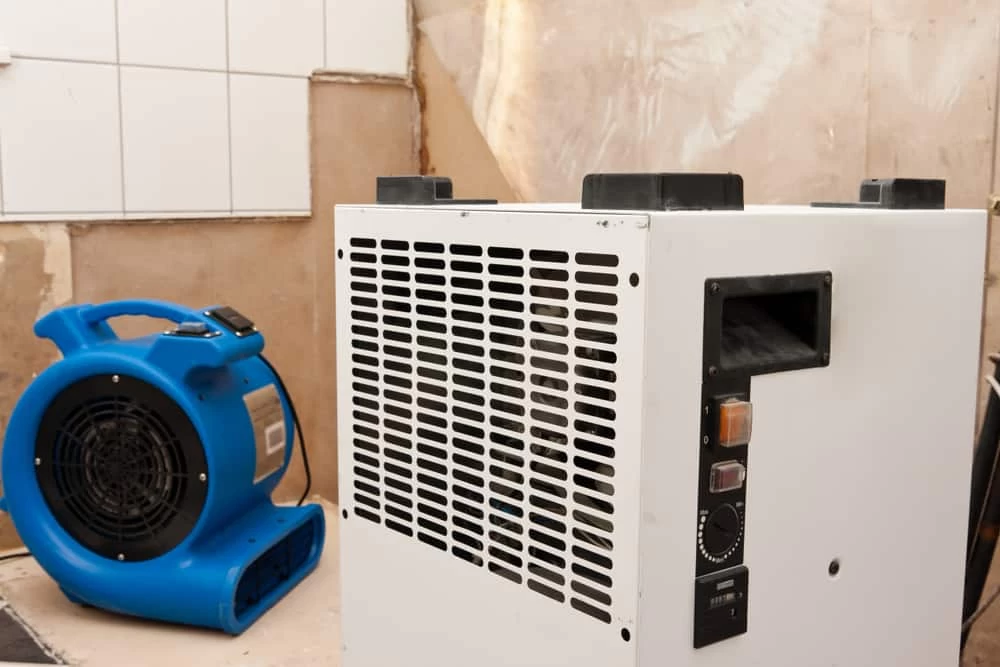
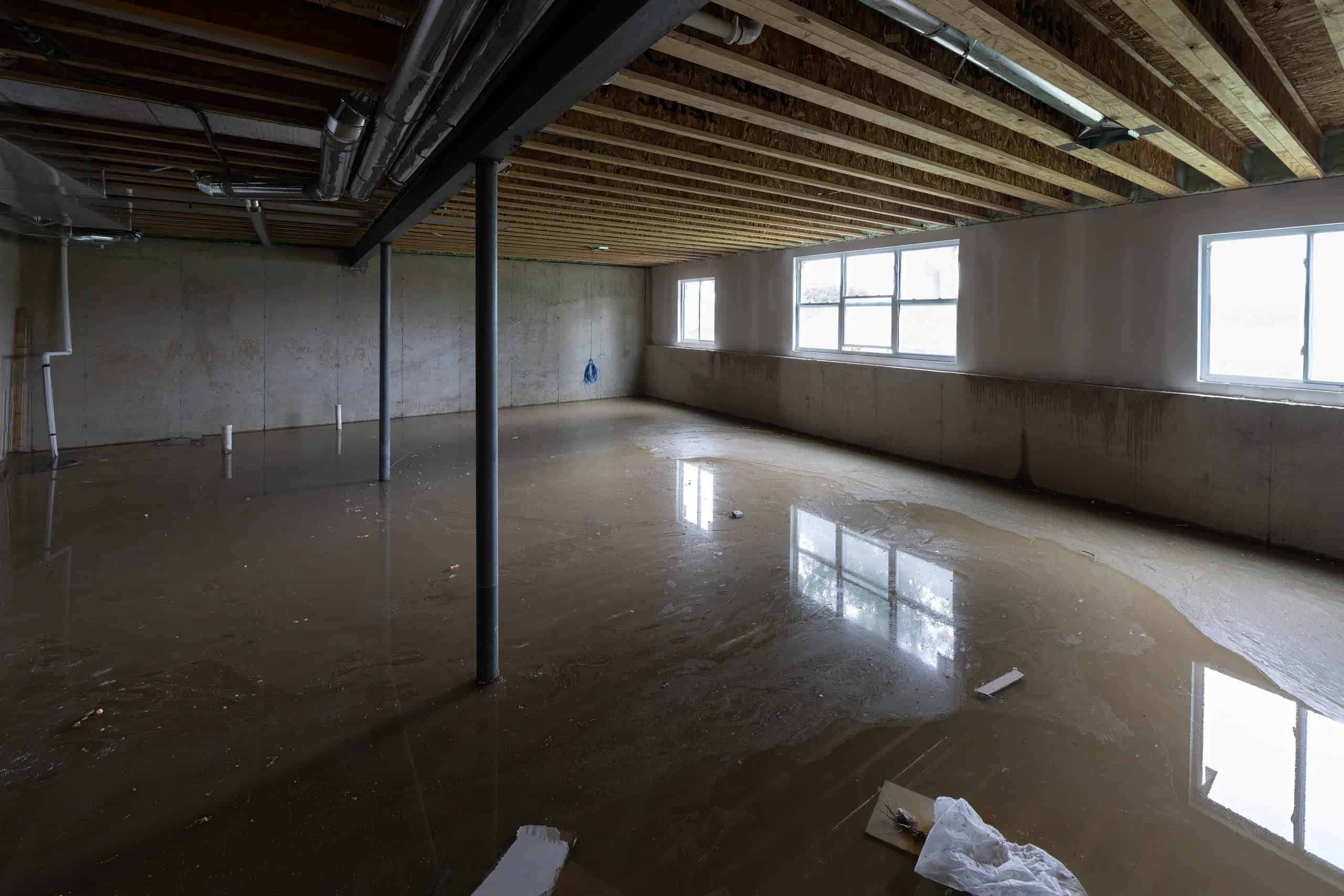
Water mitigation is the emergency phase. It’s everything that happens in the first hours after water enters your home — stopping the damage from getting worse. That means extracting standing water, mapping where moisture has traveled, setting up commercial drying equipment, and applying antimicrobial treatment to head off mold before it starts. The goal is stabilization.
Water remediation — sometimes called restoration — is what comes after. Once the structure is dry and documented, remediation covers repairing or replacing what the water damaged: drywall, flooring, carpet, structural materials, and anything else that needs to be brought back to its pre-damage condition.
Think of it as two chapters in the same story. Mitigation stops the bleeding. Remediation heals the wound. Both matter, and they have to happen in that order.
How to Find a Water Leak Inside a Wall Before It Gets Worse
Hidden leaks are one of the most frustrating parts of water damage in Nassau County homes. The majority of the county’s housing stock was built between the 1950s and 1970s, and those original plumbing systems — galvanized steel supply lines, cast iron drain pipes — are well past their designed lifespan. They don’t fail with a dramatic burst. They fail slowly, behind walls, under floors, in spaces you rarely look at.
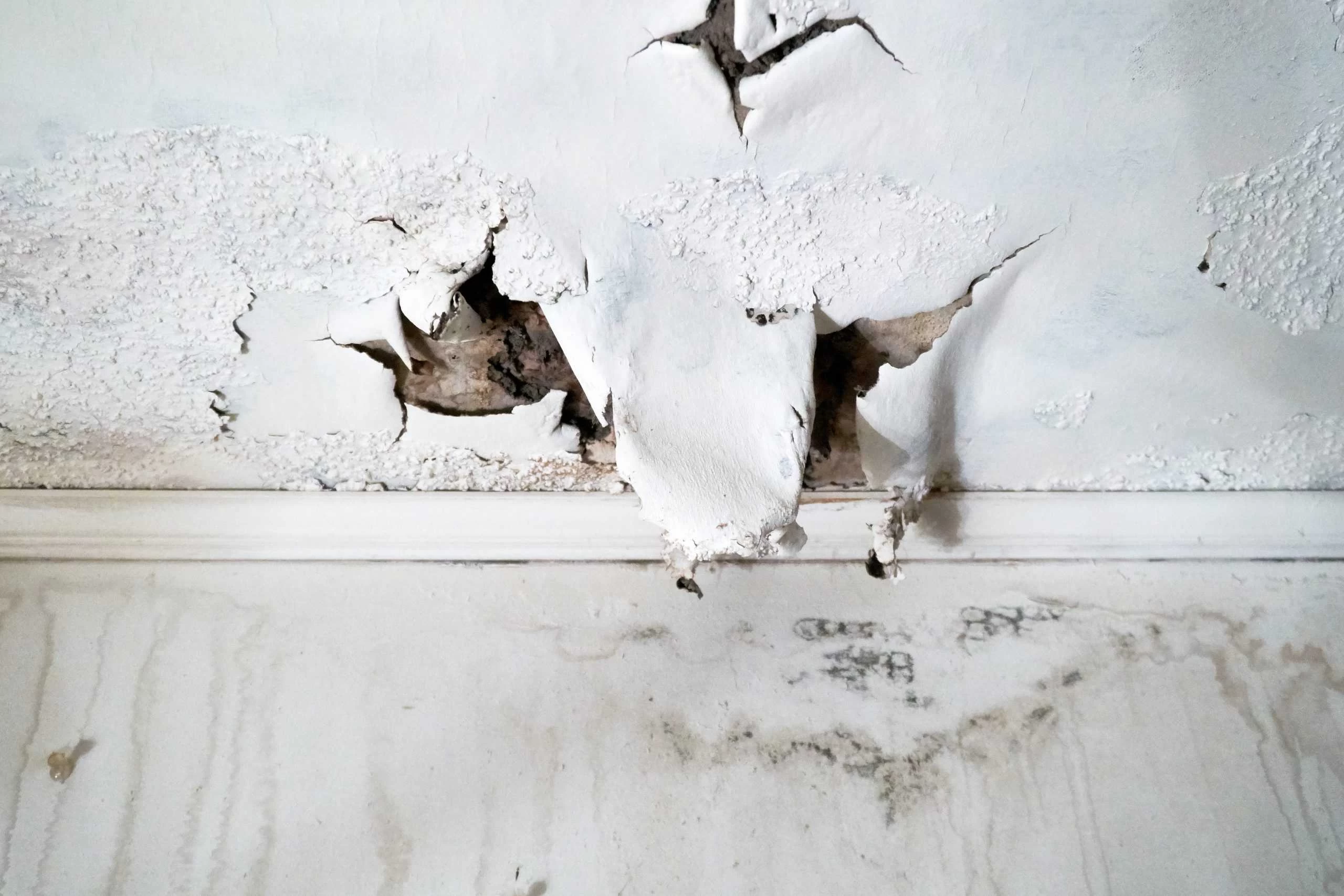
The signs are easy to miss if you don’t know what to look for. A growing stain on an otherwise clean section of sheetrock is often the first clue. Paint that’s bubbling or flaking without an obvious reason. Wallpaper separating at the seams. A soft or slightly spongy section of wall that used to feel solid. A musty smell in a room that has no obvious moisture source. Any one of these can mean water has been sitting inside your wall cavity for days or weeks.
There’s also a simple test worth trying if you suspect a slow leak: turn off every fixture and appliance in the house, then watch your water meter for a few minutes. If the dial is still moving, water is going somewhere it shouldn’t be.
Professional detection goes further. Moisture meters can read the moisture content of a surface even when it looks and feels dry to the touch. Thermal imaging cameras don’t see water directly — what they do is visualize temperature differences on surfaces. Wet materials hold and release heat differently than dry ones, so a thermal camera can reveal the outline of hidden saturation inside a wall before any visible damage appears.
This matters in Nassau County specifically because many homeowners are away from home for ten or twelve hours a day commuting into the city. A slow leak that starts Monday morning may not be discovered until Friday evening — and by then, the damage inside that wall cavity is significant. The surface may look completely normal. The interior may not be.
Carpet Water Damage Repair: What Can Be Saved and What Can't
One of the first questions people ask after a water event is whether their carpet can be saved. The honest answer is: it depends on two things — what kind of water it was, and how quickly you act.
The water damage industry uses a category system to classify water by contamination level. Category 1 is clean water — a supply line failure, an overflowing sink, a burst pipe carrying fresh water. Category 2 is grey water — water that’s picked up contaminants from appliances, drain backups, or prolonged contact with organic materials. Category 3 is black water — sewage, storm surge, or any water that’s been sitting long enough to become biologically hazardous.
For Category 1 water, carpet may be salvageable if it’s extracted and dried within roughly 24 to 48 hours. Beyond that window, even clean water begins to degrade — the moisture wicks into the pad, into the subfloor, and into the wall base, and the contamination level climbs. Category 2 and Category 3 water almost always require full carpet and pad replacement, because the contamination can’t be fully removed through cleaning alone.
What makes professional extraction different from renting a shop vac isn’t just power — it’s thoroughness. Consumer equipment pulls surface moisture. Professional water extractors pull moisture from deep in the carpet fibers, the pad, and the subfloor below. After extraction, commercial air movers and dehumidifiers establish a controlled drying environment that accelerates the process and reduces the risk of mold taking hold during drying.
In Nassau County, where summer humidity is already elevated, that controlled drying environment matters more than it would in a drier climate. Mold can begin colonizing within 24 to 48 hours of a water event, and humid ambient conditions compress that timeline. Getting the right equipment in place quickly isn’t just about saving the carpet — it’s about protecting everything underneath it.
Most Common Water Damage Claims Nassau County Homeowners File
National statistics put water damage and freezing at roughly 22 to 28 percent of all home insurance claims, with an average claim running around $15,400. But Nassau County has its own version of this story, shaped by factors that don’t show up in national averages.
The most common sources of water damage claims here aren’t dramatic — they’re mundane. Aging supply lines under sinks. Water heater tanks that have been in place since the 1970s. Washing machine hoses that were never replaced. Sump pumps that fail during a nor’easter precisely when they’re needed most. These are the everyday failures that account for the bulk of water damage in Nassau County homes, and most of them happen inside the house, not because of a storm.
Why Nassau County's Housing Stock Makes Water Damage More Complicated
When water damage happens in a home built after 1978, the restoration process is relatively straightforward. When it happens in one of Nassau County’s thousands of Cape Cods, split-levels, or ranch homes built in the 1950s and 1960s, the job gets more complicated fast.
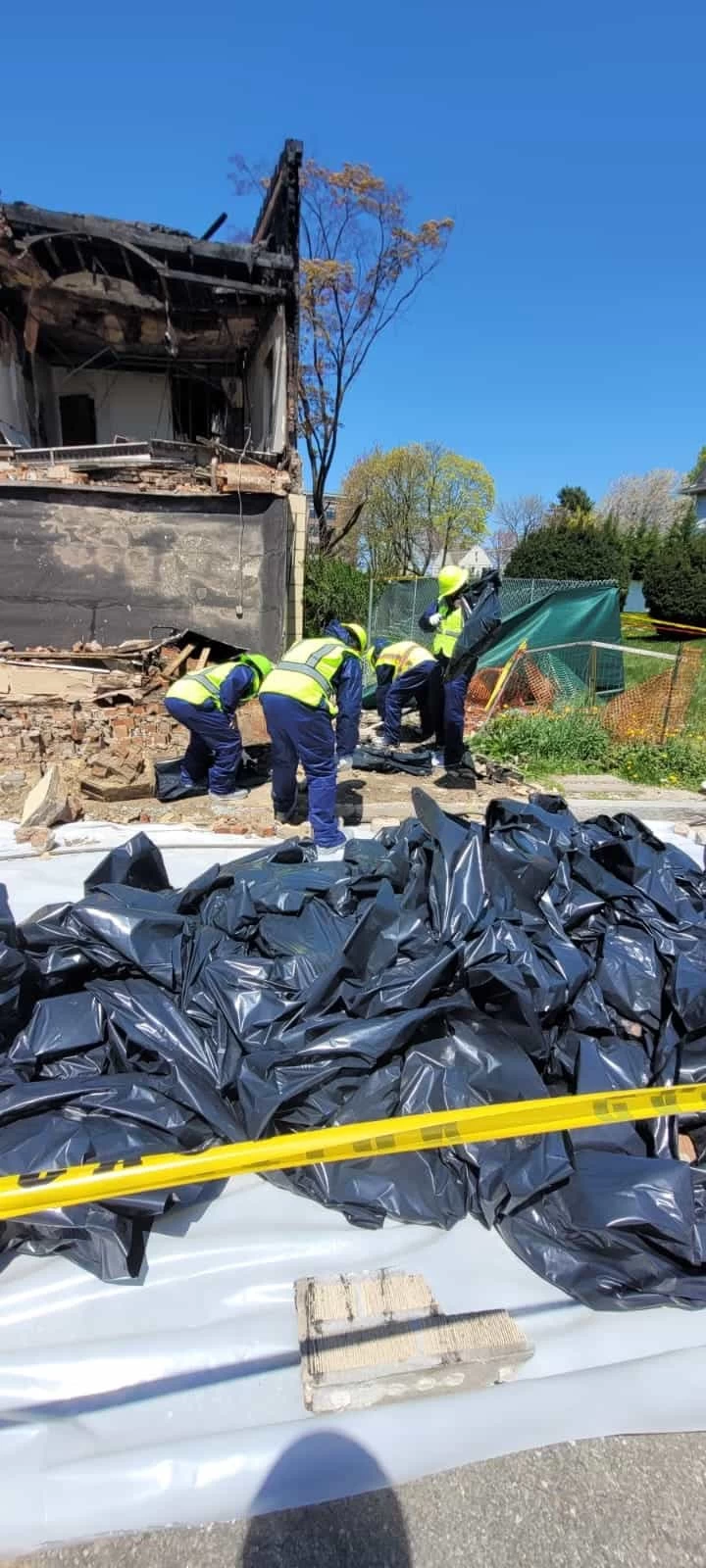
Pre-1978 construction in Nassau County routinely contains asbestos pipe insulation, asbestos floor tiles, and lead paint. These materials were standard building practice at the time. They’re not inherently dangerous when they’re intact and undisturbed — but the moment water damage requires cutting into walls, removing flooring, or demolishing structural materials, those hazardous materials become an active concern.
This is where a lot of water damage jobs in Nassau County stall. A mitigation company comes in, extracts the water, sets up drying equipment — and then discovers the walls contain asbestos pipe insulation. If that company isn’t licensed to handle hazardous materials, the job stops. The homeowner has to find a separate NYS DOL licensed asbestos contractor, schedule a separate mobilization, and wait while the structure sits open. Meanwhile, the clock on mold growth keeps running.
We hold the NYS DOL Asbestos Handler certification, the NYS DOL Mold Remediation license, the USEPA Lead and RRP certifications, and the Nassau County General Contractor license — all in-house. When hazardous materials turn up mid-project, the job continues under the same team, on the same timeline, with one invoice at the end. No stopping, no scrambling for a second contractor, no gap in the work.
That’s not a minor convenience. In a pre-1978 Nassau County home, it’s often the difference between a project that gets resolved cleanly and one that drags on for weeks while the homeowner waits for pieces to come together.
Drywall Water Damage Repair: Why Timing and Sequencing Matter
After the water is extracted and the drying equipment has been running, the natural impulse is to start repairing the visible damage. Cut out the stained drywall. Patch the ceiling. Get the house looking normal again. That impulse is understandable — but acting on it too early is one of the most common mistakes in water damage restoration, and it’s one that creates expensive problems months down the line.
Drywall repair has to follow complete structural drying, not precede it. The reason is straightforward: drywall and wall framing can hold moisture long after the surface feels dry to the touch. If you close a wall before the framing inside has reached target moisture levels, you’re sealing that residual moisture inside. In Nassau County’s humid climate, that trapped moisture becomes a mold environment — hidden inside the wall cavity, invisible from the outside, and often not discovered until the homeowner notices a smell or sees staining reappear months later.
The way professional restoration works is that moisture readings are taken throughout the drying process — not just at the surface, but inside wall assemblies, under flooring, and in ceiling cavities. Those readings are logged and tracked against target levels. Only when the readings confirm that the structure has reached appropriate dryness does the repair phase begin.
For homeowners, this means the timeline for drywall repair is driven by science, not by impatience. A wall that looks ready to patch on day two may not actually be ready until day five or six. Pushing that timeline shortens the project on paper but extends it significantly in practice when the mold problem surfaces later.
We handle both phases — the mitigation and the reconstruction — under the same scope of work. That means the team doing the drying is the same team doing the repair, and there’s no handoff gap where moisture readings get lost in translation between two separate contractors. When we close a wall, we know it’s ready to be closed.
What to Do When You Find Water Damage in Your Nassau County Home
The short version: mitigation first, restoration second — and don’t let anyone skip the step in between. The drying and documentation phase isn’t just procedural. It’s what protects your home from mold, supports your insurance claim, and makes sure the repair work that follows actually holds.
Nassau County’s combination of aging housing stock, high water table, South Shore flood exposure, and humid summers makes water damage more common here than in most markets — and more complicated to resolve when hazardous materials are involved. Knowing what phase you’re in and what your contractor is licensed to handle matters more here than it might elsewhere.
If you’re dealing with water damage now or want to understand your options before something happens, Green Island Group is available around the clock. We handle everything from initial extraction through final reconstruction, and we work directly with your insurance company so you’re not managing that process on top of everything else.