Summary:
You found water where it shouldn’t be. Maybe it’s a ceiling stain that appeared overnight, a basement that took on an inch of water during last month’s storm, or a pipe that let go while you were at work. The damage is real, and so is the question running through your head: will my insurance cover this?
That question matters more than most people realize — because the answer depends on details most homeowners don’t know to ask about. This guide walks you through what New York homeowners insurance actually covers, where the common gaps are, and what that means for Nassau County homes specifically.
Does Home Insurance Cover Water Leaks?
The short answer is: sometimes. Standard homeowners insurance covers water damage when it’s sudden and accidental — a pipe bursts, a washing machine hose gives out, a water heater fails without warning. In those situations, your policy will typically cover the damage to your home’s structure and your belongings.
What it won’t cover is just as important. Gradual leaks — a slow drip behind a wall, a supply line that’s been seeping for months, a roof flashing that’s been failing quietly — are almost always excluded. Insurers treat those as maintenance issues, not covered events. The logic is that the homeowner had an opportunity to catch and fix the problem before it caused damage.
What Types of Water Damage Are NOT Covered by Homeowners Insurance?
This is where a lot of Nassau County homeowners get caught off guard, and it’s worth being direct about it.
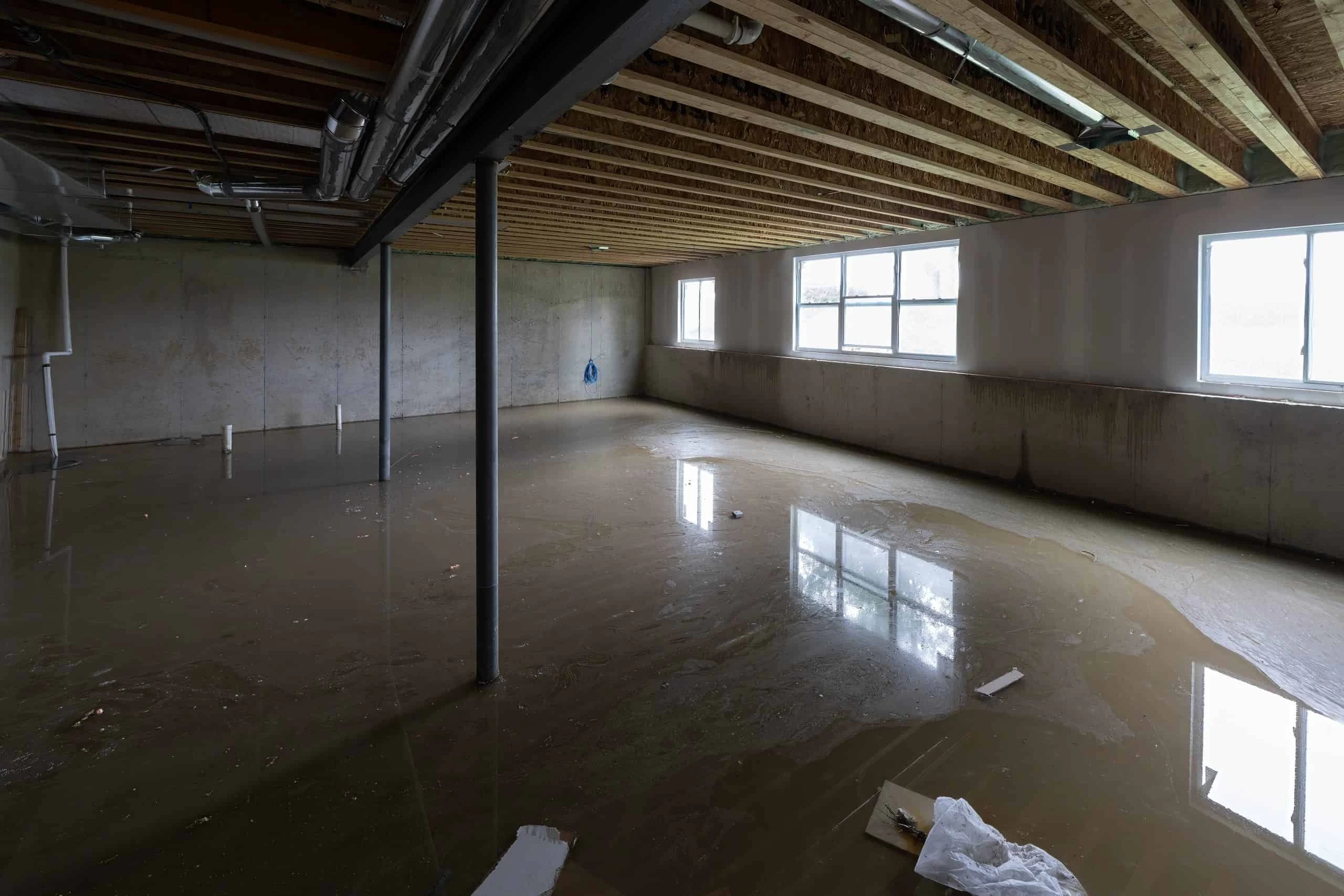
Flooding is excluded from standard homeowners policies — full stop. If water enters your home from outside, whether from a storm surge on the South Shore, a nor’easter pushing water up from Long Island Sound into North Shore communities, or a flash flood like the one that hit Nassau and Suffolk counties in August 2024, your homeowners policy won’t pay for it. That requires a separate flood insurance policy through the National Flood Insurance Program or a private carrier. Given that over 300,000 Nassau County residents live in designated flood zones, this is not a small gap.
Sewer and drain backup is another common exclusion. If your basement floods because the municipal sewer system backed up during a heavy rain event — something that happens regularly in communities with mid-century drainage infrastructure — that damage typically isn’t covered unless you’ve added a specific endorsement to your policy. Many homeowners in older Nassau County neighborhoods don’t realize this until they’re already filing a claim.
Mold is a more complicated situation. Most policies will cover mold remediation if the mold resulted directly from a covered water event and you took reasonable steps to address the water damage promptly. But if mold shows up because a slow leak went undetected for weeks, or because water damage wasn’t properly dried out, insurers will often deny the mold claim. This matters because mold begins forming within 24 to 48 hours of water intrusion — meaning the window between water damage and a potential mold exclusion is very short.
Finally, sump pump failures are excluded from most base policies. For Nassau County homeowners with finished basements — which is a large portion of the county’s housing stock — a sump pump failure during a heavy rain event can cause serious damage with no coverage unless a specific rider is in place.
Why Nassau County's Aging Housing Stock Makes Water Damage More Complicated
Nassau County has roughly 482,000 housing units, and the median build year is around 1955. That means a substantial portion of homes in communities like Oceanside, Massapequa, Great Neck, and Manhasset — the Colonials and Cape Cods built between the 1940s and 1980s — still have original or near-original plumbing.
Cast-iron and galvanized steel pipes from that era are now 40 to 55 years old in many cases, well past the point where failures become increasingly common. When one of those pipes gives out, the resulting damage can be significant — but whether it’s covered depends on how the failure is characterized. A sudden burst is typically covered. A pipe that corroded slowly and finally gave way may be treated as gradual deterioration, which is excluded.
The same applies to water heaters, washing machine hoses, and dishwasher connections in older Nassau County homes. If your home was built in the 1960s and you haven’t replaced the supply lines, you’re managing real risk — and the coverage outcome after a failure may not go the way you expect.
This is also why getting a professional assessment matters so much after water damage in an older Nassau County home. The visible damage — a wet floor, a stained ceiling — often understates what’s actually happened. Water travels. It saturates insulation, soaks into subfloors, and hides inside wall cavities where it creates the conditions for mold growth. A surface-level cleanup that misses the hidden moisture doesn’t solve the problem; it just delays it.
Average Insurance Payout for Water Damage: What to Actually Expect
Homeowners frequently overestimate what their insurance check will cover. The average homeowners insurance payout for water damage is $13,954 — but actual restoration costs for significant damage regularly run higher, and the gap can be substantial depending on what’s involved.
For context, water damage restoration can range from $1,342 to $6,044 for moderate events, but larger losses — structural drying, content removal, mold remediation, and full reconstruction — can push well past $15,000. If the event involves flooding covered under an NFIP policy rather than homeowners insurance, the average payout is considerably higher, around $66,000.
Water Damage Ceiling Repair Cost: What You're Looking At
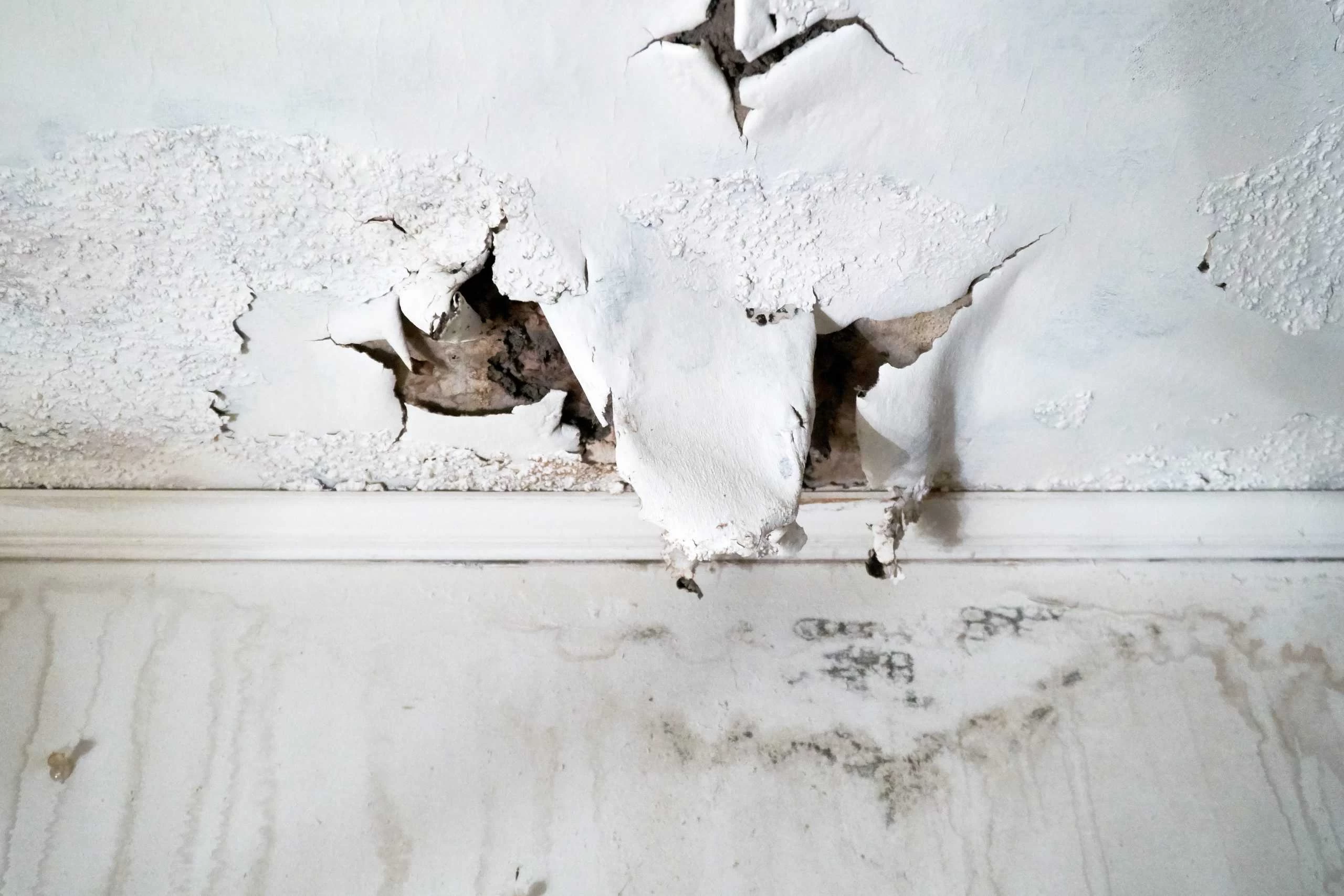
Ceiling damage is one of the most common water damage scenarios we see in Nassau County homes, and the cost range is wider than most homeowners expect. A minor ceiling repair — patching a small water stain or a localized soft spot — can run anywhere from $125 to $800.
Moderate damage, where a section of drywall needs to come out and be replaced, typically falls in the $800 to $2,500 range. Severe damage, or situations where the ceiling material has been saturated and compromised across a larger area, can exceed $3,000 and sometimes requires full replacement rather than repair. Drywall repair specifically runs approximately $50 to $70 per square foot including labor, which adds up quickly when the affected area is larger than it first appears.
Here’s the part that often surprises homeowners: the ceiling itself is rarely the whole story. When water damages a ceiling, it means water has been sitting above that ceiling — in the insulation, on the subfloor of the room above, or inside the wall cavity where it entered. A repair that addresses only the visible drywall without identifying and drying the moisture source is a temporary fix. The stain comes back. The mold starts. And the second repair costs more than the first would have if it had been done right.
This is where thermal imaging makes a real difference. We use it specifically because it shows what’s happening inside the structure — not just what’s visible on the surface. A ceiling that looks like a $500 repair can turn into a $5,000 problem if the hidden moisture isn’t found and addressed. Catching it early is almost always cheaper than dealing with it after the fact.
What Happens When the Insurance Payout Isn't Enough?
This comes up more often than people expect, and it’s worth being straightforward about it. Insurance adjusters work from the policy language, and that language has limits. If your damage includes mold, asbestos in pre-1980 construction materials, or structural issues that weren’t immediately visible when the claim was filed, the initial payout may not reflect the full scope of what the restoration actually requires.
Documentation matters enormously. The more thoroughly the damage is documented — moisture readings, photos, written scope of work — the stronger your position when the adjuster is reviewing the claim. We follow the IICRC S500 Standard, which defines the procedures that insurance adjusters evaluate when assessing whether a claim was handled appropriately. That means the work is documented in a way that holds up.
Timing also matters. Waiting to start restoration while you sort out the insurance question can turn a covered water damage event into a partially excluded mold claim. The 24 to 48 hour window is real, and it’s written into how most policies handle mold coverage. Acting quickly — documenting everything, then starting mitigation — is both the right thing to do for your home and the right thing to do for your claim.
If your costs exceed what the policy covers, we offer financing up to $200,000 at 0% APR through Enhancify for situations where the payout doesn’t cover the full scope of what needs to happen. We also handle the insurance paperwork directly and bill the carrier without requiring upfront payment from you. That removes the cash flow problem that often forces homeowners into partial repairs while waiting for a check.
Getting Water Restoration Right in Nassau County
If there’s one thing to take away from all of this, it’s that the coverage question and the restoration question are connected. How quickly you act, who you call, and how the work is documented all affect what your insurance will ultimately pay — and what you’ll be left managing on your own.
Nassau County’s housing stock, its flood zone geography, and its aging infrastructure make water damage more common here than in most places, and more complicated to handle correctly. The gap between what a policy covers and what a real event costs is real, and it catches homeowners off guard every year.
If you’re dealing with water damage right now, or trying to understand your exposure before something happens, we’re available 24/7 and handle everything from emergency extraction through full reconstruction — including the insurance process. Reach out and we’ll walk you through what comes next.