Summary:
You got a quote. Maybe two or three. The numbers are higher than what you read online, and you’re not sure whether that’s Nassau County being Nassau County — or whether someone is taking advantage of you. That’s a fair question, and it deserves a straight answer.
The national averages you’ll find on sites like Angi or HomeAdvisor don’t reflect what compliant asbestos abatement actually costs in New York State. There are real, documented reasons why Long Island projects cost more — and understanding them makes it a lot easier to evaluate what you’re looking at and make a decision you won’t regret.
Asbestos Removal Cost in Nassau County: Why the Numbers Don't Match National Averages
The national average for asbestos removal sits somewhere between $1,214 and $3,280 for a contained residential area. Those figures are real — they just don’t apply here.
In Nassau County, small projects typically run $1,500 to $3,000. Mid-size residential work lands between $3,000 and $12,000. A full home abatement — multiple material types, larger square footage — can reach $15,000 to $40,000 or more.
That gap exists because New York State has some of the most comprehensive asbestos abatement regulations in the country. Every licensed project in this state carries compliance costs that simply don’t exist in markets where the rules are lighter. Add in Long Island’s labor rates, the logistics of transporting hazardous waste to approved out-of-state disposal facilities, and the independent air monitoring requirement that New York mandates — and the math starts to make sense.
What ICR 56 Actually Adds to Your Project Cost
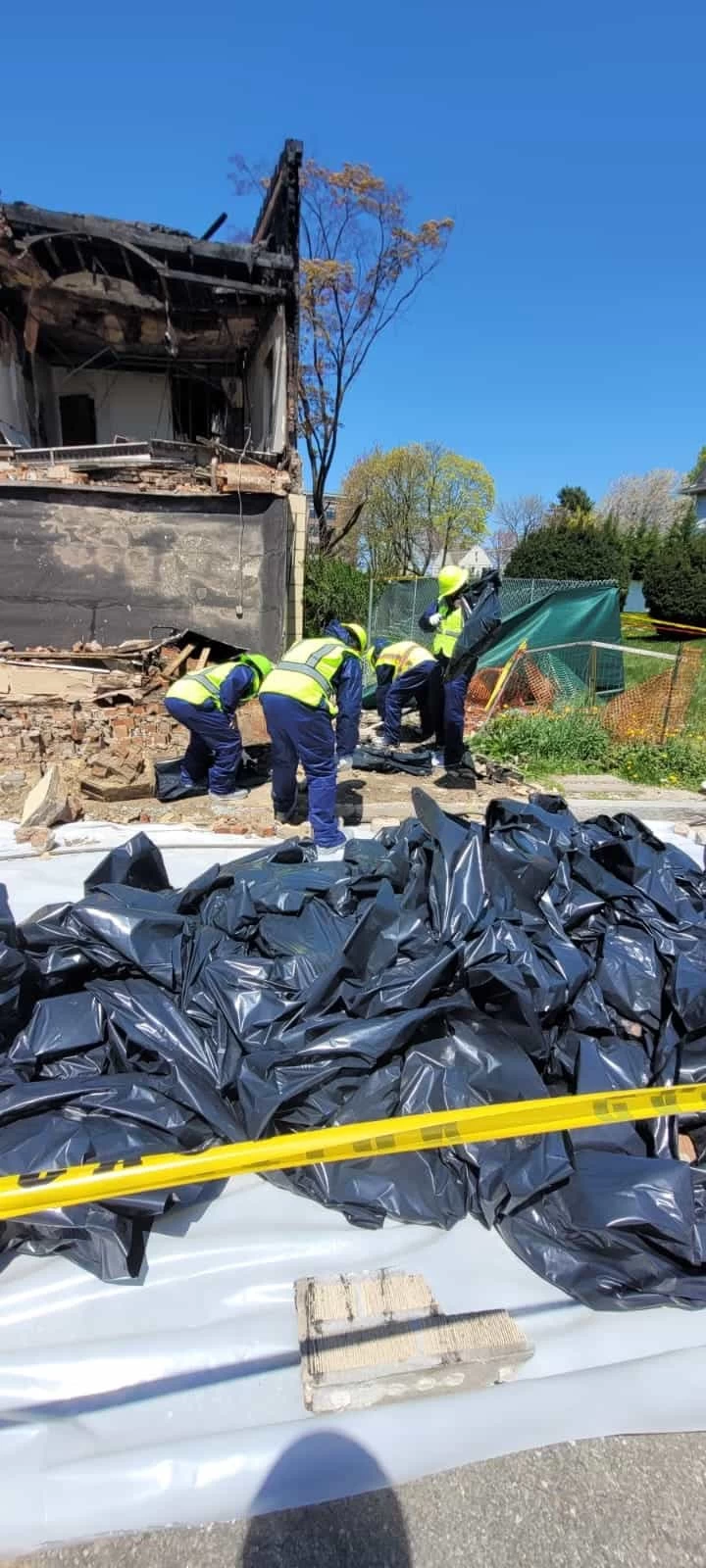
New York State’s Industrial Code Rule 56 is the primary regulation governing asbestos abatement, and it’s thorough. Before any licensed abatement work begins, a 10-day project notification must be filed with the NYS Department of Labor. The work area must be fully contained with sealed barriers and maintained under negative air pressure throughout the project.
Removal is done using wet methods to suppress fiber release. Every worker on site must be NYS DOL-certified, which requires passing state examinations and completing a minimum of 32 hours of accredited training.
When the work is done, a post-abatement air clearance test is required — and here’s the part that surprises most homeowners: the firm conducting that clearance test must be completely separate from the contractor who did the abatement. Two firms, two cost line items, both required. The clearance test alone runs $600 to $1,500 for a residential project.
All of that compliance infrastructure costs money. A contractor who quotes significantly below the market range in Nassau County is almost certainly skipping some of these steps — and when compliance fails, the legal and financial exposure lands on the property owner, not the contractor. Fines for improper asbestos handling in New York run from $1,200 to $10,000 per violation. Failed permit sign-offs can stall a renovation for months.
If you’re trying to sell the house, an undocumented abatement is a liability, not an asset. The paper trail a properly executed project produces — the project notification, the waste manifest, the signed air clearance report — is what protects you in a real estate transaction, a permit review, or any future question about what was done and when.
Why Nassau County's Housing Stock Makes Asbestos More Common Than People Expect
The median construction year for a home in Nassau County is 1955. That single fact explains a lot. The 1940s and 1950s were the peak era for asbestos use in residential construction — floor tiles, pipe insulation, joint compound, popcorn ceilings, boiler wrap, roofing shingles, and cement board siding all commonly contained asbestos during that period. If your home was built before 1980, there’s a reasonable chance at least one of those materials is present somewhere.
Levittown, built between 1947 and 1951 by William Levitt, is the most well-known example — but the same building practices applied across Nassau County. Homes in Valley Stream’s Gibson neighborhood, the post-war blocks of Rockville Centre, the older sections of Hempstead and Uniondale, and even the more stately pre-war properties in Garden City’s Cathedral and Estates areas all share this common thread. The materials are different, the concentrations vary, and the risk level depends on the condition and location of what’s found — but the presence of asbestos-containing materials in these homes is not unusual.
There’s also a common misconception worth addressing directly: that buildings constructed after 1974 don’t require asbestos surveys. The NYS Department of Labor has officially clarified that this is not accurate. Industrial Code Rule 56 applies to buildings of any age. If you’re planning a renovation or demolition — regardless of when the building was built — a pre-disturbance survey is required before work begins.
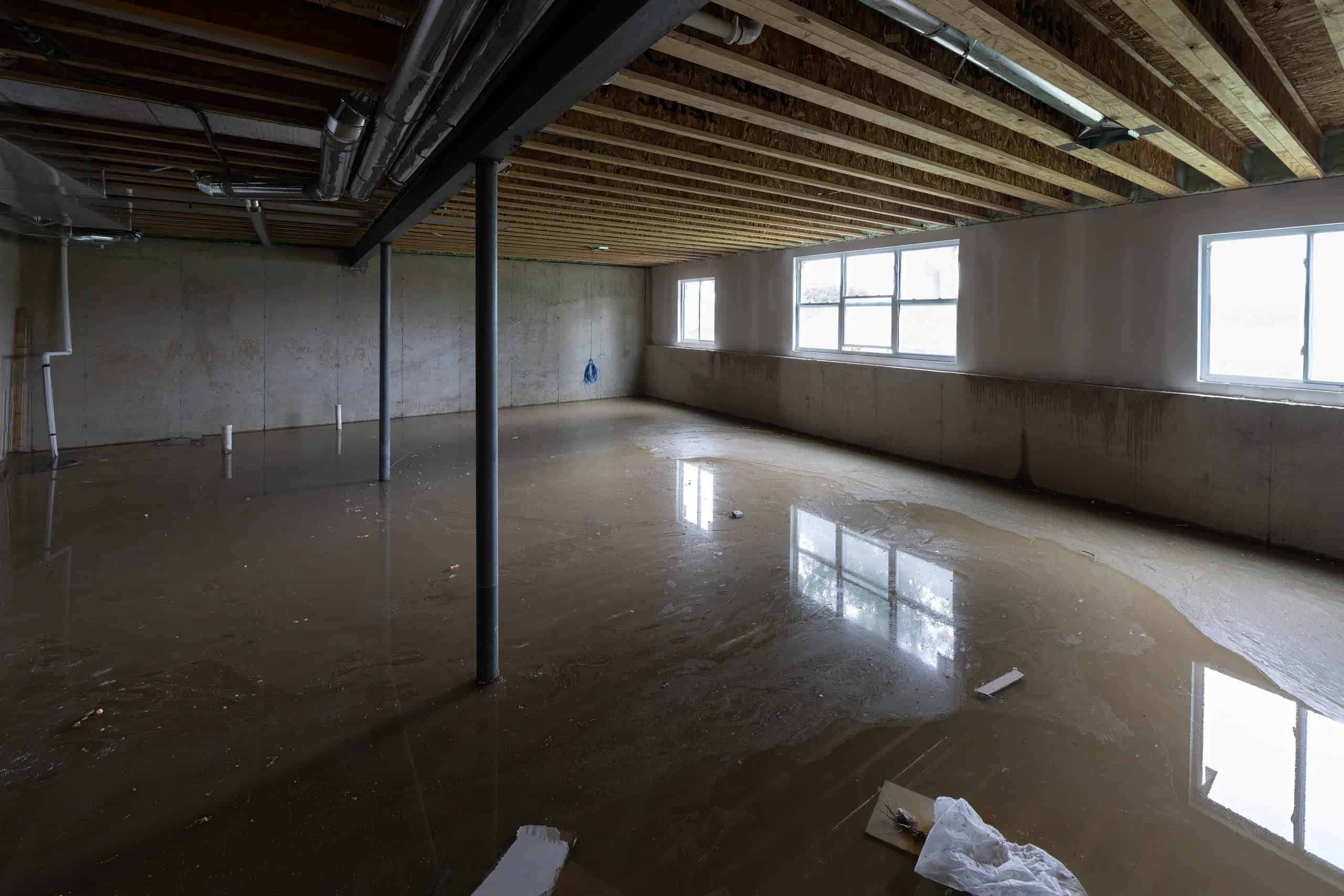
For Nassau County’s South Shore communities like Long Beach, Oceanside, and Freeport, there’s an additional layer. Coastal storm and flood damage regularly exposes previously undisturbed asbestos-containing materials — pipe insulation, floor tile adhesive, boiler wrap — creating urgent, unplanned abatement needs that weren’t part of anyone’s renovation budget. That’s a demand driver unique to Long Island’s geography, and it’s part of why local expertise matters here.
Asbestos Remediation Cost by Material Type: What You're Actually Paying to Remove
One of the most useful things you can do when evaluating a quote is understand what you’re being charged for at the material level. Asbestos remediation cost varies significantly depending on what type of material is involved, how much of it there is, where it’s located in the structure, and whether it’s friable — meaning it can be crumbled or reduced to powder by hand pressure — or non-friable and intact.
Friable materials release fibers more readily and require a higher level of containment and care during removal. That translates directly into higher labor cost, longer project timelines, and more stringent disposal requirements. Non-friable materials that are in good condition are sometimes managed through encapsulation rather than removal — but encapsulation doesn’t produce the clearance documentation that real estate transactions and permit sign-offs require.
Asbestos Siding Removal Cost: What Nassau County Homeowners Should Know
Asbestos cement siding was a popular exterior cladding choice through the 1950s and into the 1960s. It’s durable, which is part of why so much of it is still in place on Nassau County homes today. When it’s intact and undisturbed, it’s generally considered non-friable and lower risk. The problem arises when it’s damaged, when it needs to be removed for a renovation, or when a building permit requires its removal before other work can proceed.
Asbestos siding removal on Long Island runs $5 to $15 per square foot depending on the condition of the material, the complexity of the structure, and the scope of the project. For a typical 2,000 square foot home, total removal cost including disposal runs $14,000 to $20,000. That’s a wide range, and the variance is real — it reflects differences in material condition, accessibility, disposal logistics, and whether the project requires scaffolding or other site-specific equipment.
One thing worth understanding about asbestos siding specifically: encapsulation — painting or sealing the material to prevent fiber release — is sometimes proposed as a lower-cost alternative to removal. It runs $2 to $6 per square foot and can be appropriate in certain situations. But it doesn’t eliminate the material, and it doesn’t produce an air clearance report.
If you’re planning to sell the home, refinance, or pull permits for adjacent work, encapsulation may not satisfy what the buyer’s attorney, the lender, or the building department is looking for. Removal, done correctly and documented with a clearance certificate, is what gives you a clean file.
For Nassau County homeowners specifically, the Town of Hempstead building department and the various incorporated village building departments — Valley Stream, Rockville Centre, and others — each enforce their own permit requirements on top of the state baseline. A contractor who knows how to navigate those local layers keeps your project on schedule. One who doesn’t can add weeks to a timeline you’ve already committed to.
Asbestos Removal Price: What a Legitimate Quote Actually Includes
When you’re comparing quotes, the most important question isn’t which number is lowest. It’s what each number actually covers. A compliant, fully scoped asbestos abatement project in Nassau County includes several distinct cost components, and a quote that omits any of them isn’t a bargain — it’s a liability.
A legitimate quote should cover the pre-abatement inspection and bulk sampling by a certified inspector ($650 to $2,200 for a residential pre-renovation survey), the NYS DOL project notification, full containment setup, the abatement work itself, packaging and manifesting of all asbestos-containing waste to an approved disposal facility, and post-abatement air clearance testing by an independent certified industrial hygienist. That last item — independent clearance testing — is the deliverable that matters most. It’s the written confirmation that fiber levels in the work area are below regulatory thresholds. Without it, you have no documentation that the job was completed correctly.
If a quote doesn’t break these components out, ask why. A contractor who can’t explain what’s included in their number — or who resists providing documentation — is a red flag worth taking seriously. Vague lump-sum quotes are common among operators who are cutting compliance corners, and those corners are invisible until something goes wrong.
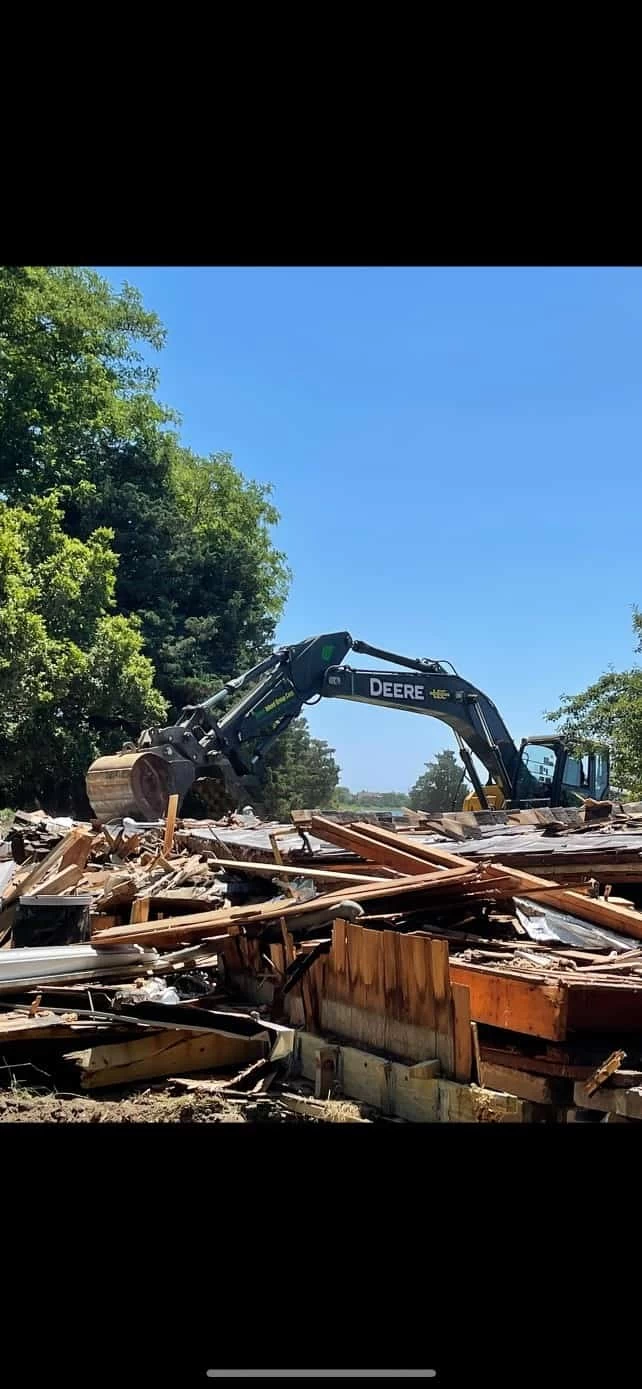
We handle asbestos abatement and the subsequent demolition, restoration, or renovation work as a single engagement. One contractor, one chain of accountability, from certified inspection through final clearance and whatever comes after.
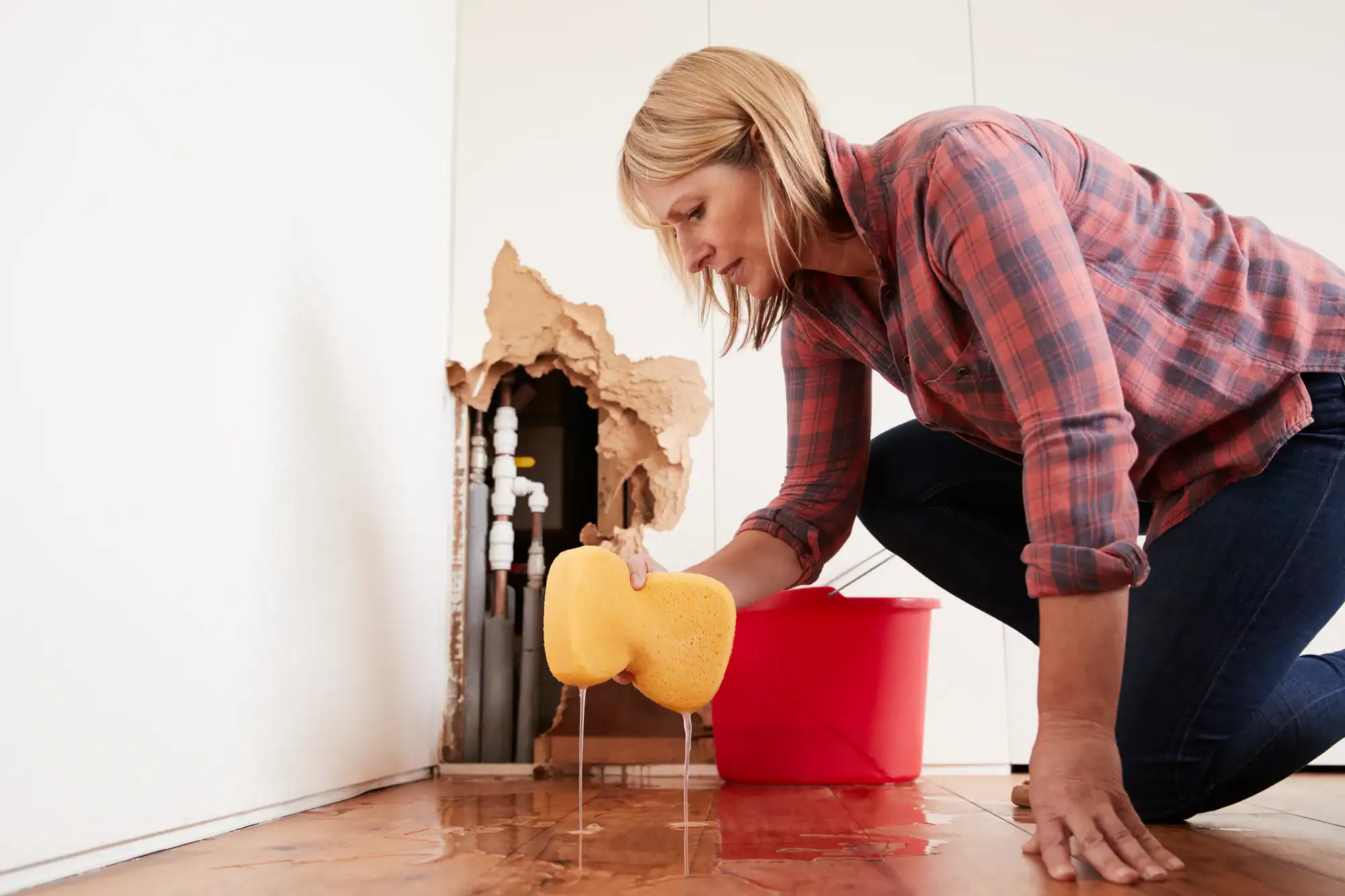
For homeowners whose abatement is connected to a covered loss — a burst pipe, storm damage, a flood — we bill insurance directly. No upfront cost, no claim paperwork for you to manage. And for projects not covered by insurance, financing is available up to $200,000 at 0% APR through Enhancify. The cost of doing this right doesn’t have to be a barrier to actually doing it right.
How to Move Forward with Asbestos Abatement in Nassau County
If you’ve been sitting on a quote you’re not sure about — or you’ve just discovered asbestos mid-project and need to understand your options quickly — the most useful thing you can do is get a clear, itemized picture of what the work actually involves and what it will cost in your specific situation.
National averages are a starting point, not a budget. Long Island’s regulatory environment, housing stock, and disposal logistics make this a different market, and the quotes you receive should reflect that. What you’re looking for is a contractor who can explain every line item, show you a verifiable NYS DOL license, and deliver a written air clearance report when the work is done.
Green Island Group has been doing this work in Nassau County for over 12 years, across more than 5,000 completed projects in New York. If you want a straight answer about what your project will cost and what it will take to complete it correctly, reach out — we’re available 24/7 and we’ll give you a real conversation, not a sales pitch.