Summary:
You paid your premiums. The pipe burst. You called your insurance company expecting help — and instead got a letter full of exclusions you didn’t know existed.
This is the situation thousands of Nassau County homeowners find themselves in every year. The damage is real, the cost is real, and the coverage gap is real. Water pipe insurance is not the blanket protection most people assume it is, and the fine print tends to surface at the worst possible moment.
We’ll walk you through exactly where standard policies fall short, why Long Island’s housing stock makes those gaps harder to avoid, and what actually protects you when the water starts rising.
What Water Pipe Insurance Actually Covers — and Where It Stops
The baseline rule in most homeowners policies is this: water damage is covered if it was sudden and accidental. A pipe that bursts without warning on a Tuesday morning, soaking your kitchen ceiling and subfloor, is the kind of event a standard policy was written to address.
But “sudden and accidental” is doing a lot of legal work in that sentence. The moment an adjuster finds evidence that the damage developed over time — corrosion, staining, prior moisture, or pipe age — the claim can shift from covered to denied. In Nassau County, where a significant portion of the housing stock was built between the 1940s and 1970s, that shift happens more often than most homeowners expect.
Why Nassau County's Aging Pipes Make the "Gradual Damage" Exclusion a Real Problem
Here’s the uncomfortable reality for homeowners in communities like Hicksville, Bethpage, Plainview, Merrick, and Bellmore: the pipes in your home may be 50 to 80 years old. Original galvanized steel and cast-iron plumbing from the post-war construction era doesn’t fail all at once. It corrodes slowly, weakens gradually, and then — at some point — fails in a way that looks sudden from the outside but reads as “foreseeable deterioration” to an insurance adjuster.
That distinction matters enormously. Insurers can and do deny claims on the grounds that the pipe failure was the predictable result of age and wear, not a true sudden event. The homeowner sees water pouring through the ceiling. The adjuster sees a 60-year-old galvanized pipe that was always going to fail. Those two perspectives lead to very different outcomes.
This is not a theoretical risk. It’s the documented pattern for aging housing stock across Nassau County’s interior communities. The homes are well-maintained, the owners are responsible, and the claims still get denied — because the policy language around gradual damage was written to exclude exactly this kind of failure.
What makes this worse is that the damage is often hidden until it isn’t. A slow leak inside a wall cavity doesn’t announce itself. By the time water is visibly coming through drywall or pooling under flooring, the underlying problem has usually been developing for months. That timeline gives adjusters the language they need to classify the damage as gradual rather than sudden — and the homeowner has no documentation to counter it.
If your home was built before 1980 and still has original plumbing, the “sudden and accidental” standard in your policy may be harder to meet than you think. Understanding that gap before a pipe fails is far better than discovering it during a claim.
Sewer Backup, Flood Damage, and the Coverage Gaps Nassau County Homeowners Miss Most
Beyond the gradual damage exclusion, there are two coverage gaps that catch Long Island homeowners off guard more than almost anything else: sewer backup and flood damage. These are not edge cases. They are among the most common water damage scenarios in Nassau County, and they are excluded from virtually every standard homeowners policy.
Sewer backup coverage — sometimes called a water backup endorsement — is not included in a base policy. It has to be added separately. For homeowners in communities like Freeport, Baldwin, Rockville Centre, and Lynbrook, where aging municipal sewer systems and heavy rainfall regularly overwhelm drainage infrastructure, this gap is a serious exposure. Tree root intrusion into aging clay or cast-iron sewer laterals is a documented problem in Nassau County’s older neighborhoods. When that backup pushes sewage into your basement, your standard policy won’t respond unless you specifically added the endorsement. Many homeowners don’t know they didn’t have it until they’re standing in contaminated water filing a claim.
Flood damage is a separate category entirely. Standard homeowners insurance does not cover flooding — water that enters a home from the outside, whether from storm surge, heavy rainfall runoff, or rising groundwater. That coverage comes through a separate flood insurance policy, typically issued through FEMA’s National Flood Insurance Program. After Hurricane Sandy reclassified large portions of Nassau County’s South Shore into high-risk flood zones, many homeowners in Long Beach, Oceanside, Seaford, Massapequa, and Wantagh were required to carry flood insurance for the first time. But having flood insurance doesn’t mean your standard homeowners policy covers the water damage — these are two separate policies covering two different types of events.
The confusion between these categories is one of the most common reasons claims get denied or underpaid. Water came in during a storm — but was it covered by the homeowners policy, the flood policy, or neither? The answer depends on how the water entered the home, where it came from, and what your specific policies say. Getting that wrong at the time of filing is costly.
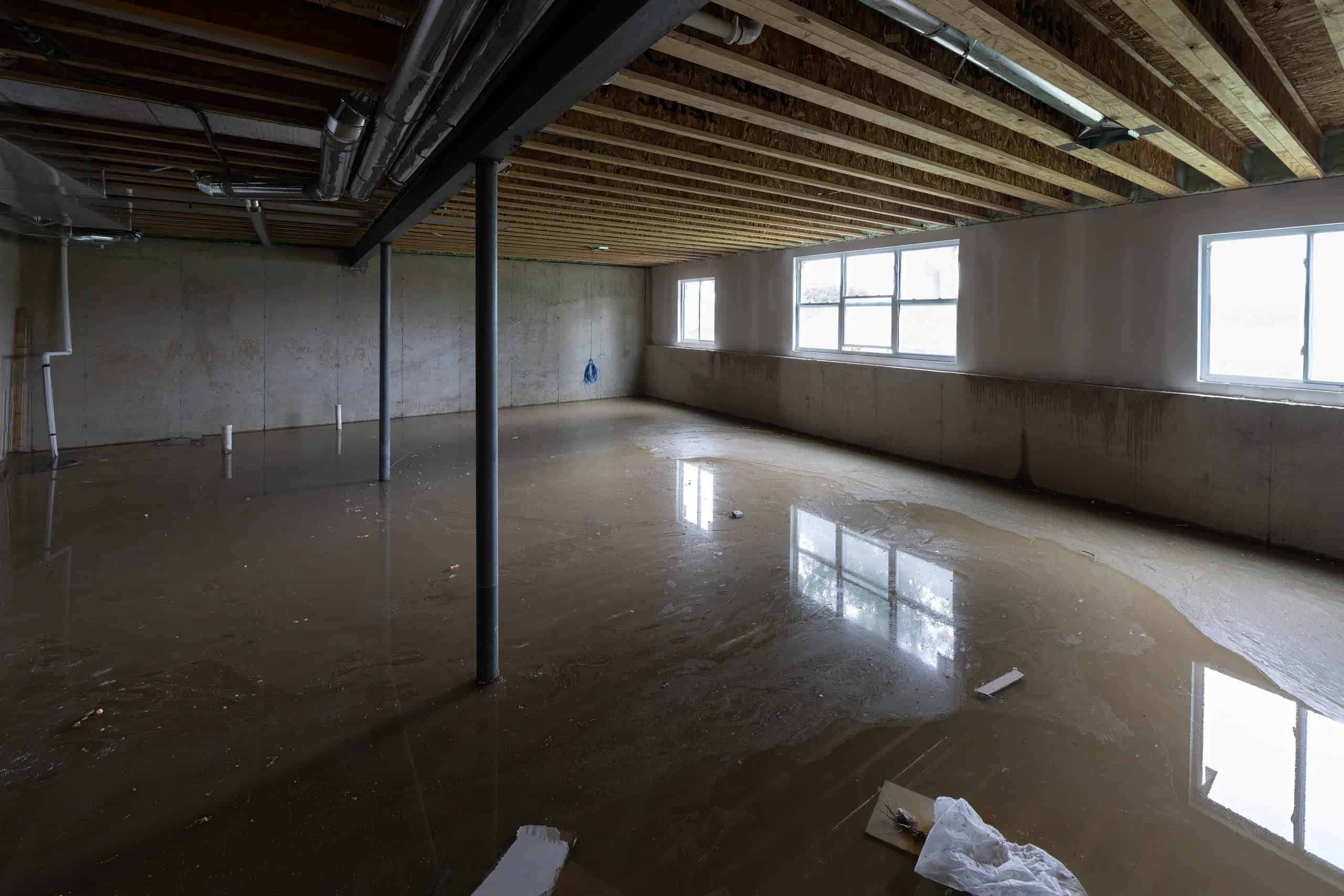
There’s also the sump pump failure scenario, which sits in its own coverage gray zone. Nassau County’s high water table means many homeowners rely on sump pumps to keep basements dry. When a sump pump fails during a heavy storm and the basement floods, standard policies typically don’t cover the resulting damage — it falls under the same water backup exclusion. Again, a separate endorsement is required.
Dealing With an Insurance Adjuster After Water Damage in Nassau County
Most homeowners assume the insurance adjuster is there to help them. The adjuster is professional, thorough, and seemingly objective — but they work for the insurance company, not for you. Their job is to assess the claim accurately according to the policy terms, which means their job includes identifying every exclusion that applies.
Understanding how this process works before the adjuster arrives changes how you prepare, what you document, and how you respond to their assessment.
What to Do Before the Adjuster Arrives — and Why It Changes Your Claim
The most important thing you can do after a pipe bursts or water damage occurs is document everything before anything gets cleaned up, moved, or repaired. That means photographs and video of every affected area — walls, floors, ceilings, personal property, the pipe or source itself — taken before any mitigation work begins. Keep every damaged material on-site until the adjuster has inspected it. Throwing out wet drywall or flooring before the adjuster sees it can give the insurance company grounds to dispute the extent of the damage.
You should also stop the water source immediately and take reasonable steps to prevent further damage — that’s actually a requirement in most policies, called the duty to mitigate. But there’s a difference between stopping the water and making permanent repairs. Permanent repairs before the adjuster visits can complicate or void your claim. The goal at this stage is documentation, not restoration.
Here’s where working with a professional restoration company changes the equation significantly. When we respond to a water event, we document the damage with thermal imaging cameras, moisture meters, and a formal scope of loss — the same standard documentation that insurance carriers and public adjusters use in the claims process. A homeowner’s phone photos are useful. A certified technician’s documented moisture assessment, with readings behind walls and under floors, is what adjusters and carriers actually respond to.
Thermal imaging matters because water doesn’t stay where you can see it. It travels through wall cavities, saturates subfloor materials, and collects in places that look dry to the eye. An adjuster doing a visual inspection will miss secondary moisture that a thermal camera finds immediately. That missed moisture becomes mold in 24 to 48 hours — and mold that develops after the adjuster’s visit creates a new claim problem that’s harder to connect to the original event.
The documentation gap between what a homeowner captures on their own and what a professional assessment produces is one of the most consistent reasons claims get underpaid. The adjuster’s estimate reflects what they saw. A complete scope of loss reflects what was actually there.
Water Damage Claim Denied in New York — What You Can Actually Do
A denial letter is not the end of the road. It feels that way, especially when you’re dealing with significant damage and the insurance company’s decision seems final. But denials are disputed and reversed more often than most homeowners realize — the key is understanding why the claim was denied and what documentation would change that outcome.
The most common denial reasons in New York water damage claims are gradual damage or deterioration, failure to maintain the property, failure to mitigate after the event, policy exclusions for sewer backup or flooding, and mold that developed because the water damage wasn’t addressed quickly enough. Each of these has a specific counter-argument — but that argument needs to be supported by documentation, not just your account of what happened.
Start by reading the denial letter carefully. The insurer is required to cite the specific policy language they’re relying on to deny the claim. That language tells you exactly what they’re claiming and what evidence would need to exist to challenge it. If they’re claiming gradual damage, the question becomes: is there documentation showing the pipe was in acceptable condition prior to the failure? If they’re claiming failure to mitigate, the question becomes: what steps were taken and when, and is there a timeline that supports your position?
You have the right to request your full claim file — every document, photo, and note the adjuster compiled. Reviewing that file often reveals how the adjuster reached their conclusion and where the documentation gaps are.
A public adjuster works on your behalf, not the insurance company’s, and operates on contingency — meaning they only get paid if your claim is paid or increased. For larger claims or complicated denials, a public adjuster can be worth engaging. An independent professional assessment from a licensed restoration company can also provide documentation that supports an appeal, particularly if the original inspection missed moisture or structural damage.
If your claim was denied in part because the damage wasn’t documented thoroughly at the time of the event, that’s harder to reverse after the fact. The strongest position is always one where the documentation happened immediately — which is why a same-day response from a restoration company that handles this process professionally matters so much from the start.
What Nassau County Homeowners Should Know Before the Next Water Event
The coverage gaps in standard water pipe insurance aren’t obscure fine print — they’re the most common reasons claims get denied in Nassau County every year. Gradual damage exclusions, missing sewer backup endorsements, the flood vs. water damage distinction, and documentation failures at the time of the event: these are predictable, avoidable problems that catch homeowners off guard because no one explains them until it’s too late.
If your home was built before 1980, sits in a South Shore flood zone, or relies on a sump pump to manage groundwater, your exposure to these gaps is higher than average. Knowing that now — before a pipe fails — gives you time to review your policy, add the endorsements you’re missing, and identify a restoration partner who understands how the claims process actually works.
When water damage does happen, we respond 24/7, document the damage professionally, and handle insurance billing directly — no upfront costs, no paperwork left for you to figure out alone. If you’re dealing with a water event in Nassau County right now, or just want to understand your options before one happens, reach out and we’ll walk you through it.