Summary:
Why Holiday and Winter Fires Spike on Long Island
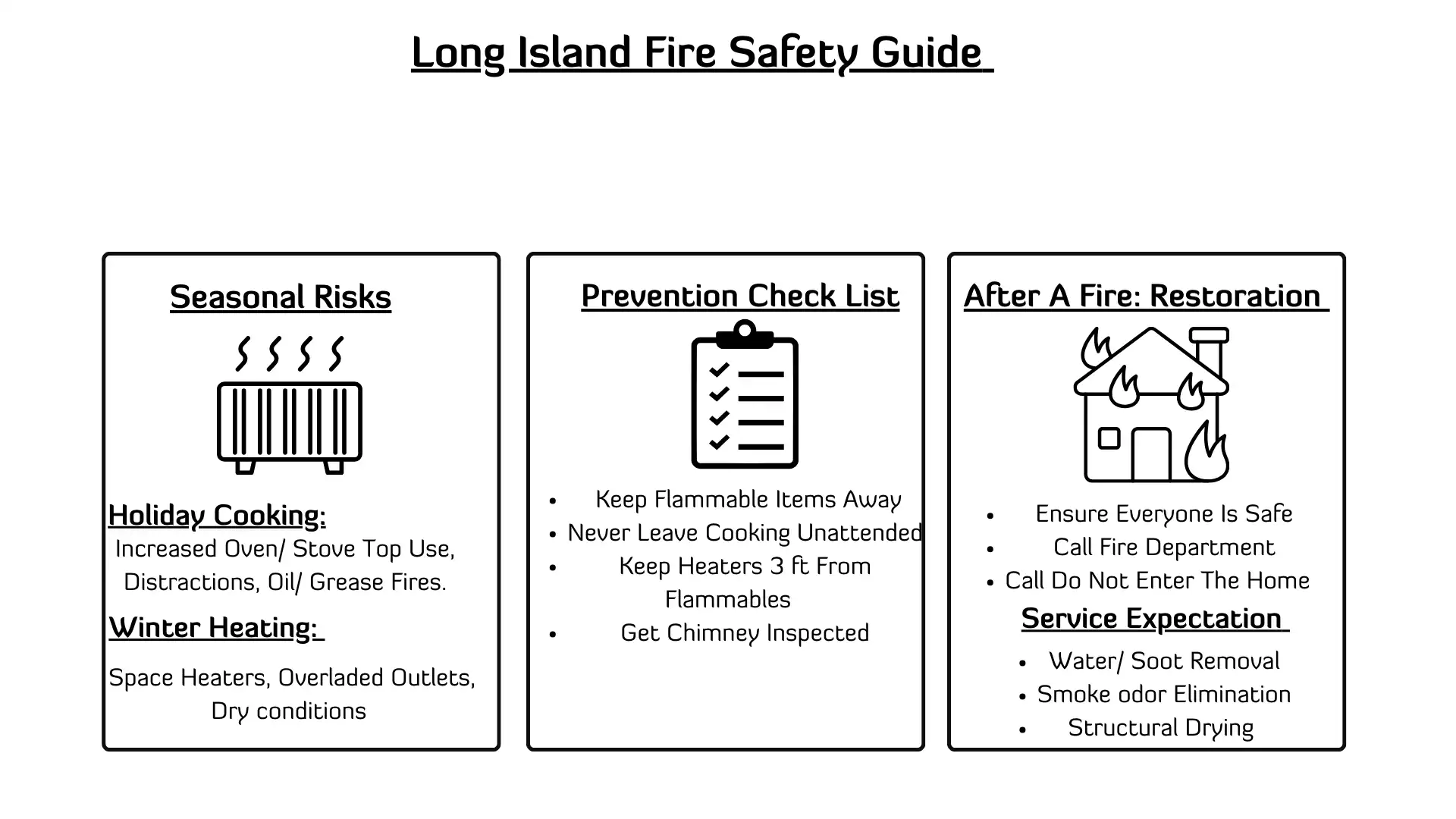
The statistics tell the story clearly. Cooking fires jump by 300% on Thanksgiving Day alone, while December, January, and February see the highest rates of heating-related fires all year.
It’s not just bad luck—it’s predictable patterns. Holiday cooking means more time in the kitchen, multiple dishes going at once, and distractions from guests or family activities. Winter heating fires spike because homeowners dust off space heaters that haven’t been used in months, overload electrical circuits, and place heating equipment too close to combustible materials.
Long Island’s mix of older homes and harsh winters creates the perfect storm. Many homes still rely on supplemental heating, and holiday entertaining often pushes electrical systems beyond their normal capacity.
The Real Culprits Behind Holiday Cooking Fires
Unattended cooking causes 70% of kitchen fires, according to recent surveys. During holidays, this problem gets worse because you’re juggling multiple tasks while trying to create the perfect meal.
The turkey fryer deserves special mention here. These devices cause over 100 fire incidents annually, with property losses exceeding $5 million. The problem isn’t the equipment itself—it’s improper use. Overfilled oil, wet turkeys, and indoor use all create dangerous conditions.
But it’s not just the big holiday meals. Even simple cooking becomes riskier when you’re tired, distracted, or have had a drink or two. Your normal kitchen awareness drops, and small mistakes become big problems.
The most dangerous scenario? Leaving cooking unattended “just for a minute” to check on guests or answer the door. That minute stretches into five, then ten, and suddenly you’re dealing with a grease fire that’s spreading to cabinets.
Prevention comes down to staying present. If you’re frying, grilling, or broiling, stay in the kitchen. For longer-cooking items like roasts or casseroles, set timers and check regularly. Keep flammable items like dish towels, paper products, and loose clothing away from the stove.
Space Heater Dangers That Long Island Homeowners Miss
Space heaters cause about 1,700 fires and 80 deaths each year nationwide, but the risks go beyond the obvious “don’t put clothes on the heater” advice most people know.
The biggest danger is electrical. Many Long Island homes have older wiring that wasn’t designed for high-wattage space heaters. When you plug a 1,500-watt heater into an extension cord or power strip, you’re asking for trouble. The connections overheat, and fires start inside walls where you can’t see them.
Location matters more than most people realize. That “three-foot rule” isn’t just a suggestion—it’s based on actual fire spread patterns. Furniture, curtains, and even carpet can ignite from radiant heat without direct contact with the heater.
Here’s what catches homeowners off guard: space heaters need clean air intake to work safely. When lint, dust, or pet hair builds up around the heating elements, it creates hot spots that can ignite. This is especially common with heaters that have been stored all summer.
The solution isn’t avoiding space heaters entirely—they’re valuable supplemental heat sources. Instead, buy newer models with safety shutoffs, place them on hard, level surfaces away from everything combustible, and plug them directly into wall outlets. Clean them before each season and never leave them running when you’re asleep or away from home.
Your Long Island Home Fire Prevention Checklist
Prevention beats restoration every time. This checklist covers the most effective steps Long Island homeowners can take to reduce fire risks during high-danger seasons.
Start with your smoke alarms—test them monthly and replace batteries annually. Consider photoelectric alarms in kitchen areas because they’re less likely to trigger false alarms from cooking smoke while still detecting real fires quickly.
For cooking safety, establish a “kid-and-pet-free zone” of at least three feet around your stove and anywhere you’re carrying hot food or liquids. Keep pot handles turned inward, have a lid nearby to smother grease fires, and never leave cooking unattended.
Essential Kitchen Safety During Holiday Cooking
Holiday meal prep tests your kitchen in ways regular cooking doesn’t. Multiple burners running, ovens at capacity, and timing pressures create the perfect conditions for accidents.
Your first line of defense is staying alert. If you’re tired, stressed, or have been drinking, ask someone else to take over cooking duties. Fires happen when your attention wavers, and holiday gatherings often involve alcohol and late nights.
Create a cooking schedule and stick to it. When you’re trying to time multiple dishes, write down what goes where and when. This prevents the “oh no, I forgot about the rolls” moments that lead to burned food and potential fires.
Keep your cooking area clear. Move dish towels, paper products, and food packaging away from the stove. Loose clothing and long sleeves are fire hazards—roll them up or change into something more fitted when you’re cooking.
Have the right tools ready. A fire extinguisher rated for kitchen use should be easily accessible but not right next to the stove where a fire might block your access to it. Know how to use it before you need it—the PASS method (Pull, Aim, Squeeze, Sweep) can save your kitchen.
If a grease fire starts, never use water. Turn off the heat source if you can do so safely, then slide a lid over the pan to smother the flames. If the fire is too large or spreading, get everyone out and call 911. Your safety matters more than saving dinner.
Winter Heating Safety That Actually Works
Safe winter heating goes beyond basic space heater placement. It’s about understanding how heating equipment interacts with your home’s electrical system and creating layers of safety that prevent small problems from becoming disasters.
Start with professional inspections. Have your furnace, chimney, and any fuel-burning appliances checked annually. This isn’t just about efficiency—it’s about preventing carbon monoxide poisoning and structural fires. Cracked heat exchangers and blocked chimneys cause serious problems that aren’t obvious until it’s too late.
For space heaters, the three-foot rule is just the beginning. Look for models with tip-over switches that shut off power if the unit falls over, and overheat protection that prevents internal components from reaching dangerous temperatures. These safety features have prevented countless fires.
Electrical safety matters more than most homeowners realize. Space heaters draw significant power, and Long Island’s older homes often have circuits that can’t handle the load. If your lights dim when the heater kicks on, or if outlets feel warm, you have an electrical problem that needs professional attention.
Never use extension cords with space heaters, even heavy-duty ones. The connections create resistance, which generates heat, which starts fires. If you can’t reach a wall outlet, you need a different heating solution for that area.
Maintenance prevents most heating fires. Clean space heaters before each use, replace furnace filters regularly, and keep heating equipment clear of storage items. That box of holiday decorations stored too close to your water heater could become kindling if something goes wrong.
What to Do Immediately After a House Fire in Long Island
The minutes and hours after a fire determine how quickly you’ll recover and how much you’ll save. Having a plan removes guesswork when you’re dealing with shock and stress.
Your first priority is safety—wait for the fire department’s all-clear before entering your home. Even after flames are out, structural damage and toxic fumes create serious hazards. Once you’re cleared to enter, contact your insurance company immediately to start the claims process.
Document everything with photos, but don’t throw anything away until your insurance adjuster has seen it. Items that look ruined might be salvageable with professional cleaning, while things that appear fine might have hidden smoke or heat damage.
Contact a local fire damage restoration company like us at Green Island Group as soon as possible. Professional restoration prevents secondary damage from smoke, soot, and the water used to fight the fire. The longer you wait, the more permanent the damage becomes and the more expensive restoration gets.